
American Mahjong Quick Start Guide: Rules, Setup & First Game
Last updated: Nov 23, 2026
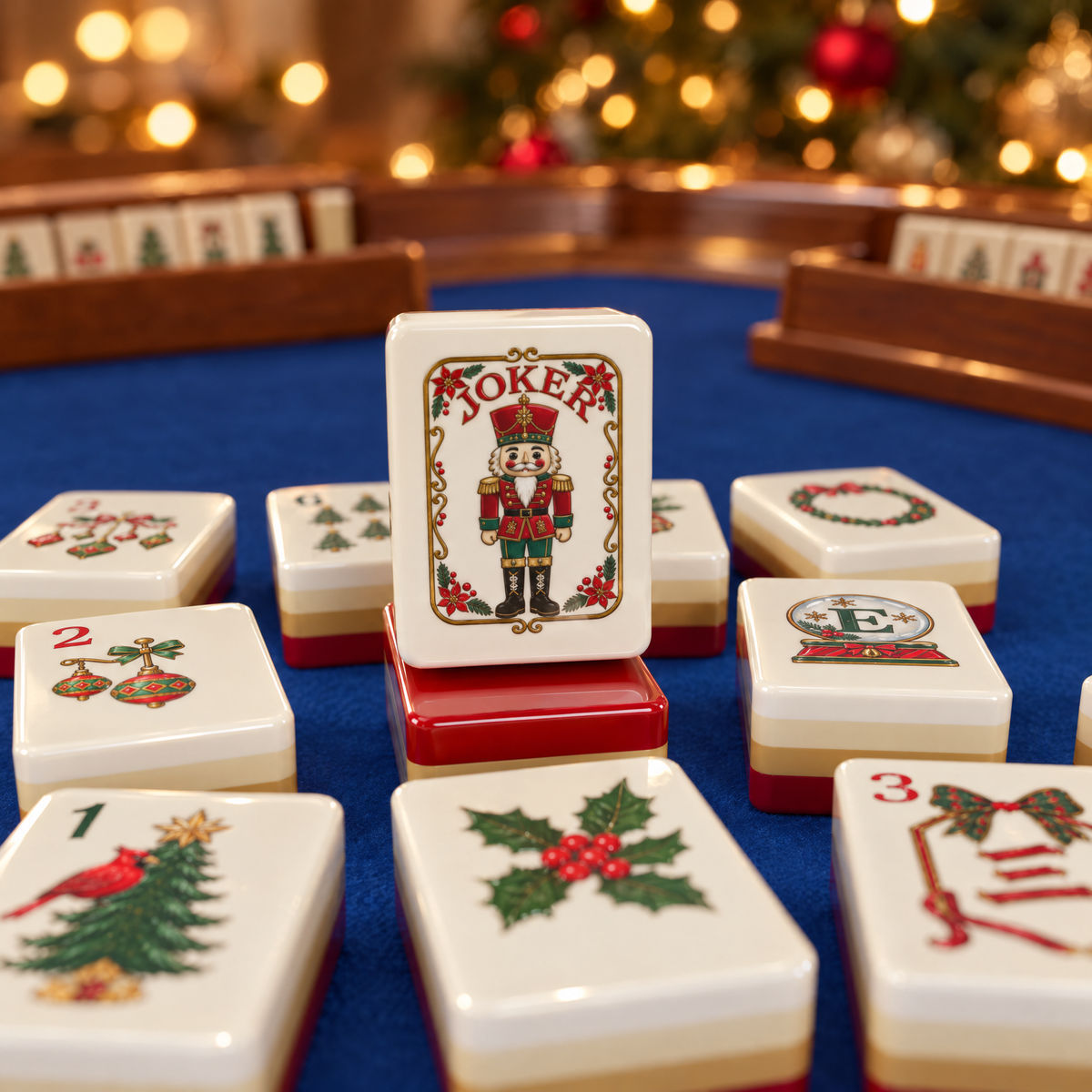
American mahjong is played with exactly 152 tiles plus 8 jokers: three numbered suits (1–9 Bams, Craks, Dots, four copies each), 16 winds (four each: North, East, West, South), 12 dragons (Red, Green, White), and 8 flowers. Each player draws 13 tiles; the game begins after the Charleston—a three-round tile-passing ritual. Hands come only from that season's National Mah Jongg League card, issued every spring; no other hand patterns count in American play. A standard game lasts 1–2 hours. Winning means matching all 14 tiles to a single card pattern and calling "Mahjong." Players take turns drawing and discarding until someone wins or the wall empties (a draw). A best-selling mahjong set gives you everything needed: tiles, racks, dice, and a card holder. Avoid mixing old cards with new yearly ones and never assume sequences (1-2-3) are allowed—American play forbids them entirely.
What's inside a 160-tile American mahjong set?
A standard American set contains 152 playing tiles plus spare jokers and blanks. The 152 tiles break down as: 108 numbered tiles (36 per suit: Bams, Craks, Dots, each numbered 1–9, four copies of each number), 16 winds (four North, East, West, South), 12 dragons (four Red, four Green, four White), and 8 flowers (four sets of flower tiles). Eight jokers sit ready in play. Modern acrylic sets also include two dice, a card holder, and often tile racks with pushers—small sticks that help players move tiles silently without dropping them. Most complete best-selling sets arrive in a sturdy bag or case, protecting tiles during transport.
🀄 Shop best-selling mahjong sets →

How do you set up and play the Charleston?
The Charleston is a three-round tile-passing ritual that randomizes your opening hand before play officially starts. Here's the step-by-step: After all four players draw 13 tiles and study them, the East player (dealer) passes three unwanted tiles to the right simultaneously—everyone passes at once. Next, the three remaining players pass three tiles to the left. In round three, players pass to the player across. Some groups play a fourth "pass back to the right" round; check your group's rules. After Charleston, each player holds 13 tiles. East draws one from the wall, bringing the total to 14, then discards one immediately. Play flows East → South → West → North, turn after turn, each player drawing and discarding one tile, until someone's hand matches a pattern on the current National Mah Jongg League card exactly. The Charleston is pure chance—it scrambles tiles and prevents players from controlling their opening position unfairly. Never skip it.
What tiles can you expose or call from the discard?
In American mahjong, only four types of exposed melds exist: a pung (three identical tiles), a kong (four identical tiles), a quint (five identical tiles), and a sextet (six identical tiles). You cannot call or expose sequences (like 1-2-3 of the same suit), and you cannot use a joker alone or as a pair. When a player discards a tile, any other player can claim it if it completes one of these four melds and appears on their hand card for the current season. Call it clearly: "Pung," "Kong," "Quint," or "Sextet." Exposing tiles means placing them face-up in front of you on your rack. The player who called the tile then passes a different tile to the right (a required exchange). If you don't need the discarded tile, it moves to the next player in turn order. This rule—only four legal melds, no sequences—separates American play from nearly every other mahjong variant and is the single most common stumbling block for new players.
How do you know when you've won?
You've won when all 14 of your tiles match exactly one hand pattern from the current year's National Mah Jongg League card, and you declare "Mahjong" loudly. Your hand must consist only of pungs, kongs, quints, sextets, and a pair—no sequences. You must be able to point to your card and show the dealer which pattern you've completed. Jokers can substitute for any tile in an exposed meld, but never in a single tile or a pair. If your hand doesn't match the card perfectly (wrong tile count, pattern doesn't exist, or you're using an old card), your claim is void—you're penalized and play continues. Winning hands earn points based on difficulty; learn scoring in detail here. If nobody wins and the wall runs out, the hand is a draw and scores no points. Seasoned players check the card before they call—a habit that saves argument and time.

What mistakes do new players make most often?
Mistake | Why it ruins the game | How to avoid it |
Using last year's card | Illegal hands; disputes over patterns | Get the current spring card every year; store old ones separately |
Calling sequences (1-2-3) | Sequences don't exist in American play | Only call pungs, kongs, quints, sextets |
Trying to use jokers as pairs | Jokers can't substitute for both tiles in a pair | Use jokers only in exposed melds, never in the pair or single tiles |
Forgetting to pass after calling a tile | Breaks turn order and tile flow | Pass one tile to the right every time you call an exposed meld |
Mixing up wind order (East, South, West, North) | Affects who passes first and rotation direction | Agree on seating before the game; East always goes first |
The fastest way to learn is to play alongside a patient player who knows the current card. Most new players nail the rules within two or three hands once they see real examples.
🎁 See our most-loved mahjong sets & accessories →
Why does the National Mah Jongg League card matter so much?
The League issues a new card every March, and you must use that year's card to play legally. The card shows around 500 legal winning hand patterns organized in sections: like "2021" (two tiles of one kind, no jokers), "Like Numbers," "Consecutive Run," and so on. Older cards are treasured by collectors and used for casual teaching, but they don't count in sanctioned play. Every spring, experienced players retire last year's card and buy or print the new one. If your group doesn't have current cards, you can't play American mahjong—you'd be inventing patterns, which defeats the game's entire strategy. Beginners often find it easier to understand the card once they've played three or four hands, so don't panic if it looks overwhelming at first. The card is not a rulebook; it's your only source of truth for what wins.
What do you need before your first game?
Essential:
One 160-tile American mahjong set with tiles, dice, and card holder
Current year's National Mah Jongg League card (printed or purchased)
Four players, a flat surface, and 1–2 hours
Mahjong racks with pushers (included in most sets; they keep tiles organized and move silently)
Nice to have:
A mahjong mat to protect the table and define discard areas
A travel bag or case if you move your set between homes or venues
A scorepad and pencil (any paper works; tracking points is optional for casual play)
Most complete sets from our best-selling collection come with racks, dice, and a card holder already packed. If you're buying a set for a gift or your first table, a full set eliminates shopping for pieces one by one.
What to check before you buy
Tile clarity: Acrylic tiles should be easy to read, with sharp characters and consistent color. Hold them up to light to check for printing flaws.
Rack comfort: Racks should slide smoothly and hold 13–14 tiles without tilting. Test them at a table height if possible.
Bag durability: If travel is part of your plan, ensure the case has padded compartments and a sturdy handle or strap.
Card compatibility: Make sure any set you buy includes or recommends how to get the current National Mah Jongg League card. Without it, you have beautiful tiles but no rules to play by.
Spare tiles: Sets come with a few extra jokers or blank tiles in case of loss; keep them in the box for long-term storage.
✨ Find your Mahstead set — free US shipping →

FAQ
Can American mahjong be played with fewer than four players?
Yes. Two or three players use modified rules—fewer tiles are dealt, and the wall changes size. See our guide to 2 and 3 player mahjong rules for details.
What's the difference between American mahjong and Chinese or Riichi?
American uses the League card, forbids sequences, allows only four melds, and resets each spring. Chinese and Riichi have different hand patterns, allow sequences, and use fixed rulebooks instead of a yearly card.
Do jokers have any limits?
Jokers can substitute for any tile in an exposed meld (pung, kong, quint, sextet) but never in a single tile, a pair, or a concealed hand. One joker can only cover one tile at a time.
If I discard a tile that matches my hand card, do I have to take it back?
No. Once discarded, a tile belongs to the wall. You can't retrieve it or claim it if it matches—you must draw from the wall instead or wait for another player to claim it.
How long does a typical game take?
One hand (one complete round) usually takes 20–45 minutes. A full session with four hands takes 1.5–2 hours. Faster players and fewer disputes speed things up.
What happens if someone claims "Mahjong" but their hand doesn't match the card?
Their claim is void. They're penalized (usually sit out the next hand or lose points), and play continues from the last valid discard.


View More
View More
View More
