
How Long Does a Game of Mahjong Solitaire Take?
Last updated: Nov 23, 2026
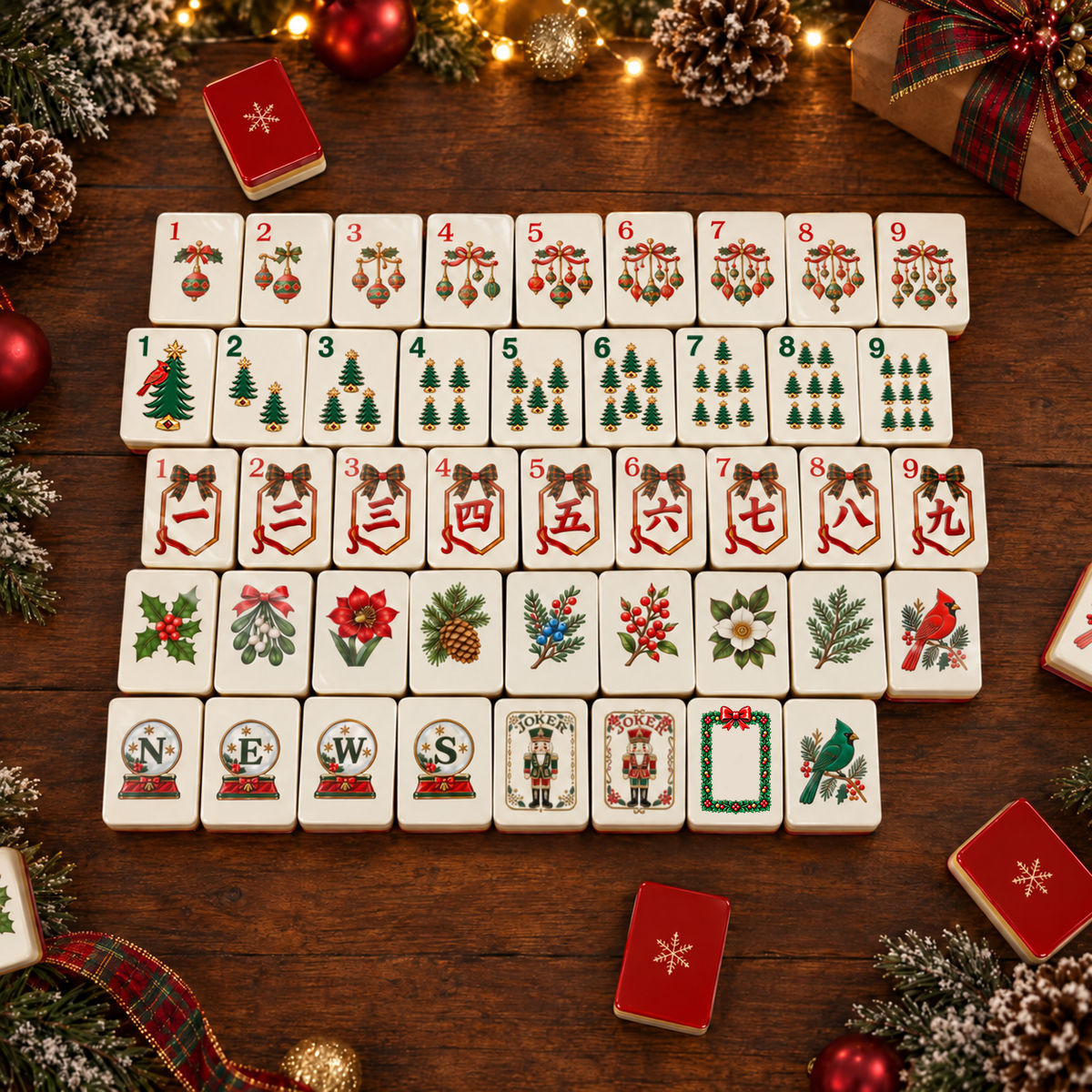
Mahjong solitaire typically takes 5–30 minutes per round, depending on the board layout and your familiarity with the game. Beginner players on complex layouts may spend 20–30 minutes; experienced players often finish simple boards in 5–10 minutes. Unlike American mahjong—a four-player game using the National Mah Jongg League card that lasts 1–2 hours—solitaire is played solo against time or to clear the board. Each layout is different: some have 144 tiles arranged in traditional pyramids or pagodas, others use modern stacked patterns. There's no gambling, no scoring system tied to other players, and no Charleston passing ritual. You win by matching all pairs or lose if no valid moves remain. Casual play focuses on relaxation; timed challenges and mobile apps push players to beat the clock. Most people play several rounds in a session—the short format makes it ideal for breaks or unwinding.
Mahjong solitaire is a single-player tile game where you match pairs to clear the board. Game length depends on the layout, your speed, and whether you're playing for fun or racing the clock.
What exactly is mahjong solitaire, and how is it different from American mahjong?
Mahjong solitaire is a digital or physical matching puzzle, not the multiplayer hand-building game most people know. You click or tap two identical tiles (both visible and adjacent on the board) to remove them. The goal: clear every tile before you run out of valid moves. American mahjong, by contrast, is a four-player game played with 152 tiles and 8 jokers, following hands from the current National Mah Jongg League card. A typical American game lasts 1–2 hours and involves strategy, hand-reading, and competitive scoring. Solitaire is solitary, turn-based at your own pace, and purely about pattern recognition and speed—not luck or tile knowledge.

Why do some solitaire rounds finish in 5 minutes and others take 30?
Board layout is the main driver: pyramid stacks with 8–10 layers take longer to clear than flat 6×6 grids. Complex tile distributions—where matching pairs are buried deep—force you to plan moves ahead; simple layouts with pairs near the edges move fast. Skill matters: after 10–20 games, you spot valid moves instantly; beginners hesitate, re-scan the board, and miss matches. Mobile apps often add time pressure (a timer running down) or bonus points for speed, which either shortens or extends play psychologically. A leisurely round on a tablet might be 20 minutes; the same board under a 2-minute clock becomes impossible. Layout symmetry and tile count both affect pacing—a 144-tile pyramid plays differently from a 200+ tile pagoda.
🀄 Shop best-selling mahjong sets →
How does playing speed change as you learn the game?
Your first 5 rounds will likely be slowest: you're learning which tiles match, re-reading symbols, and building confidence. By round 15–20, you'll develop a scanning habit and recognize matches in your peripheral vision. Expert players (50+ games) finish basic boards in under 10 minutes and rarely get stuck. This mirrors how any puzzle skill evolves—pattern recognition gets faster with repetition. Mobile apps amplify this: they reset your focus on each game, so experienced players can jump between different layouts and maintain speed. Physical tile sets, if you own one for solitaire play, require more handling time (shuffling, stacking, placing), which adds 2–3 minutes per round compared to digital versions.
Can you use American mahjong sets to play solitaire?
Yes—American mahjong sets work perfectly for physical solitaire because they contain two complete identical tile sets (152 playing tiles plus spares in a 160-tile set). Each of the four tile copies lets you create matching pairs. However, American sets include winds, dragons, and flowers that add complexity: you must track which tiles can pair (e.g., all four 5 Dots match, but an East Wind does not match a North Wind). If you're building a collection and want a dedicated physical solitaire set, look for ones labeled "solitaire" or "144-tile pyramid sets," which simplify pairing rules. For casual home play, our best-selling acrylic American sets work fine—shuffle all tiles facedown, deal a solitaire layout, and play. The acrylic tiles glide smoothly on a mat and are easier to handle than bone or bamboo for repeated rounds.

What's the best way to set up and time a solitaire game at home?
Use a flat, uncluttered surface—a dedicated mahjong mat with printed grid lines helps you keep rows even and speeds visual scanning. Shuffle all tiles thoroughly facedown, then deal into your chosen layout (pyramid, pagoda, or flat grid). Set a phone timer if you want to race. Start the timer when you flip the last tile. For a relaxing game, skip the timer and play until you win or get stuck. To level up, start timing yourself: average your first 10 games, then try to beat that time on fresh layouts. Keeping a simple log (layout name, time, win/loss) motivates improvement and helps you identify which layouts suit your speed.
🎁 See our most-loved mahjong sets & accessories →
Play Style | Typical Time | Best For | Setup Notes |
Casual/relaxed (no timer) | 15–25 min | Decompression, learning | Any layout; play at your pace |
Intermediate/timed | 8–15 min | Skill building, tracking progress | Start timer at first move |
Competitive/speed challenge | 3–8 min | Leaderboards, mobile apps | Pre-shuffled decks; timer running |
Learning first layout | 20–30 min | Beginners | Use simple grids; no rush |
What common mistakes slow down or ruin a solitaire game?
Not reshuffling between rounds. Tiles tend to settle into patterns; poor shuffling leaves matching pairs too close, making every game feel "easy" or predictable.
Playing on too-small surfaces. Cramped layouts force you to squint, misread tiles, or knock pieces over—moving to a bigger, clearer space cuts fumbling by half.
Ignoring buried pairs. Beginners focus on visible edges and miss that flipping a tile on top often uncovers the match beneath—always scan for cascades.
Mixing up similar tiles. The 1 Bam (bird), White Dragon, and certain flowers look alike at a glance; mis-pairing costs time and creates dead-ends.
Playing without a mat. Tiles slide on bare tables, scatter during shuffles, and feel slippery. A mat with pushers and a good surface grip reduce fumbling and keep focus sharp.
How does mahjong solitaire compare to other tile-matching games?
Mahjong solitaire is slower than Match-3 games (Candy Crush style) because each move requires two tiles to be identical and adjacent—not just any three in a line. A typical Match-3 round takes 3–5 minutes; solitaire averages 10–15 minutes. Solitaire is faster than building a full American mahjong hand (1–2 hours per game) because there's no strategy layer, no hand composition rules, and no opponent play. Solitaire rewards speed and memory; American mahjong rewards planning and tile knowledge. If you play both, you'll notice American mahjong feels "slower" partly because four players take turns—one person plays 15 minutes of a 90-minute game. Solitaire is pure active time, so it feels quicker despite often lasting 10+ minutes.
✨ Find your Mahstead set — free US shipping →
What to check before you buy a solitaire set
Tile count. Most solitaire sets have 144 tiles (one complete set) or 288 (two sets for double-deck play). Verify tile count in the product description.
Material. Acrylic is lightweight and glides on mats. Bamboo/bone feels premium but is heavier and can chip. Pick based on durability needs and storage space.
Layout guide. Some sets include printed or laminated pyramid/pagoda templates. Helpful if you're new to physical solitaire.
Storage. Solitaire sets go in bags or cases—check whether your set fits a standard small drawstring or needs a larger case.
Tile readability. Ensure symbols are clear and tiles are large enough for comfortable scanning, especially during timed play.

FAQ
Can I play mahjong solitaire on a mobile app instead of buying a physical set?
Yes. Mobile apps (free and paid) offer unlimited layouts, timers, and leaderboards with zero setup time. Physical sets are better for offline play, tangible satisfaction, and group settings—plus they last decades without battery drain.
Is mahjong solitaire the same as the game played at a mahjong table?
No. Table mahjong (American mahjong) is a four-player hand-building game lasting 1–2 hours. Solitaire is a solo tile-matching puzzle, 5–30 minutes per round, with completely different rules and strategy.
How many tiles should a solitaire set have?
The standard is 144 tiles (one complete set). Some enthusiasts use 288 tiles (two sets) for longer, harder layouts. Most casual players find 144 sufficient for variety.
Does difficulty level affect how long a game takes?
Yes. "Easy" layouts (fewer buried tiles, simple cascades) finish in 5–10 minutes; "hard" layouts (deep stacks, few matches visible) take 20–30 minutes or may be unwinnable.
What's the fastest time anyone has completed a solitaire game?
Speed-runners and app leaderboards show sub-2-minute finishes on simple layouts, but these are optimal boards with minimal complexity. A realistic "fast" home game is 5–8 minutes for an experienced player on a standard pyramid.
Should I learn American mahjong rules before playing solitaire?
No. Solitaire doesn't require knowing American mahjong strategy, hand composition, or the National Mah Jongg League card. If you own an American set and want to try solitaire, just remember that identical tiles match—winds don't pair with each other, and Dragons follow their suit pairings.


View More
View More
View More
