
American Mahjong Playing Concealed Hands: Rules & Strategy
Last updated: Nov 23, 2026
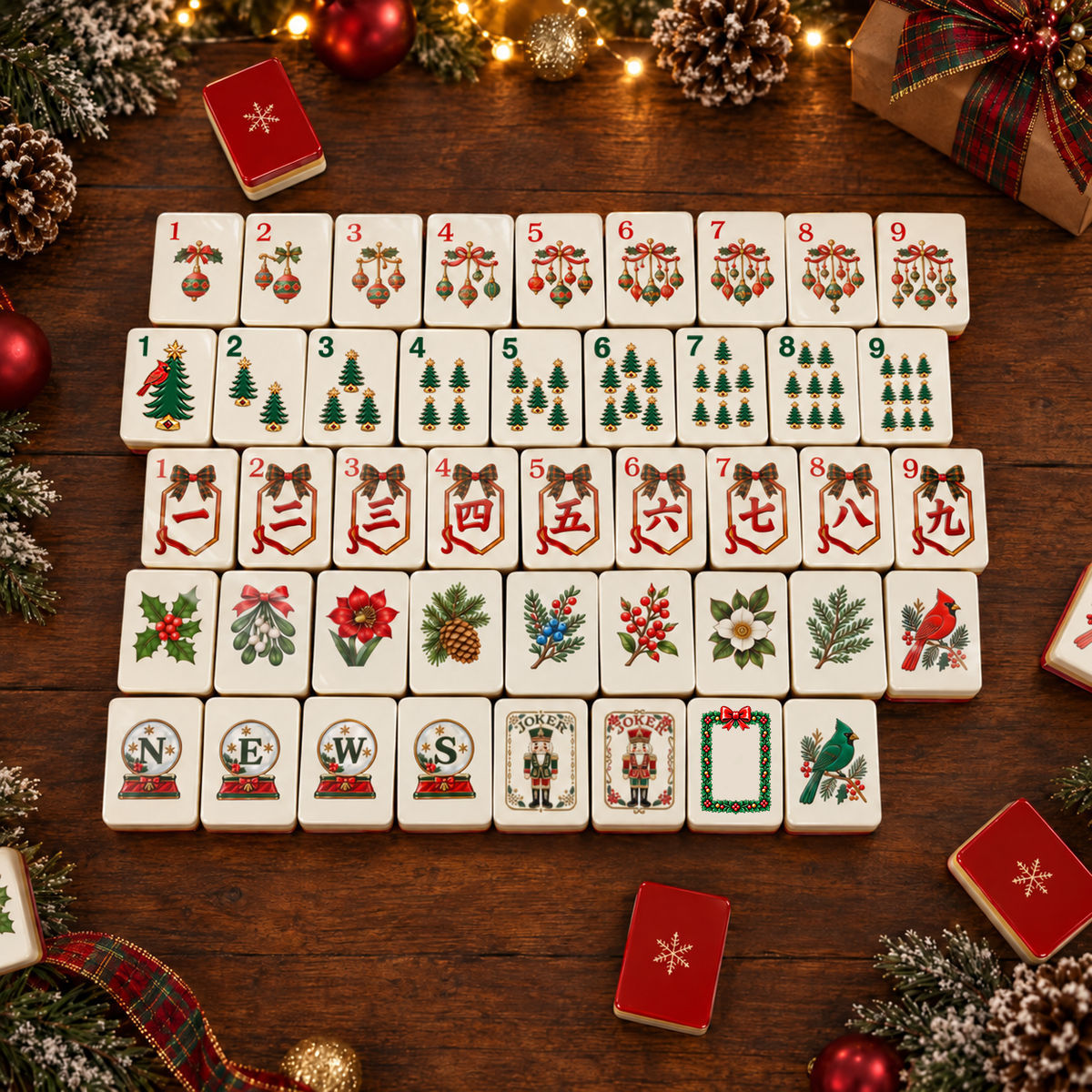
A concealed hand in American mahjong is when you hold all 14 tiles hidden (or face-down on your rack) until you complete a winning hand and declare "Mahjong"—no exposed pungs, kongs, quints, or sextets. You cannot draw from the discard pile; you must draw only from the wall. Concealed hands score higher on the current-year National Mah Jongg League card because the risk is greater: if anyone discards a tile you need before you win, you cannot call it. The hand must be played from start to finish without any exposures. Most American players expose at least one or two melds during a hand, so concealed is a specialist move. The core rule: once you expose anything, your hand is no longer concealed, even if you later hide the exposed tiles.
What exactly is a concealed hand versus exposed play?
In American mahjong, you have two strategic paths: concealed or exposed. Concealed: all 14 tiles stay hidden on your rack; you draw only from the wall, never from discards. Exposed: you reveal pungs, kongs, quints, or sextets face-up on the table as you form them, and you can call (take) tiles from the discard pile to complete those melds. Concealed hands typically earn higher points because you cannot use other players' discards—your only tile source is the wall. The tradeoff: if you miss your winning tile before the hand ends, you lose. Exposed play offers flexibility and faster melds but lower scores. Once you expose one meld, your hand is no longer concealed; you cannot switch back.

How do you arrange tiles on your rack during concealed play?
When playing concealed, tile arrangement is your secret strategy. Keep your rack organized into logical groups: potential pungs together, potential quints separate, jokers in an accessible spot (never in a pair or single, per American rules). Most players use a raised mahjong rack with pushers so tiles stand vertically and face only you. This prevents accidental exposure and lets you scan your hand quickly. Arrange tiles left-to-right: completed melds on the far left, tiles you're building on the right, wildcards (jokers) in the middle for easy access. Turn tiles to face inward so opponents see only blank tile backs. Rearrange silently as you draw; do not announce changes. A tall, angled rack helps because it shields your tiles better than a flat row.
What are the most common mistakes in concealed play?
Mistake 1: Accidentally exposing a tile—reaching too high and letting a neighbor glimpse a corner. Always draw into your rack from the wall before placing the new tile; keep your hands low. Mistake 2: Drawing from the discard pile out of habit. In concealed play, you may only draw from the wall. If you draw a discard, your hand is exposed immediately. Mistake 3: Hesitating too long on a draw. Long pauses broadcast that you're close to winning; opponents sense this and may play defensively. Draw and place quickly. Mistake 4: Forgetting the winning tile has passed. If your needed tile was discarded and you did not call it during concealed play, it is gone. You cannot go back. Track the discard pile mentally. Mistake 5: Not reading the League card carefully. Concealed hands on the card often use unusual joker counts or specific suit patterns. Verify your hand matches the card before declaring Mahjong.
Mistake | Why It Costs You | How to Avoid |
Exposing a tile | Opponents see your strategy; concealed status lost | Use a tall rack; draw low; shield with your body |
Drawing from discard | Automatic exposure; hand no longer concealed | Repeat: wall only—never the discard pile |
Hesitating on a draw | Signals you're near winning; opponents play safe | Draw and place within 2–3 seconds |
Missing a critical discard | That tile is gone; you cannot call it later | Glance at each discard; mentally track needed suits |
Wrong hand on the card | You declare Mahjong but your tiles don't match | Read the card section three times before play starts |
Why would you choose a concealed hand when exposed play is easier?
Concealed hands offer higher scores—often 25 to 40 points on the League card versus 10 to 20 for the same pattern exposed. The scoring reflects the difficulty: you cannot use discards, so you're betting your entire hand on wall draws. Players choose concealed when they want maximum points, are comfortable with the risk, or see a rare high-scoring hand that is only concealed on that year's card. Early in your mahjong journey, exposed play builds confidence; once you grasp tile probabilities and hand-reading, concealed play becomes a weapon. Concealed also teaches discipline: you learn to memorize discards, plan ahead, and move quickly. Some players alternate; others specialize in concealed. There is no "best"—only the hand that fits the moment and your table's skill level.
🀄 Shop best-selling mahjong sets →

How do you know when you have won a concealed hand?
You have won a concealed hand when your 14 tiles form a complete hand per the current-year League card and your intended hand is listed as concealed. Before declaring, do not expose your tiles—verify in silence on your rack. Your hand must consist of five melds (four 3-tile melds or 4-tile kongs, quints, sextets + one pair, or a variation per the card). Check: (1) Do all tiles match a specific hand on the card? (2) Is that hand marked as concealed? (3) Do I have the right number of tiles (14)? (4) Are my jokers placed correctly (never in a pair or single)? Only then say "Mahjong" and lay out your tiles in the order shown on the card. If your hand does not match, you lose that hand and usually pay a penalty. This is why silent verification on the rack is critical—once you declare, you are committed. At a serious table, opponents may challenge you to show the card section that matches your hand.
What role do jokers play in concealed hands?
Jokers are wildcards in American mahjong and are essential to concealed strategy. Per League rules, jokers can substitute for any tile except a single tile or a pair. In a concealed hand, jokers work the same way: you can use them to complete a pung, kong, quint, or sextet—but only in groups of three or more. You cannot use a joker as a pair or as one tile alone. On the current-year card, some hands specify the exact joker count (e.g., "two jokers," "three jokers"); these are pre-set. Other hands allow flexibility: you substitute jokers for any tile you lack. In concealed play, jokers are your lifeline—they increase your odds of completing the hand before the wall runs out. Hold jokers in a visible part of your rack so you know what flexibility you have. Never waste a joker early on a meld you don't need; save them for the final pung or pair.
🎁 See our most-loved mahjong sets & accessories →
How do the mechanics of the wall draw work in concealed play?
The wall is the stack of face-down tiles in the center of the table. In American mahjong, the wall starts with 152 tiles (plus 8 jokers used during play, never added to the wall). Each player draws from the wall in turn during regular play—but during concealed hand play, you draw only from the wall, never from the discard pile. After each turn, the wall shrinks. If the wall runs out before you complete your hand, that hand is a dead wall—no winner. Keep a mental tally: how many tiles remain? If the wall is down to 8–10 tiles and you still need two specific tiles, your odds of winning are low. This is why concealed play is risky. A good concealed strategy balances patience: if you see your needed tile in the discard pile (but cannot take it), adjust your plan before the wall ends. Some players keep a rough count aloud: "Wall down to 15," so everyone knows the pressure.
What to check before you play a concealed hand
Hand is on the card: Look up your intended hand in the concealed section of the current-year League card.
Tile count is correct: Count your 14 tiles (before declaring) to avoid short-hand penalties.
Jokers are in groups only: No joker alone or in a pair on your rack.
Rack is tall enough: Invest in a quality rack with pushers so tiles face only you.
You understand the payment: Some tables pay differently for concealed hands; clarify the scoring before the hand starts.
You can see tile faces clearly: Use tiles with clear, large markings so you don't misread a tile while hidden.
✨ Find your Mahstead set — free US shipping →

FAQ
Can I expose a tile by accident and still play concealed?
No. Once any tile is visible to another player—even accidentally—your hand is exposed. You lose concealed status immediately and can now call from the discard pile, but you lose the higher concealed score.
What happens if I draw my winning tile from the wall but the wall also runs out that turn?
You have won. The wall ending does not cancel a win; it only ends the hand if no one wins before the last tile is drawn. If you draw and complete your hand, declare Mahjong immediately.
Can I change my concealed hand mid-game if I realize it will not work?
No. Once play begins, you are committed to that hand. You cannot switch to a different hand on the card. This is why reading the card before the hand starts is crucial.
If someone discards my winning tile during concealed play, can I take it?
No. In American mahjong concealed play, you can draw only from the wall, never from the discard pile. If your needed tile is discarded, it is lost to you.
Do I have to announce I am playing concealed before the hand starts?
Not formally, but it is polite to say so. Some tables use it as a hint: "Playing concealed this hand." This sets expectations and prevents confusion if you do not expose melds early.
What is the penalty if I declare Mahjong with a concealed hand that does not match the card?
You lose that hand (score zero for it) and typically pay a small penalty to the other players—often double the usual hand payment. Verify silently on your rack before declaring.
Are there American mahjong variants where concealed hands work differently?
American mahjong follows League rules uniformly. Hong Kong and Riichi mahjong have different concealed hand rules and scoring; Chinese mahjong also differs. The concealed rules in this article apply only to American (NMJL) play.
How long does a concealed hand typically take?
Usually 8–12 minutes, same as exposed play. Concealed hands do not take longer; the time difference comes only if many players expose early melds (which is not your game if you are playing concealed).


View More
View More
View More
