
Betaori in Riichi Mahjong Explained: When to Fold
Last updated: Nov 23, 2026
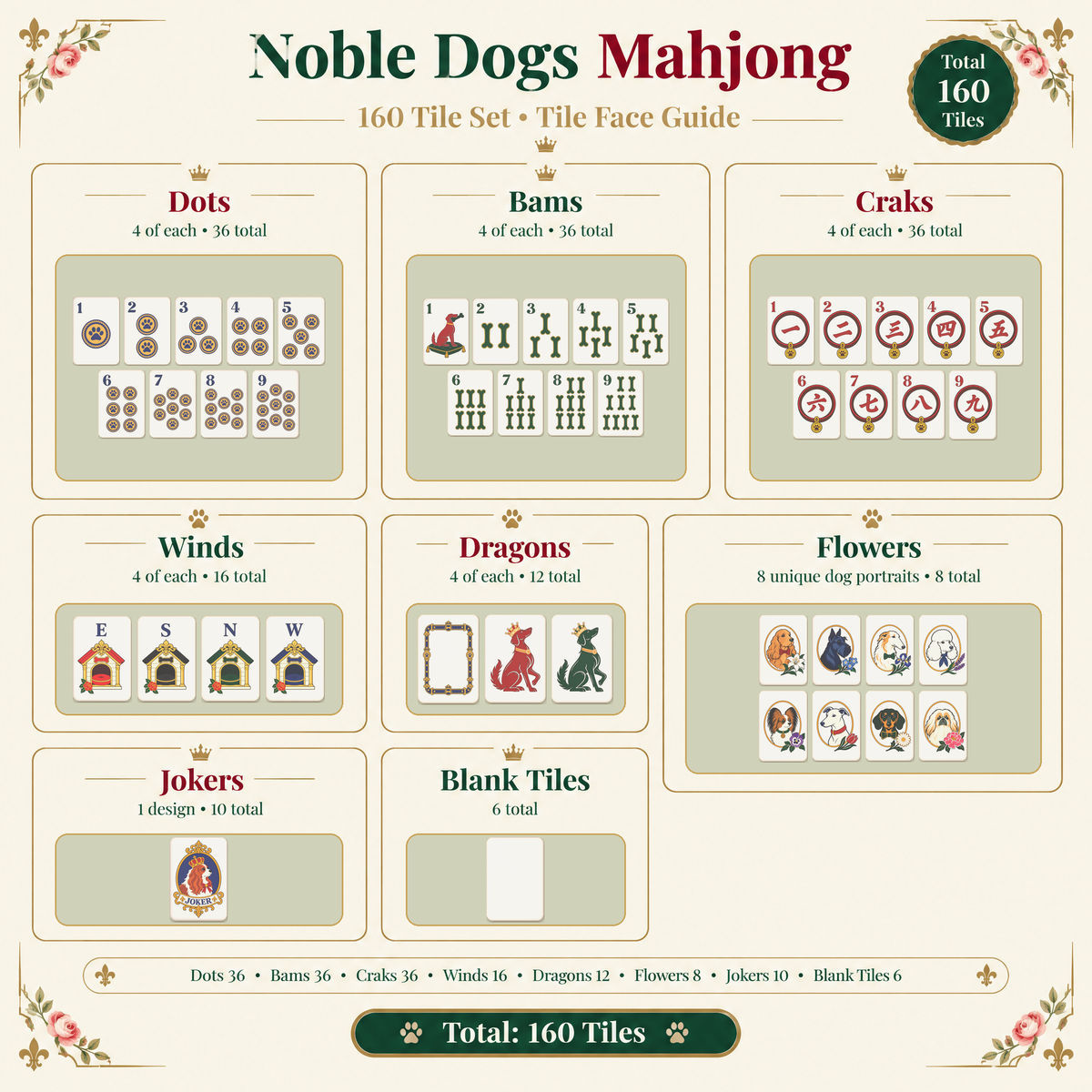
Betaori (退場折, literally "fold exit") is a riichi mahjong defensive strategy in which you prioritize discarding tiles that cannot be claimed by any opponent—particularly the player closest to winning—rather than pursuing your own hand. Unlike American mahjong's four-player symmetry, riichi rewards aggressive individual play; betaori shifts that calculus when the cost of dealing in (fumbling) exceeds the chance of winning yourself. You read the table by tracking which tiles have been played (especially the player's discard pile), count visible tiles in opponents' melds, and estimate their likely winning shapes. Players deploy betaori when one opponent is clearly tenpai (one tile away from a winning hand) or when their own hand is weak. Mahstead's best-selling mahjong sets include full tile suits that let you practice reading discards; mastering betaori requires consistent tile tracking at every session.
Betaori is a riichi mahjong defensive strategy in which you prioritize discarding tiles that cannot be claimed by any opponent—particularly the player closest to winning—rather than pursuing your own hand. Unlike American mahjong's four-player symmetry, riichi rewards aggressive individual play; betaori shifts that calculus when the cost of dealing in (fumbling) exceeds the chance of winning yourself. You read the table by tracking which tiles have been played (especially the player's discard pile), count visible tiles in opponents' melds, and estimate their likely winning shapes. Players deploy betaori when one opponent is clearly tenpai (one tile away from a winning hand) or when their own hand is weak.
What is betaori, and when do you actually use it?
Betaori means you accept that you will not win this hand. You shift from offense to pure defense: discard only tiles you believe are safe, even if that means throwing away winning possibilities. Use betaori when one opponent has declared riichi (locked hand, waiting for one specific tile) and you have no strong hand yourself. The math is brutal—if you deal in to a riichi hand worth 2,000 points and your own hand is worth 1,500, you lose 3,500 in the exchange. Better to fold, lose zero, and reset.

How do you identify which tiles are actually safe to throw?
Safety comes from three data points: the discard wall (what's been played), visible melds on the table, and probability. A tile is safest if it appears in all four copies in the discard wall or in exposed melds—it cannot be anyone's winning tile. For example, if all four 5 Craks are visible on the table, throw a 5 Crak without hesitation. If three are visible, throw it; the fourth might be in an opponent's hand, but you've reduced the risk. Middle tiles (4, 5, 6) are safer than edge tiles (1, 2, 8, 9) because they fit more hand shapes. Throw numbers that appeared early in the game—they cycle out of play faster and reduce the risk they're the riichi waiter's target tile.
What's the difference between betaori and shibari in riichi?
Shibari (絞り) is aggressive defense: you discard tiles you think do belong in opponents' hands to block them, gambling that you'll read correctly and they'll have to discard their winning tile. Betaori is conservative: you discard only tiles you're very confident are safe. Shibari works when you've seen most of the deck and can isolate which tiles remain in your opponents' hands; betaori works early and when you're unsure. Many players combine the two—shibari against one player, betaori against the riichi declarer. Shibari carries higher risk but higher reward if executed perfectly; betaori is a survival tactic.
How does table position affect your betaori decision?
Position matters enormously in riichi mahjong. If you sit kamicha (before the riichi declarer in turn order), you have more time to adjust; if you sit shimocha (after), you have fewer turns before they win or give up. Shimocha position amplifies betaori risk because you draw later and must act when the hand is most developed. Kamicha players can sometimes afford mild aggression because they'll see the riichi declarer's discard before they act. East (dealer) position changes the math: East's fumble costs more (East pays double), so East betaori is more conservative and triggers earlier. West and South must weigh whether they can credibly beat the player before the riichi declarer, or if they should fold entirely.

What real mistakes kill your betaori execution?
Folding too early. You see one player declare riichi and immediately go full betaori against three opponents. That wastes your hand if the riichi fails (they get no tiles, hand collapses). Betaori should target the specific riichi declarer and only him—keep mild aggression elsewhere. Throwing the wrong tile. You think a tile is safe because it's old, but you miscounted. Four copies are still alive somewhere. Check the discard pile twice; count on your fingers. Panic discarding. You hear riichi called and throw a tile you didn't think through. Stop. Breathe. Look at the wall. Reading riichi shape wrong. You assume they wait for an honor tile (wind, dragon), so you throw all Bams. But they wait for a Crak. You deal in on turn three. Watch what they discard—especially in the first round before riichi. Their discard pattern hints at their safe tiles and dangerous ones.
Mistake | Cost | How to avoid |
Fold too early | Miss winning hand yourself | Betaori only the riichi declarer |
Throw unsafe tile | Deal in, lose points | Count all four copies; check discard wall |
Panic after riichi call | Chaotic decision-making | Pause; take one full breath |
Wrong riichi shape | Deal in blind | Watch pre-riichi discards; infer waiting tile |
🀄 Shop best-selling mahjong sets →
How do you practice betaori without playing live games?
Review recorded games (many riichi communities share hand replays online). Pause after the riichi call. Without looking ahead, predict which tiles are safe. Then check the result. Replay hand-review tools often let you see all players' tiles; use that to calibrate your read. Play online—lower stakes than home games, faster cycle through hands, instant feedback when you fumble. Join a mahjong variants guide community and ask stronger players to review your decisions. Many riichi players appreciate teaching; they'll explain their reads and show you patterns you missed. Set a rule in your home games: if someone declares riichi, the other three players must justify every discard. Accountability sharpens your reads fast.
What's the relationship between betaori and hand strength?
Your hand strength determines when you betaori. If your hand is tenpai or one away, don't fold—you can still win. Play gently (don't force it) but don't betaori. If your hand has zero melds and no shape—four loose tiles with no pair—betaori is automatic. The middle zone (one or two melds, incomplete) requires judgment. Can you afford to play 5–10 more turns and draw into shape? If yes, mild aggression. If the riichi threat is high or you drew badly, shift to betaori. Keep a simple mental rule: if my hand cannot realistically win before the riichi player wins, I betaori. If I can win faster or simultaneously, I play.
🎁 See our most-loved mahjong sets & accessories →
What to check before you commit to betaori
— Count the discard wall. How many rounds have passed? Are you 10 tiles in or 50? Early game? Late? (Early game = fewer tiles visible = less certain information = betaori is weaker.)
— Isolate the riichi threat. Is one player riichi or two? If two are riichi, one or the other will almost certainly win soon; full table betaori often fails.
— Check East's position. If East (dealer) is riichi, betaori is cheaper for West/South (they pay less); if East is not riichi but you are, folding costs you the extra dealer payment.
— Look at your own tile usage. Do any of your discards already sit in the wall? Have you accidentally thrown tiles that suggest your hand shape? (Riichi players read your discards to guess what you threw away, then avoid those waits.)
— Monitor the opponent's draw speed. If they're drawing fast (taking one second per draw), they have shape already. If they're hesitating, the riichi might be shallow. Betaori urgency increases with draw speed.
✨ Find your Mahstead set — free US shipping →
Betaori is riichi's hardest discipline. It demands that you give up on winning to prevent losing more. That discipline, combined with daily exposure to live tile reading, builds the strongest riichi players. Join a local riichi group, practice with a quality mahjong set that tracks tiles clearly, and review hands obsessively. Within 50 hands, you'll notice your fumble rate dropping and your betaori timing sharpening.

FAQ
Is betaori the same as playing safe in American mahjong?
No. American mahjong doesn't use betaori because hands come from a fixed card (the official set each year), so you always know the exact tiles in play. Riichi mahjong allows any valid 13-tile hand, so you must read your opponents' hands by watching discards. Betaori only applies to riichi.
What happens if I betaori and the riichi hand fails (no one wins)?
You paid zero and reset with the same score. You didn't fumble, so you gained relative to the riichi declarer, who wasted effort on a dead hand. You made the right call—just one that didn't deliver a bonus.
How many hands should I play before I try betaori in real games?
After 20–30 hands. By then, you'll have seen most tiles flow through the discard wall and can track which suits and numbers remain alive. Earlier than that, your reads will be too shallow and betaori will feel like random folding.
Can I betaori if I'm East (dealer) and another East is playing?
Yes, but the math is harsher. Your fumble costs you (East pays double to all); betaori against a non-dealer riichi is cheaper for you anyway. You should betaori even more conservatively as East.
Should I signal betaori to other players, or keep it silent?
Keep it silent. Your discard pattern is the signal. If you throw only safe tiles, experienced players will read it. Don't announce "I'm folding now"—play confidently and let the reads speak.


View More
View More
View More
