
American Mahjong Passing Strategy: The Charleston & Beyond
Last updated: Nov 22, 2026
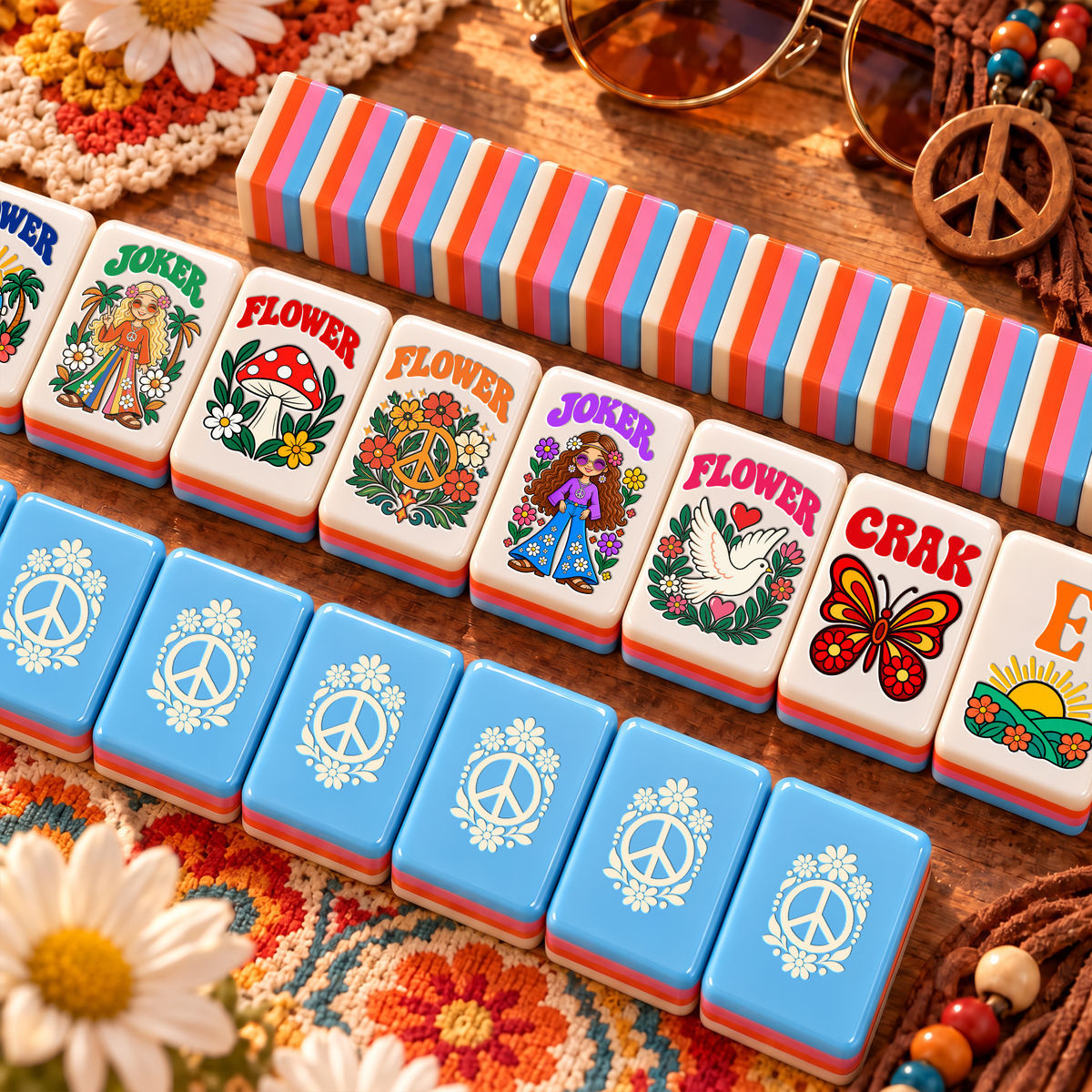
American mahjong's pre-game exchange, called the Charleston, happens in three phases: first pass (any 3 tiles left), second pass (any 3 tiles left), and third pass (1 tile each, direct to your left). The goal is to break up unwanted tile clusters and move toward one of the hands listed on the current year's National Mah Jongg League card. Success depends on reading the table—watching what others pass back, noting suit patterns, and timing your discard to avoid telegraphing your strategy. Beginners often pass too early or dump identical tiles; instead, pass consistently and hold your intended suit longer. Most games last 30–90 minutes depending on how quickly someone wins, and the Charleston takes about two minutes. Players typically host weekly or bi-weekly games at home. A 152-tile set with jokers and a mat make the exchange smoother and faster for everyone at the table. 🀄 Shop best-selling mahjong sets →
What exactly happens during the Charleston?
The Charleston unfolds in three sequential passes: each player passes three tiles to the right, then three tiles to the left, then one tile directly across. You cannot look at tiles before passing them—you choose blind. After the third pass, each player draws tiles to reach 13, and the game begins. The ritual shuffles tile distribution and gives every player a chance to pivot toward a hand they spot on the card. Unlike free exchanges in casual play, the three-pass structure ensures fairness and keeps the game's rhythm predictable. After 2026's League card releases, you'll know exactly which hands are playable that year, and your passing strategy depends entirely on spotting patterns in your opening tiles.

When should you hold a tile longer instead of passing it?
If you see three matching tiles in your hand (a pung—for example, three 5 Dots), hold them through the first or second pass to test what comes back. Identical tiles signal a specific hand pattern; if others are dumping the same suit, that pattern may be oversaturated and vulnerable. Conversely, if you pick up three different Bams in the first pass but only one Crak, pass all three Craks and keep your Bam cluster. The key is consistency: commit to one suit or honour type early, then adjust based on what you receive. Holding onto a mixed trio and splitting your passes confuses your hand direction and leaves you with scattered tiles when the game starts. Watch your neighbors—if someone passes back a Crak on every turn, they're likely steering clear of that suit, making it safer for you to build there.
How do you read your opponents' passes to predict their hand?
Notice which suits each player returns repeatedly. If your left neighbor keeps passing White Dragons, they're either trying to avoid that honour or already holding several and hedging their bet. If your right neighbor passes a high volume of Bams, they either have too many or none—context matters. The third pass (one tile direct) is most revealing: that single tile often represents a suit they're abandoning. If someone passes a lone 9 Crak, they likely don't intend Craks as a major part of their hand. Track these patterns without tipping your own hand—pass a mixed selection early, then narrow your focus after the second pass when you've gathered more information. The table's collective passing rhythm tells you which hands are already "hot" (multiple players chasing them) and which are open. Avoid piling onto the same hand as three other players; instead, pivot toward a complementary pattern that uses different tiles.
What's the most common mistake beginners make?
Passing identical tiles too early signals exactly which hand you're building, and experienced players will block you by hoarding or discarding those tiles once play begins. A second trap: holding a long sequence of consecutive Bams (like 4–5–6) thinking they're valuable. American mahjong uses no sequences—only pungs, kongs, and quints (identical tiles only). Sequences are worth zero, so a run of three different numbers is scrap; pass it without hesitation. A third error is overthinking the first pass. Your opening 14 tiles are often random; use the first pass to dump obvious misfits, not to commit to a final hand. Save your strategic choices for the second and third passes, when you've received feedback. Beginners also fail to hold blanks and jokers (which can stand in for any tile in an exposed set)—these are gold and deserve to travel with your strongest suit. Finally, don't pass tiles based on preference alone; base passes on the card's current hands and suit density at your table.

How does passing strategy change if you're dealer or have position advantage?
Dealer (East Wind) draws first and has a slight advantage: you can pivot your passing strategy if your opening 14 tiles are weak, because you'll have first choice of wall tiles when play begins. As East, hold one strong suit a touch longer through the passes; you have more freedom to catch up if the Charleston leaves you scattered. South (second to play) has almost no advantage—pass normally and adjust tactically. West (third) and North (fourth) are in the weakest positions: they see three full discard racks before their first turn. West and North should use the Charleston more aggressively to build a hand independent of what others are obviously chasing. If dealer is building Bams and South is collecting Craks, West might target Dots and honours to sidestep competition. Position doesn't change the Charleston rules, but it changes your risk tolerance. East can afford to pass a wider variety; North must be tighter and more defensive.
Decision Framework: Pass or Hold?
Tile pattern in hand | Pass or hold? | Reasoning |
Three identical (e.g., 3 Dots, 3 Dots, 3 Dots) | Hold | Signals a pung-based hand; test if you receive matching tiles back |
Lone honour (1 White Dragon) | Pass | Singletons are filler; dump early |
Two matching + one odd (e.g., 5 Bam, 5 Bam, 7 Bam) | Pass | The odd tile muddies your direction |
High tile concentration in one suit (6+ of 9 Bams, Craks, or Dots) | Hold first pass, evaluate second | Oversaturation: you may have too many; feel for competition before committing |
All different suits/honours mixed | Pass all but one suit | Focus your hand; scatter is weakness |
Blanks or jokers | Hold | These are wildcards; keep them with your strongest suit cluster |
🎁 See our most-loved mahjong sets & accessories →
Why does the Charleston take exactly three passes?
Three passes balance speed with strategy. One pass would leave hands too random and luck-driven. Two passes would let a savvy player dominate by reading the first exchange and blocking aggressively. Three passes give every player time to pivot, signal intent, and respond to what others send back. The third pass—one tile direct to your left—is the most tactical: you're committing your final direction knowing almost exactly what your left neighbor intends. This asymmetry (three tiles right, three left, one across) ensures the ritual doesn't devolve into a guessing game; by the third pass, the table has shared enough information that your choices matter. The total time—roughly two minutes—keeps the game moving while respecting the decision-making that separates casual play from competitive strategy. Understanding the full Charleston ritual deepens your sense of when to hold and when to fold during the exchange.
What tiles are least valuable to hold through all three passes?
Single honours (Wind tiles or Dragons) with no kin—no matching or complementary tiles—are dead weight. A lone North Wind in your opening hand should go immediately in the first pass. Similarly, isolated high or low numbered tiles (a single 1 Dot or 9 Crak) are filler. Pairs of honours (two Red Dragons) are also weak; unless you're chasing a hand that uses them, pass one and keep one only if you see the pair trend appearing in other players' passes. Blanks and jokers are the only individual tiles worth keeping because they adapt to any hand. A "dead" tile—one that no hand on the current card uses—is even worse than an isolated honour; if a tile never appears in any of that year's playable hands, pass it without hesitation. You learn which tiles are dead by reading the card carefully; some years a particular 4 or 7 simply doesn't appear, making it automatic discard material during the Charleston.
Can you ever pass a blank or joker?
Technically, yes—the rules don't forbid it. Strategically, almost never. Blanks and jokers are the most flexible tiles in the game; they substitute for any tile in an exposed pung, kong, or quint. If you pass a joker or blank in the first or second pass and it comes back to you, you've just wasted a gift. If it doesn't come back, someone else now holds your backup tile. The only scenario where you'd pass a joker is if you're chasing a hand that doesn't use many exposed sets (a hand based on sequences of concealed tiles and one or two quints), and even then, you'd hold the joker until the third pass as insurance. In casual play, beginners sometimes pass blanks to "test" the table; in serious weekly games, this is a tell that you're unsure of your strategy. Hold your blanks and jokers as long as possible; they're always worth keeping near your strongest suit cluster because they smooth rough edges in your tile count.
✨ Find your Mahstead set — free US shipping →
What to check before you buy a set for home games
If you're hosting weekly, invest in a high-quality 160-tile acrylic set rather than storing inherited wooden tiles in a shoebox. Acrylic sets shuffle faster, tiles stack without chipping, and their consistent weight makes discards audible (you hear shuffles and draws more clearly, which keeps energy up). Pair your set with a dedicated mahjong mat so the Charleston happens on a clear surface without tiles scattering. A mat takes up one corner of your table and shows all four player positions. Add racks with pushers so players can organize their tiles without handling them between draws—this speeds the game and prevents "oops, I drew too many" fumbles. Finally, store everything in a protective bag or case so tiles don't migrate to the couch between sessions. A complete home setup needn't be expensive, but it should be reliable: scratched tiles, lost jokers, and bent racks create friction during the Charleston and slow decision-making.

FAQ
What does "passing strategy" actually mean in mahjong?
It's your decision logic during the Charleston about which tiles to exchange and in which order. You choose which three tiles to pass right, which three left, and which one across based on spotting a hand pattern on the card, reading opponent behavior, and managing risk. Strong passing strategy means reaching the game start with a coherent hand cluster instead of scattered leftovers.
Is there a "correct" hand to build during the Charleston?
No. The year's League card offers 50–70 legal hands; any of them is correct if you complete it first. Your goal during the Charleston is to edge toward one hand that fits your opening tiles and avoids tiles others are clearly chasing. If three players are dumping Bams, building Bams is risky; instead, pivot toward Craks or Dots and honours.
Can you ask other players what they're building during the Charleston?
No. The Charleston is silent except for the mechanical act of sliding tiles. Talking during the pass is not illegal but is considered poor form; it breaks the ritual's integrity and telegraphs your hand to the whole table. Pass tiles without commentary and let the table's tile flow speak for itself.
What if you get a hand after the Charleston that looks unplayable?
Discard your weakest suit or honour and build toward what remains. You have 14 tiles in hand after the fourth player's Charleston draws. Often a hand that looks scattered at first click into focus once you draw from the wall and see what others discard. If after five or six draws you're still stuck, accept the loss and play to block others instead.
How many jokers come in a standard mahjong set?
American mahjong play uses 8 jokers as part of the 152-tile deck. A 160-tile set includes 8 jokers plus spare tiles, so you always have backups if a tile wears or is misplaced between games.
Does passing strategy differ in 2-player or 3-player games?
Yes significantly. Two- and three-player variants use different tile counts and passing rules; the Charleston is often shorter or modified. Standard four-player American mahjong (the version this article covers) remains the baseline; learn it first, then adapt for variant player counts.


View More
View More
View More
