
American Mahjong How to Count Points: The Complete Scoring Guide
Last updated: Nov 23, 2026
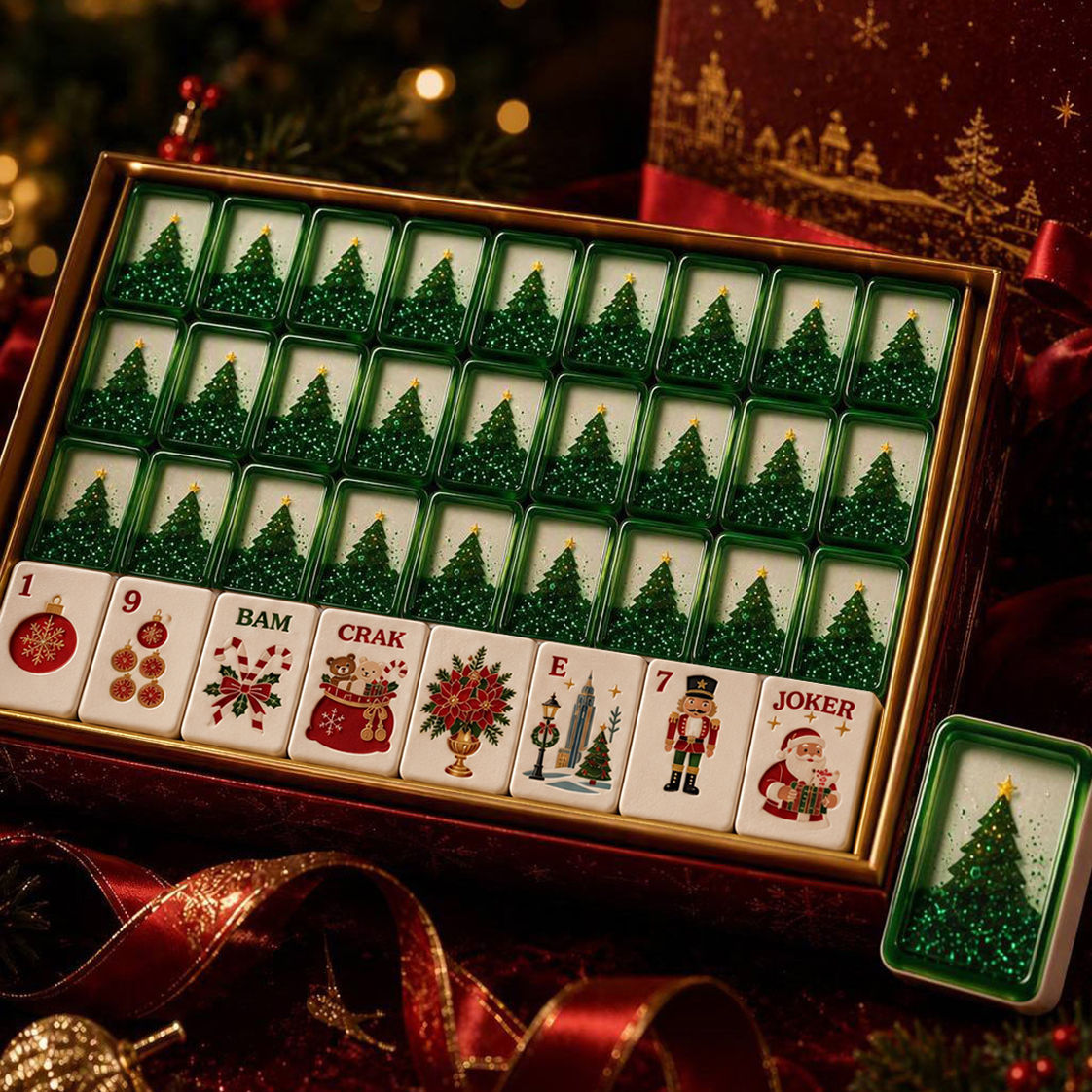
American mahjong scoring hinges on three factors: the hand's pattern from the current year's National Mah Jongg League card, which tiles you've exposed (pungs, kongs, quints, sextets), and whether jokers were used. Each exposed pung (three identical tiles) is worth 2 points, a kong (four) worth 4 points, a quint (five) worth 6 points, and a sextet (six) worth 8 points. Hidden tiles (your hand) score zero; jokers—placed in any exposed group—double that group's value. When you win ("mahjong"), you score the total points of all exposed melds plus bonuses if applicable (such as a limit hand or all concealed groups). The fastest way: add exposed melds, multiply any group containing a joker by two, and check your hand against the card to confirm it qualifies. Most newer players forget that jokers double only the group they occupy, not the entire hand—this is the top mistake we see at our table.
Why exposed tiles earn points—but hidden tiles don't
In American mahjong, you score only what your opponents can see. An exposed pung, kong, quint, or sextet must be melded face-up on the table before you win; the tiles in your closed hand (the ones you haven't revealed) count for zero points. This rule exists because winning is declared after exposure—the referee or player opposite you counts the visible melds to verify your hand is legal and calculate your win. Hidden pairs, concealed triplets, even a buried kong: none of them add points. This is why skilled players sometimes hold valuable tiles in their hand rather than exposing them early; they're waiting for the right hand where exposing would hurt their point total. By keeping dangerous tiles hidden, you also protect your hand from being "called" or blocked by an opponent spotting your strategy. The scoring rule is simple: exposure = points; concealment = zero.

Step-by-step: how to count a winning hand
Let's walk through a real scenario. Suppose you've won with three exposed groups and a hidden hand. Your first pung is three 5 Dots with no joker: 2 points. Your second meld is a kong of four 3 Craks—also no joker: 4 points. Your third meld is a pung of three North Winds, but one tile is a joker standing in for the third North: 2 points × 2 (because joker is present) = 4 points. Your hidden hand (tiles you haven't exposed, including your pair) counts zero points. Step-by-step checklist:
Identify each exposed group on the table.
Count the group size (3 = pung, 4 = kong, 5 = quint, 6 = sextet).
Assign base points: pung = 2, kong = 4, quint = 6, sextet = 8.
Check if any joker occupies that group.
If yes, double that group's base points only.
Sum all doubled and undoubled groups.
Check your hidden hand against the card to confirm it's a valid winning pattern.
Announce your total to the table.
Total for our example: 2 + 4 + 4 = 10 points.
The most common stumble: applying the joker multiplier to the entire hand instead of the single group where the joker sits. Another trap: counting tiles in your hand as "points" just because they're valuable—they're not. Only exposed melds count.
When does a hand score a bonus or limit?
Some hands are worth far more than their exposed groups suggest because they meet special conditions from the card. A limit hand (also called a "limit" or ceiling score) is one where the entire winning combination is so difficult or rare that it's worth a flat maximum payout—typically double or more than the normal sum of exposed melds. Examples include all concealed tiles, all honor tiles only (Winds and Dragons), or certain rare sequences listed on the card. Another bonus applies if you win by self-draw (drawing the winning tile yourself from the wall instead of someone else discarding it)—this often earns you double or adds a bonus to your base score.
When counting points, always check the card first to see if your hand qualifies for a limit. If it does, you score the limit value, period. Don't add up exposed melds; the limit overrides them. If your hand is not a limit but has a self-draw bonus, you typically add that bonus on top of your exposed meld score. The exact rules vary slightly by region and house rules, so confirm with your group before the game starts. Learn how to read a mahjong card to spot limits and special hands quickly.
Common scoring mistakes and how to avoid them
We catch these errors almost every week:
Counting hidden tiles. Your hand's tiles are worth zero. Stop. Only count exposed melds.
Doubling the entire hand for one joker. A joker doubles only the group it's in, not all your melds.
Forgetting jokers double pungs and kongs, not pairs. Pairs never contain jokers in American mahjong; jokers can only sit in pungs, kongs, quints, or sextets.
Assuming a high-value hand always wins. You must match a hand from the current year's card. A beautiful four-pung layout might not be on the card at all.
Miscounting group size. Make sure you're counting the exact number of tiles. A pung is three, not "three or four." A kong is four, not "more than three."
Ignoring limit hands. If your hand hits a limit, you score the limit value—usually much higher than the sum of melds. Check the card before you announce.
The fastest check: lay out all exposed melds in front of you, count each group aloud, verify it's on the card, then ask one other player to double-check your math. This 30-second pause prevents 90% of score disputes.
How scoring differs from Chinese and other variants
American mahjong is unique: we score only exposed melds and don't use sequences (chows). Chinese mahjong and Hong Kong mahjong, by contrast, allow exposed and concealed sequences (like 4–5–6 Dots), and scoring is far more complex—involving "faan" (fan/points) multipliers, doubling rounds, and concealed bonuses that American players never encounter. Riichi mahjong (Japanese) uses a completely different point system based on hand value ("fu" and "han") and meld combinations, with scoring tables that vary by win type. Taiwanese mahjong sits between Chinese and American in complexity but is less common in the U.S.
The American advantage: our scoring is transparent and fast. You see exactly what's exposed, count the melds, check the jokers, and announce. No hidden arithmetic, no multiplier tables. This is why American mahjong is ideal for casual weekly games and social play. If you're switching from another variant, remember: American scoring is additive, not multiplicative. You're summing meld values, not applying faan layers.
Explore the full rules of American mahjong play to understand scoring in context with hand building and discarding strategy.

The scoring summary table: meld types and point values
Meld Type | Size | Base Points | With Joker | When to Use |
Pung | 3 tiles, all identical | 2 | 4 (doubled) | Safe early exposure |
Kong | 4 tiles, all identical | 4 | 8 (doubled) | High-value hand |
Quint | 5 tiles, all identical | 6 | 12 (doubled) | Rare; special hands |
Sextet | 6 tiles, all identical | 8 | 16 (doubled) | Limit hands only |
Hidden hand | Varies | 0 | N/A | Concealed until win |
Key insight: a kong is always twice a pung; a quint is three times a pung. As you go up in size, the base value scales directly, and any joker present doubles only that meld's value. The hidden hand is a "reserve"—it scores zero but must be valid on the card.
🀄 Shop best-selling mahjong sets →
What you'll need to score points accurately
Accurate scoring starts with a clear board and good tile visibility. We recommend a quality mahjong mat with printed grid lines so each player's melds are neatly separated and easy to count. Racks with pushers help organize your hidden hand and keep tiles upright as you draw and discard, so you're never confused about what's in your hand vs. what's exposed. A set with clear, high-contrast engraved or printed tiles is essential—if you can't read suit symbols quickly, you'll make meld-counting errors. Keep a current-year card visible at the table (not just in someone's bag) so any player can reference limits and valid hands on the spot.
If you're hosting regular games, a mat and racks are an investment that pays back in fewer disputes and faster rounds. Many of our regular players keep a travel bag so they can bring their set and mat to friends' houses without worrying about tile loss or damage.
Before you buy: what to check
Card currency. Do you have the current year's National Mah Jongg League card? Hands change yearly. An old card will cause scoring disputes.
Tile clarity. Can you read every tile's suit (Bam, Crak, Dot) and number clearly, even after a few drinks and low light? Poor contrast leads to meld-counting errors.
Group organization. Are your exposed melds clearly separated from your hidden hand and from other players' melds? Confusion here breaks scoring.
House rules alignment. Have you asked your group whether they use self-draw bonuses, whether limit hands are in play, or whether they score ties (no play)? Scoring can vary house to house.
Joker placement clarity. When a joker sits in a meld, is it obvious which joker is standing in? Some tile designs make this harder than others.
🎁 See our most-loved mahjong sets & accessories →
The one number you must never forget
A pung is 2 points. Everything else scales from this: a kong is 4 (2 × 2), a quint is 6 (2 × 3), a sextet is 8 (2 × 4). A joker doubles that meld's value, full stop—not the hand, not the entire score, just that meld. If you remember "pung = 2, doubled if joker," you can calculate any winning hand in under 30 seconds. Teach every new player this first, and you'll cut scoring arguments by half.
✨ Find your Mahstead set — free US shipping →

FAQ
Do hidden tiles in my hand ever count toward points?
No. Only exposed melds (pungs, kongs, quints, sextets) on the table earn points. Your closed hand—including pairs, triplets, and sequences—counts zero. Hidden tiles exist only to validate that your hand matches the card.
If I use a joker in a kong, do I score 8 or 4?
You score 8. A kong's base value is 4 points; a joker doubles it to 8. The joker affects only that specific meld, not your other groups or the entire hand.
What's a limit hand, and how does it change my score?
A limit hand is a rare or difficult winning pattern listed on the card that's worth a flat maximum payout instead of the sum of exposed melds. Examples include all concealed tiles or all honors (Winds and Dragons). If your hand qualifies, you score the limit value; ignore the exposed meld count.
Can I score points for a sequence like 4–5–6 Dots?
No. American mahjong has no sequences (chows). You score only from pungs, kongs, quints, and sextets—always identical tiles. Other mahjong variants (Chinese, Hong Kong, Riichi) allow sequences; American does not.
How do I know if my winning hand is legal?
Check it against the current year's National Mah Jongg League card. If your combination of melds and hidden pair matches a hand on the card, it's legal. If it doesn't appear, you haven't won—discard and play continues.
My opponent exposed three tiles earlier, then won. Do those old exposed tiles add to their win score?
Yes, absolutely. Every meld exposed during the hand—whether early or late—counts toward the final score. You're scoring all visible groups on the table at the moment of win, not just the final few.
Do I get bonus points for winning on a self-draw?
It depends on house rules. Some groups double the score for self-draw; others add a fixed bonus; some don't award any bonus. Ask your group before the first game starts.
What happens if two players' exposed melds have the same layout but different joker placements?
The placements affect only that player's individual score. Each player's jokers double their own melds. Players don't share scoring; each hand is independent.


View More
View More
View More
