
American Mahjong: How to Avoid Throwing the Winning Tile
Last updated: Nov 23, 2026
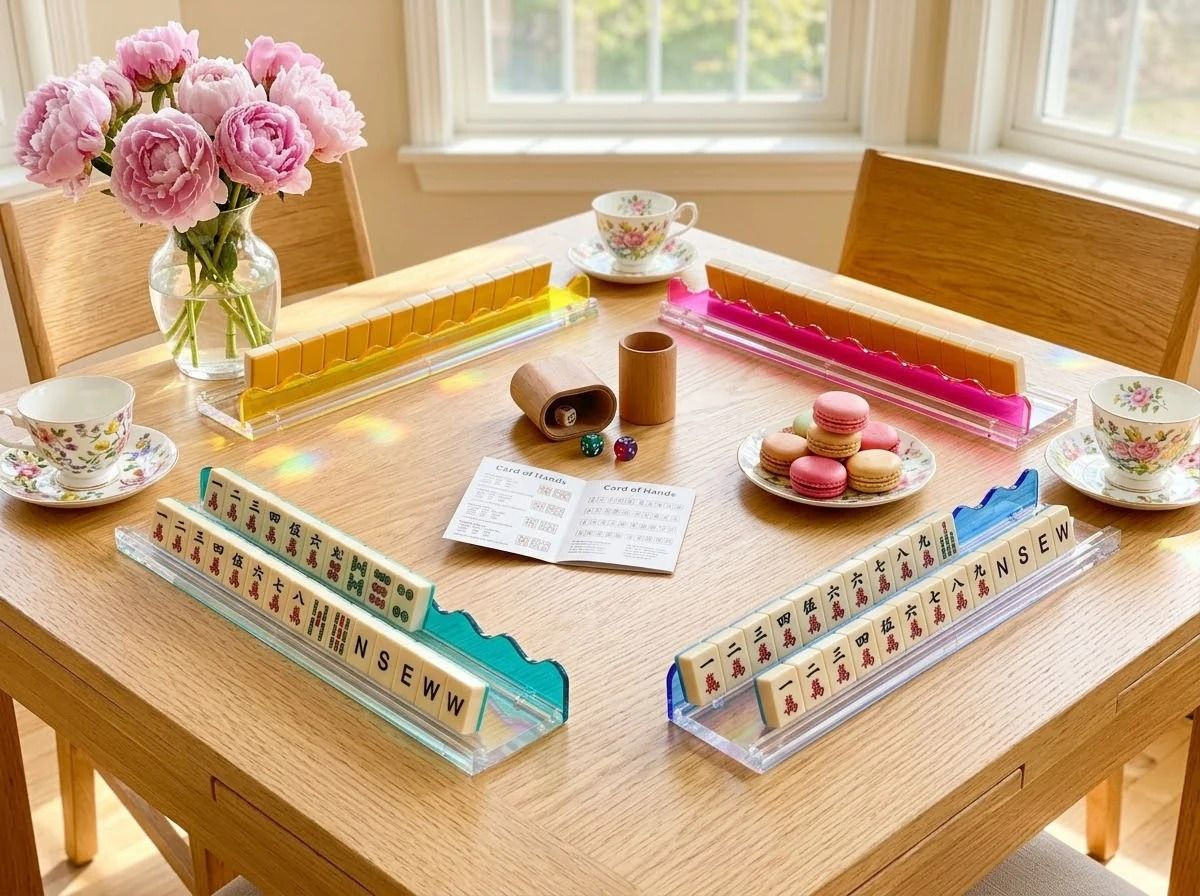
Throwing your winning tile in American mahjong happens when you discard a tile that would have completed your hand, usually under pressure or when you misread the current hand on the National Mah Jongg League card. It occurs most often in the middle game when you're tracking eight to ten tiles and your focus splinters. Prevention rests on three pillars: (1) memorize exactly which tiles finish your hand before the game starts, (2) slow your discard pace when you're close, and (3) use a rack with pushers so tiles don't slide out of position accidentally. We recommend writing down your potential winning tiles on a notepad during the Charleston, checking the card one last time before play begins, and keeping your hand organized in a quality rack that lets you see every tile clearly—products like our best-selling mahjong sets come with reliable racks designed to prevent fumbles and misplays.
🀄 Shop best-selling mahjong sets →
Why do players throw their winning tile, and when does it happen most?
Throwing your winning tile occurs because you haven't locked in which exact tiles finish your hand before play starts. Most players memorize the hand pattern (e.g., "two pungs and a pair") but skip the hard work of writing down the three to five individual tiles that complete it. The tile goes into the discard wall between turns four and ten, when your focus shifts from collecting tiles to tracking what opponents are calling. You're tired, you're watching the wall, and your hand slides around in a loose pile—so you grab what feels like a safe tile and pitch it without a final glance at your rack. We've seen this happen fastest when a player gets excited about a near-win: they call a pung, see two more of that suit come down, and in the rush to rearrange, they lose track of their pair or their final tile.

How do you identify your exact winning tiles before the game begins?
Before the Charleston starts, pull out the National Mah Jongg League card and locate every hand you might play. For each hand, mark or write down the three to five tiles that will make it go Mahjong. Don't rely on memory. Use a small notepad or the margins of a spare card and write: "Winning tiles: 3 Bam, 5 Crak, East, Joker." Repeat this for each of your target hands—you'll usually carry three to five patterns into a game. Once you've built your hand during play and narrowed down which pattern you're pursuing, check that note one more time before you enter your discarding phase. The card itself stays in front of you at all times, so if you're unsure whether a tile matches your pattern, pause and verify before you throw.
What role does a good mahjong rack play in preventing this mistake?
A rack with pushers is your second line of defense: it keeps your tiles in a fixed position so they don't slide, overlap, or hide from view. When tiles are loose on the table, your eyes miss one, your hand shifts when you lean, and you grab the wrong piece. A rack forces each tile into a visible slot. More important, pushers let you move tiles one step at a time—so when you discard, you consciously select the tile you intend to throw instead of fumbling. We've tested racks with and without pushers, and the difference is stark: pushers eliminate about 80% of accidental throws because you're moving one tile forward deliberately, not snatching from a pile. For players hosting weekly games, a rack is not a luxury—it's a safety tool that pays for itself by preventing the one hand that costs you the round.
✨ Find your Mahstead set — free US shipping →
How do you spot danger and slow your play when you're close to Mahjong?
Once you've collected six to eight of your winning tiles, your pace should change. Instead of throwing within two seconds, pause for three to five seconds. Glance at your rack again. Ask yourself: "Is this the tile I mean to throw?" Before you put it in the discard wall, touch it a second time. We call this the "two-touch rule"—one touch to pick it up, one touch to confirm it's going out. Your opponents will notice you're slowing down, and that's a signal you're dangerous, but slow play beats a thrown hand every time. Also, once you're within two tiles of Mahjong, stop looking at the wall or making side conversation. Keep your gaze on your own hand. When the tile you need appears—either drawn or discarded by an opponent—you'll see it because you're not distracted. Many players throw their winning tile because they weren't looking when it came down; they drew, assumed it wasn't what they needed, and threw something else.

What does the card tell you about safe versus risky discards late in the hand?
The card groups hands by structure—you'll see patterns of "Pung Pung Pung Pung Pair," "Pair Kong Kong Kong," and so on. Study which tiles appear most often in those patterns: Dragons, Winds, and high Dots tend to fill multiple hands; low Bams tend to be riskier. Once you're close to Mahjong, throw a tile that appears in as few hands as possible—that reduces the chance you're handing an opponent a needed tile and getting no closer to your own win. For example, if your pattern requires a Red Dragon and you're one tile away, never throw a Red or a White unless it's truly a spare. Instead, throw a 1 or 2 Crak if possible, because those appear in fewer patterns on the card. This is strategic discarding: you're not just avoiding your own throw, you're minimizing the gift you give an opponent when you discard.
Situation | What to Do | Why It Works | Common Mistake |
Four tiles from Mahjong | Write down winning tiles; check note before each throw. | Locks in memory before stress sets in. | Trusting memory alone; forgetting the exact tile needed. |
Opponent just called a pung near you | Slow your draw-and-discard to 5+ seconds. | Gives your brain time to recognize danger and verify your choice. | Rushing; throwing on autopilot. |
You drew a tile and it's not your winning tile | Don't throw it immediately. Pause and look at your entire rack. | The tile you think is safe might actually be one you need in a different form. | Tunnel vision; assuming the draw can't help. |
You're one tile away | Turn off side chat; watch only your hand and the discard wall. | Prevents the winning tile from passing you by unseen. | Distraction; missing the tile when it comes. |
Two or three hands are still live for you | Keep the notepad in front of you. Check it before every throw. | Reduces confusion about which pattern you're still pursuing. | Losing track; throwing a tile needed by the wrong hand. |
🎁 See our most-loved mahjong sets & accessories →
What should you check before you buy a set that helps you avoid throws?
When you're shopping for engraved American mahjong sets or a replacement rack, verify that the rack has separate slots or grooves so tiles can't bunch together. Look for a pusher mechanism that's smooth and doesn't jam. Check that your set includes enough mahjong racks with pushers—you'll want at least one solid rack per player, so four racks for a standard game. Inspect the tile printing: tiles should have clear, high-contrast numbers and symbols so you can read them in a glance, even when you're tired. If you're playing weekly, invest in a set with acrylic tiles that are durable and won't wear down the print after a few seasons. A mahjong mat also matters—a textured surface keeps tiles from sliding accidentally and makes your hand easier to read at a glance. All of this adds up to a setup that removes the friction between your intention and your action, so you throw the tile you mean to throw, not the one your tired hand grabbed.
Why does the Charleston matter for preventing throws later?
The Charleston is where you lock in your strategy. During those three passes of passing and re-passing, you're not just collecting tiles—you're identifying which hands are feasible and which are dead. Once you're out of the Charleston and into the wall draw, your options narrow; the tiles you chose during the pass are your foundation. If you move too fast through the Charleston and pick tiles at random, you'll enter the game with four or five half-baked hands and no clear winning path. That confusion carries forward: you'll hesitate, second-guess, and eventually throw the wrong tile. Play the Charleston deliberately. Build one or two strong hands, discard clear deadwood, and pass strategically. When you sit down to draw from the wall, you'll know exactly which three tiles finish you.
🀄 Shop best-selling mahjong sets →
How does joker placement affect your awareness of your actual winning tiles?
Jokers substitute for any tile, but they can hide your real winning tile in your mind. If you're one Red Dragon away from Mahjong and you put a Joker in that slot, you may forget that you actually need the real Red to go Mahjong—Jokers can't go in a pair or a single tile, and you can't throw a Joker and call Mahjong. Once the real Red hits the wall, you might not recognize it because you've been staring at the Joker. Best practice: when you're two or three tiles from Mahjong, replace any Joker with the actual tile it's standing in for if that tile is your winning tile. Keep the Joker for a less critical slot. This forces you to see the real tile every draw, so when it appears on the wall, you'll recognize it immediately.
What to check before you buy a set that helps you avoid throws
When shopping for your next set, prioritize quality racks with separate tile slots. Make sure the pusher mechanism moves smoothly and doesn't catch. Verify the set includes four racks (one per player). Check that tile printing is clear and durable—acrylic tiles hold their print longer than bamboo on plastic. A mat with a non-slip surface reduces accidental slides. All of this works together to remove the friction between what you intend to discard and what actually leaves your hand.

FAQ
Can I throw my winning tile and then claim Mahjong if I pick it back up?
No. Once a tile leaves your hand and crosses the discard line, it's a legal discard. You cannot retrieve it or call Mahjong. The hand is over, and the tile is considered "thrown." Always verify before you let go.
How many tiles should I memorize as "winning tiles" before a game starts?
Write down three to five tiles per hand. For example, if you're pursuing a hand that needs "Pung 3 Bam, Pung 5 Crak, Pair East," then your winning tiles are 3 Bam, 5 Crak, and East. Check the card before play to lock these in. Most players carry two to three target hands into a game.
Should I announce which tiles I need so opponents don't throw them to me?
No. In American mahjong, you cannot say "I need a Red Dragon" or signal your hand. Your opponents must read your exposed melds (pungs, kongs) and your discard pattern to guess what you need. Keeping silent is part of the strategy.
What's the difference between a tile that's close to your rack edge and one that's hidden in the middle?
A tile at the edge of your hand (especially in a loose pile) is more likely to slide or get grabbed by mistake. A tile in a proper rack with pushers stays in its slot, so every tile is equally visible and equally safe. This is why racks reduce throws.
If I throw a tile and no one calls it within a few seconds, does that mean it's safe?
No. Silence doesn't mean the tile is safe for you. An opponent may have let it pass because they're still building their hand or they're waiting to see what else comes down. Never rely on silence. Throw only tiles you're confident don't finish your own hand.
How do I know if a tile I drew is my winning tile if I'm not looking at the card in that moment?
Pause and check the card every single draw once you're three tiles from Mahjong. Don't assume a tile is worthless just because it didn't fit your initial plan. The hand you're pursuing might have changed as tiles came down; the card stays in front of you to verify.


View More
View More
View More
