
American Mahjong Flowers and Bonus Tiles: Rules & Scoring
Last updated: Nov 23, 2026
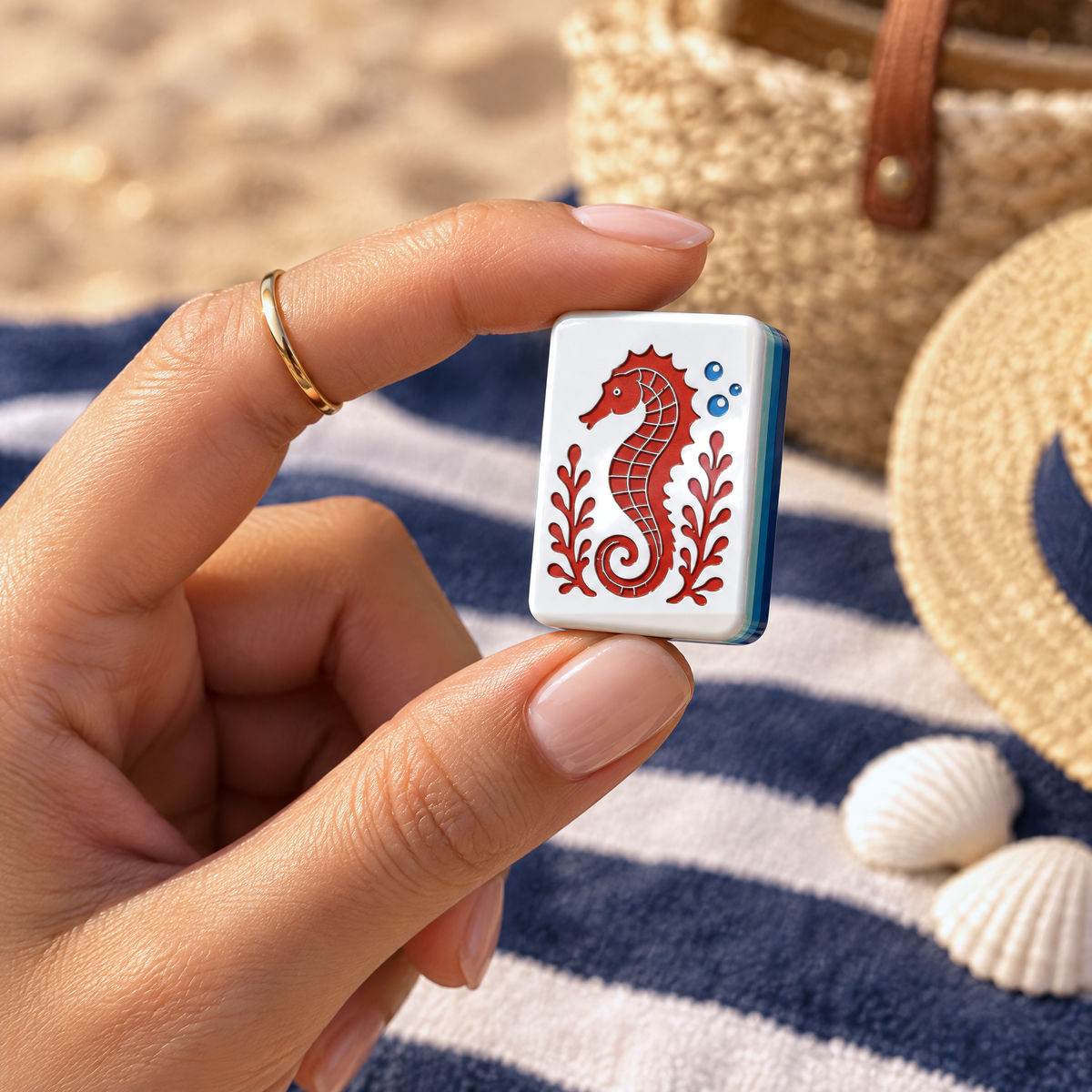
In American mahjong, flowers and bonus tiles are special tiles drawn separately during hand-building and play. When you draw one (from the live wall or during play), you set it aside immediately, show it, then draw a replacement tile from the end of the wall. Each flower or bonus tile is worth points—typically 4 points each in most scoring systems. An American set contains 8 flowers total (one for each compass direction and season: Spring, Summer, Autumn, Winter, and Earth, Sky, Human, and Harmony in some sets; designs vary by manufacturer). Unlike regular tiles, flowers cannot form part of your hand structure; they're declared as soon as drawn and scored after the hand ends or when you win. This mechanic speeds up play and rewards early luck. Mahstead's 160-tile acrylic sets include the standard 8 flowers in bold, readable engravings so they're never confused with suit tiles during fast games.
When you draw a flower or bonus tile during hand-building or live play, you've triggered a mechanic that's purely American mahjong—it doesn't exist in Chinese, Hong Kong, or Riichi variants. Set it face-up in front of you immediately, announce it, draw a replacement from the dead wall (the end tiles set aside before play started), and keep playing. This happens fast and builds anticipation, especially early in hand-building when the wall is tall.
What counts as a flower or bonus tile in American mahjong?
American mahjong sets include 8 flowers—tiles printed with seasonal or directional imagery. Some sets label them 1–8 Flower; others use Season/Direction names. Each flower is singular in a standard set; you cannot make pungs or kongs with flowers because there's only one of each. All 8 flower tiles are live from the start and scored if drawn at any point during hand-building or play, making them distinct from the numbered suits (Bams, Craks, Dots) and winds/dragons. Bonus tiles are sometimes included in 160-tile sets as extras beyond the standard 152-tile game count; they function like flowers when drawn but are not mandatory in every region's rules—check your local or league rules before play.

How do you score flowers when you win?
Once the hand concludes (whether you win or someone else does), each flower or bonus tile you drew is scored according to your league or house rules. Most American players award 4 points per flower; some award 8 or scale by compass direction. Points are tallied after hand scoring is calculated, so a hand worth 40 points + 2 flowers (8 bonus points) = 48 points to your total. If you draw a flower during another player's turn while they're in play, you still set it aside, draw a replacement, and collect the flower points when the hand ends—no interruption to active play. Flowers don't contribute to hand validity; you can win a hand with zero flowers or three flowers, and neither affects whether your hand pattern is legal on the card.
What's the difference between drawing a flower and drawing a joker?
Jokers are wild tiles that substitute for any single tile within an exposed pung, kong, quint, or sextet on the board. When you draw a joker, you place it in your hand and can use it immediately in your melds or save it for later—jokers never leave your hand unless you win. Flowers, by contrast, are drawn, set aside permanently, and never used in hand structure; they're pure scoring bonuses. Jokers can be called by other players if you expose a pung or kong; flowers are already declared and locked in. Learn how jokers work in detail—the mechanics are completely separate from flowers, and mixing them up is a common beginner mistake.
Why do flowers matter strategically during the game?
Flowers don't change your hand legality or victory condition—you win on hand structure and matching the card, not on flower count. However, they add psychological momentum: drawing flowers early signals you're "lucky" and can boost confidence or rattle opponents. Since flowers are scored after the hand, beginners sometimes forget to declare or count them, leading to disputes. The strategic edge is minimal unless your league plays high flower values or uses them as tiebreakers. The real value is pacing—flowers speed up the hand-building phase and keep energy high, especially during the first round when tension is low.
What to watch for: common mistakes and table fixes
Forgetting to draw a replacement: You pull a flower, set it aside, then keep playing without drawing a replacement tile. Catch this immediately—the missing tile imbalances the wall and invalidates the hand. Solution: announce "Flower drawn, one off the wall" aloud so the table hears it.
Confusing flowers with other tiles: In older or worn sets, flower engravings can blur. Acrylic sets with clear, bold lettering prevent this. Mahstead's best-selling mahjong sets feature high-contrast engraving so flowers are instantly distinguishable even in poor light.
Mixing house rules on flower scoring: Some tables award points only if you draw three or more flowers; others award all. Agree on scoring before the Charleston starts.
Not declaring flowers during another player's turn: Some players hide flowers until the hand ends, hoping to claim points if no one notices. Declare all flowers immediately—it's cleaner and builds trust.
Mistake | Symptom | Fix |
Forgot replacement draw | Hand is short one tile; wall count is off | Redraw immediately from the dead wall |
Flower not declared | Player claims bonus points after hand ends | Require announcement at time of draw; mark score sheet live |
Confusion with other tiles | Flower played as a regular suit tile in hand | Use high-contrast engraved sets; review flower images before play |
Scored incorrectly | Flower points added to pung value or hand score | Tally flowers separately after hand legality is confirmed |
🀄 Shop best-selling mahjong sets →

Flowers in the context of the American mahjong card
The National Mah Jongg League card (issued each spring) focuses on hand patterns built from the 108 suit tiles, 16 winds, and 12 dragons. Flowers are scored bonus—they're not part of the card itself and don't determine hand legality. However, the card does indicate which year's season flowers appear on modern sets, and some players collect sets by year for nostalgia or verification purposes. When learning to read the card, ignore flowers; they're external scoring mechanics that never block a hand win and never help you build a pattern.
For a fuller picture of how the card works and what hands are playable this season, see how to read the mahjong card.
Flowers in 2-player and 3-player games
Standard 4-player American mahjong uses all 152 tiles and all 8 flowers. In 2-player or 3-player variants, tile counts are reduced—typically to 108 tiles for 2 players. Flower inclusion varies by rule set: some include all 8 flowers regardless of player count; others reduce flowers proportionally. Always confirm your league or house rules before starting. 2-player and 3-player mahjong rules cover these variants in depth, including flower handling.
Setting up a set so flowers are never lost or confused
High-quality acrylic sets clearly label or engrave flowers so they remain visible even after thousands of plays. When you unpack a new set from Mahstead, flowers come molded with the same precision as suit tiles—no paint that chips or fades. Before your first game, lay out all 8 flowers, learn their images or numbers, and keep them in a designated area of your mat or storage case so they never mix with the 152 main tiles. If a flower tile is lost or damaged, the hand becomes unplayable; many players order spare tiles or a second set to cover losses.
✨ Find your Mahstead set — free US shipping →
What you'll need: mat and storage
Flowers are tiny targets during a fast game—they roll, get bumped, or slip under a rack. A dedicated mahjong mat with a cup or zone for flowers keeps them visible and safe. A quality mahjong bag or case with compartments ensures all 8 flowers stay with your set between games, preventing loss. Acrylic sets from Mahstead ship in protective packaging and include spare space in cases for flower tiles, keeping them organized for every session.
🎁 See our most-loved mahjong sets & accessories →
What to check before you buy a set
Flower count: Verify the set includes 8 flowers; some older or low-cost sets omit them.
Engraving clarity: Look at product photos—flowers should be distinct and easy to read at table distance.
Material: Acrylic is durable and won't chip; bamboo/bone sets may scratch over years of play.
Tile replacement policy: Ask if the manufacturer offers spare tiles; flowers get lost most often.
Storage included: Does the bag have a compartment or pouch to isolate flowers from the main tile stack?

FAQ
Can I use jokers to replace a flower if it's lost?
No. Flowers are never part of hand structure, so a joker cannot substitute. If a flower is missing, you either play without it (reducing flower scoring) or postpone the hand. Order a spare tile from the manufacturer or replace the entire set to restore game integrity.
Do flowers count toward hand value or pung scoring?
Flowers are never part of your hand structure or melds. They're pure bonus points awarded after the hand ends. A pung of 5 Bams is worth X points; if you drew two flowers during that hand, add the flower bonus separately to your final score.
What if I draw a flower on the last tile of the wall?
Draw your replacement from the dead wall (the tiles set aside before play). The dead wall is specifically designed to supply replacements for flowers and kongs. If the dead wall is exhausted, the hand is deemed a draw (no winner).
Are flowers included in a 160-tile set, or only in the 152 playing tiles?
Flowers are part of the 152-tile game count. A 160-tile set includes 8 flowers (in the 152) plus 8 spare tiles beyond the main game. All spare tiles are never used in a single game—Mahstead's 160-tile sets are designed to include flowers in the play count and extras for replacement if any tile is damaged or lost.
Do I have to announce flowers immediately, or can I hide them until the hand ends?
Announce them immediately. Set the flower face-up, declare it aloud, and draw a replacement. Hidden flowers create disputes and are considered poor form. Clear play builds trust and speeds up the game.
Do different regions score flowers differently?
Yes. Most tables award 4 points per flower, but some award 8, and a few scale by direction or season. Agree on your local or league rules before the Charleston. The National Mah Jongg League card does not specify flower scoring—that's a house rule everywhere.


View More
View More
View More
