
Honitsu in Riichi Mahjong Explained: Rules and Winning Strategy
Last updated: Nov 23, 2026
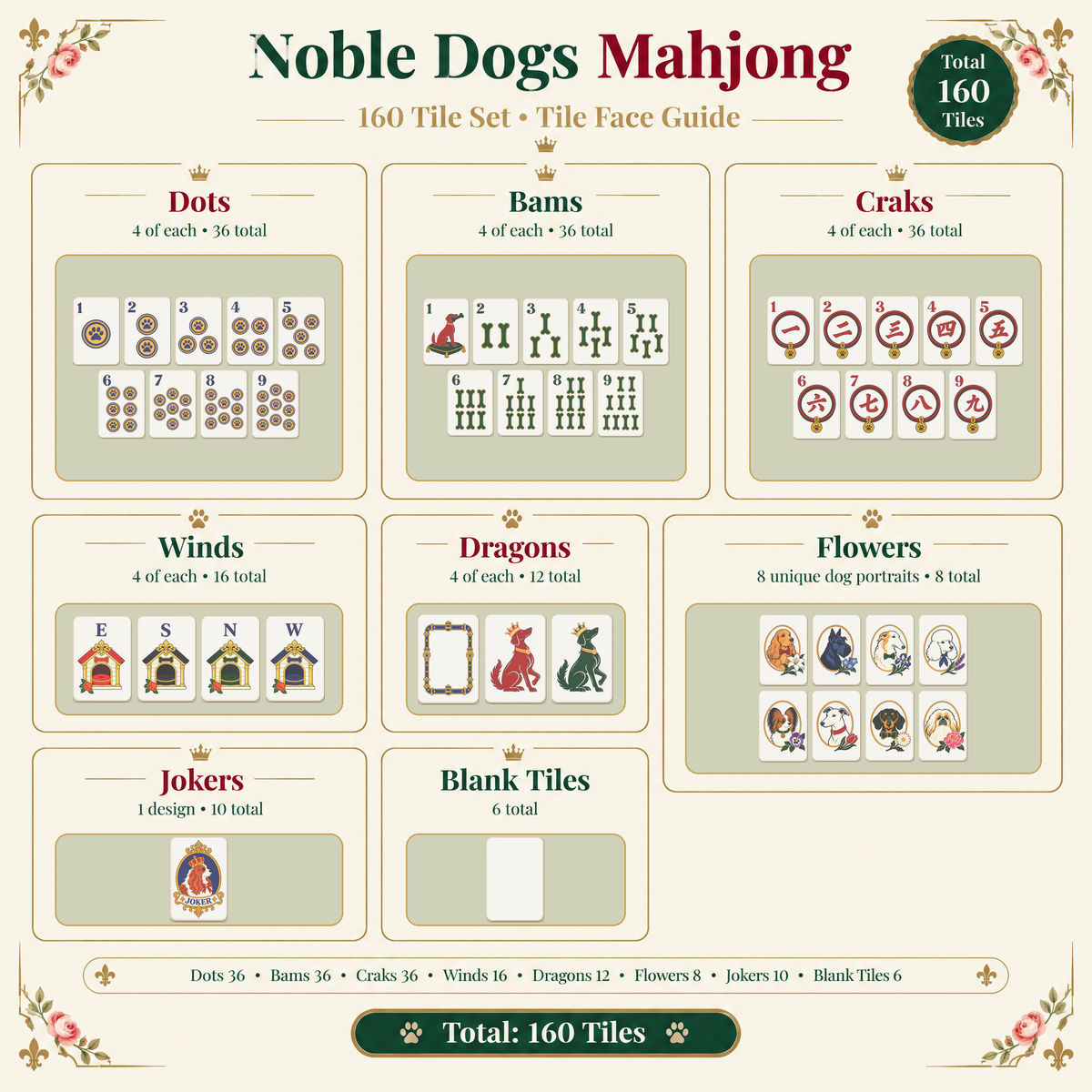
Honitsu (混一色, "mixed one color") is a riichi mahjong yaku requiring tiles from exactly one numbered suit (Bams, Craks, or Dots) combined with any honor tiles (winds and dragons). The hand must contain at least one honor tile and form a valid winning combination (four melds plus a pair, or a special hand). Honitsu scores 3 points as the base yaku value in most riichi rulesets; combined with other yaku it stacks for higher meld values. It appears in Japanese, Chinese, and Hong Kong riichi play but does not exist in American mahjong, which has no yaku system. Beginners often confuse honitsu with honroutou (all honors and terminals); honitsu is simpler and more common. Practice building honitsu hands by discarding aggressively from two suits early, then pivoting to one suit once you're committed.
🀄 Shop best-selling mahjong sets →
How does honitsu differ from other one-suit yaku?
Honitsu requires exactly one numbered suit plus honors (at least one), whereas chinitsu uses only one numbered suit with zero honors—chinitsu is harder to complete and scores higher (6 points). Honroutou uses only terminal tiles (1s and 9s) and honors, ignoring suit. In American mahjong, none of these yaku exist; hands are validated only against the current year's card. Honitsu sits between easy hands and rarer patterns: it's the training ground for intermediate riichi players learning hand discipline.

When should you commit to honitsu instead of pivoting?
Commit to honitsu once you hold four or five tiles from one suit plus an honor, with the honor appearing in your hand early or mid-game. If you've discarded two full suits by the fourth discard round, switching now is costly—stick with honitsu. Red flags for abandoning honitsu: your honor tiles are all waiting in the dead wall, or you're holding 1-2 of one suit while leading another with three tiles. Watch for other players' discards; if they're hoarding one suit, that suit is risky for you—pivot to honors instead. Experienced players read the table: if two opponents clearly play one suit, the remaining suit becomes your honitsu lane.
What hand combination makes honitsu complete?
A winning honitsu hand has four melds (ponzu or kan) plus a pair. Example: three 2-Bams, three 5-Bams, two 7-Bams, three East winds, two White dragons. You need meld diversity: three different honor types (e.g., East, South, Red dragon) are safer than relying on one honor repeated three times, which narrows your winning tile pool. Some players build honitsu with a triplet honor and a pair from the same suit—this works but costs flexibility. The pair is your anchor; the most secure pair in honitsu is an honor tile, not a numbered tile, because honors are used individually in fewer melds. Chinitsu (pure one-suit) is strictly all four melds from one suit; honitsu loosens that rule by allowing honors, making it more achievable in live play.
🎁 See our most-loved mahjong sets & accessories →
Why do beginners fail at honitsu hands?
Most beginners hold three numbered suits equally, delaying the decision to isolate one. By the time they commit to honitsu, five or six discard rounds have passed and waiting tiles are gone. They also miscalculate pair safety: they keep two different pair candidates (e.g., 3-Bams and East) and when only one is available in the live tiles, they're locked into a weaker pair. A third mistake: they retain too many honors, bloating the hand with unused tiles instead of building melds. When you claim a tile to form a pung (three-of-a-kind), the meld locks; if that pung is an honor unrelated to your numbered suit, you've wasted the meld slot. Practice by playing only honitsu hands for one sitting, then reviewing discards afterward—you'll spot where you waffled. Riichi declaration forces your commitment; declare early once you're one tile away from winning to lock opponents into defensive play.

How does honitsu scoring change by variant?
In Japanese riichi, honitsu alone = 3 points (2,000 points at non-dealer, 3,000 dealer-won). Pair it with tanyao (all numbered 2–8 tiles) = 5 points total. In Hong Kong riichi, honitsu scores 50 points base, stacking with yaku multipliers. Chinese variants often run open play, allowing you to declare honitsu mid-hand by exposing melds; Japanese riichi requires concealment until winning. Taiwanese mahjong and Korean variants have their own scoring tables but recognize honitsu similarly. The key rule that changes: in open-play variants (China, Hong Kong), you can declare honitsu openly and trigger defense earlier. In closed Japanese riichi, you hide your hand until you win or call riichi (locked hand), so opponents have less information. None of these yaku systems exist in American mahjong, which scores hands only from the National Mah Jongg League card published each spring.
What's the best way to practice honitsu at home?
Play dedicated sessions where every player targets honitsu or honors-only hands (honroutou). Set a rule: you cannot discard any numbered tile from your target suit once you've kept three. After three rounds of play, review the discard pile together—beginners spot their errors immediately. Deal five hands in a row with identical starting tiles, but different draw sequences; see how outcomes vary. Use tiles with clean suit markings so colors and suits are unmistakable under any light. When you play online or casual games, explicitly call "I'm drilling honitsu today," so table mates can offer feedback on your pivots. Record a game or take notes: your first two discard choices set the tone for the entire hand. Most breakthroughs happen after 10–15 deliberate honitsu hands, not 100 mixed hands played passively.
Scenario | Your Move | Why |
Hold 2-Bams, 3-Bams, East, South, White, East—first round | Discard 2-Bams or 3-Bams (not East) | Honors are rarer; keep them, build around them. |
Opponent just discarded three honor tiles (East, South, White)—you have one East | Abandon Bam-honitsu, pivot to honor hand | Honors are leaving the table; chase numbered suit instead. |
You have 4-Crak pung (meld), two 1-Bams, one 5-Bams, three East, one Red | Discard 1-Bam next; commit to Crak honitsu | You have a locked meld; build numbers around it. |
Two players discarding Crak aggressively; you hold three Craks | Fold Crak honitsu; switch to Bam or Dot | Heavy competition = slow win; another suit has fewer blockers. |
✨ Find your Mahstead set — free US shipping →
What to check before you buy a riichi set for honitsu practice
Look for tile sets with high contrast between suits (Bam dots, Crak characters, Dot circles) so you never miscall your suit during fast play. Verify the set includes all four copies of each tile (Japanese riichi uses a full 136-tile set); if tiles are missing, your honitsu drills will be incomplete. Choose a mat with suit-color guides or borders if you're a visual learner—this speeds up hand organization. Make sure your racks fit your hand size; honitsu hands often involve 13 tiles before the draw, and cramped racks hide information from opponents and slow your decisions. Jokers should not appear in your riichi set; American mahjong uses them, but riichi does not. If you're hosting weekly games, invest in a travel bag so tiles are protected and suits stay intact across sessions. Never share a riichi set with American mahjong players without clearly labeling it, as the tilesets look identical but have different rules.

FAQ
Can you make honitsu with only one honor type, like four East winds?
Yes, but it's weaker. Four East winds fulfill the "at least one honor" rule, but you're vulnerable if East tiles run out early in the game. Experienced players spread their honors across two or three types (East, South, Red) to keep waiting tiles alive longer.
Does honitsu count if I win with a special hand like chiitoitsu?
No. Chiitoitsu (seven pairs) is a separate yaku that doesn't combine with honitsu. If your seven pairs use only one suit plus honors, you score chiitoitsu alone (25 points in Japanese riichi), not honitsu plus chiitoitsu.
How is honitsu different in Hong Kong mahjong versus Japanese riichi?
Japanese riichi requires you to declare riichi (locked hand) or concealed win; honitsu is hidden until you win. Hong Kong open-play often lets you claim and expose melds mid-hand, so honitsu is visible and opponents adapt faster. Scoring also changes; Hong Kong uses a point multiplier system rather than flat yaku values.
What happens if I'm building honitsu Bams and someone declares riichi on Craks?
You're not directly blocked—honitsu uses one numbered suit, so Crak tiles don't interfere. However, if other players abandon Craks to defend against the riichi declaration, Bam tiles may be discarded more freely, helping you. Play tight, don't take unnecessary risks.
Should I call honitsu in progress, or wait until I win?
In Japanese closed riichi, you cannot call it mid-hand—only riichi declaration is allowed. In Hong Kong open play, you can expose melds as you go, and observers will identify your honitsu lane. Never verbally announce your hand until you've won; it's poor sportsmanship and risks information leaking to other players.
Can I discard a suit completely and still claim I'm building honitsu?
Yes, legally—but it's a bad habit. Once you've discarded all nine tiles of one suit (or enough that a winning tile seems unlikely), switching back to that suit wastes time. Lock in your honitsu suit by round three or four and discard other suits completely. This clarity speeds up the game and sharpens your decision-making.


View More
View More
View More
