
American Mahjong Flowers and Bonus Tiles Explained
Last updated: Nov 23, 2026
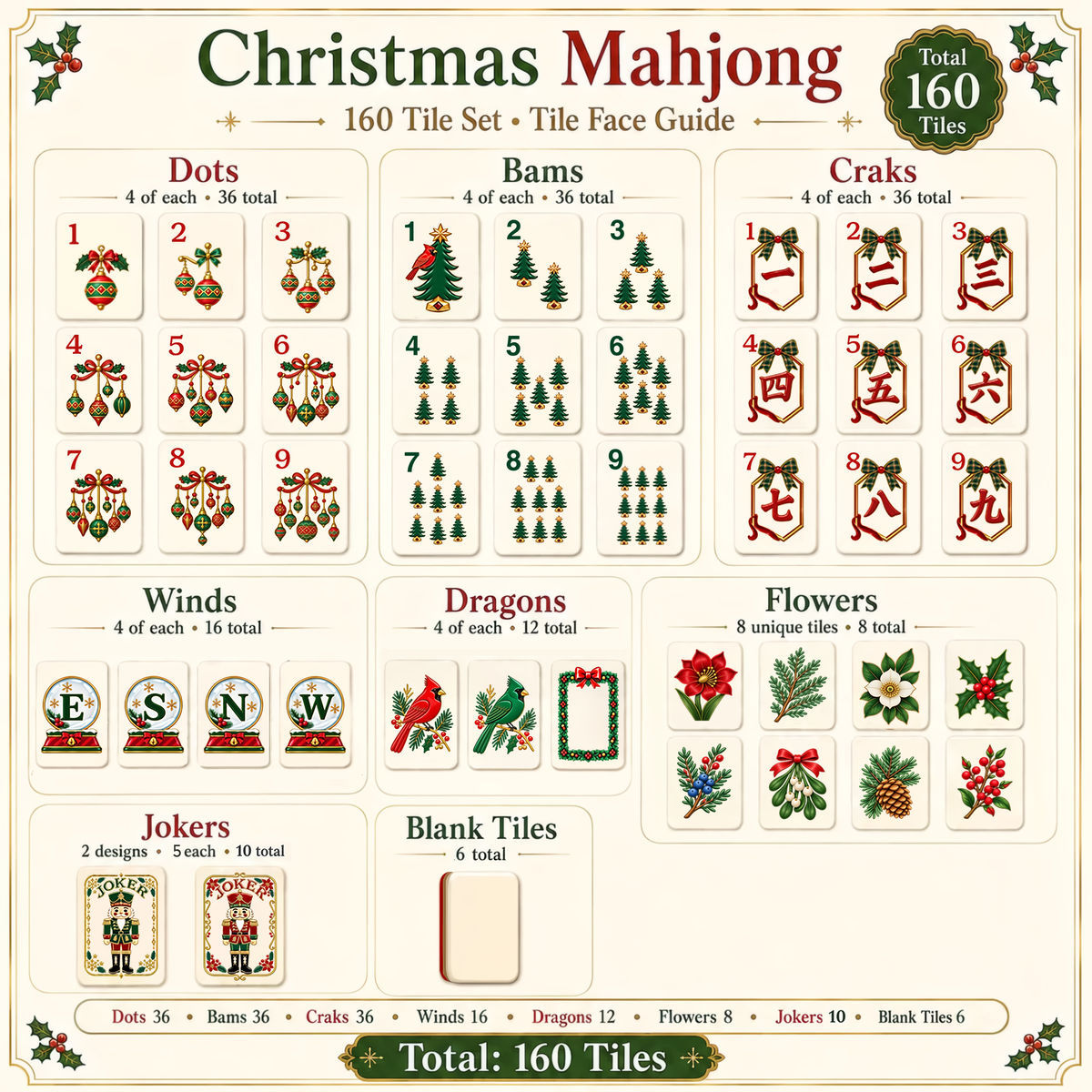
In American mahjong, flowers and bonus tiles are eight identical tiles (four flowers, four bonus tiles) that serve a single critical function: when drawn or picked, they trigger an immediate replacement draw from the wall. Unlike jokers, flowers and bonus tiles cannot be used in any hand itself—they exist only to refresh your rack mid-play. When you draw a flower or bonus tile during regular play, you lay it face-up on the table, draw a replacement tile from the wall, and continue. This mechanic accelerates the game and creates moments where your hand suddenly opens up. On the opening draw (before play begins), if you pull a flower or bonus tile, you set it aside and draw again until you have 14 tiles. The National Mah Jongg League card determines which hands are legal in any given year, and flowers/bonus tiles never fulfill a position within them—they only speed up your chance to build a winning combination. Understanding when and how to use them is essential for timing your winning call. Our best-selling acrylic sets include all eight flowers and bonus tiles, perfectly sized and clearly marked.
When you draw a flower or bonus tile during regular play, lay it face-up on the table, immediately draw a replacement from the wall, and keep your turn going. You cannot hold a flower or bonus tile in your hand or use it to complete a pung, kong, quint, sexttet, or pair. The moment it enters your rack, it must exit to the table.
What's the difference between a flower and a bonus tile?
Flowers and bonus tiles are functionally identical in American mahjong—both trigger an immediate wall draw with no penalty. The only distinction is visual: flowers usually depict blooms (plum, orchid, bamboo, or chrysanthemum in traditional sets), while bonus tiles show numerals, Chinese characters, or design elements that differ from the standard numbered suits. In modern acrylic sets, they're simply marked to distinguish them from Bams, Craks, and Dots. Both count as "honor tiles" in the context of hand-building, but since neither can be used in any legal hand, the practical difference disappears once play begins. Some players confuse them with dragons or winds—they are not. Dragons and winds are suit tiles that can form pungs, kongs, and quints; flowers and bonus tiles exist only to refresh your draw.
🀄 Shop best-selling mahjong sets →

Why do American mahjong sets include eight flowers and bonus tiles?
A standard American mahjong set for tournament or casual play contains exactly 152 tiles (including eight flowers and bonus tiles) plus spare tiles in a 160-tile package. The eight honors (four flowers, four bonus tiles) were designed to maintain balance across the four players and to prevent the game from stalling when luck sends too many dead draws in one direction. Because each player needs roughly equal access to draws during their turn, having eight honors distributed evenly means each player encounters them with similar frequency over multiple rounds. This also prevents any single player from monopolizing draw opportunities, which would otherwise make hand-building unfair. The best-selling mahjong sets all include the correct eight-piece flower/bonus tile allocation—never fewer, never substituted.
What happens if you draw a flower or bonus tile during the opening draw?
Before the first hand begins, each player draws 13 tiles, and the first player to play draws a 14th. If during this opening draw you pull a flower or bonus tile, you do not keep it. Instead, set it aside face-up on the table and draw another tile from the wall immediately. Keep drawing replacements until you have 14 tiles in your rack with no flowers or bonus tiles held. This prevents any player from starting with a flower/bonus tile stuck in their hand, which would waste your opening position. After the opening draw completes and the Charleston (the pre-game tile exchange) finishes, play begins normally—and now a flower or bonus tile drawn during active play does trigger a wall draw, but you stay in your turn rather than passing to the next player.
Can you use a flower or bonus tile in a winning hand?
No. Flowers and bonus tiles cannot appear anywhere in a legal winning combination on the current year's National Mah Jongg League card. They are strictly draw-refreshers. This is one of the largest differences from Chinese mahjong variants, where bonus tiles (called "flowers" or "seasons") can sometimes contribute to hand scoring. In American mahjong, a flower or bonus tile in your possession is not a resource—it's a prompt to get rid of it. If you accidentally keep one on your rack when you declare ready (waiting to win), your hand is invalid and you lose your turn. Always keep your flowers and bonus tiles face-up on the table to avoid this costly mistake.

How do flowers and bonus tiles affect game strategy and pacing?
Because flowers and bonus tiles refresh your draw without ending your turn, they speed up hand-building and reduce the number of dead discards that pile up. A player who draws two or three flowers during a hand gets extra looks at the wall, increasing the odds they'll complete a pung, kong, or quint faster. Conversely, a player who draws none may feel the pressure of having fewer draw opportunities, which can force riskier discards earlier. Strategic players watch how many flowers and bonus tiles have been drawn (and by whom) to estimate how many wall draws remain and when the game is likely to end. This is subtle but real: if flowers are drawn early and often, the wall empties faster, and the hand may end on someone's lucky pung before others finish their primary combinations. Understanding this timing helps you decide whether to build aggressively or hold defensive discards. Over many weekly games, you'll notice flowers clustering in certain seats or rounds—that's random variance, not design, but it teaches patience.
Element | Function | Interaction with Jokers | Uses in Hand |
Flower (4 tiles) | Immediate wall draw | None—jokers and flowers are separate | Never |
Bonus Tile (4 tiles) | Immediate wall draw | None—jokers and flowers are separate | Never |
Joker (8 tiles) | Wildcard in melds; can substitute for missing tiles | Cannot be used as pair or single; replaces one tile in a pung/kong/quint/sextet | Always (per hand on card) |
Standard Suit Tile | Numbers 1–9 in Bams, Craks, Dots | Can be replaced by joker in exposed meld | As needed per hand |
🎁 See our most-loved mahjong sets & accessories →
The key takeaway: flowers and bonus tiles exist to keep the game moving, not to build your hand. Treat them as neutral board events—useful timing information, nothing more.
How to check for flowers and bonus tiles when you buy or receive a mahjong set
When you open a new set, count the tiles by category: you should have 36 Bams, 36 Craks, 36 Dots (108 total), 16 winds (N, E, W, S—four of each), 12 dragons (four Red, four Green, four White), and eight honor tiles total: four flowers and four bonus tiles. This totals 152 tiles for active play. Any additional tiles beyond 152 are spares and stay in the box. If your set is missing flowers or bonus tiles, or if they're unclear or damaged, contact the retailer—a full set is non-negotiable for tournament or weekly game hosting. Acrylic sets from reputable makers are durable and rarely lose flowers; the real risk is misplacing them in a cluttered bag or case. Store them in the same compartment as your set, or better yet, in a dedicated mahjong bag or case that keeps everything organized and visible.
What to check before you buy:
Flowers and bonus tiles are clearly marked (color, symbol, or engraving) and easy to spot during play.
All eight are present and undamaged (no cracks, fading, or missing engraving).
The set totals 152 tiles for play plus spares in a 160-tile package (never a 144-tile shortcut set).
If you host weekly games, engraved sets make flowers and bonus tiles instantly recognizable even in variable lighting.
Pair your set with a mat that shows tile positions so players can see the table layout clearly and spot honors quickly.
How the Charleston and reading the card relate to flowers and bonus tiles
The Charleston is the pre-game passing ritual where players exchange tiles before play begins. Flowers and bonus tiles do not participate in the Charleston—they are already on the table from the opening draw and reset. Once the Charleston ends, play begins, and flowers/bonus tiles function as described above. Knowing how to read the yearly National Mah Jongg League card is essential because the card defines which combinations win; flowers and bonus tiles never appear on the card as tiles you need, so you can safely discard them or leave them on the table without panic.
✨ Find your Mahstead set — free US shipping →

FAQ
Can I keep a flower or bonus tile in my hand if I'm not using it?
No. A flower or bonus tile drawn during active play must be placed face-up on the table immediately, and you draw a replacement. If you keep one in your hand when you declare ready, your hand is invalid.
If I draw a flower on my first turn, does my turn end or continue?
Your turn continues. You place the flower on the table, draw a replacement from the wall, and play proceeds as normal. You do not pass to the next player.
Are flowers and bonus tiles the same as jokers?
No. Jokers are wildcards that substitute for missing tiles in pungs, kongs, quints, and sextets and can appear in a winning hand. Flowers and bonus tiles trigger a wall draw only and cannot be used in any hand.
What happens if a flower or bonus tile is damaged or missing from my set?
Contact the seller. A complete tournament set must have all eight honors (four flowers, four bonus tiles). If you're hosting weekly games, a missing or damaged honor tile disrupts balance and fairness.
Do flowers and bonus tiles affect scoring?
No. Flowers and bonus tiles do not contribute to points or scoring—they affect only pacing and draw opportunity. All scoring comes from the tiles used to complete your winning hand, per the current year's National Mah Jongg League card.
In a 160-tile set, what are the extra tiles if 152 are for play?
The eight extra tiles are spares—typically additional jokers and/or blank tiles for replacement if a tile is lost or damaged during extended play. They never enter the game itself.
Can the dealer (East) draw a flower or bonus tile as their opening 14th tile?
If the dealer draws one during opening draw setup, they set it aside and draw another (same as any player). Once play begins, if the dealer draws a flower, they keep their turn and draw a replacement, like any player's draw.


View More
View More
View More
