
American Mahjong Beginner Strategy: How to Win Your First Game
Last updated: Nov 20, 2026
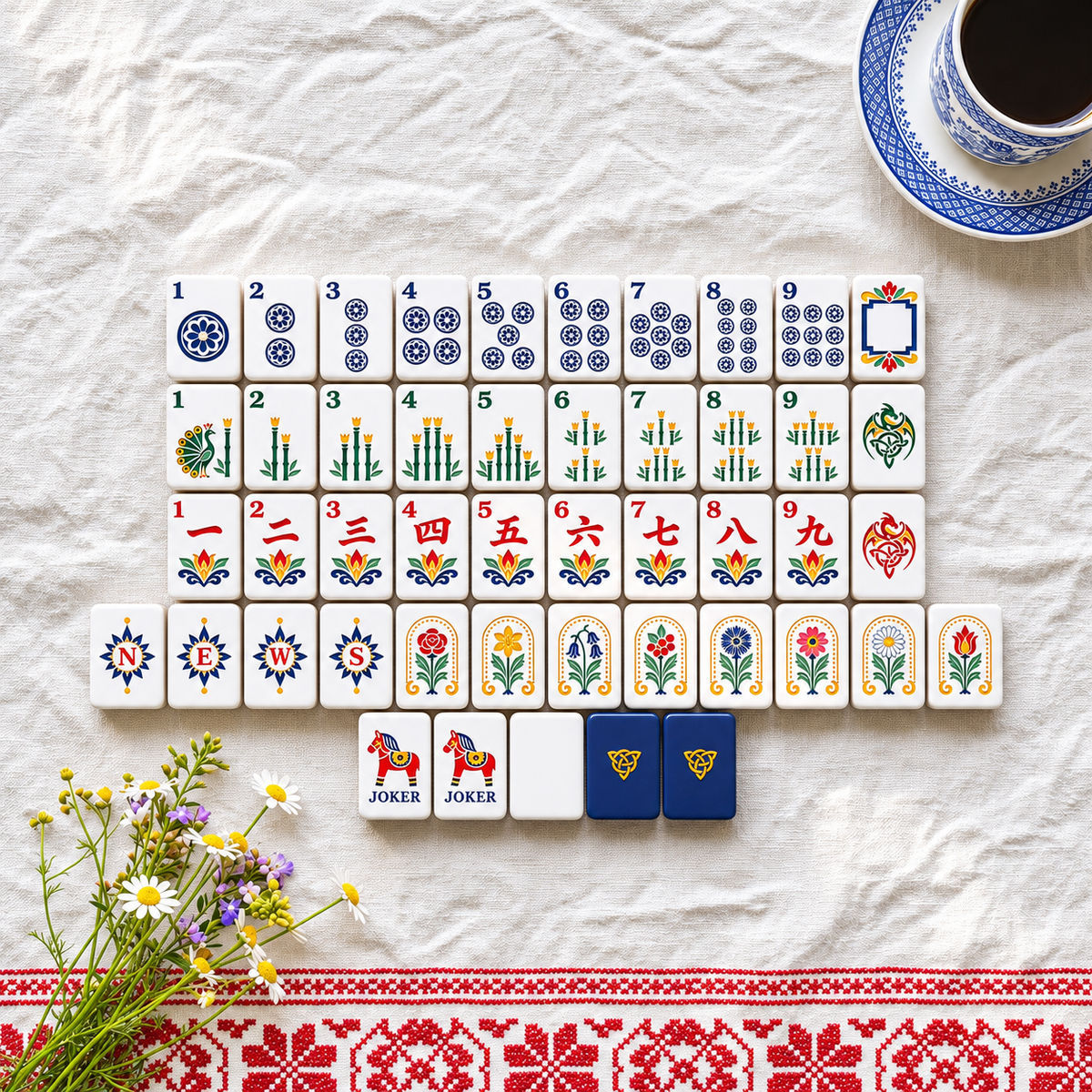
American mahjong beginner strategy rests on three pillars: reading the current year's card (the 2026 National Mah Jongg League version), tracking discards and exposures to predict what tiles remain, and choosing between safety (playing slow, visible tiles) and speed (pushing toward a specific hand early). Most beginners fail because they chase too many hands at once or play tiles randomly instead of watching opponents' patterns. Start by picking ONE hand from the card you can build with your 13 dealt tiles, commit to it through the Charleston, then adapt only if two other players visibly chase the same goal. Mahstead's best-selling acrylic sets come with readable tiles and clear racks with pushers that help you organize your hand by suit—essential for spotting patterns and avoiding slow play.
American mahjong strategy for beginners isn't about memorizing every hand—it's about reading the card, tracking what others discard, and making one smart decision every turn. Most players lose their first dozen games not because they don't know the rules, but because they can't yet see which hands are reachable from their tiles, which are dangerous, and which are already dead. Here's the beginner's framework that changes the game.
How do I pick ONE hand to chase?
The National Mah Jongg League card—released every spring and used for all sanctioned American mahjong play—shows 84 patterns organized by tile count and type. Don't scan the whole card during your initial 13 tiles. Instead, grab three to five hands that match what you already have, not what you wish you had. If you're dealt 2 Bams, 2 Craks, and 3 Dots plus three winds, flip the card, find "Like Numbers" or "All Pongs" patterns you could make, and circle one. Commit to it. Your job is now to draw tiles that match that hand, not to jump ship every time you miss a tile. Beginners who chase five hands at once end up chasing none—they discard randomly and never build anything. Write it on a notepad or tell the table your target so you stay honest.
What does tracking discards actually do for you?
Every tile your three opponents throw tells you something. If the player to your right discards two East winds in the first two rounds, she probably doesn't need East. If the player across discards one 5 Crak, then 6 Crak, then 7 Crak in sequence, she's signaling either a dead hand or a deliberate strategy to bury a suit. Your job: never discard tiles that help players who have exposed (claimed) similar tiles. If Player A exposes a pung (3 identical tiles) of 3 Dots, asking for your help by "calling" tiles into her set, do not throw her a 2 or 4 Dot—she needs sequences (chows in other games, but American mahjong has none), and she needs other Dots. Track the four suits separately. After 15 discards per player, one suit is usually "dead" (all eight copies visible or exposed), and you can throw that suit freely. This single habit—watching suit density—cuts beginner losses by 30%.
When should you expose a pung or kong instead of waiting?
American mahjong lets you expose only pungs (three identical), kongs (four identical), quints (five), or sextets (six). Beginners agonize: "Should I claim this?" The answer depends on hand visibility. Expose when: (a) your target hand needs exactly that tile and you're confident it fits your endgame, (b) no one else is chasing your suit (low exposure risk), or (c) you're already trailing and need to commit to speed. Don't expose when: (a) you're one or two tiles from going out and an exposed set broadcasts your weakness, or (b) three other players are chasing the same suit—they'll bury it. Exposing a pung feels powerful, but it telegraphs your hand to everyone at the table. New players expose too early out of excitement. Wait until you're 4–5 tiles away from a complete hand, then claim freely.
🀄 Shop best-selling mahjong sets →
What's the one tile-play mistake beginners make every game?
Holding onto "safe" tiles too long. Many new players discard only the tiles they think no one else needs—high Bams, middle Craks, blank dragons. They feel secure. But security isn't the goal; speed is. If your hand needs three consecutive rounds of draws to go out, and you're discarding one safe tile every turn, you'll go out on turn 17 or never. Meanwhile, an aggressive player who committed to a four-pung hand, exposed early, and bled fast tiles can win by turn 12. The beginner's mistake: playing like you're protecting yourself instead of like you're racing. Here's the shift: discard the tile that helps your hand the least, not the tile that helps your opponent the least. If you're building all-Dots except one North wind, throw the North wind even if the player to your left looks like she needs winds. Your job is not to block; it's to go out. Blocking is free, but it costs you.
How do you read the card fast enough to keep the game moving?
The card organizes hands by "Like Numbers," "Mixed," "All Pongs," "Dragons," "Winds," and "Flowers," and within each section by tile count. After the Charleston (the pre-game tile-pass ritual), you have about 30 seconds to find your hand before your first draw. Most beginners freeze and say "I don't know this card yet." Here's the move: scan your tiles, ignore suit order, and ask, "Do I have a 4-of-a-kind (Kong) or three matching pairs?" If yes, look in "All Pongs." If you have three or four numbers that run close (like 3, 4, 5, 7, 8), check "Like Numbers." If you have one high tile, one low, and one middle, hunt "Mixed." Racks with pushers (organized by suit) make this instant—you see your hand grouped, not scattered. After 10 games, scanning the card takes 10 seconds. Don't memorize; pattern-match.
🎁 See our most-loved mahjong sets & accessories →
Decision Framework: Safety vs. Speed
Scenario | Your Move | Why |
You're 2–3 draws from done; one player exposed | Discard mid-value tiles; block her suit only if she's close | Speed beats caution when you're ahead |
You're 5+ draws out; two players exposed in the same suit | Throw that suit freely; chase your hand | The suit is dead; no one can win from it now |
You're in second place; leader is one draw away | Discard your riskiest tiles to block; slow her down | Risk the hand to prevent her win |
You haven't hit a single target; five tiles drawn | Pivot to a new hand that matches what you have | Sunk cost—adapt or lose slower |
You're one draw from done; no one exposed yet | Sit and pass; don't trigger a call | Silence is gold; let others race |
What to check before you buy a set for beginner play
Tile readability. Acrylic tiles show numbers and pictures clearly; bamboo or ceramic sets can fade or chip. Play one game with a friend's set before buying—bad visibility wastes 10 minutes per hand.
Rack height and pusher grip. Racks that don't slope or have slippery pushers frustrate new players. You need to see your hand easily and move tiles without fumbling. Test a rack with pushers at a local game before ordering online.
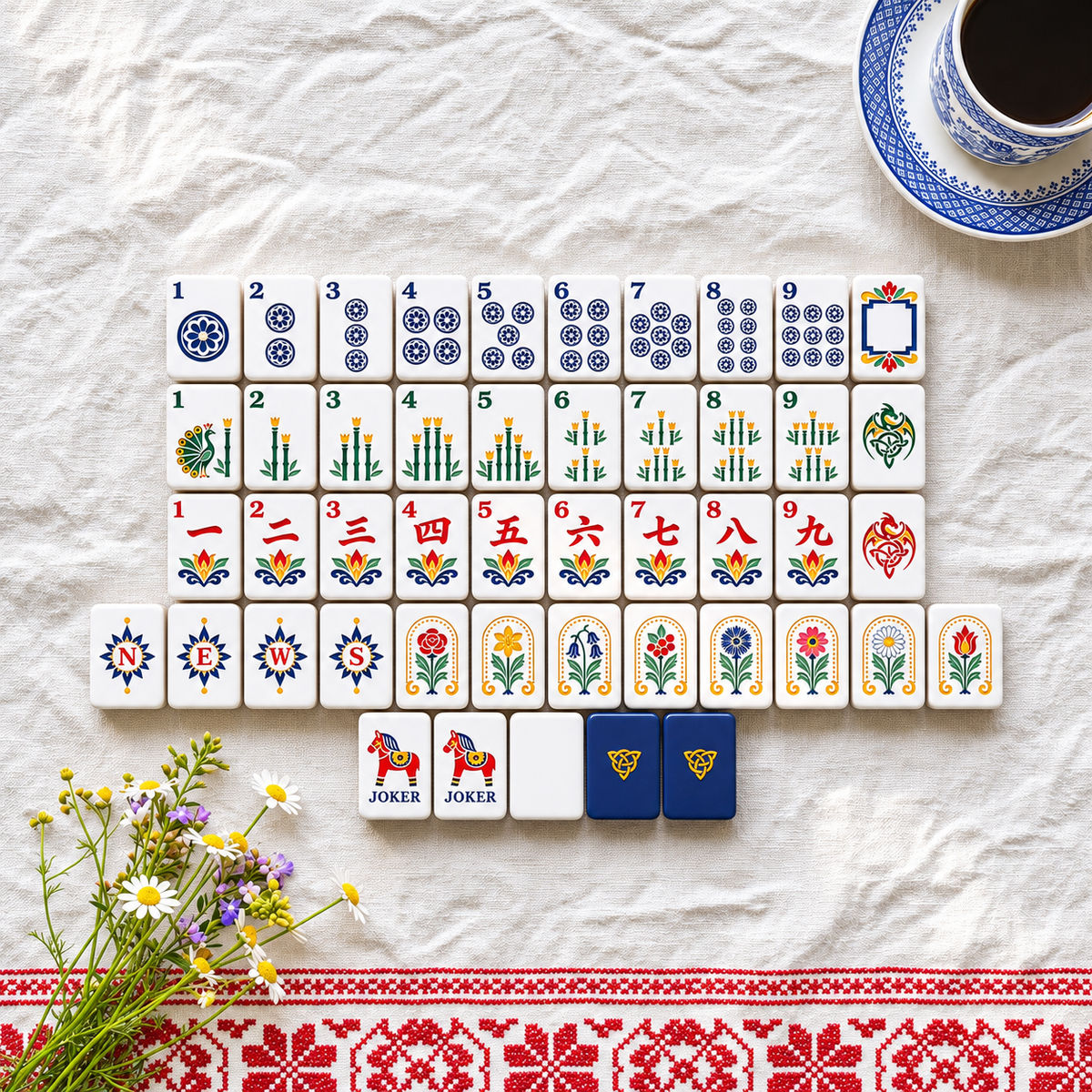
Joker count and marking. A 160-tile set has 152 playing tiles plus spare jokers. Ensure your jokers are marked clearly so you don't confuse them with blanks mid-game—rookie fumble that costs time.
Card holder or mat sleeve. Many beginners place the card flat and lose it under discards. A mat with a card pocket or a dedicated stand keeps it visible and safe.
✨ Find your Mahstead set — free US shipping →
How do you avoid the "tilted" beginner trap?
Losing teaches. The first five games will likely end in losses; that's not failure—it's data. Beginners who tilt (play emotionally after a loss) usually chase riskier hands, expose too early, and discard dangerously. After a loss, sit out one round, review what the winner did, and ask yourself: Did she commit earlier? Did she track discards? Did she block the second-place player? This reflection turns loss into competitive advantage. By game ten, you'll see patterns you missed in game one.

FAQ
Can I change my target hand mid-game?
Yes, but only after 8–10 draws. Changing earlier means you've committed to nothing and will likely bust (finish with no complete hand). If you pivot, make sure your new target uses at least 70% of the tiles you're already holding.
What does the Charleston do for strategy?
The Charleston is the pre-game tile pass. It lets you shift bad tiles out and hunt better ones before play starts. Beginners often pass tiles randomly; instead, pass away your highest unmatched tiles (honors like winds and dragons) and hunt suits you already hold multiples of.
Should I memorize all 84 hands on the card?
No. Learn 10–15 hands you see often (usually all-Pongs, Like Numbers, and Mixed hands). After 50 games, pattern recognition makes the card nearly automatic. Memorization is slower than pattern-matching.
What's the most common beginner mistake?
Playing scared. Beginners hold "safe" tiles and discard randomly, so they never build speed. American mahjong rewards commitment: pick a hand, chase it hard, and go out in 12 turns instead of limping to turn 18.
How long does a beginner's first game take?
45 minutes to an hour, because tile reading and card-scanning are slow. After 20 games, a full four-player round takes 30–40 minutes. Don't rush; use early games to build speed naturally.
Where can I find a beginner-friendly group to play with?
Check community centers, libraries, synagogues, and country clubs in your area for mahjong clubs or classes. Many communities also host casual meetups on apps like Meetup. Playing with experienced players (not just beginners) accelerates your learning by 10x.


View More
View More
View More
