
American Mah Jongg: How to Count Points Like a Pro
Last updated: Nov 23, 2026
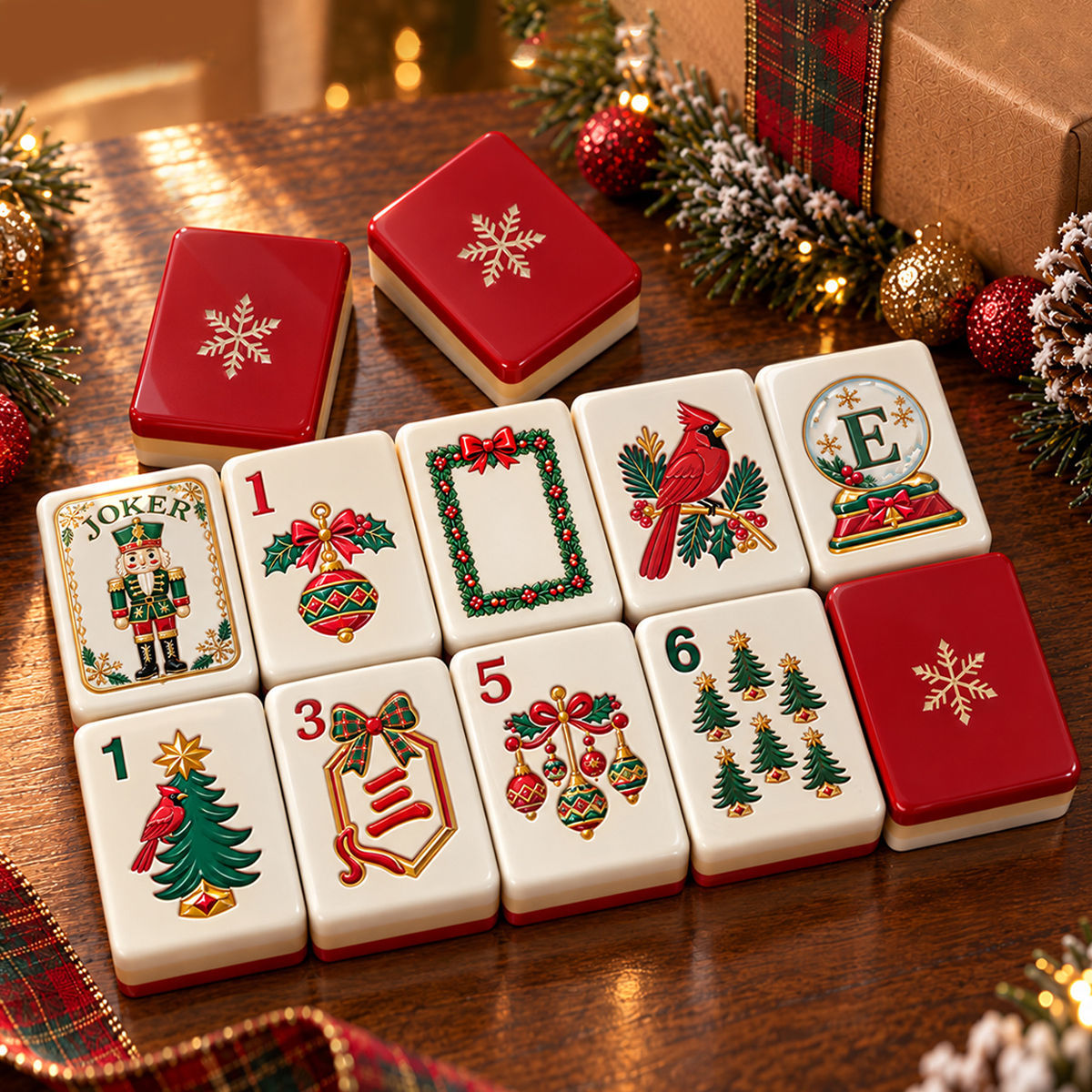
American mahjong scoring works by matching your winning hand to the current year's NMJL card, where each legal hand has a fixed point value (typically 30–70 points, with special categories worth more). You don't calculate points—you look them up. The card lists all winning hand types organized by section (like "Like Numbers," "Consecutive Run," "2012 Like Numbers"), each with its point value printed beside it. All four players see the same card; the value you win doesn't change based on the tile count or hand difficulty. Scoring happens instantly: when you declare "Mahjong," you read your hand pattern on the card, announce the points aloud, and the other three players settle with you according to house rules (often: non-winners each pay you that amount, or losers pay double if they discarded your winning tile). Unlike Chinese variants where arithmetic changes per tile, American mahjong isolates scoring to one step: find it, announce it, collect.
How do I find my hand's point value on the card?
Every legal American mahjong hand appears on the current year's card with a point number next to it. The card is divided into sections by hand type: "Like Numbers" groups hands where all exposed melds share the same number; "Like Suits" groups hands in a single suit; "Consecutive Run" shows hands that progress numerically. Within each section, hands are listed as patterns—for example, "Pung, Pung, Pung, Pung, Pair" or "Kong, Pung, Pung, Pung, Pair." Each pattern shows a point value (30, 40, 50, 60, 70, or special categories). Once you go Mahjong, you find the row that matches your hand layout exactly, read the points, and announce it.
🀄 Shop best-selling mahjong sets →

What's the difference between a 30-point and 70-point hand?
A 30-point hand is simpler to achieve—usually all one suit or a straightforward pattern. A 70-point hand typically requires multiple constraints: specific suit combinations, honor tiles (winds or dragons), or rare sequences that appear fewer times on the card. Point value doesn't reflect difficulty; it reflects rarity and strategic value set by the NMJL. For example, a hand with all winds and dragons might score 60 or 70 because those tiles are harder to gather and hold. A beginner often wins 30–40 point hands early in a game; experienced players hunt for 50–70 point patterns because the payout compounds. The card itself determines your payout—not your skill or the time you spent collecting tiles.
What happens if I can't match my hand exactly to the card?
Your hand is not Mahjong. If no row on the card matches your exact pattern—including the number and type of your melds and pair—you cannot win that round. This is why learning to read the mahjong card matters. Common mistakes include: claiming a hand where one meld is a chow (1-2-3 sequence), which American mahjong does not allow; using a joker in the pair, which is illegal; or misreading the card and thinking a row applies to you when it requires a different suit or honor. If you're unsure, ask the table before declaring. Once you call "Mahjong" and the hand is verified as illegal, you often pay a penalty (house rules vary) and play continues.
How many points do different players actually pay me?
Scoring payment varies by house rules, but the most common setup is: each non-winner pays you the full point value listed on the card. If the hand is worth 50 points and you win, the three other players each pay you 50 points (you gain 150 total). Some houses double the payment if the player who discarded your winning tile was the one you took it from; others triple it if that player is the discarder. A few groups use "losers only pay"—meaning only the two players whose tiles are still in the wall pay, while the discarder pays double. Agree on the rule before the game starts. The point value itself never changes; only the multiplier or distribution of payments does. Track payments with paper or a score app to avoid disputes.
How do special hands and bonus points work?
Special hands—like "Heavenly Hand" (Mahjong on your first draw before anyone discards) or "Thirteenth Wonder" (drawing your winning tile on the 14th turn of your first turn)—exist in some house rules and are worth premium payouts, but they are not part of the official NMJL card. If your group plays with bonus hands, establish the point values before the game. The NMJL card itself has no bonuses; it assigns a fixed value to each legal hand pattern. Some newer house variants add a "concealed hand" bonus (you won from the wall, not a discard) or reward speed, but these are local customs. The card is always your first authority. If a hand appears on the card, it has its listed value; if it doesn't appear, it's not Mahjong. Special hands are almost never part of tournament or formal American mahjong scoring.

Common Scoring Mistakes and How to Avoid Them
Mistake | Why it happens | How to avoid it |
Claiming a hand not on the card | Not matching your hand exactly to a card row | Read the pattern—suit, tile count, meld type—twice before calling |
Using a joker in the pair | Forgetting jokers cannot form pairs in American mahjong | Pair must always be identical tiles, no substitutes |
Confusing the card year | Playing with an old card from a prior year | Check the NMJL card date each spring; games use only the current year card |
Forgetting to announce points aloud | Assuming everyone can read the card at the table | Say the point value clearly so all players confirm they understand the payout |
Accepting a hand you can't verify | Trusting the winner without checking | Every player has the right to see the hand and confirm it on the card before payment |
Learning how jokers work in American mahjong is especially crucial because joker placement can make or break a legal claim.
How does scoring change if someone picks up a tile out of turn or breaks a rule?
If a rule is broken—such as a player exposing a meld incorrectly, picking a tile from the wrong position, or discarding before drawing—the hand may be voided and play continues to the next player's turn. Penalties vary by house rule: some deduct points, others restart the hand. If Mahjong is claimed and then someone notices an earlier rule break, check whether the breach affects the winning hand's legality. If the breach doesn't invalidate the winning hand, payment proceeds normally. The NMJL card only scores valid hands; rule enforcement is your table's job. Establish your group's penalty system before playing to avoid arguments mid-game.
🎁 See our most-loved mahjong sets & accessories →
Point value differences: American vs. Chinese, Hong Kong, and Riichi mahjong
American mahjong uses a fixed point card issued yearly by the NMJL—every hand has one value, no calculation. Chinese and Hong Kong mahjong calculate points dynamically based on melds, honors, and tile count: the same hand can be worth 8, 12, 16, or more "points" (often doubled or tripled for special conditions). Riichi mahjong uses a complex base-point system multiplied by your hand's "fu" (tile count and meld efficiency) and "han" (scoring layers), then adjusted for wind position and payment method. Taiwanese mahjong combines fixed and variable scoring depending on the house. American mahjong is the simplest to learn because there's no arithmetic—just lookup. The downside: you must play with that year's card. The advantage: every table, every state, plays by identical rules, and scoring takes seconds. When you host a weekly game, American mahjong's fixed card means new players can score confidently on their first night without fumbling calculator apps.
What to check before you buy a mahjong set or card
Confirm you have the current year's NMJL card before playing (card is not always included; check the set box or purchase separately if needed).
Verify the set includes 152 playing tiles plus spare jokers—all American mahjong games use exactly 152 tiles in play.
Make sure your tiles are clearly marked (numbers and suit symbols legible under table lighting so you don't misread your hand).
If hosting weekly games, invest in a mat or rack to keep tile organization clean and speed up scoring verification.
Agree on house rules for penalties and bonus payouts before the game starts, then write them down for consistency.
✨ Find your Mahstead set — free US shipping →
Our pick: sets built for clarity and scoring confidence
Hosting a regular mahjong game means clarity matters. Our best-selling mahjong sets feature engraved tiles with crisp, high-contrast markings—no squinting under dim light when you're checking a card match. Engraved American mahjong sets with titles add personality to your game while keeping tile legibility sharp. Pair a set with a mahjong mat so tiles stay in clear rows and you can quickly scan hand sections without fumbling. Racks with pushers keep your tiles upright and organized, which makes matching patterns to the card faster and mistakes fewer. Free shipping across the US means a complete hosting setup lands ready to play.

FAQ
Can I play American mahjong and score a hand if I don't have the current year's NMJL card?
No. Every legal hand must appear on that year's card. Without it, you cannot verify a winning hand or assign points. The card is essential—it is the rulebook and scorebook in one. Purchase the current card separately if your set doesn't include it.
If two hands tie in points, does the one who called first score higher?
No. In American mahjong, only one player wins per round (the first to call Mahjong with a valid hand). If a second player also claims Mahjong simultaneously, house rules determine priority—often the player in turn order (starting with East) wins. Points don't "tie."
What's the highest point value on the NMJL card?
The highest values appear in special categories (often 60–70 points), but exact top value depends on the current year's card. Scan your card's last sections to see the maximum; it changes yearly based on NMJL design.
Do I have to pay more if I discarded the winning tile?
Usually yes. Many house rules double or triple your payout if you are the discarder. Confirm your group's rule before the game. Some tables use "losers pay" only, so the discarder pays the same as everyone else.
Can I announce a lower point value than what the card shows if I want to be generous?
No. The card value is binding—it's the payout. You cannot claim a different amount. If you want to play for lower stakes, negotiate the ante or point multiplier before the game, not after you win.
How fast should scoring happen after someone calls Mahjong?
Within 30 seconds. The winner reads the hand to the card, announces points aloud, and players pay. If anyone disputes the match or rule, pause and verify with the card and the table before payment. Then move to the next hand.
If my hand matches two different rows on the card, which point value do I use?
Your hand should match only one row exactly. If it matches two, you've likely misread one or your hand is ambiguous—ask the table. In rare cases, take the higher value (favor the winner), but this signals a card design edge case or a rule misunderstanding; clarify for next time.
Are there bonus points for speed, like winning on the first turn?
Not officially on the NMJL card. Some house games add bonuses (e.g., "Heavenly Hand"), but scoring always starts with the card value. Any bonus is a local house rule—agree on it before the game.


View More
View More
View More
