
Mahjong Set Dimensions: Size & Space Guide for Home Games
Last updated: Nov 23, 2026
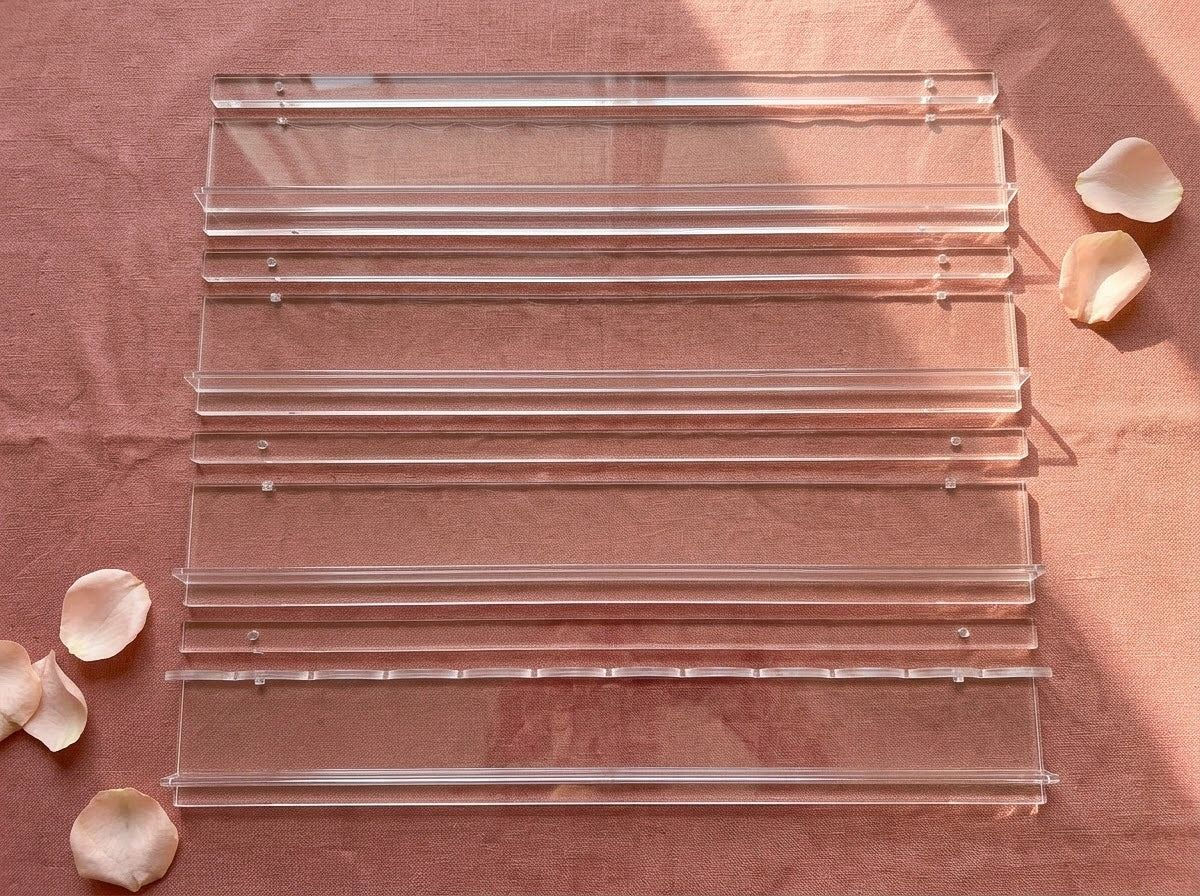
An American mahjong set contains 160 tiles (152 playing + spares), each roughly 0.75–0.8 inches wide and 1 inch tall. A four-player game spreads across a mat or table: the playing surface typically measures 28–36 inches square, with racks holding 14–18 tiles per player along the edges. A standard mahjong mat fits on a dining table or card table without overhang. Tile weight, material (acrylic or plastic), and rack type (bamboo, wood, acrylic with pushers) affect setup comfort and durability. At Mahstead, we design our acrylic sets and mats to work together—dimensions tested on tables from 36 to 48 inches square. Before buying, measure your table, count your regular players, and decide whether you want a portable mat or a permanent setup. 🀄 Shop best-selling mahjong sets →
What are the exact dimensions of individual mahjong tiles?
American mahjong tiles are standardized across the industry. Most tiles measure approximately 0.75 to 0.8 inches wide, 1 inch tall, and 0.3 to 0.4 inches thick. The face displays the suit symbol and number (or flower, wind, or dragon icon), and the back is unmarked. Thicker tiles (acrylic, heavier resin) feel more stable in hand and on racks than thinner plastic versions. Our acrylic sets use uniform 0.8-inch width and 1-inch height—the dimensions that work best for pushers and standard bamboo racks.
Tile thickness matters less for casual play but affects how comfortably your fingers grip them and how securely they sit on a rack with pushers. Beginners often worry that non-standard tile sizes will make hands harder to read. In fact, as long as all tiles in your set match each other, size variation across brands is irrelevant to gameplay.

How much table space does a four-player mahjong game actually need?
A four-player game needs a table at least 36 inches square—though 42 to 48 inches is far more comfortable. The 152 playing tiles sit in the "wall" (a 14-tile-deep, 2-tile-high stack on each side), and each player holds a rack of 14 tiles plus one drawn tile. In play, exposed melds (pungs, kongs) sit in rows in front of each player's seat. The live discard pile sits in the center.
Here's the real-world footprint: a 36-inch-square mat fits snugly on a 36-inch card table but leaves almost no room for teacups, scorecards, or the tile wall if players draw their racks close. A 42-inch table gives breathing room; a 48-inch dining table is ideal. If your table is smaller, consider a portable mat sized to fit without overhang—many of our players use a mahjong mat that's 32 inches square and set it in the center, leaving the table edges free for drinks and notepads.
What's the difference between mat, table cover, and rack dimensions?
Equipment Type | Typical Width | Typical Depth | Best For | Storage ---|---|---|---|--- Soft mat (fabric) | 28–32 inches | 28–32 inches | Portable games, renting venues | Rolls up, fits any closet Padded table cover | 36–48 inches | 36–48 inches | Permanent home setup, card table | Folds onto table, stays in place Bamboo rack (no pushers) | 4–6 inches wide | 7–9 inches tall | 14–16 tiles, hand-held | Stands on table edge Acrylic rack with pushers | 4–5 inches wide | 8–10 inches tall | 14–18 tiles, smooth tile draw | Stands on table edge
A soft fabric mat packs into a tote bag and unfolds on any flat surface—ideal if you rotate between homes or host in restaurants. A padded table cover stays permanently draped over a dining table and defines the play zone clearly. Racks with pushers let you advance one tile at a time as you draw and discard, keeping your hand organized; racks without pushers require you to juggle tiles by hand.
The choice depends on whether you're building a permanent home game or moving your set. We've paired mahjong racks with pushers with our acrylic sets so that drawer depth and rack height work in sync. The tile width (0.8 inches) fits snugly in the pusher slots without jamming.
How do different mahjong set materials affect setup space?
Acrylic tiles are heavier and denser than resin or plastic; a 160-tile acrylic set weighs roughly 4–5 pounds. Heavier tiles settle more stably into the tile wall during play and don't shift as the wall shrinks. They also sit more securely on racks with pushers. A lighter plastic set (typically 2–3 pounds) packs smaller and suits players who rotate sets among multiple venues—less strain when you're carrying the bag.
The wall-building process takes the same time regardless of material, but heavier tiles feel more "premium" to experienced players and are less prone to tipping over if someone bumps the table. Beginners often assume material choice changes gameplay—it doesn't. What matters is consistency: all 152 tiles in your set must match in weight and finish so the wall feels balanced.
Our best-selling acrylic sets are engineered so tile weight and mat grip work together; the heavier tiles don't slide on the mat, and the pusher racks anchor the weight evenly. If you're shipping your set often or storing it in a small space, lighter-weight sets exist, but we focus on acrylic for durability and the tangible feel that keeps players coming back.
What do you need to measure before buying your first mahjong set?
Before you order, grab a tape measure and answer these five questions:
Table width and depth. Measure the table where you'll play. If it's smaller than 36 inches in either direction, plan on using a soft portable mat (28–32 inches square) rather than a full-sized cover. If it's 42 inches or larger, you have full freedom.
How many players regularly join your game. American mahjong is always four-player (never adapt the tile count). But knowing whether you host four regulars or rotate five or six players helps you choose storage and carrying options—extra sets, a travel bag, or a permanent setup.
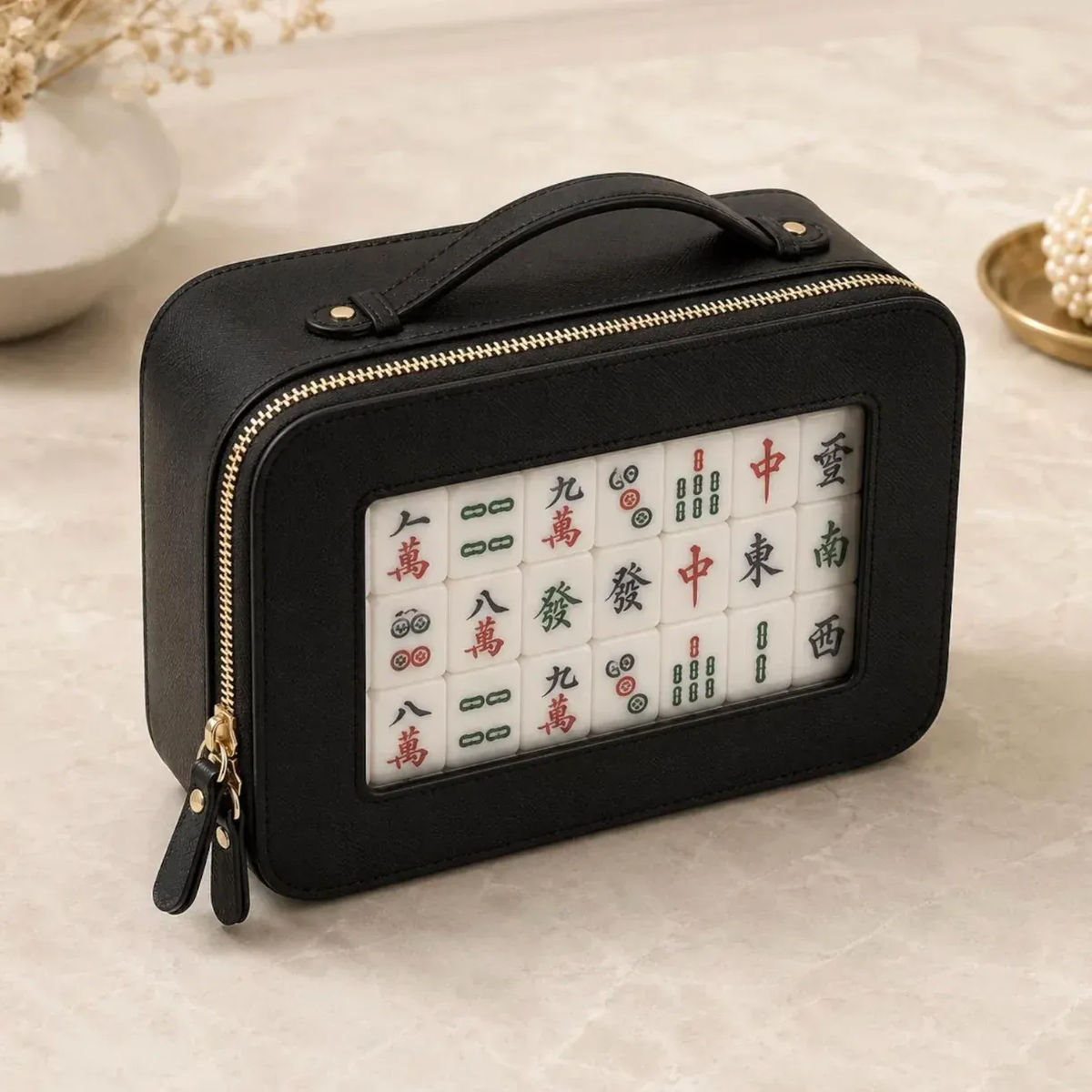
Storage space. A 160-tile set in its box measures roughly 10 × 8 × 4 inches. A mat rolls to 3 × 3 × 10 inches. Racks and pushers are compact. If you have a small closet, a soft mat + compact bag is your best bet. If you have a dedicated game cabinet, a full acrylic set with padded cover stays ready year-round.
Your table surface material. Soft mats grip better on bare wood or glass; they slide on glossy surfaces. Padded table covers anchor themselves with ties or grips on all four corners. If your table is very smooth (marble, polished granite), test the mat grip before committing.
Tile handling comfort. If players have arthritis or reduced grip strength, thicker racks with pusher mechanisms are a must—they reduce hand fatigue. If everyone prefers hand-holding racks or no racks at all, lightweight tiles and a soft mat are enough.
🎁 See our most-loved mahjong sets & accessories →
Once you've answered these, you'll know whether you need a portable mat + racks, a permanent table cover + full-sized set, or a hybrid setup that travels between homes.
What to check before you buy
Measure your table first. A 36-inch table is the minimum; 42+ inches is comfort. If smaller, buy a portable mat (28–32 inches), not a full-sized cover.
Verify tile dimensions on the product page. Standard tiles are 0.8 inches wide and 1 inch tall. Non-standard sizes won't fit standard racks or pushers.
Count your core players. American mahjong always uses one 152-tile set (160-tile box = 8 spares). You don't need multiple sets for a four-player game, but you may want one as a spare if you host backup players in rotation.
Test rack fit before ordering racks separately. If you buy an acrylic set and later add mahjong racks with pushers, confirm the rack slot width matches your tile width. Most of our racks are designed for 0.8-inch tiles.
Check mat grip on your table surface. Soft mats grip best on wood; padded table covers work on any surface. If your table is glass or marble, specify the surface when choosing your mat style.
✨ Find your Mahstead set — free US shipping →

FAQ
Can I play American mahjong on a table smaller than 36 inches?
Yes, but with tight spacing. A 30–32-inch mat centered on a 32–36-inch table works if players position racks carefully and don't overlap the tile wall. For comfort, upgrade to a 42-inch table or larger. Experienced players often sacrifice some arm room to keep the wall intact.
What size mat should I buy if my table is 48 inches?
A 36-inch mat on a 48-inch table gives you 6 inches of free space on all sides for drinks, scorecards, and the flower pile. If you want more breathing room or plan to display tiles after the game, choose a 40–42-inch mat. Check the product page for exact dimensions before ordering.
Do heavier acrylic tiles need a different mat than plastic tiles?
No. Both acrylic and plastic tiles (within standard weight) work on any mat designed for mahjong. Heavier tiles simply sit more stably; they don't require a thicker or textured mat. Our mats are designed to grip all tile weights equally.
How much space do mahjong racks with pushers actually take up on a table?
Each rack occupies roughly 5–6 inches of width and 8–10 inches of depth (standing vertically). Four racks positioned on the table edges (one per player) occupy the perimeter and leave the center clear for the wall and discard pile. On a 36-inch table, racks fit comfortably; on a 32-inch mat, they sit just at the edge.
If I buy a mahjong set now, can I add a mat and racks later?
Absolutely. Our sets are modular—you can start with tiles and a soft mat, then upgrade to a padded table cover or mahjong racks with pushers whenever you're ready. Just confirm that your racks match the tile width of your set (most Mahstead racks fit 0.8-inch tiles).
What's the smallest portable mahjong setup I can travel with?
A 28–32-inch soft mat, one 160-tile set in a travel bag, and no racks (players hold tiles in hand). This packs into a carry-on suitcase or car trunk and sets up on any flat table. Add lightweight bamboo racks if you prefer hand-free tile holding; lightweight racks add only 1–2 pounds.


View More
View More
View More
