
American Mahjong with 2 Players: Rules & Setup
Last updated: Nov 23, 2026
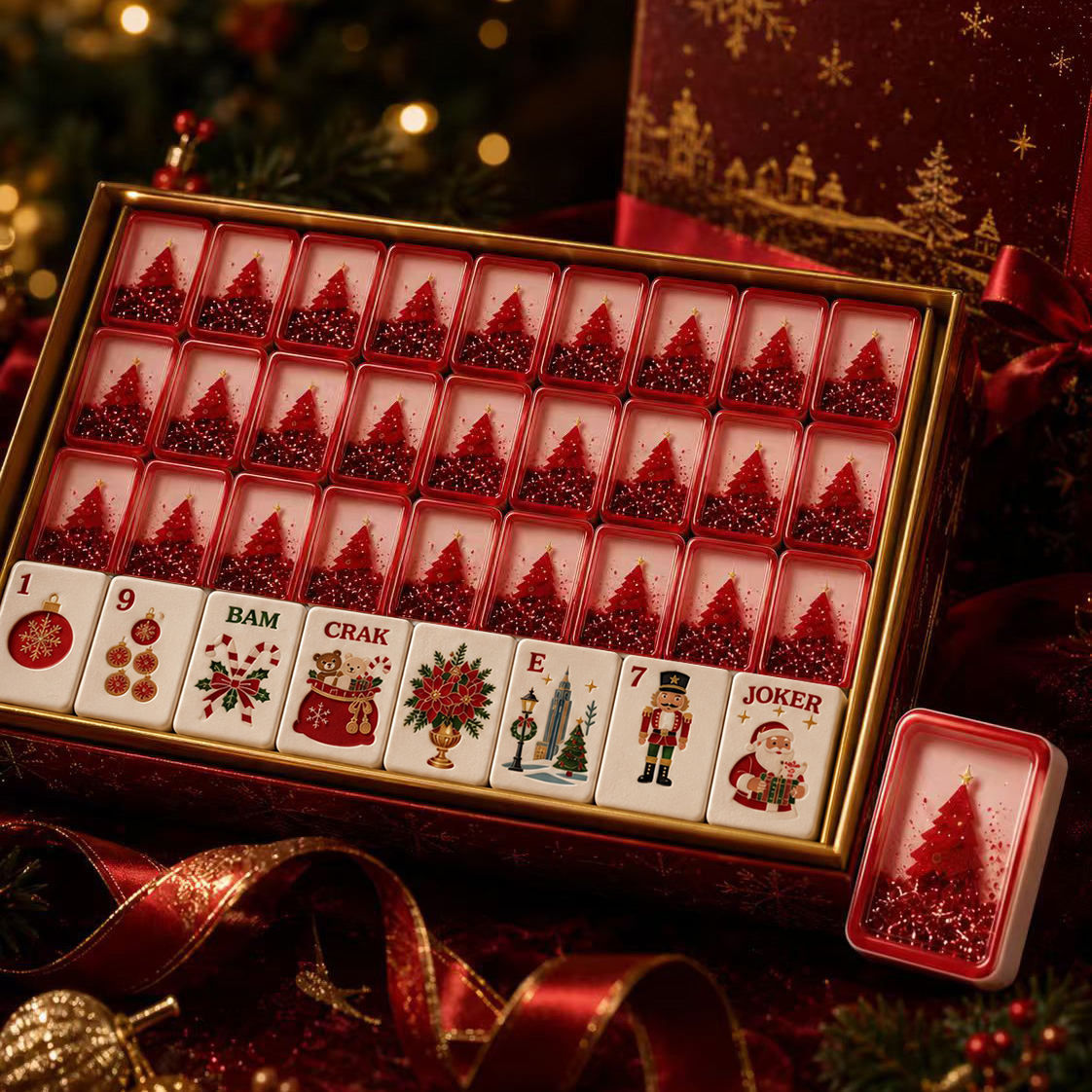
American mahjong officially requires four players because the standard game rotates positions (East, South, West, North) and uses exactly 152 tiles with strategic passes called the Charleston. Two-player mahjong modifies these rules: you typically abandon the Charleston, deal 13 tiles per player instead of drawing from a wall in traditional fashion, and use a simplified scoring method. One common two-player variant lets each player hold two positions simultaneously (East–South and West–North), drawing tiles as if all four seats were active but only two people playing. You'll need the current year's National Mah Jongg League card to check legal hands, though most players house-rule scoring heavily for casual two-player games. Games run 20–40 minutes depending on house rules. Mahstead's best-selling mahjong sets include all tiles and jokers needed; many players prefer clear acrylic tiles so both players spot all positions easily. 🀄 Shop best-selling mahjong sets →
Why American Mahjong Resists Two Players
American mahjong breaks down as a true two-player game because the entire rule set assumes four independent positions. The National Mah Jongg League card lists hands designed for four-player balance: wall draws, Kong cycles, and exposure rules all presume four separate hands competing. Playing two-on-two removes strategic tension—fewer players mean fewer tile blocks, easier hand completion, and less drama around who goes out first. Most casual two-player variants treat it as a house-rule experiment rather than "real" American mahjong. If you want a genuine, card-legal experience, four players remain the only honest way to play.

The Most Playable Two-Player Setup
The dual-seat variant works best in practice: each player manages two compass positions and draws for both. Player One holds East and South; Player Two holds West and North. Shuffle all 152 tiles and form a wall as if four players were seated. Player One draws for East, then immediately draws for South; Player Two does the same for West and North, cycle by cycle. You discard as two separate hands, track melds for both positions, and write down or use two racks to keep hands separate. This preserves wall draws, Kong mechanics, and exposure rules exactly as written in American mahjong. Games feel closer to the real thing because the tile flow and hand pressure stay authentic. Most players find this version playable for 30–45 minutes before fatigue sets in—the mental load of two hands is real. Use mahjong racks with pushers to keep both hands clearly separated; a second rack prevents tile confusion and keeps play moving.
🎁 See our most-loved mahjong sets & accessories →
Scoring & Winning Conditions
Two-player games typically abandon the official American mahjong scoring table because half the positions and melds lose meaning. Instead, many groups use a simplified point system: a basic win = 10 points (or 1 point in friendly games), each exposure pung or kong = 2 extra points, and winning on a Kong draw or wall-end draw = bonus points (4–5 points). You and your opponent track cumulative scores across hands, and first to 100 points (or 30 points, depending on time) wins the session.
Some pairs skip scoring entirely and play "play to 7 wins" or just count rounds. The key: agree on the rule before you sit down. We've found that written-down rules prevent arguments mid-game. How to read the mahjong card explains hand notation, which helps both players verify legal hands even in casual variants.
Fast Setup Checklist
Step | What to Do | Why It Matters |
Shuffle | Mix all 152 tiles face-down thoroughly | Ensures random wall |
Wall build | Stack 76 tiles per side in pairs (4 stacks of 19 pairs each) | Creates 4 draw stacks even if only 2 play |
East seat draw | Player One draws 2 stacks (8 tiles), then draws 1 more = 13 tiles | Mimics four-player deal |
South seat draw | Player One draws 1 more stack (4 tiles) to hold as second hand | Separates two positions |
West & North | Player Two repeats, drawing 13 then 4 more tiles | Both players now hold 2 hands |
Discard order | East discards first; South, West, North follow by turn order | Preserves wall rhythm |
Card placement | Keep the current year's Mah Jongg League card visible to both | Validates hand before win claim |
This mirrors how to play American mahjong with four seats but keeps tile flow and hand pressure believable for two people.

Equipment That Helps Two-Player Games
Two-player American mahjong works best when each hand stays visually distinct. Here's what makes the difference:
Clear acrylic tiles: You spot character tiles from across a small table; no squinting needed when managing two hands. Best-selling mahjong sets include crisp engraving so faces read instantly even in lower light.
Two racks with pushers: One rack per hand. The pusher (a small stick) lets you nudge tiles forward to signal readiness without touching them. Prevents accidental mixing and keeps both hands organized.
Compact mat: A smaller mat (e.g., 27"–32" width) fits a two-player game on a laptop desk or coffee table without excess space waste. How to choose a mahjong mat covers sizing for small spaces.
Joker tracking: Write down joker placement or use a separate joker pile so both players know the count. Jokers move fast in two-player games and mistakes cascade.
✨ Find your Mahstead set — free US shipping →
Common Two-Player Mistakes to Avoid
Skipping the Charleston. Beginners often say "Let's just play; two players can't pass tiles." Wrong. Pass three times (or one simplified pass per player) anyway—it mixes hands, creates strategy, and keeps one player from drawing too many flowers or dragons early. The Charleston explained shows the standard ritual; adapt it to two players by letting each pass once.
Losing track of the second hand. Many novices grab all 17 tiles into one messy line and lose position identity halfway through the hand. Use two separate racks—one per position—or deal tiles in two clear piles. This also helps when exposing melds: you expose for the correct compass seat, not both hands at once.
Ignoring Kong draws. In dual-seat play, drawing for a Kong (replacing from the wall's back end) matters twice per round. Forgetting to draw for South's Kong while you remember East's distorts tile flow and hand pressure. Count Kongs aloud before each cycle to stay even.
Accepting any hand as valid. Two-player games feel casual, so players skip checking the Mah Jongg League card. Always verify the winning hand matches the current year's card patterns—even in friendly play, this keeps the game honest and helps you learn real American mahjong rules.
Undoing discards mid-turn. Once a tile is released from the hand and touched to the table, it's final. Prevent fumbles by asking "Are we ready?" before each discard and by using pushers to slide tiles out rather than dropping them.
What to Check Before You Buy
When shopping for a two-player setup, look for:
Clarity of tile faces: Test in the store or check product photos. Acrylic tiles with bold engraving beat jade or bamboo for two-player games where both seats sit closer.
Separate rack option: Confirm the set includes two racks if you want dual-hand storage, or plan to buy a second rack from our racks collection.
Joker count: A standard 160-tile set from Mahstead includes the 152 playing tiles plus spares. Confirm joker quantity in the product details—you'll track them closely in two-player mode.
Compact mat fit: Measure your table. A standard 34"–36" mat works for four players; two players often prefer 27"–32" to keep both hands within easy reach.
Card access: Keep the current year's National Mah Jongg League card in your game bag. Two-player casual play may ignore it, but rule disputes resolve faster when the card is present.

FAQ
Can you play real American mahjong with exactly two people?
Not by official National Mah Jongg League rules—the game requires four independent seats and positions. Two-player variants exist (dual-seat or simplified scoring) but are house rules, not tournament legal.
What's the easiest two-player variant for beginners?
The dual-seat method: each player holds two compass positions, draws and discards for both in sequence, and uses the same wall and card rules as four-player American mahjong. It preserves nearly all real mechanics.
Do you need the Mah Jongg League card for two-player games?
For casual games, no—you can define your own winning hands. For learning real American mahjong, yes, always use the current year's card to stay rule-accurate.
How long does a two-player game usually take?
25–50 minutes, depending on house rules and player speed. Dual-seat play (managing two hands) takes longer than simplified scoring variants because tile flow is more complex.
Why do we still use four compass positions if only two people play?
Keeping East, South, West, North preserves wall draws, Kong cycles, and exposure rules exactly as designed. This keeps the game mechanically true to American mahjong even in casual two-player mode.
Is two-player mahjong fun for regular players?
Yes, as an occasional change of pace or teaching tool for beginners. Most experienced players prefer four-player games because the strategic depth and tile pressure vanish with fewer seats.


View More
View More
View More
