
Addition Hands in Mahjong: Examples & How to Read Them
Last updated: Nov 23, 2026
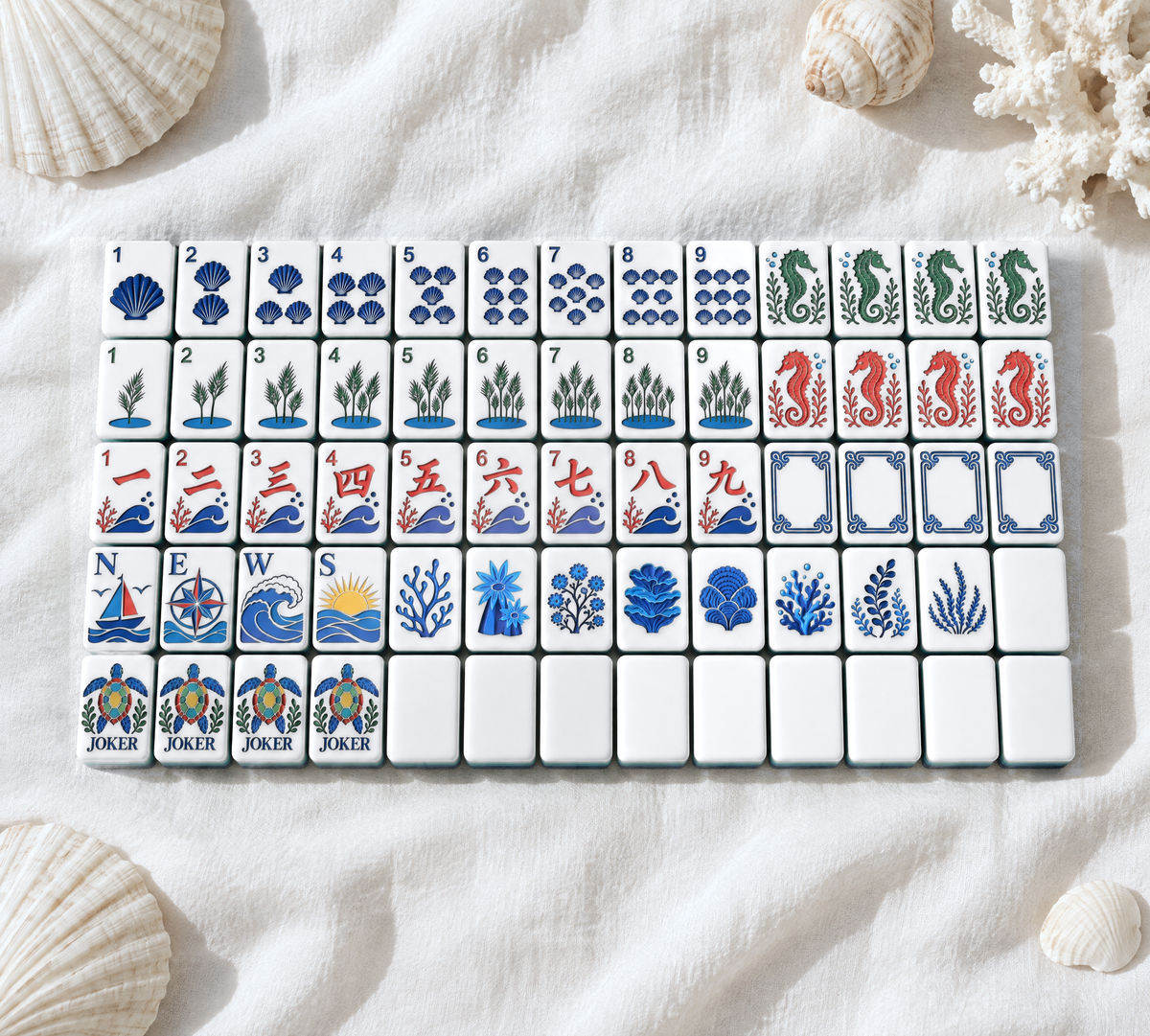
An addition hand in American mahjong consists of tile groups (pungs, kongs, or pairs) whose values sum to a target number listed on the current year's National Mah Jongg League card. For example, if the card shows "1 Bam + 1 Crak + 1 Dot = 3," you need exactly one pung of 1 Bams, one pung of 1 Craks, and one pung of 1 Dots, plus a pair. Addition hands appear on every card and reward beginners and veterans alike because the math is straightforward—no sequences required. They're among the fastest patterns to recognize if you learn how to read the mahjong card, and they account for roughly a third of all playable hands in a typical game. Check the best-selling mahjong sets to ensure your tiles are clear enough to spot numbers at a glance during live play.
What exactly is an addition hand?
Addition hands are built from tile groups where the sum of the tile numbers equals a target value on the card. You're not chaining tiles or creating sequences; you're collecting identical tiles (pungs/kongs) in specific numbers and adding them up. The card lists the equation—say "2+3+4=9"—and you need one pung of 2s, one pung of 3s, one pung of 4s, and a pair in any suit or honor. Once you master this pattern, you'll spot five or six playable addition hands in your rack almost instantly.

How do you read an addition hand on the card?
The card divides each hand type into rows and columns. Addition sections clearly show the arithmetic: a target number on the left, then a series of tile descriptions (suit + number) to its right. For instance, an entry might read "9 | 1B 2C 3D" meaning pung of 1 Bam + pung of 2 Crak + pung of 3 Dot, plus any pair, totals 9. The pair is always separate—it appears in its own column or is noted as "any wind" or "any dragon." Never confuse the pair with a group; a pair is always exactly two identical tiles and cannot contain a joker. Read our full guide on decoding the card for step-by-step column interpretation.
🀄 Shop best-selling mahjong sets →
What are the most common addition hand totals?
The card changes every spring, but addition hands typically target sums between 6 and 18. The most frequent totals are 9, 12, and 15 because they sit in the middle range—easy to hit without needing extreme high or low tiles. For example, a "12" hand might look like "5B 4C 3D = 12" (5 + 4 + 3 = 12), or "2B 5C 5D = 12." Lower totals (6, 7, 8) lean toward 1s and 2s; higher totals (15–18) require 6s, 7s, 8s, or 9s. Winds (N, E, W, S) and dragons (Red, Green, White) are never included in the addition—the card only uses numbered suits. Pair options vary by hand: sometimes you're free to use any pair, sometimes only specific dragons or winds.
How do addition hands differ from other patterns?
Unlike like-number hands (all 5s, all 6s) or quint/sextet patterns (five or six identical tiles), addition hands require different numbers that mathematically combine. Quints and sextets demand continuous or identical values; addition hands demand variety. You won't confuse them in play: the card layout separates addition sections from quint/sextet sections, and the equation format makes the intent clear. Winds and dragons (used in other patterns) never appear in an addition—only Bams, Craks, and Dots. This rule simplifies scanning: if you see "1B 2C 3D = 6," you're looking at addition, not a wind or honor pattern.

Common mistakes when chasing addition hands
Missing the pair: Beginners often forget to keep a pair in reserve and expose a group too early, locking themselves out of the math. Always count your remaining tiles after you've committed to three groups—if you can't form a clean pair, re-examine your hand.
Confusing suit order: "1B 2C 3D" requires Bams in the equation, not three Bams of different numbers. Double-check the suit letter (B, C, or D) before discarding.
Overlooking joker restrictions: Jokers can substitute for any tile within a pung or kong, but they cannot form a pair or single tile alone. If an addition hand requires a pair of dragons, use actual dragon tiles—no jokers.
Wrong pair choice: The card specifies which pairs are legal—"any wind," "Red Dragon only," etc. You cannot substitute. If the card says "Green Dragon pair" and you don't have two Green Dragons (and can't use jokers for a pair), that hand is unplayable.
Stopping too early: Players sometimes claim a hand the moment they have three groups totaling the right number, forgetting to verify they've also got the required pair. Wait until all four groups are complete before calling.
Addition Total | Example Tile Groups | Pair Rule | Why This Hits Often |
6 | 1B, 2C, 3D | Any | Low numbers easy to draw |
9 | 2B, 3C, 4D | Any wind | Middle value, flexible pairs |
12 | 4B, 4C, 4D | White Dragon | Numbers repeat across suits |
15 | 5B, 5C, 5D | Any | High-mid range, common mid-game |
🎁 See our most-loved mahjong sets & accessories →
Step-by-step: spotting and building an addition hand
Scan your 13 tiles and count each suit separately. How many Bams, Craks, Dots? Are there patterns (e.g., two 5s, three 3s)?
Look at the addition sections on your card. Read each equation—target sum, tile descriptions, pair rule.
Match your tiles to an equation. Do you have 1B, 2C, 3D plus any pair? Write it down or mark it mentally.
Verify your pair is legal. If the card says "any pair," you're free; if it specifies "winds only," check you have a wind pair.
Count a second time before calling. Three groups adding up correctly + one legal pair = ready to mah jongg.
If you draw a new tile, repeat steps 1–4 for all possible hands in your new rack.
Why addition hands matter for beginners and regular players
We host weekly games and watch new players bloom when they master addition hands—it's often their first "aha" moment. The math is transparent, the card layout is predictable, and success breeds confidence. Even veteran players count on addition hands because they're so numerous; in any given week, roughly 30–40% of winning hands are addition-based. They're your foundation. Without spotting addition hands quickly, you'll fall behind in scanning, miss discards, and telegraph your strategy. Invest time in reading the card's addition section first, before memorizing other patterns. Your win rate will jump.
✨ Find your Mahstead set — free US shipping →
What to check before you buy
When you're ready to practice addition hands at home, make sure your mahjong set is clear and legible. Engraved tiles or faded prints slow down recognition. Your tiles should have high contrast between the face and background, and numbers should be large enough to read from arm's length. If you're hosting regular games, a quality mahjong mat with clear sections also helps—dedicate zones for your hand, melds, and discards so tile groups stay organized. Racks with pushers are optional but beloved by players who want hands-free management. Our engraved American mahjong sets arrive with a current-year reference card, so you always have the official hand list at the table.

FAQ
Can I use a joker to complete an addition hand?
Yes, but only within a pung or kong. Jokers cannot form a pair or single tile. If an addition hand requires a pair of White Dragons and you have only one, you cannot substitute a joker for the second.
What if my addition groups are all the same number, like 3B, 3C, 3D?
That works—it's still an addition hand if the total (3 + 3 + 3 = 9) matches the card entry. The numbers don't have to be different; the equation is all that matters.
Do winds or dragons ever appear in addition hand equations?
Never. Addition hands use only numbered tiles from the Bam, Crak, and Dot suits. Winds and dragons may be the pair, but not part of the three groups being added.
How do I know if a hand is an "addition" and not something else?
The card layout separates patterns by type. Addition sections show an equation (numbers plus an equals sign). If you see "1B 2C 3D = 6," it's addition. Other sections use different symbols or formats for quints, sextets, or honor patterns.
If I have 1B, 2B, 3B (a sequence), does that work for an addition hand?
No. American mahjong has no sequences or chows—they're not valid. Addition hands require three separate pungs (three identical tiles each) or kongs. 1B, 2B, 3B as singles do not qualify; you need three 1 Bams, three 2 Bams, and three 3 Bams.
Can the pair be worth points in the addition?
No. The pair is separate from the math. If the equation is "2 + 3 + 4 = 9," the pair isn't counted—it just has to exist and meet the card's rules.


View More
View More
View More
