
9 Crak Mahjong Tile: Meaning, Play & Recognition
Last updated: Nov 23, 2026
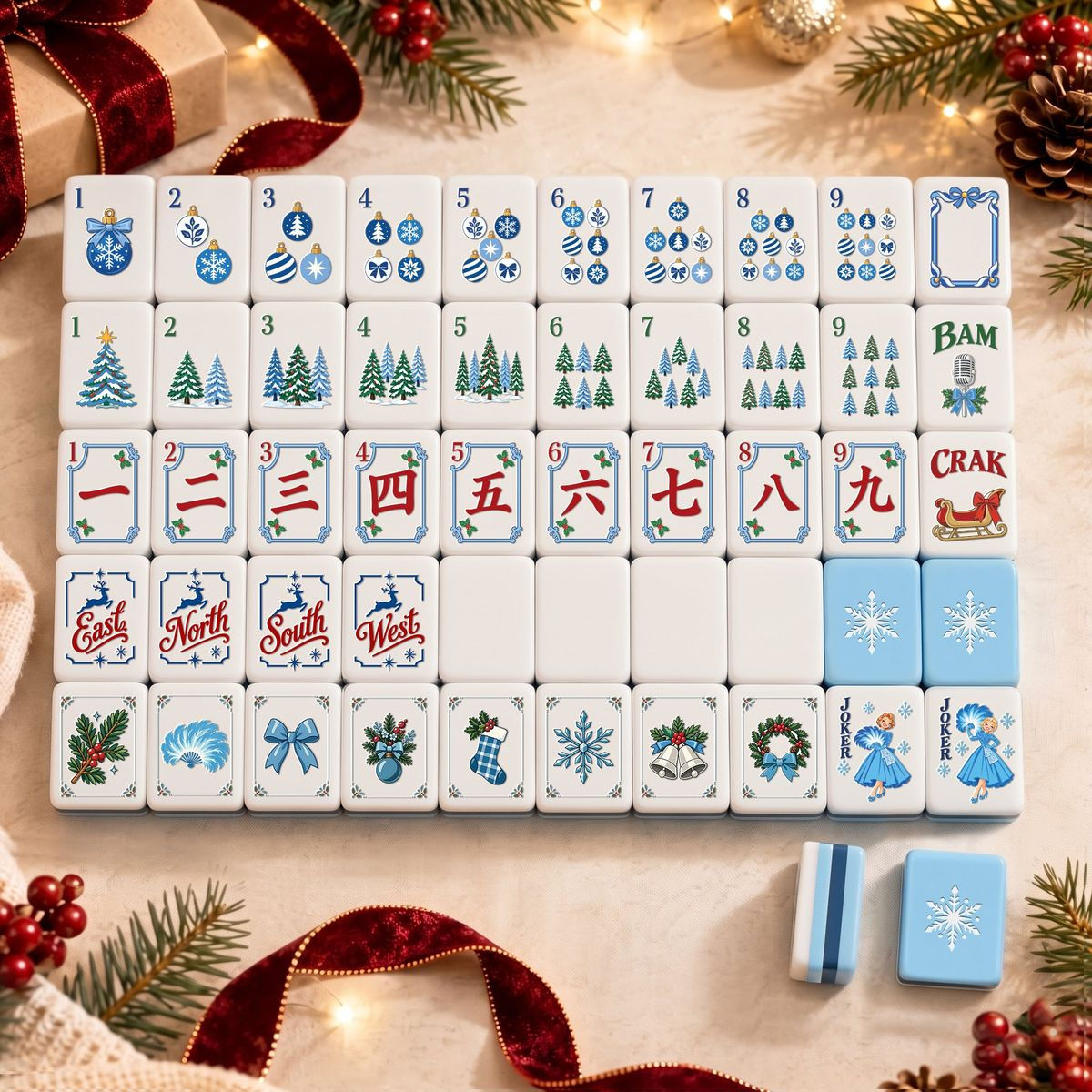
The 9 Crak is one of four identical tiles in American mahjong's Craks suit (numbered 1–9, four copies each). It shows the numeral 9 with a bamboo plant symbol. The Red Dragon always pairs with Craks, making the 9 Crak a natural partner in hands that call for "9 Crak + Red Dragon" sequences or higher-number pungs. It appears on the current year's National Mah Jongg League card in patterns requiring the top Crak value—typically in "nine-tile" or "like number" sections. You'll need to recognize the 9 Crak by its distinctive print on your tile face to avoid discarding it accidentally when building hidden hands. Mahstead's acrylic American mahjong sets display each number clearly so you can tell suits and values at a glance during fast play. 🀄 Shop best-selling mahjong sets →
What does the 9 Crak symbol actually show?
The 9 Crak displays the numeral 9 and a bamboo-plant design—the same visual across all four copies in your set. Unlike the 1 Bam (which shows a bird), the 9 Crak is purely numeric and botanical. Learning to identify it by shape rather than counting pips saves you precious seconds mid-game, especially when tiles are in hand or on the rack.

Why is 9 Crak paired with Red Dragon?
American mahjong convention links the Red Dragon to the Craks suit; the number 1 Bam (bird) pairs with Green Dragon; and White/Soap pairs with Dots. This color-suit relationship appears often on the card. Hands reading "9 Crak + Red Dragon + pung of honors" rely on this association—it's not random, it's structural. Knowing it helps you spot valid patterns faster.
Where on the card do 9 Crak patterns appear?
The National Mah Jongg League card organizes hands by type: "like number" sections (all 8s, all 9s, mixed nines), "consecutive run" patterns (including 7-8-9 sequences), and "quint/sextet" sections where the 9 Crak can anchor a pung or kong. Most hands are grouped by the number you're chasing. If your hand shows "all 9s," you're looking for every 9 Dot, 9 Crak, 9 Bam, and honor tiles that form the required shape. The card changes each spring, so your 9 Crak role shifts year to year.
How do you avoid discarding a needed 9 Crak?
Before the Charleston ends and you draw the first wall tile, study the current card's "all 9" section and note which honors pair with them. As you build your hand, keep the 9 Crak visible on your rack (not hidden behind smaller tiles) or mark it mentally as "essential." When you're not chasing a nine-heavy hand, it's often safe to discard early—but only after comparing it to your target patterns. Many players lose because they toss the 9 Crak not realizing the card shifted to a hand requiring it. Read your card before the game starts.
Why can't you use jokers to replace the 9 Crak in a pair?
Jokers work as wildcards in pungs, kongs, quints, and sextets—but never as a single tile or a pair. That means if your hand needs two 9 Craks (as part of a pair in an "all 9s" sequence), you must have two real 9 Crak tiles. You cannot use one real 9 Crak + one joker. This rule protects the integrity of pairs—they must be identical, genuine tiles. It's a common mistake for new players to try joker substitution for pairs, then realize mid-hand they've broken the rule.
Quick Recognition Checklist
When you draw or see a tile you think is a 9 Crak:
Look for the numeral 9 printed clearly on the face
Check for the bamboo symbol (distinguishes Craks from Dots and Bams)
Confirm it's not a 6 Crak or 8 Crak (compare to neighbors on the rack)
If playing with worn or faded sets, hold it to light—older tiles may lose contrast

Decision Table: When to Keep or Discard 9 Crak
Game Phase | Hand Type on Card | Keep 9 Crak? | Why? |
Before Charleston | All 9s or Like 9s | Yes | Core tile; needed later. |
After Charleston | Mixed/No nines | Safe to discard | Not required; open seat. |
Hand building (4–8 tiles) | All 9s + Red Dragon | Keep hidden | Protects your strategy. |
Hand building (8+ tiles) | Mixed/quint pattern | Discard if pung incomplete | Frees space; reduces clutter. |
Late discard (near hand end) | All 9s near completion | Never discard | One draw away—hold. |
This table helps you make fast, smart decisions without overthinking.
Real Player Tips
Acrylic sets make 9 Crak unmistakable. If you're upgrading from a cloth or paper set, you'll notice acrylic tiles sit upright on racks and display colors and numerals without squinting. Our best-selling mahjong sets use clear, consistent engraving so the 9 Crak is instantly recognizable. Speed matters in American mahjong—a tile you can identify in one glance means you spend more time thinking about strategy and less time decoding symbols.
Color-code your mental workflow. Many experienced players assign a quick mental rank to each suit: "Craks are red-linked, so 9 Crak goes with Red Dragon." This automatic pairing reduces the risk of building an illegal hand.
Keep old cards for reference. Save cards from past years. Patterns rotate; a hand using the 9 Crak in 2025 might differ from 2026. Comparing years teaches you where the 9 typically lands on the card and why.
What to Check Before You Buy a New Set
Can you read the numerals from across the table? Hand-painted or poorly engraved tiles cause confusion during play. Sit back two feet and verify each number is visible.
Do all four 9 Craks look identical? Inconsistency (color fade, uneven print) slows recognition and invites dealer disputes.
Is the bamboo symbol clear? You should distinguish Craks from Dots within a second, even in low light.
Does the set include enough spares? A full 160-tile set includes spare tiles for wear—essential if you play weekly.
🎁 See our most-loved mahjong sets & accessories →
Why Tile Quality Matters for Learning
Beginning players often blame themselves for missing the 9 Crak, when the real culprit is a worn or unclear tile set. Low-contrast printing forces you to squint and guess, burning mental energy you should spend on strategy. As you advance, investing in a clear, durable set—like our best-selling acrylic options—pays back tenfold. You'll spot the 9 Crak instantly, remember patterns faster, and enjoy the game more.
For context, American mahjong sets contain 152 playing tiles plus spares. Your 9 Crak is one of four in play; knowing where it fits on the card and how to keep it safe during the Charleston and early rounds separates casual play from consistent winning.
Common Mistakes New Players Make With the 9 Crak
Confusing it with 9 Dot or 9 Bam. The symbol (bamboo vs. dots vs. circles) is your lifeline. Drill this distinction before your first game.
Assuming one 9 Crak is enough. You need all four if the current card requires them. One player holding two blocks you from a win.
Forgetting joker rules apply to 9 Crak. You cannot use a joker as the second tile in a pair, even if you have one 9 Crak and one joker.
Discarding too early in all-9 hands. Patience is the skill here. If the card calls for all 9s, keep your 9 Crak through the first discard round unless you're certain your hand is wrong.
✨ Find your Mahstead set — free US shipping →

FAQ
How many 9 Craks are in a standard American mahjong set?
Four—identical copies. One player can hold up to four if needed, but typically they're spread among hands. All four must come from one set to ensure consistency.
Can I use a 9 Crak in a sequence like 7-8-9?
In American mahjong, no. You cannot expose or call a sequence (chow). Only pungs (3 identical), kongs (4), quints (5), and sextets (6) are valid. A 9 Crak in a hand must be part of a pung/kong or a pair.
What happens if I discard a 9 Crak and someone calls it?
They take it into their exposed pung/kong. If you're near the end of your hand, losing a 9 Crak might cost you the round. Always check the card before discarding high-value tiles.
Why does the 9 Crak pair with Red Dragon?
American mahjong convention links suits to dragons: Red with Craks, Green with Bams, White with Dots. Many card patterns exploit this pairing. It's a rule, not a coincidence.
If the card doesn't use 9 Craks this year, can I ignore them?
You should still recognize them (they may appear in the discard pile), but you won't chase them. Always scan the current year's card first to know what matters this spring.
How do I tell a 9 Crak from a 6 Crak in bad lighting?
The 9 is taller/wider in most sets. High-quality acrylic tiles like our sets stay legible in any light. If your set is hard to read, it's time to upgrade.


View More
View More
View More
