
8 Bam Mahjong Tile: Meaning, Symbol & Why It Matters
Last updated: Nov 23, 2026
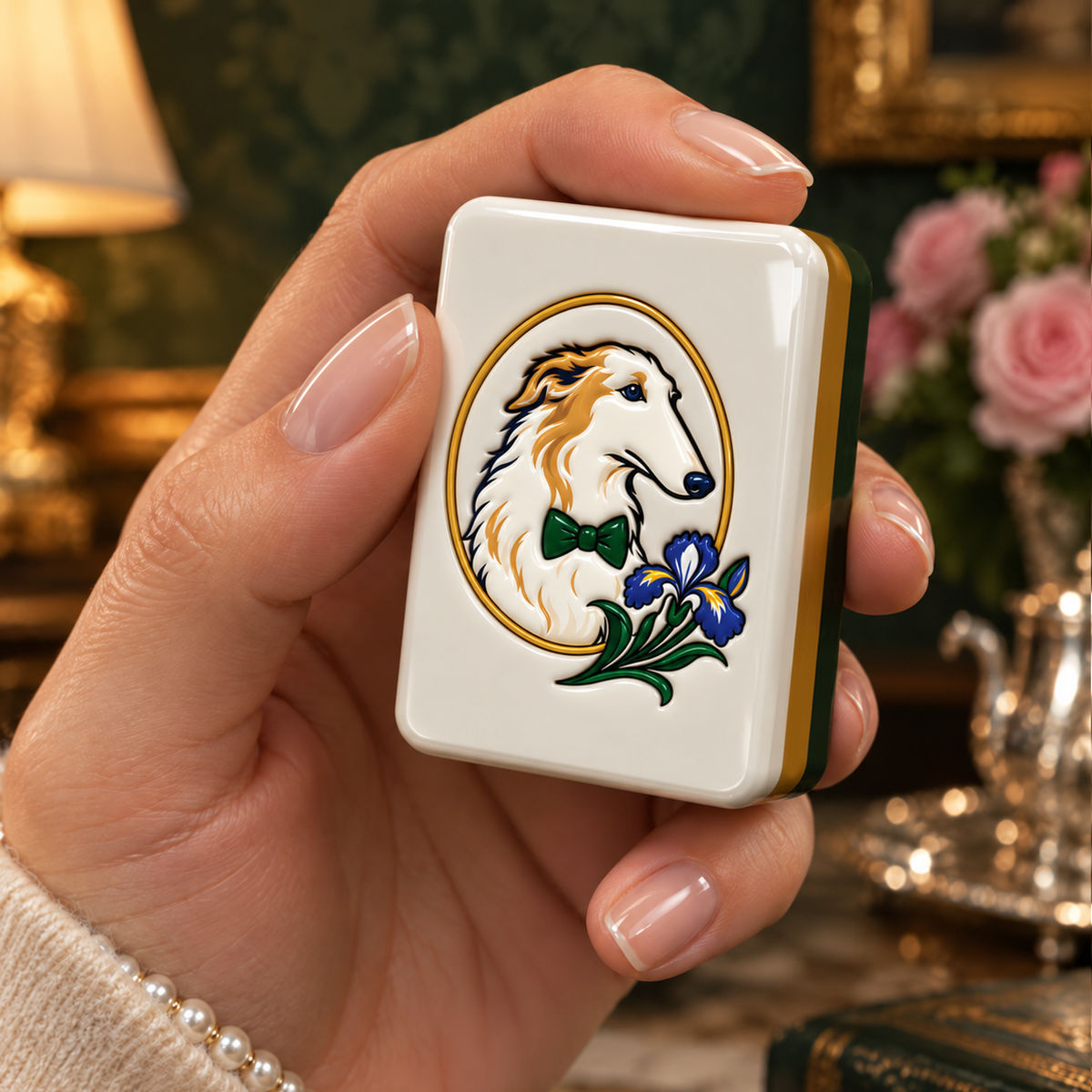
The 8 Bam is a numbered tile in the Bam suit (bamboo) of American mahjong, one of 108 suited tiles in every 152-tile set. It displays the number 8 alongside a bird illustration, which traditionally represents the eight birds of good fortune in Chinese art. Unlike the 1 Bam (which also features a bird), the 8 Bam's bird occupies the center with the numeral clearly marked. You'll need four copies of the 8 Bam in a complete set; they appear identical on their faces. The 8 Bam functions like any other numbered tile—you use it to form pungs (three identical), kongs (four identical), or as part of exposed melds on your rack. It never forms sequences in American mahjong, only identical-tile combinations. Recognizing the 8 Bam at a glance prevents draw confusion and speeds up hand-checking against the annual National Mah Jongg League card. Understanding what goes in an American mahjong set helps you spot every tile type confidently. 🀄 Shop best-selling mahjong sets →
Why Is the 8 Bam Called "the Bird Tile"?
The 8 Bam earns its nickname because it's one of only two tiles in American mahjong that displays a bird as its primary motif—the other being the 1 Bam. The bird on the 8 Bam appears centered on the tile face, often rendered in profile or classical pose. Historically, bamboo-themed tiles in Asian mahjong represent birds perched among stalks; the eight birds symbolize harmony and prosperity. In play, calling it "the bird" helps players communicate quickly during draws or tile-checking moments, especially when the lighting is dim or tiles are face-down on a fast shuffle. Knowing this visual cue means you'll never confuse it with the 8 Dot or 8 Crak, which use different suit symbols entirely.

How Do You Spot an 8 Bam Amid 152 Other Tiles?
Look for three markers simultaneously: the Bam suit symbol (vertical bamboo stalks or a bundle design), the numeral "8" printed clearly, and the bird illustration. The bird is the fastest identifier—your eye learns to pick it out in seconds after a few games. The tile's background color also matters; Bam tiles in most traditional sets carry a green or natural tint, while Craks are typically red and Dots are white or cream. On acrylic sets like those in our best-selling collection, the engraving or paint contrasts sharply, making the bird unmistakable even when tiles lie stacked on a mat. During the Charleston (the pre-game tile-passing ritual), speed-spotting the 8 Bam helps you grab it quickly if you need it for your hand.
What Hands Require the 8 Bam on Your Card?
The current National Mah Jongg League card (updated every spring) contains dozens of winning hand patterns. Some require three or four 8 Bams; others mix them with other Bam numbers. You cannot know which hands call for the 8 Bam until you learn how to read the card and study this year's patterns. For example, a hand might ask for "8 Bam pung" (three identical 8 Bams) alongside a Dragon or Wind. Another calls for "8, 9 Bam Kong" (four identical 8 Bams, combined with other melds). Tracking which hands on your card use the 8 Bam helps you decide during the Charleston whether to keep or pass it. Many players jot quick notes on their cards or memorize frequently-called hands to speed up decision-making.
Is the 8 Bam Ever Wild or Joker-Eligible?
No. In American mahjong, only the eight joker tiles and the White Dragon ("Soap") can substitute for any missing tile in a meld. The 8 Bam is always exactly itself. If a hand requires an 8 Bam and you draw a joker instead, you must use the joker to fill that spot—you cannot use the real 8 Bam elsewhere. This rule prevents confusion and keeps hands fair. Understanding how jokers work clarifies why the 8 Bam's rigidity matters strategically; it forces you to decide early whether a hand requiring 8 Bams is realistic given the tiles you hold and the jokers you've drawn.
What Common Mistakes Do New Players Make with the 8 Bam?
Many beginners confuse the 8 Bam with the 1 Bam because both show birds, then mix it with the 8 Crak or 8 Dot under poor lighting. The remedy: spend two minutes before each game laying out one complete suit and naming each tile aloud. Another mistake is trying to use an 8 Bam in a sequence (like 7, 8, 9 Bam together)—American mahjong forbids sequences entirely; only pungs and kongs exist. A third error is forgetting how many 8 Bams sit in the wall after the Charleston; if three are already exposed on players' racks, only one remains in the draw pile, making a hand requiring a full pung of 8 Bams nearly impossible to complete. Tracking visible tiles on the table helps you assess hand viability before you commit to it.
Quick Reference: Tile-Spotting Checklist
What to Check | The 8 Bam | Common Confusion | How to Avoid It |
Suit symbol | Bamboo stalks (green tint often) | 8 Crak (red), 8 Dot (white) | Memorize suit colors before play |
Numeral | Clear "8" printed | Could be 3, 5, or 9 if worn | Use a fresh, high-contrast set |
Main motif | Bird centered on tile | 1 Bam also has a bird | Note the numeral alongside the bird |
Joker-able? | No; always literal | Assume it can substitute | Review joker rules before each game |
How many in the set | Four copies (one per player) | Forget you drew/passed one | Track exposed melds visually |

How Many 8 Bams Should Be in Your Set?
Every complete American mahjong set contains exactly four 8 Bams—one for each player if every player drew one in their opening hand. A standard 152-tile set (the game size) includes four copies of every numbered tile 1–9 in each suit. When you host a weekly game, ensure your set has all four before you begin; a missing tile makes hands unplayable and the game impossible to complete fairly. If you're buying a new set, verify it's a full 160-tile set (which contains the 152 playing tiles plus spare jokers and blanks) so you have backups if a tile cracks or fades over years of play. Our best-selling sets arrive complete and organized, ready to shuffle and deal the same day.
🎁 See our most-loved mahjong sets & accessories →
Why Does the 8 Bam Matter Strategically?
Because the National Mah Jongg League card changes every spring, the frequency of hands calling for the 8 Bam varies year to year. In some seasons, many hands require 8 Bams; in others, few do. Players who memorize card patterns early in the year can assess hand viability faster during the Charleston and the opening draws. If you hold 8 Bam early and see many hands on your card don't use it, you're likely to pass it during the Charleston to keep space for higher-probability tiles. Conversely, if several of your favorite hands (the ones you'll pursue aggressively) require 8 Bams, you'll fight harder to keep it. Strategic tile retention and passing during the Charleston often determines whether you win or stay competitive; the 8 Bam is no exception. Learning the Charleston teaches you how to leverage this timing.
How Should You Organize Your Tile Rack When You Draw the 8 Bam?
Place all Bams together in numerical order (1 through 9) on your rack, keeping the 8 Bam visible at a glance alongside the 7 and 9. If your rack has pushers (small rods that slide tiles forward to organize and conceal), use them to separate your hand into suit sections and melds. Many players face their Bams toward the right side of their rack so they can scan quickly for combinations—e.g., if you draw a second 8 Bam, you spot it immediately and know you're one draw away from a pung. Exposed melds (pungs, kongs) sit outside your rack in front of you; when you expose a set of 8 Bams, place all three or four face-up on the table so the other players can see them clearly. Racks with pushers make this organization effortless and faster, especially during rapid-fire draws.
What If You Own an Older Set Without Clear 8 Bams?
Older or worn tiles become ambiguous over time; paint fades, engravings wear, and the bird on the 8 Bam blurs into the tile face. If you're playing with an antique or heavily-used set, consider it a backup for casual games only. For weekly games with real stakes or scoring, invest in a fresh set where every tile is legible. Acrylic sets with deep engraving or bright paint resist fading far better than bone or bamboo tiles used decades ago. If you love the aesthetic of vintage sets, display them and play with a modern, durable set simultaneously; many homes have both. When you're ready to upgrade, explore options that suit your hosting style—whether you want engraved personalization, vibrant colors, or compact travel cases.
✨ Find your Mahstead set — free US shipping →
What to Check Before You Buy a Mahjong Set
Verify the 8 Bam is present and legible. Hold it to light and confirm the bird and numeral are clearly distinguishable from the 1 Bam and other tiles.
Count all four copies. Lay out all Bams (1–9) and check you have four of each number.
Compare the tile size to your hands. Hold a sample tile; if it's too small or too large, your grip and speed suffer.
Test the tile weight and surface feel. Acrylic tiles glide smoothly on mats; some materials stick or feel fragile.
Inspect the case or storage. Does the set come with a bag or case? Will you need one for travel?
Check the mat condition. If included, ensure it lies flat and the grid lines are readable.

FAQ
What is the bird symbol on the 8 Bam?
The bird represents one of eight celestial birds in Chinese tradition, symbolizing luck and prosperity. It appears centered on the tile face and serves as the fastest visual cue to distinguish the 8 Bam from the 8 Crak and 8 Dot under any lighting.
Can I use an 8 Bam in a sequence like 7-8-9?
No. American mahjong does not allow sequences (chows). The 8 Bam can only form pungs (three identical) or kongs (four identical), never different numbers in a row.
How many 8 Bams must a complete set have?
Exactly four. One complete American mahjong set contains four copies of every numbered tile 1–9 in each of the three suits, including the 8 Bam.
Is the 8 Bam ever used as a joker or wild tile?
Never. Only the eight joker tiles and the White Dragon can substitute for missing tiles. The 8 Bam is always literal and cannot replace any other tile.
How do I quickly spot an 8 Bam during a fast shuffle?
Look for three markers: the Bam suit symbol (vertical stalks, often green), the numeral "8," and the bird motif. The bird is the fastest identifier—your eye learns it in a few games.
What if my set's 8 Bams are worn and unclear?
Use that set for casual play only. For weekly games or scoring, buy a fresh set with legible tiles. Acrylic sets resist fading better than aged bone or bamboo.
Why do I need to know which hands on the card use the 8 Bam?
Knowing card patterns helps you decide during the Charleston whether to keep or pass the 8 Bam. If few of your target hands require it, passing it frees space for higher-probability tiles.


View More
View More
View More
