
Mahjong vs Backgammon: Which Game Suits You?
Last updated: Nov 23, 2026
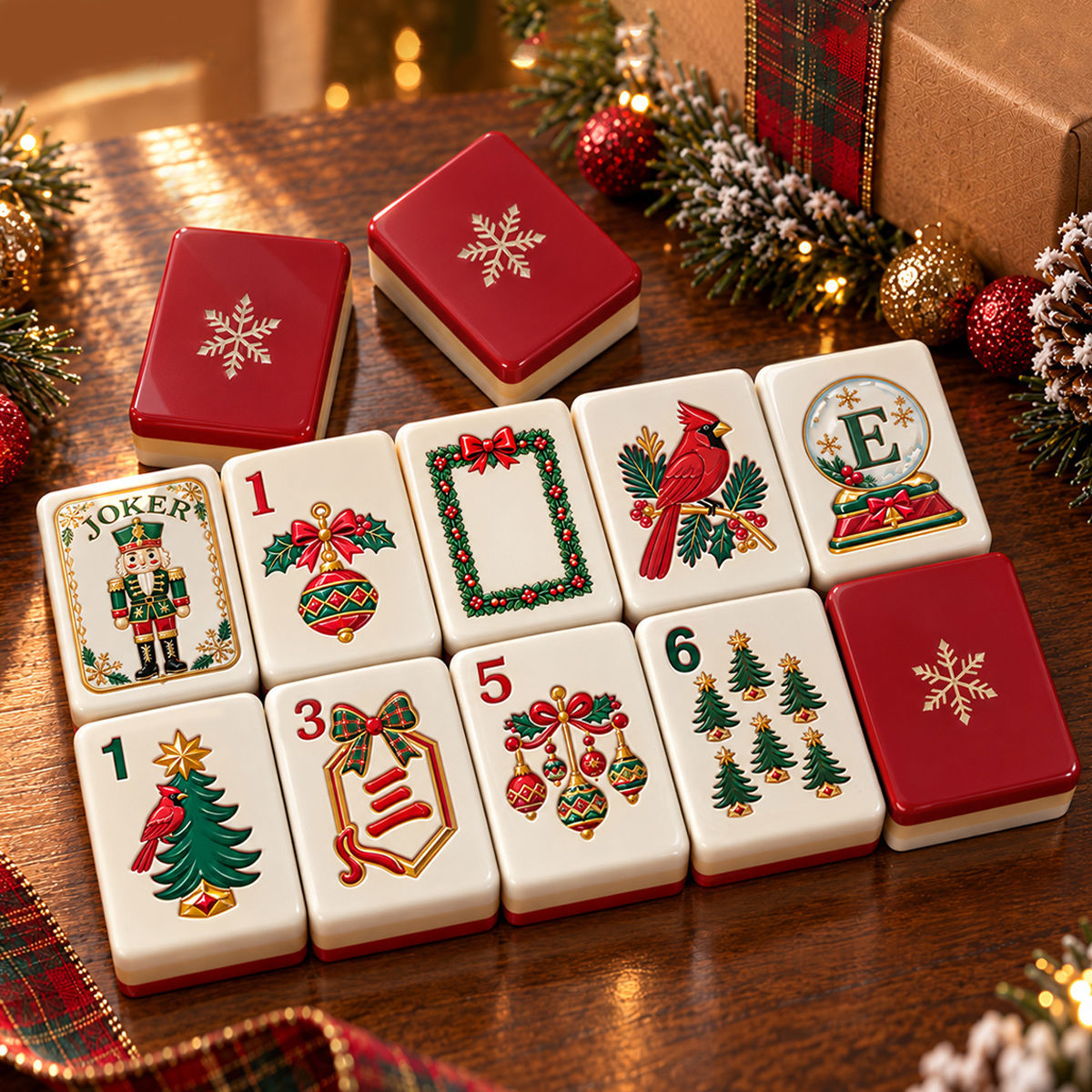
Mahjong and backgammon are fundamentally different games despite both being timeless and social. Mahjong (American variant) uses 152 tiles across three numbered suits, honors, dragons, and flowers; play involves drawing, discarding, and matching tiles to a yearly pattern card. Backgammon uses 15 checkers per player and two dice; the goal is racing your pieces around and off the board while blocking opponents. Mahjong typically takes 30–90 minutes per game with zero dice, relies on memory and hand management, and requires learning the current year's card. Backgammon plays faster (15–45 minutes), depends heavily on dice rolls, and uses unchanging rules across all variants. Mahjong demands four players; backgammon works best as one-on-one. Both reward strategy, but mahjong suits groups seeking pattern-recognition depth, while backgammon appeals to players who enjoy rapid decision-making and luck. Mahstead supplies complete American mahjong sets with tiles, racks, mats, and cards to get your group started immediately.
What's the core difference between the two games?
Mahjong is a tile-matching game where you build hands from a shuffled 152-tile pool, following a card of hand patterns that updates yearly. Backgammon is a race game where you move checkers based on dice rolls, trying to reach home first while strategically blocking your opponent. One rewards memory and planning; the other rewards speed and tactical positioning. Choose mahjong if your group enjoys puzzles; choose backgammon if you want quick, luck-driven rounds.

How long does each game actually take?
A typical American mahjong session runs 30–90 minutes per game, depending on hand difficulty and player speed. Backgammon games finish in 15–45 minutes, partly because dice eliminate the need for deliberation. Mahjong's first-time setup—learning to read the card and passing tiles in the Charleston—adds 10–15 minutes to your first session but becomes automatic. Backgammon requires no setup; you place checkers, roll, and begin. If you have an evening and want depth, mahjong wins. If you're between tasks and want a brisk game, backgammon is faster.
Do you need special equipment for each?
American mahjong requires a 160-tile set (152 tiles for play plus spares), a card, four racks, ideally a mat, and a bag for transport. Backgammon needs a board, 30 checkers (15 per side), and two dice. Mahjong is more equipment-intensive and fragile—tiles crack if dropped, and losing one ruins play. Backgammon is durable; checkers and dice tolerate rough handling. If you're hosting weekly games, mahjong gear demands careful storage; backgammon stores easily in a single box. Consider your group's travel habits: mahjong sets designed for transport protect your tiles and mat during car trips.
🀄 Shop best-selling mahjong sets →
How steep is the learning curve?
Backgammon rules fit on one page and take 10 minutes to learn; strategy deepens over years. Mahjong has no dice, so every move is intentional, and learning to read the card takes 2–4 games. American mahjong also enforces specific hand types from the yearly card, so beginners must memorize patterns. A newcomer can play backgammon competently in one session; mahjong takes 3–5 sessions before play flows naturally. Neither is insurmountable, but mahjong demands more upfront study. If you're teaching a mixed-skill group, start with backgammon. If your players already commit to weekly games, mahjong's complexity becomes an asset—it stays engaging for years.

Which game works better for groups?
American mahjong requires exactly four players; the game collapses with fewer or more. Backgammon plays best as a one-on-one match but accommodates variants for three or four people. Mahjong tournaments pair winners and rotate opponents, so groups of eight or twelve easily run a session. Backgammon works for drop-in play (two people at a time) and scales to tournaments, but the rhythm is different. If you're hosting a standing weekly group of four, mahjong creates camaraderie through team-like dynamics (sitting partners). If your attendees vary in number, backgammon's flexibility is an advantage.
Factor | Mahjong (American) | Backgammon |
Player count | Exactly 4 | 2 (1v1 best) |
Game time | 30–90 min | 15–45 min |
Rules learning | 3–5 sessions | 1 session |
Luck vs. strategy | ~40% luck, 60% skill | ~50% luck, 50% skill |
Setup time | 5–15 min (first time longer) | <2 min |
Equipment cost | Higher (set + mat + racks) | Lower (board + pieces) |
Equipment durability | Fragile (tiles break) | Very durable |
Repeat play appeal | High (yearly card changes) | Medium (rules stay the same) |
Social dynamic | Team-oriented; partner-based | Individual; head-to-head |
Which should your group actually pick?
Choose mahjong if:
You have a stable group of four who meet weekly.
You want a game that stays fresh (the card changes annually).
Your players enjoy pattern recognition and memory challenges.
You're comfortable with an investment in quality tiles and equipment.
Choose backgammon if:
Your player count varies or you have two people playing solo.
You want minimal setup and quick rounds between other activities.
Your group prefers luck-driven play and tactical positioning over memorization.
You value portability and durability over depth.
Both games reward social engagement. Mahjong demands a committed group; backgammon tolerates casual drop-in play. Neither is "better"—they serve different needs.
🎁 See our most-loved mahjong sets & accessories →
What should you check before you buy?
If you're leaning toward mahjong:
Verify you have exactly four regular players. A set sits unused if your group is too small or unpredictable.
Check the current year's National Mah Jongg League card online; confirm your group is comfortable with its hand patterns.
Measure your table space. A full game needs room for four racks, a discard wall, the draw pile, and a mat. A 48–60 inch table works; smaller tables feel cramped.
Budget for a complete set with mats and racks upfront; piecemeal buying costs more and delays play.
Start with beginner-friendly designs; engraved titles are fun after your group masters the basics.
If you're leaning toward backgammon:
Check that you have a flat, stable playing surface. Backgammon boards must sit level or dice rolls bias outcomes.
Confirm your group can commit to head-to-head play or rotate opponents fairly in a group setting.
No special equipment buys are necessary beyond the board and pieces.
✨ Find your Mahstead set — free US shipping →

FAQ
Can I play mahjong with fewer than four people?
American mahjong requires exactly four players—three or two people cannot complete the full game mechanics. Variants like two-player or three-player mahjong exist but use different rules; see our guide to 2 and 3 player rules for details.
Is backgammon harder to learn than mahjong?
No. Backgammon's basic rules take 10 minutes; you play competently in your first game. Mahjong takes 3–5 games to feel natural because you must learn to read the pattern card and memorize tile types.
Do mahjong and backgammon use dice?
Backgammon requires two dice for every move; they drive the strategy. American mahjong uses no dice—all draws are random but controlled by hand position and the shuffled tile pool.
Which game is better for a family group with mixed ages?
Backgammon suits mixed ages because rules are simple and play is brisk. Mahjong works if children are at least 10–12 and enjoy pattern games; younger kids tire from the memory component.
What if my group wants to switch between mahjong and backgammon seasonally?
Go for it. Store your mahjong tiles safely in a protective bag, and keep a backgammon board in the same cabinet. Both take up minimal space when not in use, and variety keeps your group engaged.
Can I teach mahjong from YouTube alone?
Partially. Videos teach hand-reading and tile management, but seeing experienced players draw and discard live accelerates learning. Watch videos first, then play a supervised game with someone who already knows the rules.


View More
View More
View More
