
Year Section of the Mahjong Card Explained
Last updated: Nov 23, 2026
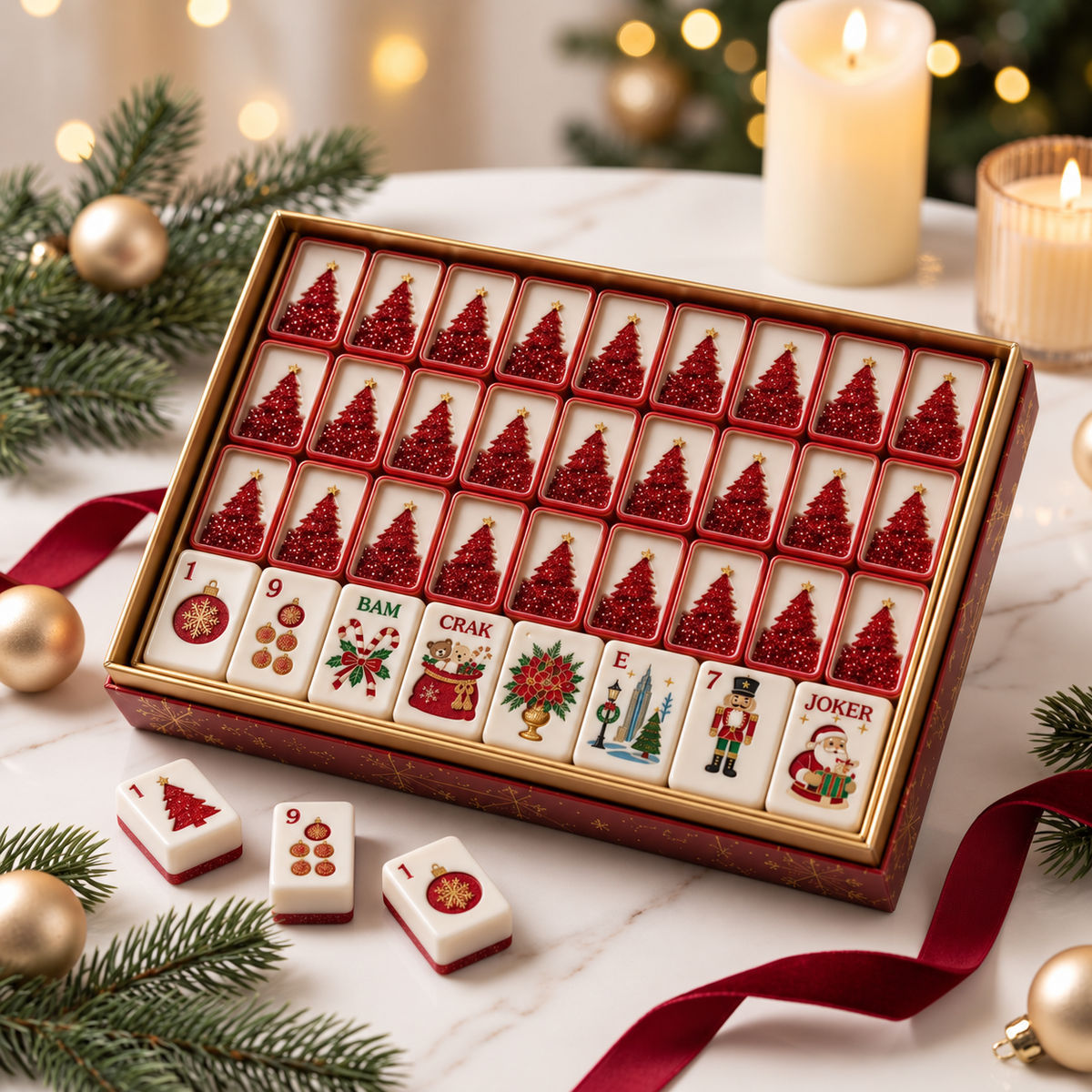
The year section of the National Mah Jongg League card is the seasonal division of all valid hands for that playing year. The League issues a new card each spring; American players may only play hands printed on the current year's card. The card is divided into sections—typically Spring, Summer, Fall, and Winter—plus numbered year-round categories. Each section contains dozens of hand patterns organized by structure (pungs, kongs, quints, sextets, pairs, and joker counts). You use it live at the table: after the Charleston, you form tiles in your rack and scan the card to find a matching pattern, then announce the hand and claim your win. The card costs nothing if you join a club or league; most casual home players print or purchase one alongside a set from our best-selling collection. Beginners often flip pages too slowly or misread tile sequences—we'll show you how to avoid both.
What exactly does "year section" mean on the card?
The year section refers to the specific seasonal or year-round division stamped on your current card. The National Mah Jongg League prints a new card annually (dated 2026, for example). That card's front or back is split into visible zones—Spring, Summer, Fall, Winter, or sometimes numbered rows—each showing dozens of hand patterns. You play only from that year's card; hands from last year's card are invalid, even if they look identical. This forces freshness and prevents memorization of a static set. Think of it like a rulebook that changes every year: you must own the current one.

How do I find my hand on the card quickly?
Start by noting your tile composition: count identical pungs (threes), kongs (fours), quints (fives), sextets (sixes), your pair, and joker count. Example: three Bams (pung), three 5 Dots (pung), four Craks (kong), one Flower pair, two jokers. Scan the year section matching your joker count first (left margin or top corner usually shows "0 Jokers," "1 Joker," "2 Jokers," etc.). Once you've narrowed the section, look for the structural pattern: pung-pung-kong-flower-pair. The card lists hands by exposure type and count, not by suit. Many new players search suit-first and waste time; joker count and structure are faster filters.
Why does the card change every year?
The League rotates the card annually to keep the game fresh, prevent rote memorization, and balance hand difficulty across seasons. A hand valid in 2025 may not appear on the 2026 card. This is deliberate: it ensures players engage with the game strategically rather than reflexively. It also allows the League to remove imbalanced hands and introduce new patterns. If you host regular games, keep the previous year's card for reference only—never play from it. Confusion between years is the single most common rule dispute we hear about at the table.

Which section should I prioritize when learning?
If you are a beginner, study the year-round sections (often numbered 1–10 or labeled "Regular") before tackling seasonal hands. Year-round sections contain the most fundamental patterns: simple pungs, basic kong structures, standard pairs. Seasonal sections add complexity: they may introduce quints, sextets, and trickier joker placements. Once you can spot year-round hands in 10–15 seconds, move to Spring. Many casual home players skip the seasonal sections altogether and play only year-round—this is legal and recommended for first-year players. How to read a mahjong card covers the entire card layout; refer to it alongside this article to see how the year section fits the bigger picture.
🀄 Shop best-selling mahjong sets →
What mistakes do players make with the year section?
Playing an old card: The most costly error. Last year's card looks identical to this year's—many players don't notice the date and play invalid hands. Always stamp or label your current card with the year and season.
Scanning the wrong joker section: If you have two jokers, but you scan "0 Jokers" or "1 Joker," you'll never find your hand. Double-check joker count before searching.
Confusing section names across variants: If you play American mahjong, the card's year section is specific to the National Mah Jongg League (NMJL) rules. Chinese or Hong Kong mahjong use entirely different scoring systems and no printed card—don't mix them.
Memorizing instead of learning patterns: New players try to memorize hand locations. This backfires when the card changes. Instead, learn why each pattern is valid: what makes a pung-pung-kong-pair different from a pung-kong-kong-pair. Pattern recognition beats rote memory.
Not keeping the card visible during play: Some players fold it or stack it under the discard pile. Keep it flat and centered on the table so all four players can reference it simultaneously. This prevents disputes and speeds up play.
Comparison: Year Section vs. Seasonal Section Decision
Section Type | Best For | Hand Complexity | When to Start |
Year-round (numbered rows) | New players, casual home games | Simple: 2–3 pungs, pair, jokers | Game one |
Spring | Intermediate players, tournament prep | Mixed: pungs, kongs, some quints | Month 2+ |
Summer | Experienced players | Advanced: sextets, minimal jokers | Month 4+ |
Fall | Advanced only | Very difficult: rare combinations | Month 6+ |
Winter | Expert players, seasonal tournaments | Hardest: complex multiples, traps | Month 9+ |
What to check before you buy or play with a new card
Verify the year printed on the front or back cover. Should match the current year (2026). If it says 2025, don't play it.
Confirm it's the National Mah Jongg League card. Other organizations (like tile manufacturers) print unofficial cards. The NMJL card is the legal standard for American mahjong.
Check that all sections are present. Damaged cards may have torn-out pages. Quickly flip through and ensure Spring, Summer, Fall, Winter (or all numbered rows) are legible.
Bring a backup. If you host weekly games, keep a second current-year card. Spilled drinks, dog ears, or lost cards happen; a backup keeps play moving.
Pair it with a quality rack and pusher set. A good mahjong rack with pushers keeps your tiles organized so you scan the card faster—less fumbling means quicker hands.
🎁 See our most-loved mahjong sets & accessories →
Three-Step Quick Reference for the Year Section
Step 1: Note your joker count (0, 1, 2, etc.).
Step 2: Identify your tile structure (e.g., three pungs, one kong, one pair).
Step 3: Locate the matching section by joker count, then scan for your structure. Average time: 8–15 seconds once you practice.
Players who internalize this workflow rarely call for a re-deal or rule dispute. Speed comes from pattern recognition, not memorization.
Why Mahstead's organized, engraved tiles matter here
When tiles are clearly printed and your rack is well-designed, you form tile groups faster, your card scanning improves, and you spot matches before opponents do. Worn or unclear tiles slow down the entire table. A set from our best-selling collection with crisp engravings and a solid mahjong mat creates a professional play environment where everyone can read the card and tiles without strain.
✨ Find your Mahstead set — free US shipping →

FAQ
Can I play a hand from last year's card if it's still printed on a newer card?
No. American mahjong rules require the current year's National Mah Jongg League card. Even if a pattern appears on both, you may only play hands from the card dated the current year (2026). Using an old card is an automatic loss and typically forfeits the game for that round.
Do all four players need their own card, or can we share one?
You can share one card placed centrally on the table, visible to all players. Sharing is common in casual home games. However, if play is fast, a second card is helpful so two players can verify hands simultaneously without blocking the discard pile.
What's the difference between the year section and the seasonal sections?
The year section is the entire card dated 2026 (or the current year). Within it, seasonal sections (Spring, Summer, Fall, Winter) organize hands by difficulty and theme. Year-round hands appear in a separate numbered area and are valid all year; seasonal hands are valid only during their respective seasons.
How often does the National Mah Jongg League release a new card?
Every spring. The new card typically becomes official around March or April. Many clubs transition at the spring equinox. Always check the League's official website or your local club for the exact changeover date.
If I'm playing with friends casually, do we *have* to use the official card?
Officially, yes—American mahjong rules require the current National Mah Jongg League card. That said, casual home players sometimes use house rules and older cards. If you want to play by the book, use the current card. If you're exploring the game, any card will work, but switching to the official card later teaches correct patterns.
What happens if I announce a hand that's not on the card?
The hand is invalid. You forfeit the round, and play passes to the next player. This is why scanning the card before announcing is crucial. Take your time; there's no penalty for a long search, but a false claim costs you the entire hand.


View More
View More
View More
