
Mahjong Dice: Choosing the Right Pair for Your Game
Last updated: Nov 23, 2026
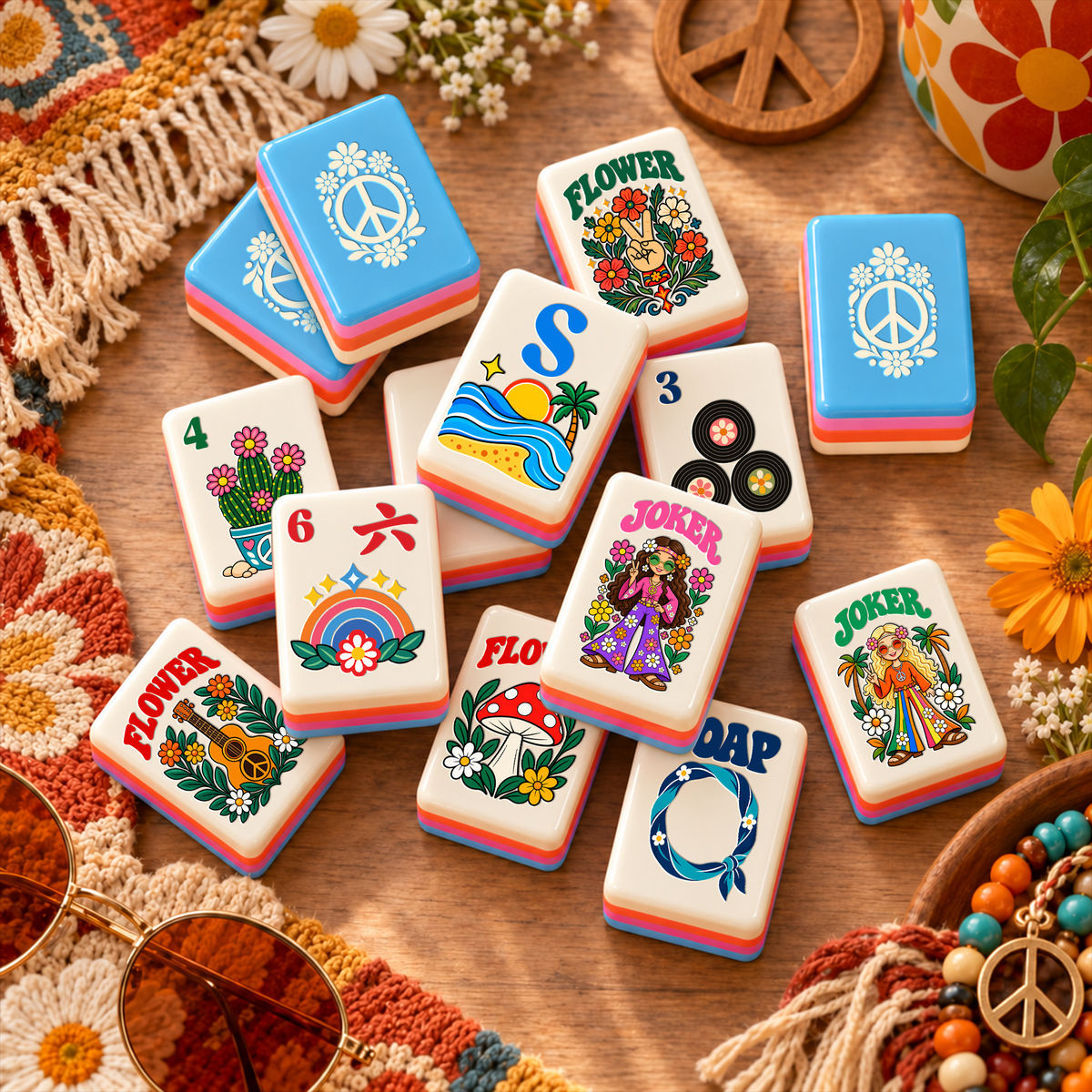
Mahjong dice are two six-sided cubes used to randomly select the dealing seat and the starting position on the wall in American mahjong. A standard pair consists of two regular dice (usually acrylic or wood) that players roll at the start of each hand. You need exactly one pair per game; they're often sold as part of a full set, though many experienced players buy a second pair as a backup or gift. We recommend acrylic dice for durability and consistent roll behavior—they resist chipping and don't absorb moisture from humid game rooms. Wooden dice offer warmth and traditional appeal but require careful storage. Weight and size matter: heavier dice (around ⅜ inch per side) roll more predictably than lightweight alternatives. Check that numbers are deeply engraved or painted so they remain legible after years of rolling on acrylic mats.
Why do mahjong dice need to be different from regular dice?
Standard six-sided dice work mathematically, but mahjong dice face unique demands. You'll roll them dozens of times per evening on hard acrylic mats, sometimes on wood or felt surfaces. Regular gaming dice often have shallow pip markings that fade or chip under that stress. Mahjong-specific dice are manufactured with deeper recesses or higher-contrast paint so players at all four seats can see the result instantly from across the table. Weight also matters: lighter dice bounce unpredictably on firm mats, creating disputes over the true result. A heavier pair (cast acrylic or quality wood) rolls true and settles decisively.
🀄 Shop best-selling mahjong sets →

What's the difference between acrylic and wooden mahjong dice?
Acrylic dice dominate competitive and casual American mahjong for three reasons: they're nearly indestructible, they roll consistently on acrylic mats, and engraved numbers stay legible for years. Wooden dice offer aesthetic warmth and align with traditional play, but they absorb humidity, can warp, and chip if dropped on tile or concrete. Over a season of weekly games, wooden dice show wear; acrylic dice look nearly identical. If your group plays in a climate-controlled room and stores dice in a dry case, wood works fine. If you play in basements, garages, or near windows where humidity fluctuates, acrylic is the practical choice. Many players buy one acrylic pair for regular play and keep wooden dice as a decorative backup.
How do you read the result when two players roll?
In American mahjong, two players roll the pair. The sum of both dice determines which wall becomes the dealing wall (1–12, with 12 usually meaning the East wall). Then the player who rolled adds their individual result to navigate that wall. For example: Player A rolls a 4, Player B rolls a 5. Total is 9—that's the starting wall. Then Player B counts nine tiles from the right end of their side of the wall to find where the dealer takes their first tile. If either player rolls a 1, it counts as 1 (not 7 or 13). Poor visibility leads to miscounts and arguments; quality dice eliminate that friction. Ensure your dice are large enough (at least ⅜ inch per side) and numbered boldly so all four players read the same result without leaning in.
What size and weight should mahjong dice be?
American mahjong dice range from ¼ inch (cramped, hard to read) to ½ inch (bulky but very clear). The sweet spot is ⅜ inch per side—large enough to see from ten feet away, compact enough to store in a small pouch. Weight varies by material: acrylic dice typically weigh 3–5 grams each, wooden ones 2–3 grams. Heavier dice roll further and settle more decisively; lighter dice bounce, especially on acrylic mats. If you're replacing dice in a set, aim to match the existing pair's weight and size so rolling behavior feels consistent from game to game. A mismatched pair—one heavy, one light—creates suspicion and play slows.
Feature | Acrylic | Wooden | Resin/Specialty |
Durability (years) | 10+ | 3–5 | 5–8 |
Cost basis | Mid | Low–mid | Mid–high |
Roll predictability | Excellent | Good | Good |
Humidity sensitivity | None | High | Low |
Appearance | Modern | Classic | Custom options |
Best for | Weekly groups, clubs | Occasional play, display | Themed sets, gifts |
🎁 See our most-loved mahjong sets & accessories →
How do you check dice quality before you buy?
Look for four specific marks: (1) engraved or painted numbers that are deep and sharp, not fuzzy or shallow; (2) uniform size on all sides (measure if possible); (3) even weight (compare both dice by hand if you can); (4) smooth edges—no burrs that catch on felt or mats. Roll each die at least twice on the surface where you'll play most. Do they settle decisively or bounce? On an acrylic mat, a quality die lands flat within one second. If a die rocks or tumbles for two or three rolls, the sides aren't balanced or the surface isn't level. Ask the seller if the dice are cast (more uniform) or injection-molded (faster, sometimes softer). We include paired dice with every best-selling mahjong set precisely because unmatched or low-quality dice create chaos during dealing.
Should you buy dice separately or as part of a set?
Most players buy dice as part of a complete set. Buying separately makes sense only if you're replacing a lost die, adding a backup pair, or collecting specialty dice (e.g., engraved names for a gift set). A set ensures all components—tiles, dice, rack, mat—work in harmony. Standalone dice are useful for clubs or organizations that run multiple concurrent games; having a spare pair avoids delays if one set's dice crack. Store-bought replacement dice sometimes don't match the weight or feel of the originals, so if you love your current set, buy a second pair identical to yours now and keep them in a dry storage case. Specialty dice (weighted, color-changing, or engraved with custom designs) are pure luxury—fun at a themed tournament or as a conversation piece, but functionally the same as standard acrylic.
What common dice mistakes do players make?
Mixing old and new dice. An original die from a 2015 set rolled thousands of times behaves differently than a brand-new one. Even slight differences in weight or balance affect rolling patterns. Solution: retire both dice together and buy a matched pair.
Ignoring humidity. Wooden dice stored near a sink or in a damp basement warp within two seasons. Numbers blur as the wood swells and shrinks. Store all dice in a sealed pouch inside a case.
Rolling on the wrong surface. Carpet or felt dampens a die's roll; it stops short and lands unpredictably. Always roll on the hard edge of your mat or table, not the felt area where tiles sit.
Betting on "lucky" dice. Some players believe a die that landed on 6 three times in a row is "hot." Dice have no memory. What changes is wear: a chipped or unbalanced die will indeed roll inconsistently, but that's physics, not luck.
Buying the cheapest option. Ultra-cheap plastic dice wear out in one season. Mid-range acrylic dice from a reputable set maker last a decade or longer.
✨ Find your Mahstead set — free US shipping →
What should you check before ordering mahjong dice?
Verify the material. Ask whether dice are acrylic (cast or molded), wood (solid or laminate), or resin. Acrylic is best for humid climates and heavy play.
Confirm the size. Request ⅜-inch dice minimum. Measure existing dice if replacing—consistency matters more than size alone.
Ask about number marking. Engraved numbers outlast paint. If paint is used, confirm it's heat-set so it won't peel after 500 rolls.
Check the pair weight. Both dice should feel nearly identical in your hand. If one is noticeably heavier, rolling won't be fair.
Confirm they arrive together. Dice ship as a pair in a small cardboard tube or cloth pouch. Check packaging before leaving the carrier—a loose die can roll during transit. Our sets ship with dice secured in individual slots inside the carton.
Ask about returns or replacements. If a die cracks in shipping (rare, but it happens), you should be able to request a replacement without repaying shipping. We cover outbound US shipping on all orders, and we'll replace a damaged die if you photograph it immediately upon arrival.

FAQ
Can I use a single die instead of two for American mahjong?
No. American mahjong requires two dice rolled together. One die determines the starting wall; the second identifies the exact tile stack within that wall. Using one die makes the dealing position predictable and breaks game fairness. Always roll both.
What happens if a die is lost during the game?
Stop play and use the backup die from your spare pair (or borrow one from a nearby table). Mark it clearly so you return the correct pair to its owner. Never substitute a coin flip or "count to" method—it defeats randomness and players will dispute fairness. Keep a backup pair at every game night.
Do I need different dice for 2-player or 3-player mahjong?
No. Dice work the same way in two-player and three-player variants. The math changes slightly (fewer walls, different bearing), but the two-die roll remains the standard for determining who deals and where tiles are drawn. Use the same dice you'd use in four-player games.
Can dice be engraved with names or dates as gifts?
Yes, and it's a lovely personal touch for a host or tournament prize. Engraving doesn't affect rolling performance if done by a professional on acrylic. Avoid deep engraving on wood (it can weaken the structure). Engraved dice also make sets instantly recognizable—useful if your group rotates hosting duties and someone takes home the wrong set.
How often should dice be replaced?
With acrylic, rarely. We've seen the same acrylic pair in use for 10+ years. Check annually for chips, cracks, or cracks in number markings. If either die bounces inconsistently or shows visible wear, replace both at once. Wooden dice typically need replacing every 3–5 years with moderate weekly play due to humidity effects.
Are weighted or "trick" dice ever allowed in American mahjong?
No. Any die suspected of being weighted, shaved, or altered is cause for immediate ejection from a club game. American mahjong is built on random chance. Use only standard, fair dice—acrylic or wood, matched pairs. Specialty dice are fun for home games among friends who know they're novelty, but never at a club table or tournament.


View More
View More
View More
