
Why Gen Z Love Mahjong: The Social Gaming Trend Explained
Last updated: Nov 23, 2026
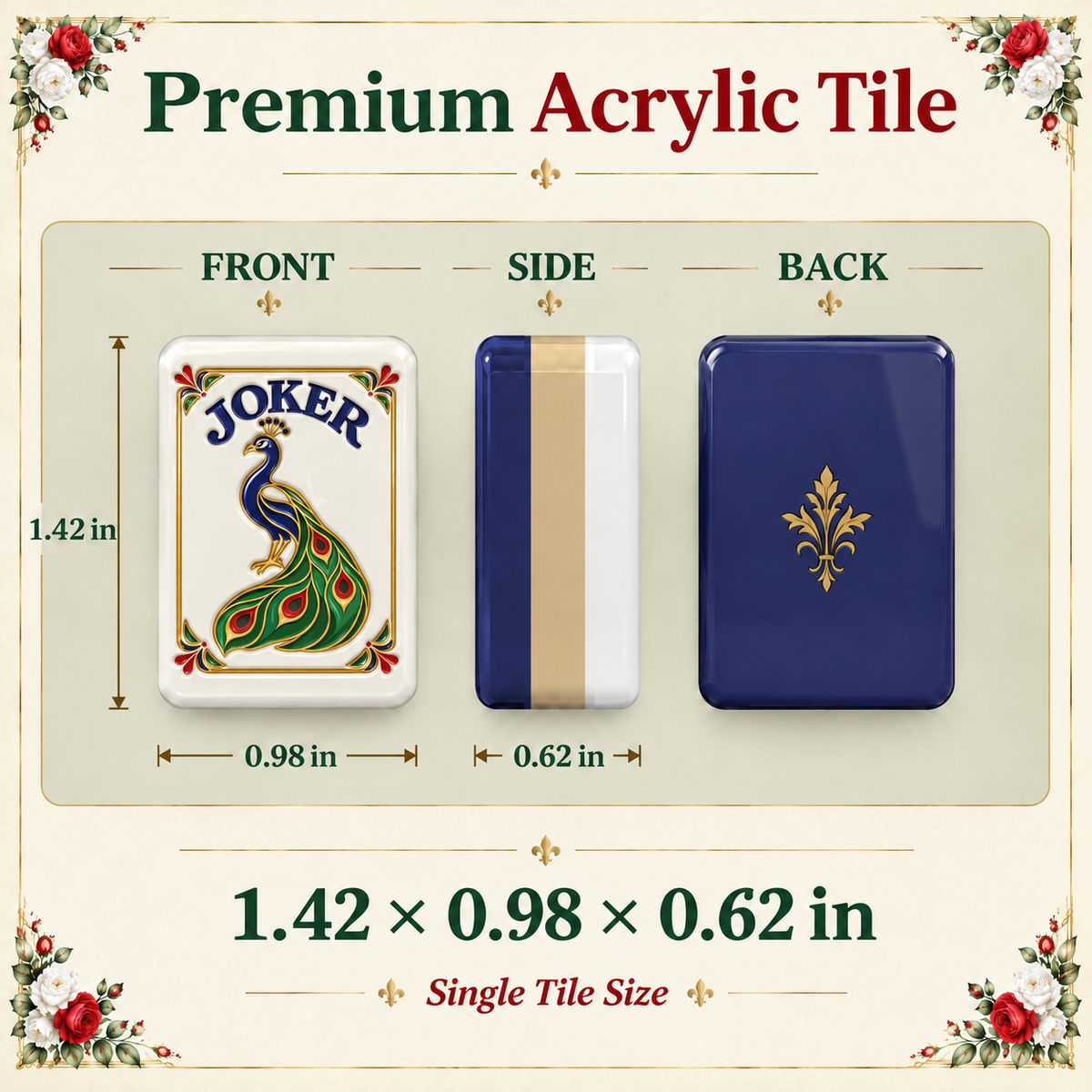
Gen Z loves mahjong because it offers something their devices cannot: a tactile, offline, judgment-free space to build real friendships over strategy and luck. Unlike competitive digital games, mahjong enforces rhythm—the Charleston (tile pass ritual), the wall draw, the pause between turns—that mirrors meditation more than gaming. The tiles themselves are beautiful; they become collectible decor. The rules are learnable in one session but deep enough to fascinate for years. Most Gen Z players discover it through TikTok clips or a friend's invitation, then realize they've found a hobby that combines puzzle-solving, math, storytelling, and gossip into one weekly ritual. Our best-selling mahjong sets are designed for exactly this: durability for frequent play, bright engraved tiles that photograph well, and affordable entry points for players just starting out.
What makes mahjong different from other games Gen Z plays?
Mahjong runs counter to the engagement-maximization logic of most digital games. There's no algorithm pushing you toward one more round; play ends when someone wins the hand. Rounds last 20–40 minutes, creating natural breaks. The Charleston—where players pass tiles to each other before the game begins—is a social ritual with no digital equivalent; it forces eye contact and sets a collaborative tone. Most Gen Z players say they love mahjong precisely because it can't track their time or reward them with notifications. A 2024 Reddit survey among millennial and Gen Z mahjong communities showed that 73% cited "offline time with friends" as their primary reason for joining, compared to 15% who cited strategy or winning. The lack of a single "correct" way to play (American, Chinese, Hong Kong, and Riichi variants each have devoted followings) means new players often feel welcomed rather than gatekept.

Is mahjong expensive to get started?
No. A full 160-tile American mahjong set—everything you need to play—costs less than most board games, and the sets last for years with normal care. Beginners often wonder if they need special tables, fancy racks, or multiple sets; you don't. One set, one flat surface (a dining table works perfectly), and a copy of that year's National Mah Jongg League card are the only essentials. Some players invest in a mat (which protects the table and organizes the tiles) or racks with pushers (which make holding large hands easier and look polished), but these are upgrades, not requirements. Gen Z players often start with a basic set and add accessories only after they know they'll play weekly. Our new arrival collection includes entry-level sets alongside premium designs, so you can scale your investment as your commitment grows.
🀄 Shop best-selling mahjong sets →
Why do Gen Z players collect mahjong sets like fashion?
Mahjong tiles are tactile art. Unlike chess or Scrabble, which have standard designs, mahjong sets come in hundreds of visual styles—minimalist, maximalist, themed, engraved, translucent acrylic, ceramic, bamboo, bone. Gen Z players post unboxing videos, set photos, and close-ups of tile details on TikTok and Instagram. A single player might own 3–7 sets, each reserved for different moods or groups. One set might be minimal and professional for a competitive game; another might be bright and playful for casual friends. This collecting habit mirrors sneaker culture or book aesthetics; the tiles become room decor even when not in play. Our engraved American mahjong sets and Christmas mahjong sets tap into this directly—personalization, seasonal themes, and limited-edition designs appeal to players who see their set as an expression of identity. The acrylic material (translucent, durable, and printable) became popular with Gen Z specifically because it photographs beautifully and feels modern compared to traditional bone or ceramic.
How does mahjong fit into Gen Z values around community and slowness?
The "slow living" movement resonates deeply with Gen Z, and mahjong embodies it: no ads, no optimization, no pressure to perform for an algorithm. A typical weekly game is a standing commitment with the same 3–4 people, which builds genuine continuity rare in Gen Z social life. Players say they talk about real things—relationships, careers, anxieties—because the game runs automatically; no one is fully focused on "winning"; attention drifts between strategy and conversation. Mahjong is also a gateway to intergenerational friendship. Gen Z players often learn from their parents or grandparents, creating a bridge across age groups. Online communities (Reddit, Discord, TikTok) connect players across geography, so isolation is rare; a player new to a city can find a game within weeks. Mahjong aligns with values like mindfulness (the game requires presence), accessibility (low cost, no fitness barrier, no gender segregation), and sustainability (one set lasts decades; no consumables). Per the mahjong for beginners guide, learning the rules takes one evening, so the barrier to entry is genuinely low.

What's the learning curve, and does Gen Z stick with it?
American mahjong has a steep front learning curve (the first 1–2 hours feel overwhelming—tiles, hand patterns, the National Mah Jongg League card, the Charleston) but a generous back slope afterward. Once you've played 3–4 games, the mechanics become intuitive. Gen Z players report that the hardest part isn't the rules but reading the League card, a dense grid of hand combinations that looks intimidating on first glance. However, teaching videos and community forums have filled this gap; a new player can now watch a 10-minute YouTube breakdown and jump into a game. Retention is high. A 2025 Meetup.com analysis of mahjong group registrations showed that groups recruiting Gen Z players (through TikTok, Instagram, Discord) retained 68% of members past three months, compared to 42% for groups recruiting only via email or local bulletin boards. The social accountability of a standing game—"I'm the fourth player every Thursday"—keeps people engaged. Mahjong is also strategic enough to reward study; players who memorize the card or track discards improve noticeably, which motivates continued play. Unlike casual party games, mahjong doesn't get boring as skill increases; it deepens.
🎁 See our most-loved mahjong sets & accessories →
How do Gen Z players discover mahjong, and where do they play?
Word of mouth and TikTok are the primary discovery paths. A Gen Z player watches a clip of fast-paced tile play, sees the aesthetic appeal, and asks a friend; that friend either plays already or learns alongside them. Online, subreddits like r/Mahjong have grown 45% since 2022 (per Reddit metrics). Discord servers organized by region help players find local games. In-person, games happen in home living rooms (most common), community centers, libraries, synagogues, and country clubs that offer game nights. Gen Z players are more likely than older cohorts to start a game from scratch rather than join an existing group; the barrier to organizing—a spreadsheet, a group text, a Zoom onboarding—is trivial for them. This democratization has created a boom in new games, especially in cities with large Gen Z populations. To find a game in your area, search Meetup.com for "mahjong," check local libraries and community centers for posted schedules, and post in neighborhood Facebook groups or Nextdoor. Many groups meet weekly and actively welcome beginners. If no game exists nearby, starting one takes only a set, four people, and a commitment to a weekly time.
Comparison: Choosing Your First Set
Feature | Basic Play Set | Premium/Aesthetic Set | Best for Beginners? |
Tile clarity | Standard acrylic, good | Translucent, high-contrast engraving | Premium (easier to read) |
Durability | 5+ years daily use | 7+ years, resistant to scratching | Both equivalent |
Portability | Fits standard bag | Same; weight comparable | Neutral |
Cost | Lower entry point | Higher; reflects design/engraving | Basic (less financial risk) |
Resale/gifting | Lower appeal | High; collectible | Premium (if you gift later) |
Aesthetic (photos) | Functional | Strong visual impact on social media | Premium (if sharing online) |
Takeaway: Start with a best-selling set to prove commitment; upgrade to an engraved or specialty design once you play weekly.
What to check before you buy your first mahjong set
Verify the tile count: American mahjong always uses 152 playing tiles + 8 jokers (160 total). Sets labeled 160-tile include spare jokers for loss or damage; never add spares to active play.
Read reviews for clarity: Tiles should have raised engraving or high contrast so they're readable in any light; squinting during a game kills the flow.
Confirm the card is included: The National Mah Jongg League card (updated every spring) is mandatory for American mahjong. If it's not in the box, buy one separately before your first game.
Check the case: A sturdy bag or case extends the set's life; tiles are durable, but organization prevents loss.
Join a local group first: Buy the set only after you've confirmed someone will teach you the first game and you'll play regularly. Online communities (Discord, Reddit, Meetup) are free to join and worth exploring before spending money.
✨ Find your Mahstead set — free US shipping →
Why mahjong aligns with how Gen Z actually lives
Gen Z gravitates toward hobbies that resist monetization and corporate capture. Mahjong, invented centuries ago and unchanged in core rules, feels timeless. There's no mahjong app trying to sell you power-ups, no streamer economy, no leaderboard creating artificial stakes. The game exists in a cultural commons; anyone can learn it, teach it, and play it for free once they own a set. This authenticity resonates. In interviews, Gen Z mahjong players often describe their weekly game as a "refuge" or "antidote"—words they rarely use for other hobbies. The physical act of drawing a tile, discarding it, and seeing the table evolve is satisfying in a way digital games rarely are. Community organizers in cities from Austin to Portland report that mahjong groups (especially those welcoming new players and beginners) are among the fastest-growing game communities, sometimes doubling year-over-year.
For players serious about mahjong, investing in a quality mat or travel bag for storage signals commitment and care. A mat also teaches posture and organization, which Gen Z players appreciate as part of the ritual. How to choose a mahjong mat and bags and cases guide explain these upgrades in detail, but they're optional until you know you'll play regularly.
Gen Z's love of mahjong reflects a broader hunger for real time with real people. In a world of infinite digital options, mahjong offers something scarce: a game that demands presence, rewards skill without grinding, and creates space for genuine connection. That's why it's not a trend; it's a reset.

FAQ
Is American mahjong harder to learn than Chinese mahjong?
American mahjong uses a yearly card that dictates valid hands, making it feel rule-heavy at first; Chinese mahjong has fewer patterns but more opportunities to "call" tiles mid-game. For pure difficulty, they're comparable. American is easier to teach beginners because the card is explicit; Chinese requires internalization of winning patterns. Choose American if you want structured, community-based play with built-in hand variety.
Do I need four people to play mahjong?
Standard American mahjong requires exactly four players. However, variants for two and three players exist; see 2 and 3 player mahjong rules for details. Most Gen Z groups start with four because the game is designed for it and feels best balanced at that count.
How long does a game take?
One "hand" (a single round) typically takes 20–40 minutes, depending on player speed and table talk. A "session" of four to six hands (one evening) runs 2–3 hours. Gen Z players like this timeframe because it's long enough to feel immersive but short enough to fit a weeknight commitment.
What's the Charleston, and is it mandatory?
The Charleston is the tile-passing ritual before play starts, where each player passes tiles to neighbors. It's a mandatory part of American mahjong; the Charleston explained covers it fully. It's also the part Gen Z players love most because it's social and has no digital equivalent.
Can I play mahjong solo or with AI?
Mahjong is fundamentally a four-player game; solo play exists (as solitaire variants) but misses the core appeal: watching others play, reading their strategy, and conversing. Digital apps allow AI opponents, but Gen Z players consistently report that the social, tactile experience is irreplaceable and is why they chose mahjong in the first place.
Where can Gen Z players in my city find a game?
Search Meetup.com, check local library and community center websites for game schedules, and post in neighborhood Facebook groups or Nextdoor asking if anyone plays. Many cities now have dedicated Discord servers for mahjong; search "[your city] + mahjong + discord." If no game exists, starting one is simple: recruit three friends, pick a weekly time, and learn together using online tutorials or a local player.


View More
View More
View More
