
Why Families Love Mahjong: Connection, Fun & Brain Boost
Last updated: Nov 23, 2026
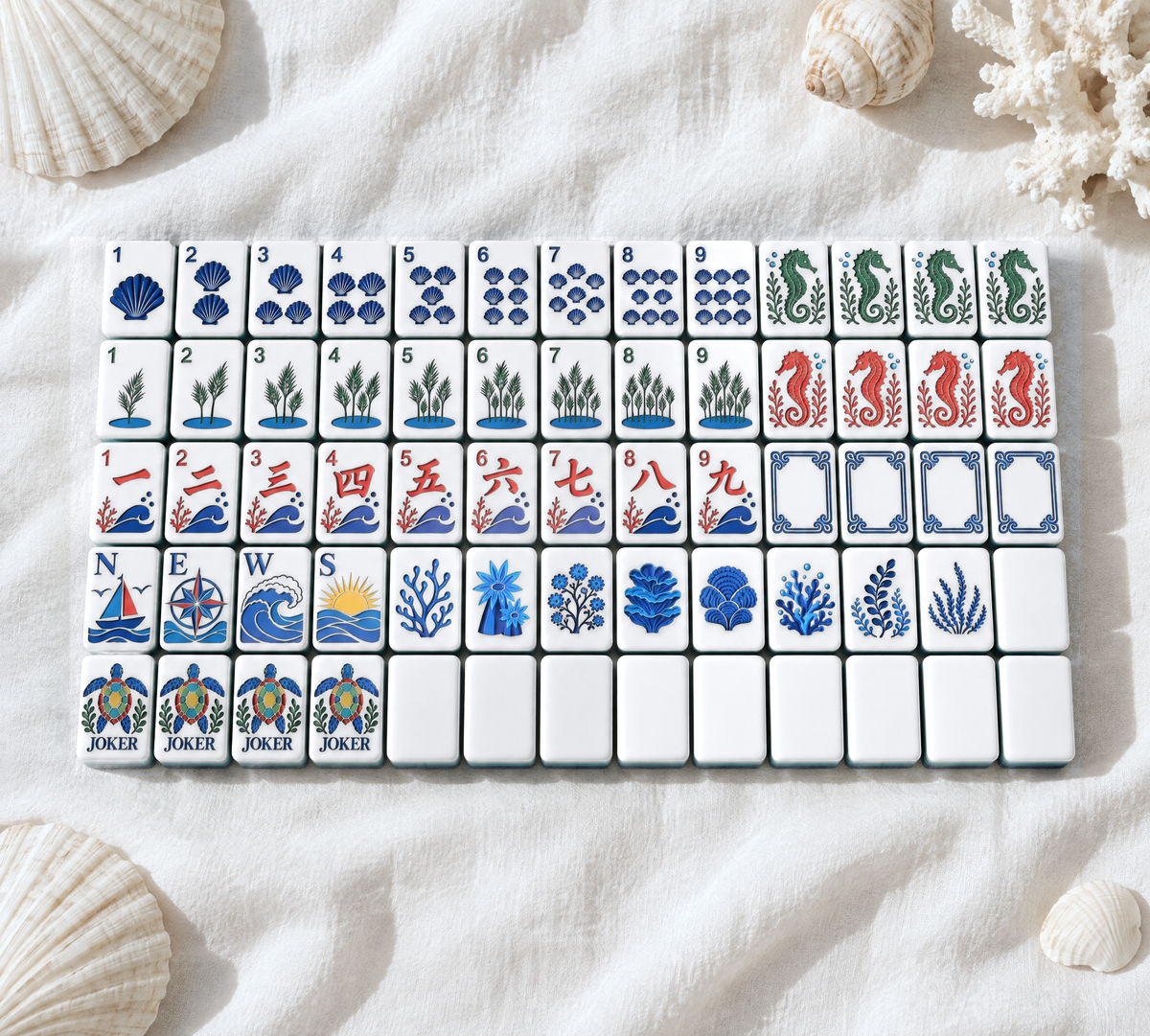
Families love mahjong because it combines simple-to-learn rules with genuine strategic depth, welcoming grandparents and teenagers at the same table without condescension. The game unfolds over 2–4 hours, creating natural conversation rhythm; tiles feel tactile and satisfying; and each hand feels fresh because the National Mah Jongg League card changes every spring. It requires no apps, no luck-only gambles, and no one gets eliminated mid-round—everyone plays all 13 hands. A standard American set from Mahstead contains 152 playing tiles plus 8 jokers, costs accessible for any household budget, and lasts decades with care. The real magic: families who start with "let's try it once" end up hosting weekly games, recruiting cousins, and debating hands at the dinner table for years afterward.
What makes mahjong different from other family games?
Unlike poker or bridge, mahjong has no bluffing—your hand is semi-visible. Unlike Scrabble or Monopoly, it ends on a fixed schedule and everyone stays engaged all the way through because you're always drawing and discarding. American mahjong also requires zero luck: there's no dice, no shuffled cards that betray you—only skill, memory, and strategic discard timing. Games take 1.5 to 3 hours depending on table speed, giving families a meaningful block of time together without the open-ended commitment of a full evening.
🀄 Shop best-selling mahjong sets →

Can grandparents really play alongside teenagers?
Yes, without anyone feeling patronized. The learning curve is gentle: tile names (Bams, Craks, Dots, Winds, Dragons) take 10 minutes; the mechanics of matching, exposing, and calling take one practice hand; reading the current year's card takes 15 minutes for beginners. Grandparents often excel because mahjong rewards memory and pattern recognition—strengths that don't fade with age. Teenagers enjoy the strategic layers: hand-building, counting remaining tiles, and calculating which discards leak fewest options. Younger kids (8+) can play simplified versions or shadow a parent. The key: invite everyone to play at their own pace, explain hands without criticism, and celebrate near-wins as loudly as wins.
How does hosting work? What do you actually need?
You need a table, four chairs, one standard 152-tile set, a mat to protect tiles and muffle noise, and a current year's National Mah Jongg League card. That's the minimum. For comfort: four racks with pushers so players don't hold tiles in hand for hours (back strain is real), a scorepad, a timer for Charleston (the tile-passing ritual), and ideally a mat that defines the play zone and lets tiles glide smoothly. Our best-selling sets come in acrylic, which cleans with a damp cloth and won't crack if a tile drops. For a first game, borrow or buy a basic set; after three weeks, you'll know if investing in a custom or specialty set makes sense for your family's style.
Why does the game create such strong family traditions?
Mahjong anchors time. Unlike casual phone scrolling or streaming together, mahjong requires presence: you can't check texts mid-hand without losing the thread. You sit across from each other, you read faces, you joke about unlucky discards, you celebrate a win together. Many families play the same day each week—Thursday night, Sunday afternoon—and that consistency matters. The game also levels: a parent who dominates at work sits next to a high-schooler who reads tiles better. A grandparent who can't hear well hears the satisfying clack of a tile being drawn, making the game accessible to multiple abilities. Over months and years, these nights accumulate into family folklore: "Remember when Dad won with a hidden Kong?" or "That's the night Grandma taught us the Winds."
🎁 See our most-loved mahjong sets & accessories →

What's the honest barrier to entry—and how to clear it?
The biggest barrier is rule confusion. American mahjong looks like Chinese mahjong but plays differently—sequences (chows) are not allowed, only matched triplets (pungs), quads (kongs), and fives/sixes. Many families start by watching a YouTube tutorial, which helps, but fumble the first two hands. The solution: invite a friend who already plays, or find a local community center or library that hosts beginner classes (check your area's recreation department or library website). The second barrier is the mahjong card—it's dense and looks like a secret code at first. Spend 10 minutes mapping out three hands before you play; your brain will grab the pattern. The third barrier is cost anxiety: a quality set feels expensive if you're unsure you'll play more than once. Budget solution: start with a simpler set from a local Asian market (usually under typical retail) and upgrade to a custom or specialty set only after you've hosted three games and know your family's taste.
How do you know if your family is ready to commit?
After your first or second game night, watch for two signs: (1) do people ask when the next game is? (2) are you tempted to pull out the set mid-week, just to review hands or practice? If yes to either, you're ready to invest. At that point, buy a proper mahjong set, racks, and a mat—not because you must, but because the tactile pleasure and durability will deepen your family's commitment. Many families who host weekly games report that these nights became their favorite family tradition, more meaningful than holidays because they're intentional and recurring. If your family doesn't take to it after three tries, no shame—mahjong is not for everyone, and that's okay. But the families who do stick with it often tell us they can't imagine their rhythms without it.
What to Check Before You Buy
Set durability: Acrylic tiles clean easily and last decades; bone/bamboo sets are beautiful but need more care.
Tile size: Standard American tiles suit adults; confirm the set fits your table and hand sizes.
Mat thickness: A padded mat reduces noise and protects tile edges during years of play.
Rack compatibility: Most Mahstead racks fit standard tiles; confirm before buying separately.
Joker clarity: Ensure jokers are visually distinct so you don't accidentally play them as regular tiles.
✨ Find your Mahstead set — free US shipping →
Comparison: Gift Sets vs. Everyday Play Sets
Set Type | Who It's For | Why It Works |
Standard acrylic set + racks + mat bundle | Families starting weekly games | Everything you need; tiles feel premium; racks save hands. |
Engraved or custom set | Long-time players, milestone gifts | Personalized; marks "this is our game"; becomes a keepsake. |
Specialty travel set with bag | Players who host at multiple homes | Compact; travel bag protects tiles in transit; fits a sedan. |
Christmas or holiday-themed set | Families looking for a gift anchor | Signals this is a gift; themes add personality; shipped ready. |
Why Weekly Games Stick
Once a family hosts their second or third game night, attendance stabilizes. Here's why: mahjong has no score that humiliates—you can lose a hand and still have fun. It has no elimination—everyone plays all 13 hands, so a slow start doesn't doom you. The conversation during play is easy: talking about tiles, strategy, or family gossip while shuffling. And the rhythm—shuffle, deal, Charleston, play, tally, repeat—is predictable, which is comforting. Families often report that mahjong nights become the one time everyone puts phones down and shows up present.

FAQ
Do all family members need to be equally skilled?
No. Mahjong rewards pattern recognition and memory, which vary by age and experience, not intelligence. A beginner and an expert can sit at the same table if the expert plays their own game without coaching; both have fun.
How long until a family feels confident enough to host others?
Three to five games. By the third hand of the second game night, most families understand the rhythm well enough to teach a friend watching. By the fifth game, you'll feel comfortable hosting strangers or inviting new relatives.
Can you play mahjong with fewer than four people?
Yes. American mahjong has two and three-player variants with modified tile counts and hand structures, though four-player is most common and easiest for families starting out.
What's the real cost to get started—set, mat, racks, card?
See current price on the product pages. Families typically start with a set and card only (minimum), then add racks and a mat once they commit to weekly play. Mahstead ships all across the US free.
How do you keep the game feeling fresh if you play weekly?
The National Mah Jongg League card changes every spring, so new hand patterns appear each year. Beyond that, the psychology of the game—who discards what, when you draw a lucky tile—is never identical. Families also rotate who keeps score, who shuffles, or who sits East (dealer), which shifts table dynamics.
Is mahjong too complicated to teach kids?
Not if they're 8 or older. The tile names take 10 minutes; reading patterns takes practice. Start kids as an observer or let them shadow a parent, calling out what they see. Interest usually grows fast once they grasp one hand.


View More
View More
View More
