
Chinese vs. Vietnamese Mahjong: Key Differences & Rules
Last updated: Nov 23, 2026
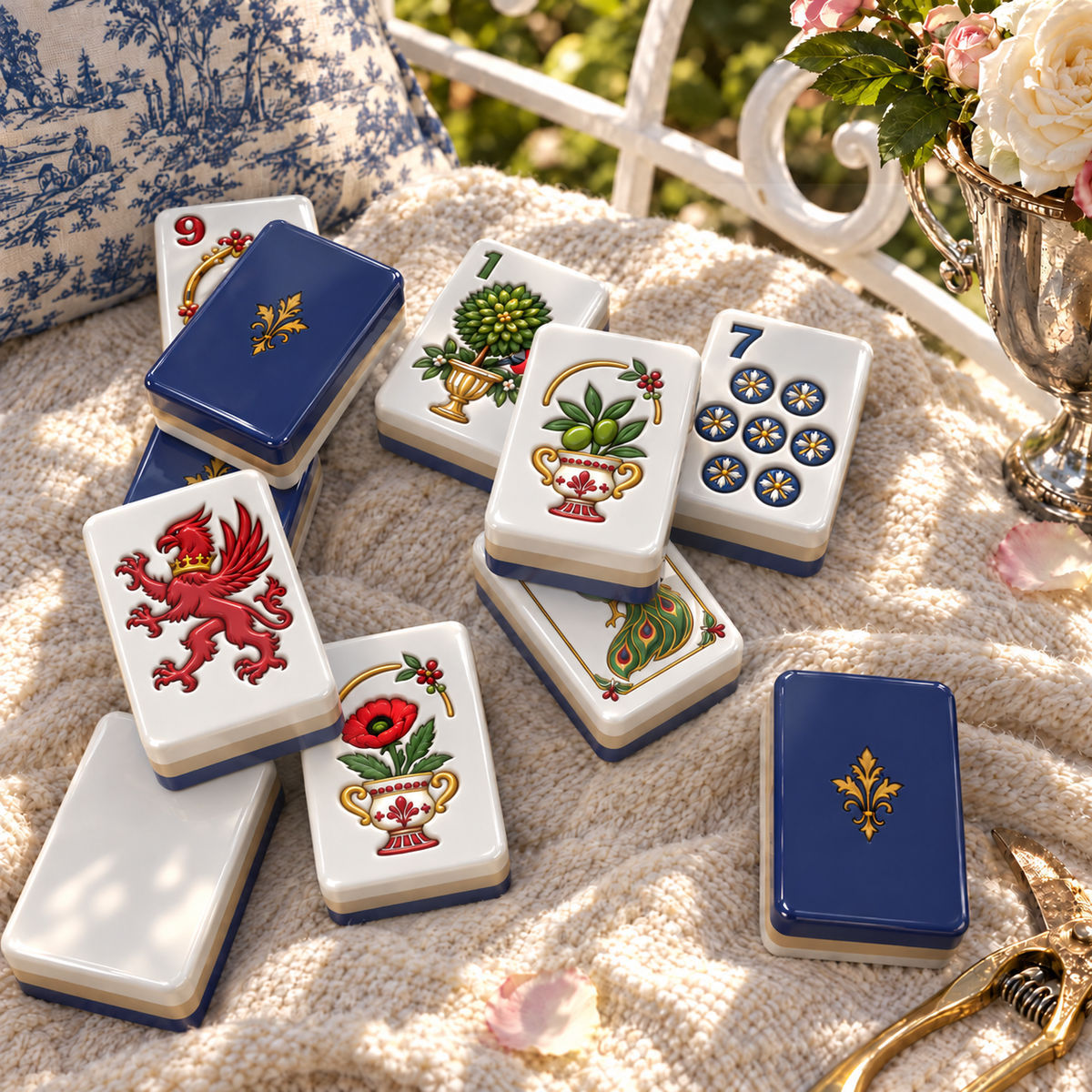
Chinese mahjong uses 144 tiles (36 per suit: Bam, Crak, Dot; 16 winds; 12 dragons; 8 flowers; 8 jokers in some regional variants) and emphasizes melding, concealment, and silent play. Vietnamese mahjong also runs on 144 tiles but employs simpler hand-winning patterns, louder calling, and faster rounds suited to social, high-volume play. American mahjong stands apart: it uses 152 playing tiles, requires hands from the current-year National Mah Jongg League card, and includes the Charleston—a pre-game tile-exchange ritual unknown in Asian variants.
Many players switching between variants stumble because they expect the same tile distribution or hand logic. This guide walks through the practical differences, so you can host the right game and buy equipment suited to your chosen style.
How do tile counts and composition differ?
Chinese mahjong: 144 tiles total—108 numbered tiles (1–9 in three suits × 4 copies), 16 winds (4 each: N, E, S, W), 12 dragons (4 Red, 4 Green, 4 White), 8 flowers. No jokers in classical play; modern variants may add them. Vietnamese mahjong: identical tile distribution (144 tiles, same suits and honors). American mahjong: 152 playing tiles (144 base + 8 jokers), replacing one White Dragon copy with a second White Dragon known as "Soap," and using jokers as wildcards in exposed melds only—never in concealed pairs or single tiles.
Key difference: All three variants share the same base 144-tile structure, but American mahjong adds jokers and a rule framework around their use that Chinese and Vietnamese play do not employ.

What are the main hand-winning patterns?
Chinese mahjong hands require a standard melds-plus-pair win: four melds (each a pung, kong, or chow—a sequence like 1-2-3) plus one pair. A player may hold tiles concealed and declare "mahjong" only when their hand meets the condition. Bonus tiles (flowers, seasons) are drawn separately and replaced.
Vietnamese mahjong similarly uses four melds plus one pair, but hand patterns are often simpler, with fewer bonus combinations and faster recognition. Calling is more open and frequent.
American mahjong differs fundamentally: there is no standard "four melds plus pair." Instead, hands come from the seasonal National Mah Jongg League card—a list of 50–70 specific patterns issued each April. A player must match their exact tiles to a card hand and then declare the hand number and seat position. No sequences (chows) exist in American play; only pungs (3 identical), kongs (4 identical), quints (5), and sextets (6) are exposed. Jokers wildcard these exposed melds but never appear in pairs or single tiles.
Conclusion: Chinese and Vietnamese hands follow classic melds-plus-pair logic; American hands follow a curated seasonal card, making it more rigid but more accessible to newcomers who simply memorize the card each year.
How does calling and concealment work differently?
Chinese mahjong emphasizes silent play and concealment. Players typically hold their tiles hidden, reveal few melds (keeping hand density high), and call "mahjong" only at completion. Discards are read carefully for clues. The game rewards memory and deduction.
Vietnamese mahjong encourages louder calling and more frequent melds. Players announce "pung," "kong," or "chow" during play, exposing melds openly. Social noise and banter are common. The pace is typically faster, and the learning curve gentler.
American mahjong lies between these poles. Players keep their hand mostly hidden but use an open card visible to all four players. They call specific hand numbers and track which seat they occupy. Melds (pungs, kongs, quints, sextets) are exposed and announced clearly. Jokers in exposed melds are called out. The dynamic is structured, rule-bound, and moderately social.
Conclusion: Chinese play is silent and deductive; Vietnamese is loud and social; American is structured and card-driven.
What roles do jokers and wildcards play?
Chinese mahjong traditionally includes no jokers; classical play uses only the 144 base tiles. Some modern regional variants (e.g., Hong Kong, Sichuan) add jokers, but their use is optional and regional.
Vietnamese mahjong similarly plays without jokers in the standard game, though modern home games sometimes include them informally.
American mahjong mandates 8 jokers as integral to the 152-tile set. Jokers wildcard any tile within an exposed pung, kong, quint, or sextet—but never in a pair or single tile. If a player has a joker in their exposed quint and someone needs that tile, the quint cannot be broken; the joker stands in place. This rule prevents exploitation and keeps the hand intact. How jokers work governs every standard American game and is a common source of beginner errors.
Conclusion: Chinese/Vietnamese play is joker-free; American play depends on jokers as wildcards in exposed melds only.
How do scoring systems compare?
Chinese mahjong scoring is complex and regional. Most systems award base points (e.g., 8 points for a simple hand, 16 for a harder pattern) plus multipliers for lucky combinations (like a hand of all one suit, all terminals, or all simples). Settlements flow from losers to the winner. Regional variations (Hong Kong, Sichuan, Shanghai) have different multipliers and bonus rules.
Vietnamese mahjong scoring is simpler: most home games use a flat point system—a winner collects a fixed or variable amount from each loser (e.g., 1 point per hand or scaled by hand difficulty). The emphasis is speed and social play over complex arithmetic.
American mahjong uses point values drawn from the seasonal card. Each hand on the card lists a point value (often 30, 40, 50, 60, or higher); the winner collects that value from each of the three losers. Bonuses apply for concealed hands and certain tile combinations. Scoring is deterministic and printed, not calculated at the table.
Conclusion: Chinese scoring is regional and multiplier-heavy; Vietnamese is fast and flat; American is card-based and deterministic.

Which variant should you choose for your game group?
Variant | Best for | Tile Count | Learning Curve | Play Style |
Chinese | Memory, deduction, quiet strategy | 144 | Steep (regional rules) | Silent, concealed, long rounds |
Vietnamese | Speed, social energy, newcomers | 144 | Gentle (simple patterns) | Loud, open calling, fast rounds |
American | Rule clarity, seasonal novelty, North America | 152 + 8 jokers | Moderate (card-based) | Structured, card-driven, medium pace |
Choosing wisely: If your group values memory and quiet strategy, Chinese mahjong rewards deep study. If your group prizes speed and social noise, Vietnamese is ideal. If you want a rule book that updates yearly and appeals to North American players, American mahjong—played with a best-selling mahjong set—offers clarity and a defined learning path.
🀄 Shop best-selling mahjong sets →
What equipment do you need for each variant?
All three variants benefit from:
Tiles: Hand-carved wood or acrylic (durable for repeated play).
Mat or table cover: Protects tiles and defines the playing surface. Helps players see discards clearly.
Racks with pushers: Keeps hand tiles organized and reduces table accidents. Essential for longer sessions.
Bag or case: Transports and protects your set between games.
Chinese and Vietnamese mahjong players typically use traditional mahjong mats with an open bamboo or fabric weave, which allows tiles to slide smoothly and lets bamboo breathe. American mahjong players often prefer padded acrylic mats with edge guides and cup holders, reflecting the comfort-focused American style.
Jokers and blanks matter only for American play. A 152-tile acrylic set designed for American mahjong includes the jokers already integrated. If you're playing Chinese or Vietnamese, buy a standard 144-tile set and ignore American-specific extras.
🎁 See our most-loved mahjong sets & accessories →
What common mistakes should you avoid?
Mixing rule sets: Never assume Chinese rules apply to Vietnamese play or vice versa. Always agree on your variant before the game starts and—if possible—have a reference guide or experienced player present for the first session.
Buying the wrong tile count: If you're starting Chinese or Vietnamese mahjong, buy a 144-tile set, not an American 152-tile set. American mahjong requires jokers and the card; without them, you'll be frustrated. Conversely, if you commit to American play, a proper 152-tile set with jokers ensures you have everything needed.
Ignoring joker rules in American play: Beginners often treat American jokers like wildcards in classic mahjong. In American mahjong, jokers cannot appear in pairs, single tiles, or concealed melds. This rule prevents cheating and keeps the integrity of exposed melds.
Underestimating calling conventions: If you're new to Vietnamese play, louder, more frequent calling takes adjustment. If you're used to American play, Chinese silent strategy can feel like slow torture. Know what to expect.
Poor mat or rack choice: A thin, slippery mat makes tiles hard to control. Low-quality racks wear out quickly and tilt unexpectedly. Invest in a stable mat with a non-slip base and sturdy racks with pushers designed for frequent play.
Before you buy: What to check
Variant confirmation: Which mahjong do you and your group actually play? Ask your regular players, don't guess.
Tile composition: Confirm the set has 144 tiles (Chinese/Vietnamese) or 152 tiles (American). A product description should state this clearly.
Joker inclusion: American sets must include jokers. Chinese/Vietnamese sets should not require them.
Material durability: Acrylic or wood? Which works for your climate and table use? Acrylic is easier to clean and lasts longer outdoors; wood has aesthetic appeal but requires more care.
Mat and rack fit: Will your mat fit your table? Do your racks suit your hand size and playing frequency? A padded mahjong mat and ergonomic racks make longer sessions painless.
Storage: Do you have a bag or case for transport? Sets travel better and last longer in proper cases.
✨ Find your Mahstead set — free US shipping →

FAQ
Can I play Chinese mahjong with an American mahjong set?
No. An American set has 152 tiles (including jokers), while Chinese mahjong uses 144 tiles without jokers. The extra tiles and joker rules will confuse the game. Buy a standard 144-tile set for Chinese play.
Is Vietnamese mahjong harder than Chinese mahjong?
No. Vietnamese mahjong is generally simpler and faster. Hands follow straightforward melds-plus-pair patterns, and calling is open. Chinese mahjong has regional rule variations and emphasizes deep memory and silent strategy, making it harder for newcomers.
Do I need to learn the National Mah Jongg League card for Vietnamese or Chinese play?
No. The League card applies only to American mahjong. Chinese and Vietnamese players use standard melds (pungs, chows, kongs) without a card. American players must memorize or reference the current year's card each season.
What's the best mat for Chinese or Vietnamese mahjong?
A traditional bamboo or fabric mat with open weave allows tiles to slide smoothly and suits the pace of silent (Chinese) or social (Vietnamese) play. Padded acrylic mats are more common in American play. Choose based on your variant and table comfort.
Can I switch between Chinese and Vietnamese mahjong if I learn one?
Yes. Both use 144 tiles and melds-plus-pair logic, so the fundamentals overlap. Rule differences (calling conventions, hand patterns, scoring) are learnable. Start with one and branch into the other once comfortable.
How many people play mahjong in Vietnam, China, and America today?
Exact numbers are not tracked, but mahjong remains deeply woven into social and family life across East and Southeast Asia. American mahjong has a smaller, dedicated community centered on the National Mah Jongg League and local clubs. Without official census data, estimates are not reliable.


View More
View More
View More
