
Guangdong Mahjong Winning Hands: Rules & Hand Patterns
Last updated: Nov 23, 2026
Guangdong mahjong wins are built from melds (pungs, chows, or pairs) plus one final pair. The winning hand has 14 tiles arranged as four melds of three tiles each plus one pair. Chows (sequences like 1–2–3 of the same suit) are allowed and can be called or exposed—unlike American mahjong, where only pungs, kongs, and higher-order melds count. Winning typically requires declaring "Tian Hu" (heavenly hand, won from the wall on your first turn) or "Di Hu" (earthly hand, won from a discard on East's first turn), or a regular win on your turn. Scoring depends on hand difficulty and bonus tiles (honors, terminals, dragons). Guangdong players often play with house rules for bonuses and fast rounds. Many players moving between Guangdong and American mahjong appreciate both games' rhythm—one teaches speed and pattern recognition, the other strategy and card-reading discipline.
Guangdong mahjong feels like a sprinter's game compared to American mahjong's chess match. The tile count is lower (136 vs. 152), the hand is simpler (four melds plus a pair, not a league card pattern), and anyone can call a chow off a discard or melded tile. If you've played American mahjong and want to try Guangdong, or vice versa, understanding these winning hand structures will let you sit down with confidence.
What counts as a Guangdong mahjong winning hand?
A winning hand in Guangdong mahjong has exactly 14 tiles: four melds (each three tiles) plus one pair. Melds are either pungs (three identical tiles), kongs (four identical tiles, though kongs can be added to an existing pung), or chows (three consecutive numbers of the same suit, like 5–6–7 Bams). The final pair must be two identical tiles and cannot be replaced by a joker or wild tile. You win by drawing or claiming a discard that completes any of these structures—no hand card or list of patterns required, only the geometry of the tiles themselves.

How do chows work differently from American mahjong?
In Guangdong mahjong, chows are live, callable melds. If another player discards a 5 Crak and you hold 3–4 Craks, you can claim that discard and expose the chow immediately. This creates a faster, more interactive rhythm than American mahjong, where chows do not exist—you can only expose pungs and higher sets. Chows can also be melded from the wall (drawn as your next tile) without announcing anything special. This openness means Guangdong games turn on reading what your opponents are building and blocking their discards—a different strategic flavor than American mahjong's focus on a single annual card and pattern complexity.
What are the main winning categories and bonuses?
Winning hands in Guangdong mahjong earn points based on how the win occurred and what tiles are in the hand. Tian Hu (Heavens Hand) is won by East on the very first turn from the wall—the highest score. Di Hu (Earth's Hand) is won by anyone on East's first discard—also premium. Regular wins (drawing or claiming a discard mid-game) are scored lower. Bonuses multiply if your hand uses all terminals and honors (no simple number tiles), all one suit, pairs of dragons, or pair of winds matching your seat. Some regions or home games add bonuses for doubling (winning a hand you've melded openly before, or collecting three of the same pung). Scoring systems vary widely by region and house rules; many players play for points only without betting.
Winning Type | When It Occurs | Point Value | Strategy Note |
Tian Hu | East's first turn from wall | Highest | Rare; luck-dependent |
Di Hu | Anyone on East's first discard | High | More achievable than Tian Hu |
Regular win (own draw) | Any player's turn later in round | Medium | Most common |
Regular win (claiming discard) | Any player's turn later in round | Medium | Requires calling chows or pungs |
Bonus hands (all terminals, all one suit) | Any win + bonus condition | ×2 or more | Requires planning and tile luck |
How do Guangdong and American mahjong winning hands differ?
The biggest differences: American mahjong uses 152 tiles, a published hand card (new every spring), and does not allow chows or live calls on any melds except pungs and higher sets. Winning hands follow patterns on the card—like all one suit with a pair of dragons, or specific sequences of sets in a named "hand" (e.g., "2024-H1"). Guangdong mahjong ignores a card entirely; you win by forming any four melds plus a pair, using only the 136 tiles. Chows are central in Guangdong, almost incidental in American play (and only internally, never exposed). American mahjong scoring is highly complex and tied to the card; Guangdong scoring is simpler and often varies by house rule. If you play both, Guangdong sharpens your speed and meld recognition, while American mahjong builds your memory and pattern discipline—the skills transfer but the games feel distinct.
What mistakes do newcomers make when learning Guangdong hands?
Confusing the pair: Many new players forget that the final pair is not a meld and cannot be part of a chow or pung. A pair is always two identical tiles—if you're holding 5–6–7 Bams and two Dragons, you do not have a valid winning hand yet. You need a second pair of Dragons, or the Dragon pair is wasted.
Misreading chow eligibility: You can claim a discard for a chow only if you hold the two other tiles. If you discard a 5 Crak and an opponent holds only 3 Craks (not 3–4), they cannot claim it for a chow. This prevents many errors if you're blocking opponents and need to count their possible melds.
Overextending visible melds: Exposing melds early (showing your chows and pungs) speeds up the game but signals your strategy. Opponents learn what suit you're building and can block your winning tile. Conservative players meld late; aggressive players expose early to apply pressure. There's no single right answer, but new players often expose too early without a clear path to win.
Misunderstanding bonus rules: Each region and household has different rules for bonuses (doubles, all-pairs, bonus for certain dragons). Before sitting down, ask your hosts which bonuses are live and what they're worth. Skipping this step wastes a hand or two as you adjust.

When should you switch between Guangdong and American mahjong styles?
If you're hosting a casual, quick game with experienced players who want high turnover and friendly competition, Guangdong mahjong is ideal—rounds run 15–25 minutes. If you're learning mahjong or playing in a structured league setting, American mahjong teaches deeper strategy and memory. Many players keep a best-selling mahjong set handy for American games (the standard 152-tile set with current-year card), then borrow a 136-tile set or play Guangdong on visiting relatives' tables. Neither is "better"—they're different enough that mastering both makes you a stronger player overall.
🀄 Shop best-selling mahjong sets →
What you'll need to play Guangdong mahjong
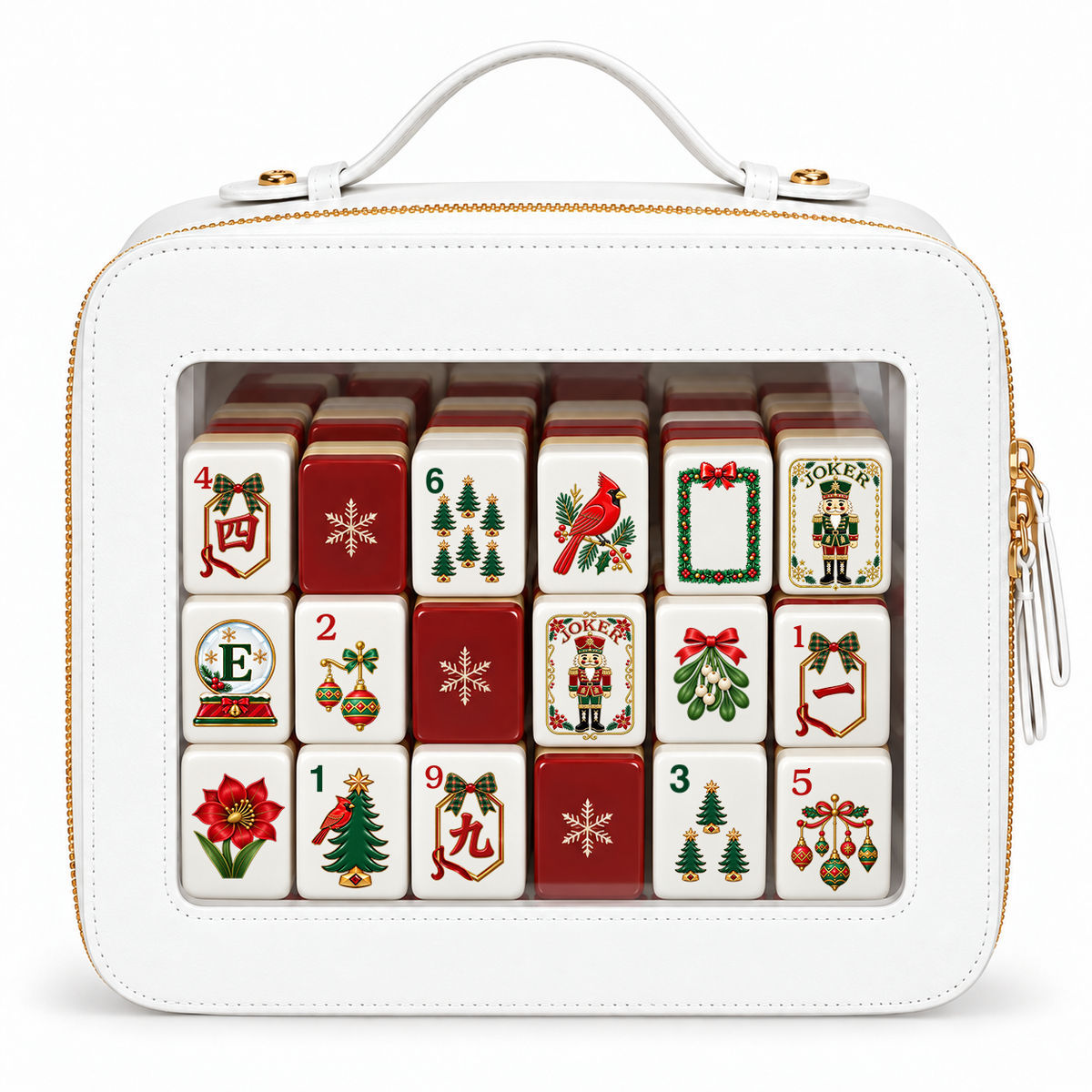
If you're planning to host or join regular Guangdong games, ensure you have the right setup. A 136-tile set (not the standard American 152-tile), a mat to keep tiles organized and muffled, racks or holders to see your hand clearly without fatigue, and storage for easy transport. Many players who move between variants appreciate mahjong mats that work with any tile size. If you're traveling to relatives' homes or hosting mixed groups, a durable travel bag for mahjong sets protects your tiles and mat. Some groups prefer mahjong racks with pushers—they're optional but reduce hand strain during long sessions.
🎁 See our most-loved mahjong sets & accessories →
What to check before you buy a Guangdong set
Tile count: Confirm it's 136 tiles before purchasing. A 160-tile set sold for American mahjong will not work for standard Guangdong play.
Tile clarity: Ensure the face symbols (Bams, Craks, Dots, honors, dragons) are large and clear enough to read quickly during play. Guangdong games move fast; squinting slows you down.
Durability of racks: If purchasing with racks or holders, check that they're sturdy enough to hold tiles without tipping. Guangdong players often slam melds onto the table for speed and drama—flimsy racks invite accidents.
Storage: Guangdong sets are less common in Western shops than American sets. If you're ordering, confirm the seller ships complete and includes a bag or case. Loose tiles scattered in a box are a hassle to organize before each game.
How are Guangdong and Chinese mahjong related?
Guangdong mahjong is one regional variant of Chinese mahjong, which has dozens of local rule sets across China, Hong Kong, Taiwan, and the diaspora. All share the core idea—four melds plus a pair, chows allowed, scoring by hand difficulty and bonuses. But Sichuan mahjong, Fujian mahjong, Shanghai mahjong each tweak the rules (e.g., different tile counts, bonus tile sets, ways to block opponents). Guangdong is popular in Guangdong Province and among Cantonese-speaking communities worldwide. If you learn Guangdong thoroughly, picking up another regional variant is often just learning new bonus rules and scoring—the fundamental hand structure remains the same.
✨ Find your Mahstead set — free US shipping →

FAQ
Can I use an American mahjong set to play Guangdong mahjong?
No. American sets have 152 tiles; Guangdong uses 136. You'd have 16 extra tiles sitting unused, and the spare tiles and jokers in American sets don't fit Guangdong rules. Use a dedicated 136-tile set for authentic play.
Do I need to memorize a hand card for Guangdong mahjong?
No. Guangdong mahjong has no official hand card. Any four melds plus a pair wins. This makes it far easier to learn than American mahjong, where you must learn the annual National Mah Jongg League card.
What's the fastest winning hand in Guangdong mahjong?
Tian Hu (Heavens Hand)—East's very first turn drawing from the wall. It's rare and based on luck, not skill. After that, Di Hu (Earth's Hand) is the next prize, won on East's first discard.
Can you win with all chows in Guangdong mahjong?
Yes. A hand of four chows plus a pair is valid and common. In American mahjong, chows are not recognized at all, so this hand would be illegal.
How long does a typical Guangdong mahjong round last?
Usually 15–25 minutes, depending on luck and how aggressively players block discards. American mahjong rounds often run 30–45 minutes because the hand card forces players to hunt for specific patterns.
Are house rules common in Guangdong mahjong?
Yes. Scoring, bonus tiles, and blocking rules vary widely by region and by table. Always ask your host which rules are in play before the first hand. American mahjong, by contrast, follows the National Mah Jongg League rules fairly strictly.


View More
View More
View More
