
East Wind Tile in Chinese Mahjong: Ranks, Rules & Reading
Last updated: Nov 23, 2026
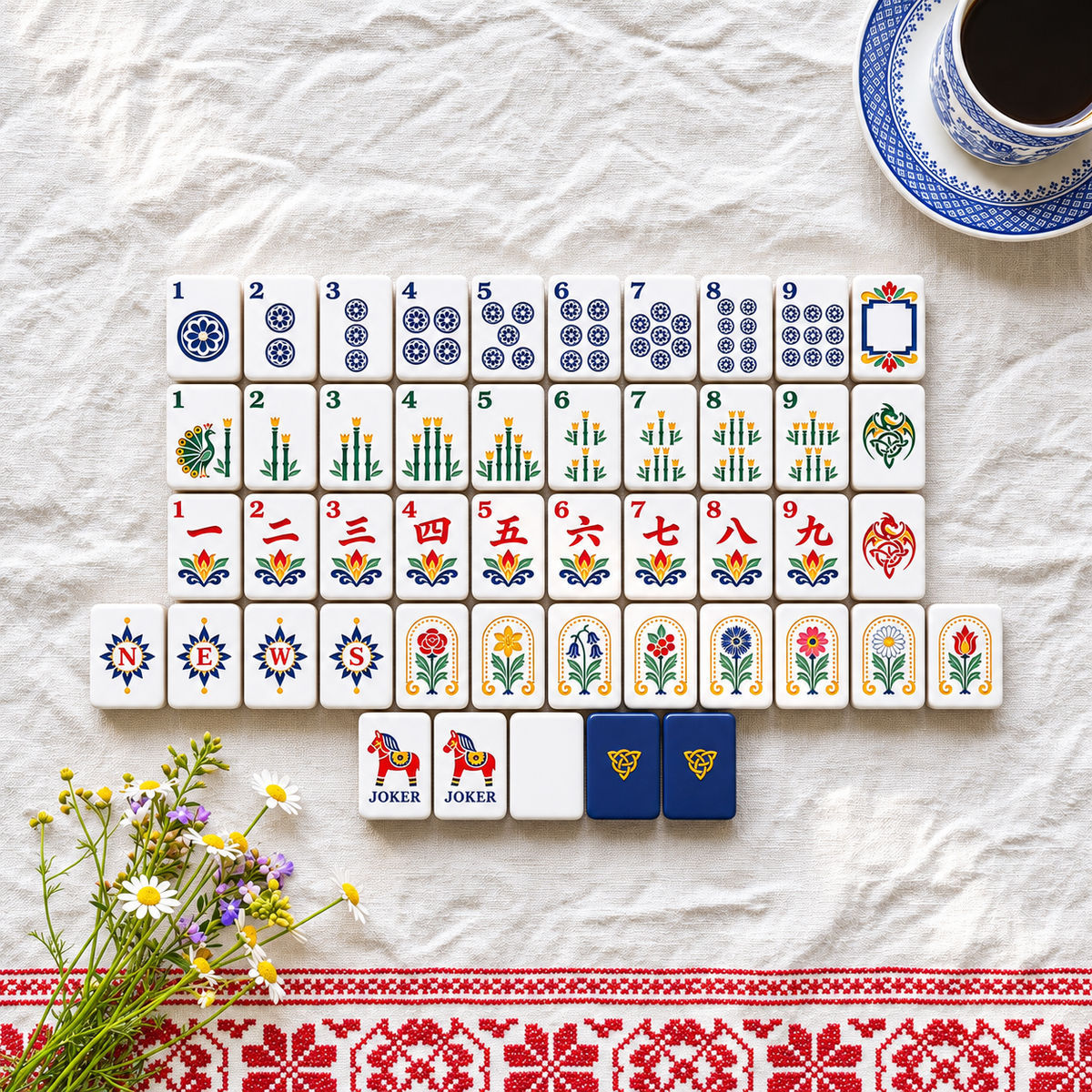
The East Wind is one of 16 wind tiles (North, East, South, West) found in all mahjong variants. In Chinese and Hong Kong mahjong, East Wind is the highest-ranking wind and determines the "prevailing wind" for each round; the player holding East Wind sits in that position and plays first. In American mahjong, wind tiles work the same way as honor pieces—you expose them in pungs, kongs, or quints to match hands on the current year's National Mah Jongg League card, but there is no seating hierarchy. East Wind tiles appear on the rack between Charleston passes and during discards. The tile usually shows a Chinese character (east) on one face. Understanding whether you're playing American (hand-driven), Chinese (points-driven), or Hong Kong (faster rounds) is essential because the East Wind's strategic weight differs: in Chinese games it's valuable for scoring combos; in American games it's just a tile slot to fill a hand pattern.
In American mahjong, we sit down with one of our best-selling tile sets and pull wind tiles as honor pieces, not as seating markers. But if you've played Chinese or Hong Kong mahjong before, or watched it played, the East Wind tile carries extra ceremonial weight. Let's walk through what East Wind is, how it changes across variants, and what you need to know to avoid calling it wrong.
What exactly is an East Wind tile, and where do I find it in my set?
The East Wind tile is one of four wind honor tiles in any complete mahjong set. It displays the Chinese character 東 (dōng) on its face and is typically colored or styled to match the other three winds—North (北), South (南), and West (西). In a 152-tile American mahjong set, there are exactly four East Wind tiles; they live in the honor tile section alongside the three other wind types. You'll draw them during the Charleston, pass them during tile exchanges, and eventually expose them on your rack if your hand pattern calls for them. Unlike Bams, Craks, or Dots, wind tiles don't form sequences; they can only appear as identical pungs (three tiles), kongs (four), quints (five), or sextets (six) in American rules.
🀄 Shop best-selling mahjong sets →

How does East Wind rank in Chinese mahjong versus American mahjong?
In Chinese and Hong Kong mahjong, East Wind is the highest-ranking wind. The four winds form a hierarchy: East > South > West > North, which determines seating rotation and points weight. The player in the East position goes first, then South, then West, then North. If you hold East Wind and form a pung or kong, your score multiplier rises. In American mahjong, wind tiles have no rank order—they're just honor pieces. An East Wind pung counts the same as a North Wind pung when you complete your hand; the hierarchy exists only on the National Mah Jongg League card pattern you're chasing. The East Wind tile in an American hand is valuable only if that year's card shows it in your chosen pattern. This difference is massive: Chinese players strategize around East Wind dominance; American players chase the card pattern above all.
Why does East Wind determine the prevailing wind in Chinese mahjong?
The prevailing wind is the "round wind" in Chinese and Hong Kong variants. Each round, a different wind prevails—East, South, West, then North—and only the player(s) sitting in that wind position can score a "round wind pung" bonus (typically 2× multiplier). This is why East Wind is prized: when East prevails, any East pung or kong you make pays extra. The prevailing wind also determines which player throws the tiles first and rotates after every four rounds. American mahjong has no prevailing wind concept; every game is a race to complete the current year's hand pattern. The East Wind tile in an American set is simply a piece with the same draw odds as any other honor tile—no seating drama, no round bonuses.
How do you read and use East Wind on a mahjong tile rack?
On a tile rack, the East Wind tile sits upright, displaying its character. In American play, you slide it into an empty honor-tile slot on your rack if you draw it. If your hand pattern calls for an East pung—say, East + East + East—you place all three together and expose them (flip them face-up) once you've completed that grouping. Some players place a joker underneath to indicate a wild substitution, but jokers cannot be used in a single tile, so the East pung must always be three identical East Wind tiles. When you read your rack before declaring a win, you scan left to right (or your table's house convention) and confirm all exposed pungs/kongs/quints match the hand number and line on the current year's card. If your exposed East pung doesn't match the card, your hand is invalid and you cannot declare mah-jongg.

What's the difference between East Wind in American, Chinese, and Hong Kong rules?
Variant | East Wind Role | Rank | Seating Impact | Scoring Impact | Exposed Rules |
American | Tile slot on hand pattern | Equal to other winds | None—no prevailing wind | Points only if pattern calls for it | Pung/kong/quint/sextet only; no sequences |
Chinese | Prevailing round wind | Highest (East > South > West > North) | East player goes first each round | Round pung = 2× multiplier (or set by house) | Pung, kong, or chow (sequence); jokers wild |
Hong Kong | Prevailing round wind | Highest | East player leads; faster payout | Round pung doubles payment from non-prevailing winds | Pung, kong, or chow; limited jokers |
The key insight: in American mahjong, East Wind is a tile to draw and use as a game piece. In Chinese and Hong Kong mahjong, East Wind is a rank and a seating power. If you're hosting a mixed group, agree upfront which rule set you're using—it changes everything about how the East Wind tile is valued and played.
🎁 See our most-loved mahjong sets & accessories →
Common mistakes players make with East Wind tiles—and how to avoid them
Mistake 1: Confusing East Wind with a "1 tile" in number suits. The East Wind is an honor; it is not a 1 Bam, 1 Crak, or 1 Dot. Some newer players see the character and think it must pair with numbered tiles. No. East Wind only pairs with the three other winds or stands alone in a hand pattern that explicitly calls for it.
Mistake 2: Using a joker as an East Wind in American mahjong. Jokers can fill gaps in pungs, kongs, or longer groupings (quints, sextets), but they cannot replace a single tile or a pair. If your hand calls for one East Wind as a single or a pair, you must have real East Wind tiles—jokers won't work.
Mistake 3: Thinking East Wind "rotates" after each hand in American play. In Chinese mahjong, if East player doesn't win the round, East shifts. In American mahjong, the Charleston is random; seating position doesn't matter. You play the same seat all game unless house rules say otherwise.
Mistake 4: Assuming East Wind pungs always score high. In American mahjong, an East pung scores the same as any other identical pung if the current year's card pattern includes it. Status depends on the pattern, not the tile itself. A West pung in a pattern-winning hand is worth more than an East pung in a pattern you didn't draw.
To avoid these, always check the current year's National Mah Jongg League card before the game starts. Confirm with your table whether you're playing American (card-driven) or another variant. If you are new to tiles, practice reading the card at home first.
What to check before you buy: ensuring your set has clear, readable wind tiles
Wind tiles should be large enough to identify at a glance—especially East, which you'll call during play. Check that the character on the East tile is embossed, engraved, or printed clearly (not faded). If you're playing with engraved American mahjong sets that include custom text or logos, make sure the wind tiles themselves are still readable; ornate designs should never obscure the 東 character. Acrylic tiles are easier to read than bone in low light because they're more reflective. Test your tiles under your table lighting before your first game. If winds are hard to spot, you'll waste time each time you draw one, and disputes over tile ID can kill momentum. Pick a set where honor tiles are visually distinct from number tiles in size, color, or both.
✨ Find your Mahstead set — free US shipping →

FAQ
Can I use a joker as an East Wind tile in American mahjong?
No. Jokers cannot substitute for a single tile or a pair. If your hand pattern calls for East Wind alone or as part of a pair, you must have real East Wind tiles. Jokers work only within pungs, kongs, quints, or sextets when the rest are genuine tiles.
Is East Wind always the highest-ranking wind?
In Chinese and Hong Kong mahjong, yes—East ranks above South, West, and North. In American mahjong, there is no wind hierarchy. All winds are equal on the tile, and their value depends only on whether your current year's card pattern includes them.
Do I need four East Wind tiles to play American mahjong?
Yes. American mahjong uses exactly 152 tiles—four copies of each wind. If your set is short an East tile, you cannot play a legal game. Check your set before sealing the Charleston.
How many times do I see the East Wind tile in one game?
That depends on the hands dealt and the patterns you're chasing. You might draw zero East Wind tiles in some games, or you might draw all four if the patterns call for multiple East pungs. Unlike the prevailing wind concept in Chinese mahjong, East Wind has no guaranteed appearance in American play.
What does the Chinese character 東 on the East Wind tile mean?
東 (dōng) means "east" in Mandarin and Cantonese. It is the compass direction. The three other winds are 南 (south), 西 (west), and 北 (north). Learning the characters helps you call tiles faster and respect the game's tradition.


View More
View More
View More
