
When to Choose Addition Hands in Mahjong
Last updated: Nov 23, 2026
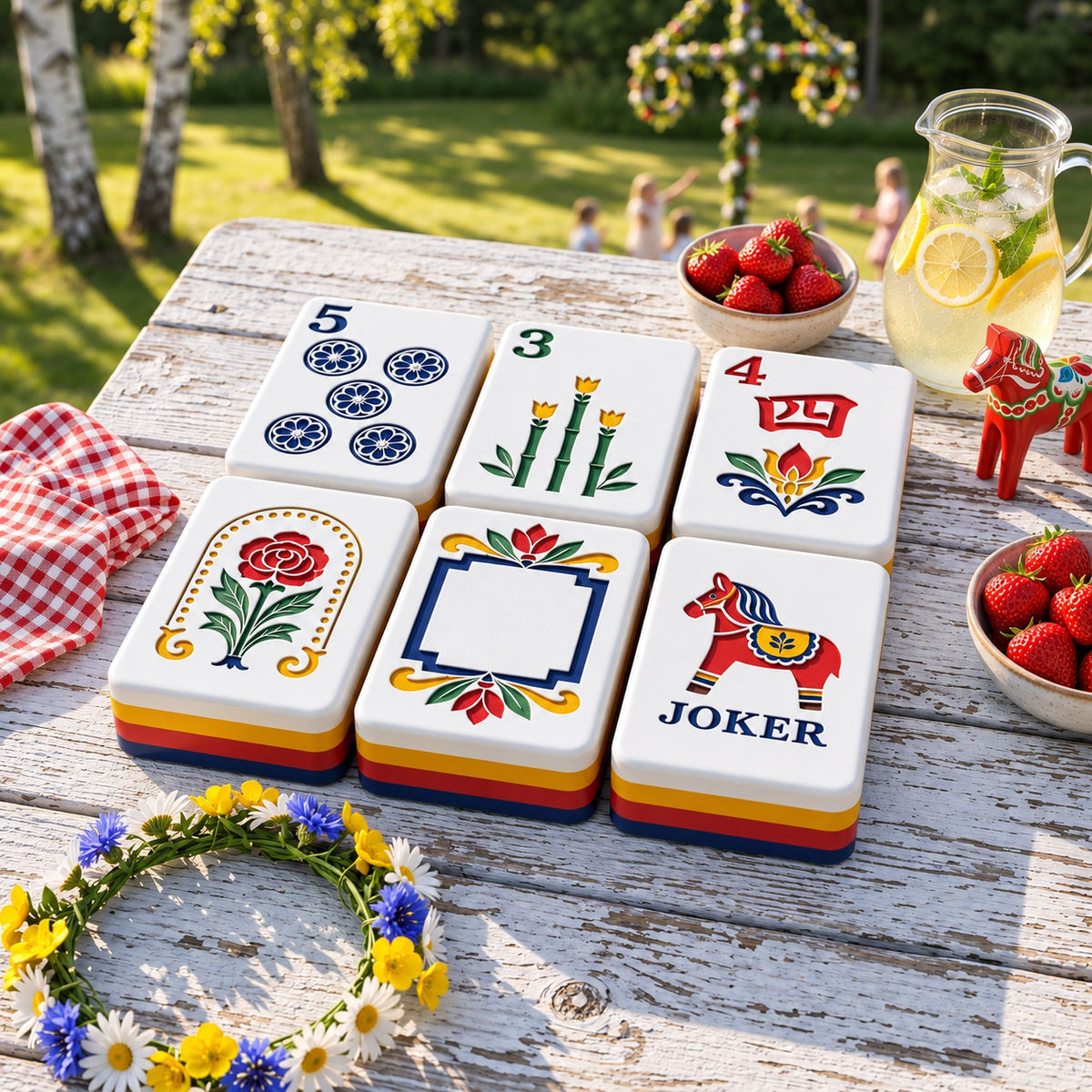
Addition hands are tile groups where the sum of each suit equals a target number (often 11 or 12 in standard patterns on the National Mah Jongg League card). You recognize them by scanning the card's addition section, matching your drawn tiles to the mathematical pattern required. Choose addition hands when (1) you've drawn tiles that already cluster around a single suit sum, (2) the hand requires only common numbers (2–8) rather than rare terminals or honors, and (3) your discard pool suggests opponents are unlikely to block the tiles you need. Avoid addition hands early in the game when joker availability is high and exposure locks you into one line; favor them in the second half when tile scarcity makes hidden sequences viable. Our best-selling mahjong sets come with a current year's card, so you can reference every addition pattern during play.
Addition hands—where numbers in each suit add up to a fixed total—are the workhorse of American mahjong. You'll find them clustered in a dedicated section of the National Mah Jongg League card. Unlike pungs (three identical tiles) or exposed sequences, addition hands hide until you go mah jongg, making them both flexible and risky. Knowing when to commit to one separates the players who adapt to the tiles they draw from the ones chasing phantoms all night.
How do I spot an addition hand on the card?
Flip to the card's addition section. You'll see rows labeled by suit and number combinations: for example, "Bams add to 11," "Craks add to 11," "Dots add to 12." Each row shows valid tile combinations—never just one. Scan horizontally: the pattern tells you exactly which numbers in each suit are allowed. A typical entry might read 1-2-3-5 Bams, 4-5-6 Craks, 2-3-6 Dots (totals differ by suit). Match your hand against every addition pattern, not just the first one you spot. Many players rush and miss a second or third option that's actually easier to complete.

When should I pursue an addition hand instead of a pung?
Addition hands win when your first 12 tiles naturally cluster in one or two suits and you've drawn enough small numbers to reach the target sum without jokers. Compare: if you hold 1, 2, 3, 4 Dots and 2, 3, 5 Craks, an addition hand using four Dots (sum = 10) plus three Craks (sum = 10) is viable if the card allows it and jokers are scarce (late game). Pungs, by contrast, require four identical tiles—much rarer to draw. Pursue addition when you need fewer jokers and the remaining discards flow steadily. Abandon it if you've used two jokers by the second hand and still haven't exposed a pung or kong; the risk of a fourth-hand discard grows exponential.
What's the biggest mistake players make with addition hands?
Locking in too early. You expose one addition pung (3 Bams, for instance) hoping to build the full hand, but opponents clock your suit preference and starve your needed numbers. The second mistake: ignoring the card's small print. Some addition entries allow only odd numbers or only numbers 1–5 in a suit; players glance, assume flexibility, and dead-end halfway through. The third: miscounting. 2, 5, 6 Bams = 13, not 12. Always recount aloud before you expose. Finally, never sacrifice your flexibility early to pursue an addition hand that's merely possible—wait until you've drawn five or six tiles that lock it in, or until it's the only hand left on your line after others are blocked.
How do addition hands rank in scoring versus exposures?
Addition hands score lower than hands requiring difficult exposures (like quints or four-tile melds). However, they score higher than simple pung-heavy hands because the hidden element forces opponents to guess your suit. In American mahjong, the National Mah Jongg League card assigns point values based on hand difficulty and exposure count. An all-hidden addition hand typically scores 30–50 points; the same tiles in a fully exposed hand scores 2–8 points. This scoring imbalance means addition hands are worth pursuing in competitive play when you're down and need a high score, or in friendly games where the thrill of a late-game concealment adds theater. But never chase an addition hand purely for points if a safer, simpler hand is available and already 80% complete.
When does the timing of the discard cycle matter most?
Addition hands become viable around the fourth or fifth hand of the game. Early on, jokers are plentiful and the tile pool is deep; you're better off pursuing exposed pungs and kongs where jokers multiply your options. By the midgame, jokers thin out and players begin showing their suits. If three opponents have exposed Bams and Dots, Craks remain abundant—perfect for a hidden addition hand in Craks. Late-game (hand 6–8), addition hands shine because both joker scarcity and exposure patterns narrow the field; an opponent cannot afford to block every possible number. Track the discard history: if all small Dots (1–5) have appeared face-up, don't pursue a Dots addition hand. If large Craks (7–9) are missing and haven't appeared in anyone's exposure, suspect they're hidden and ripe for addition.

What's your decision framework for picking addition vs. other options?
Use this checklist when you see multiple hands on your card:
Scenario | Addition Hand | Exposed Pung Line | Simple Pattern |
Hand 1–2, jokers plentiful | Skip | Pursue | Pursue |
Hand 4–5, jokers scarce, suit concentrated | Pursue if ≤2 jokers needed | Pursue if ≤3 jokers needed | Avoid if possible |
Late game (6+), 2+ players showed same suit | Pursue if opposite suit | Avoid (blocked) | Pursue if hidden |
You're trailing in score | Pursue (higher points) | Pursue if simpler | Pursue if fastest |
The rule: addition hands thrive in mid-to-late play when jokers are scarce, at least one full suit has been exposed by opponents (clearing that suit's numbers from the hidden pool), and you've already drawn 6+ tiles that match the addition target without forcing. If none of these three conditions hold, choose a safer exposed line.
🀄 Shop best-selling mahjong sets →
How do I avoid dead-ending mid-hand with addition?
The moment you expose a meld, opponents know your suit preference. If you expose two Dots melds and then need a third Dots tile to complete your addition hand, savvy players will hoard Dots. Instead, delay all exposure until hand 6 or 7 if possible—keep your addition hand entirely hidden while you complete it. If you must expose early, expose a different suit than your hidden addition hand uses, or expose early and switch hands entirely, accepting a lower score to guarantee a mah jongg. Write down which tiles you've exposed and mentally eliminate them from the pool; don't chase a 3 Bam if three 3 Bams are already visible on the table.
What role do jokers play in addition hands?
Jokers are wildcards that fill any tile position in an exposed meld—but they cannot be part of a pair, and they weaken your hand's point value because exposures drop the score. In addition hands, try to minimize joker use: if you need 1, 5, 6 Bams (sum = 12), use no joker. If you need 2, 4, 6 Bams and only have 2, 6, a joker fills the 4—still strong. Avoid using more than two jokers in an addition hand unless it's your only path to mah jongg. Learn how jokers work in detail so you never waste one on a tile that will appear naturally in your discard window.
🎁 See our most-loved mahjong sets & accessories →
How do I practice reading addition patterns faster?
Spend 10 minutes daily with your card and a set from our best-selling collection. Draw 13 random tiles. Find all addition hands available, not just one. Time yourself. After two weeks, speed doubles. Mark the addition section with a sticky tab so you flip to it without hunting. Play practice hands where you intentionally build addition sequences to feel the tile flow. In your next real game, you'll instinctively scan the addition section and recognize a viable pattern within seconds instead of minutes—critical when it's your turn and the table is waiting.
✨ Find your Mahstead set — free US shipping →
What to check before you buy a mahjong set for addition-hand play
Tile clarity: Addition hands require you to read numbers quickly under table light. Ensure your set's tiles are engraved clearly (not hand-painted in dim colors) so the numerals are instant to spot. Card quality: A current-year National Mah Jongg League card must come with your set. Confirm it's the 2026 card—not a leftover from prior years. Mat and lighting: A quality mat with racks keeps tiles upright and easier to read; good table lighting eliminates squinting. Racks with pushers:Racks with pushers let you organize tiles by suit and number, a game-changer for spotting addition patterns. Poor organization buries your 2 Craks under four other tiles.

FAQ
Can I use an addition hand as my first mah jongg of the game?
Yes, but it's rare and risky. You have no opponent exposure patterns to guide you, so hidden addition hands are harder to complete. Favor simple, pungs-heavy hands for your first round; save addition for later when opponent exposure reveals which suits to avoid.
If I expose one meld of an addition hand, do I have to finish that exact hand?
In American mahjong, no. You can expose a pung of 3 Dots as part of an attempted addition hand, then later discover another viable hand on your card uses that same 3 Dots pung. You pursue the new hand instead. The card is your guide, not a lock-in.
How many jokers is "too many" for an addition hand?
More than three jokers in an addition hand usually signals you should switch to an exposed pung line. Jokers reduce your score and increase the risk of opponents predicting your move. If the only path to completion uses four or more jokers, fold and pursue a simpler hand.
Do addition hands work the same way in Chinese or Hong Kong mahjong?
No. Chinese and Hong Kong mahjong use chows (sequences like 1-2-3 Bams), pungs, and kongs—no addition patterns. American mahjong's addition hands are unique to the National Mah Jongg League format. If you play other variants, study their separate rule systems.
When should I tell my group I'm pursuing an addition hand?
Never announce it mid-hand. In American mahjong, players keep their strategy private. When you expose a meld, opponents infer your suits; you don't confirm. Announce only after you call mah jongg—then show your winning hand so everyone verifies it matches a valid card pattern.


View More
View More
View More
