
Riichi Mahjong Defensive Play: Core Tactics & Discard Strategy
Last updated: Nov 23, 2026
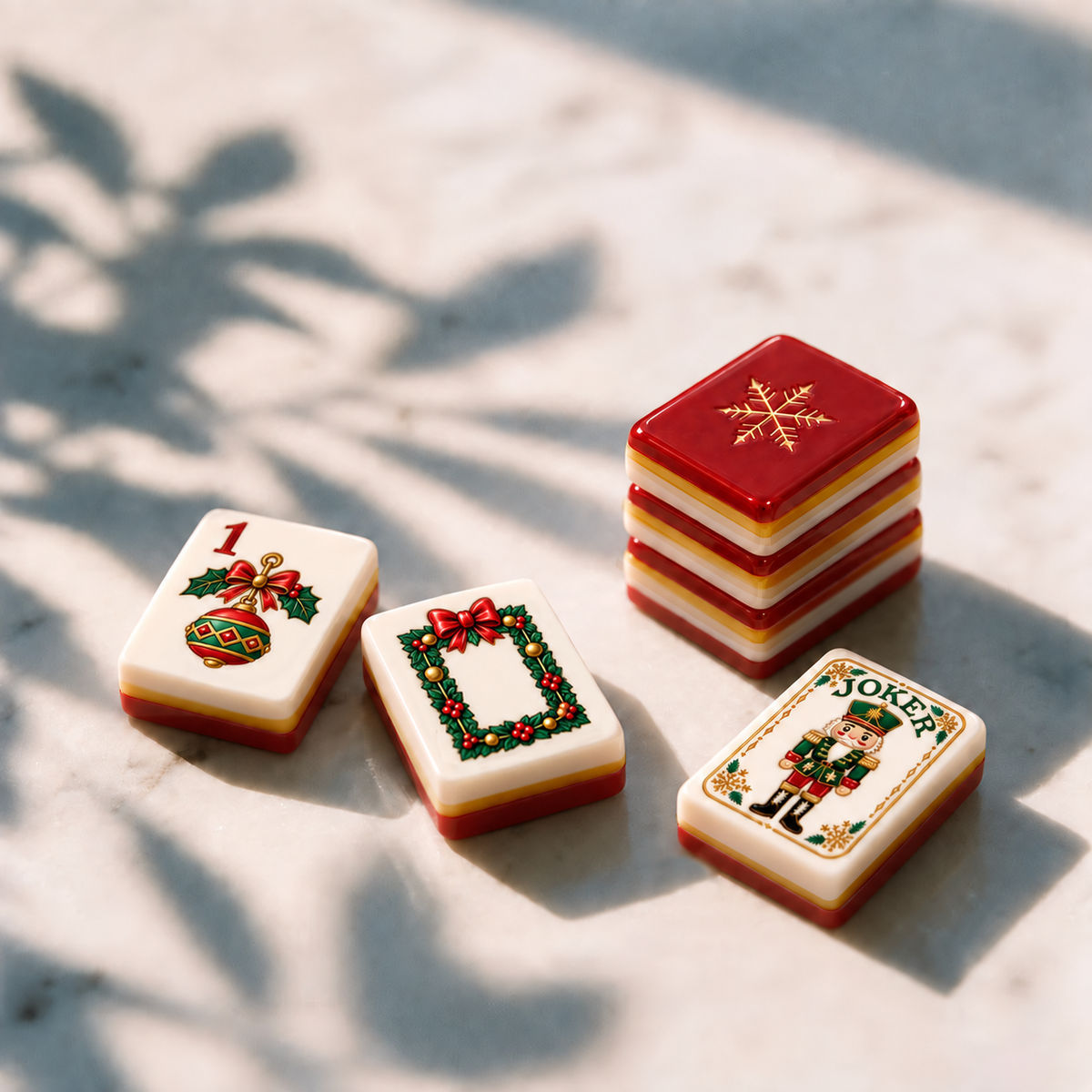
Riichi mahjong defensive play means intentionally slowing your own hand-building while discarding tiles unlikely to cost you points if an opponent wins. Unlike American mahjong's fixed hand list, riichi rewards speed and offense; defense is the art of staying alive without winning. Key tactics: track discarded tiles to avoid suits opponents favor, delay riichi (the gambling declaration) when threatened, hold tiles from your own melds to reduce predictability, and understand that "safety" is always probabilistic—the 5 Crak you throw today might be fatal tomorrow if an opponent draws it during their wait. Defensive play costs you—slower hand, fewer points—but losing fewer hands matters more than winning big ones. Study your table's discard patterns and adjust to each opponent's aggressiveness; riichi rewards adaptive players.
Riichi mahjong defense isn't about memorizing every safe tile—it's about reading position, hand history, and risk. Unlike American mahjong's fixed hand list, riichi rewards speed and offense; defense is the art of staying alive without winning. Key tactics: track discarded tiles to avoid suits opponents favor, delay riichi (the gambling declaration) when threatened, hold tiles from your own melds to reduce predictability, and understand that "safety" is always probabilistic—the 5 Crak you throw today might be fatal tomorrow if an opponent draws it during their wait. Defensive play costs you—slower hand, fewer points—but losing fewer hands matters more than winning big ones. Study your table's discard patterns and adjust to each opponent's aggressiveness; riichi rewards adaptive players.
Why is riichi defense harder than offense?
Riichi rewards speed: the first player to declare riichi (a closed hand one tile from winning) earns bonus points; early hand completion beats careful planning. Offense is default. Defense requires sacrificing points and speed to stay alive—a fundamentally losing trade unless the table is hot (one player winning hand after hand). Riichi players must accept that defensive rounds earn zero points; your goal shifts from winning to preventing larger losses. The payoff: survive long enough for your hot hand to arrive, then strike fast. Tables that understand this rhythm see defensive players finish highest over 20+ rounds.

How do you read opponent wait patterns in riichi?
Track the tiles each opponent discards in the first 8–10 turns—especially terminal tiles (1s and 9s), which safer players throw early. If a player discards 1 Bam, 9 Bam, then 5 Crak early, they're likely building a simple hand needing middle numbers. Watch for "safe discard order"—many players follow a pattern (suits in sequence, then terminals). If East (dealer) breaks pattern suddenly and throws a rare tile, they may be shifting strategy or pressured. The critical tell: if an opponent stops discarding a suit entirely, they're collecting it; avoid that suit. Riichi declares happen when a hand reaches one-tile-away; defensive players watch for players who go quiet (they've declared riichi internally but haven't announced yet). Count their discards since the last draw—fewer than four typically means they're one tile away.
What's the discard hierarchy for defensive play?
Discard order by safety (highest to lowest risk):
Category | Tile Examples | Safety Reason | When to use |
Very Safe | 1s and 9s (terminals) | Riichi waits rarely include terminal pairs | Early game, or when one player is clearly threatening |
Safe | Numbers already discarded 3+ times by others | Fewer tiles remain in deck; low draw probability | Mid-game, any position |
Moderate | Numbers 5–7 in suits your opponents haven't touched | Mid-range tiles less predictable but still useful to many hands | When you need speed; slight risk |
Risky | Numbers 4–6 in suits multiple opponents have collected | "Dangerous" numbers; high probability an opponent waits for them | Only when you have no choice or need tempo |
Very Risky | Number 5s generally (especially 5 Honors, which become tiles in many waits) | Most valuable for melds and waits across all hands | Never, unless you must break them to avoid worse tiles |
Early game, throw 1s and 9s. Mid-game, throw duplicates of discards already on the table—the tile's already visible, no new info if you throw it. Late game, when one player is obviously threatening, throw only tiles from honor suites (winds and dragons) they haven't touched, or repeat their own discards. Critical mistake: throwing the same suit continuously signals weakness; rotate suits to hide your hand direction.
🀄 Shop best-selling mahjong sets →
Should you declare riichi early or hold back defensively?
Riichi is a gamble: you freeze your hand, earn a 1-point bonus, and force future draws to be winning or losing—no flexibility. Declare early only if: (1) your hand has a 70%+ completion chance (two or more waits, multiple tiles to each), (2) no opponent has declared riichi yet, and (3) you're not dealer (losing fewer points as non-dealer is worth delaying your 1-point bonus). Hold back riichi if one opponent has already declared—now a win means you pay them double points; a loss means you pay double. If two players have declared, almost never declare riichi yourself; focus on discarding safe tiles and watching them eliminate each other. In dealer seat, riichi earns 2-point bonus (vs. 1 for non-dealer) but you also pay triple on a loss, so threshold is higher. Many strong players delay riichi until they have three or more waits—riichi with one wait means you lose if any other three tiles are drawn, a 50%+ loss rate.

How do you adapt defense to each opponent's style?
Riichi tables have archetypes: aggressive dealers push riichi early and accept losses; defensive non-dealers slow-play and fold often; balanced players adapt to the table temperature. Record three things per opponent over 5–8 rounds: (1) How many hands do they declare riichi in? (2) Do they ever fold (discard safely without completing)? (3) Which suits do they abandon or hoard?
Aggressive player approach: they'll win 40%+ of rounds; fold rounds where they look threatening by round 6–7. Don't match their pace—you'll lose. Outlast them: throw very safe tiles and let them cannibalize each other.
Defensive player approach: they rarely push riichi; you can play slightly looser against them. They'll discard in a rigid order; predict their hand. When they break pattern, they're desperate—retreat.
Balanced player approach: these are your real threats. Study the first 10 rounds to find one leak (a suit they always build, or a pattern they telegraph). Exploit it defensively: avoid that suit, or if they stop discarding it, intensify your offense.
Beginners often treat all opponents identically; riichi punishes this. Spend every hand studying your opponents' rhythms, not just your own tiles.
🎁 See our most-loved mahjong sets & accessories →
What are the biggest defensive mistakes to avoid?
Mistake 1: Throwing "wild cards" too early. Tiles like 5 Craks and 5 Dots appear in many waits; new players throw them first to "clear" their hand. Strong players hold these and discard 1s and 9s. By round 4, you've signaled everyone that middle numbers don't matter to you—they know your hand shape.
Mistake 2: Folding when you should attack. If no one has declared riichi by round 8 and you have a good hand, declare. Riichi advantage compounds: early declares earn bonuses, set the table pace, and make others nervous. Folding every hand trains the table to ignore your discards; suddenly your safe tile isn't safe anymore.
Mistake 3: Changing discard pattern mid-hand. If you've thrown terminals for five turns, then suddenly throw a 5, opponents notice. Consistency is safety; mix your safe tiles (throw 1s, then 9s, then other 1s) to hide your intent.
Mistake 4: Forgetting the live wall. In riichi, the wall tells you what's left in the deck. If 12 tiles remain and four players are waiting, odds are bad; the 5th tile drawn ends the round. New defensive players ignore wall size and keep risky hands open; strong players close their hand and throw safe tiles when 10 tiles or fewer remain, because the wait probability drops sharply.
Mistake 5: Chasing points defensively. If you're ahead on score, play defense—fold aggressively, let others compete. If you're behind, you must attack; folding every hand guarantees a loss. Defensive play is conditional on position.
How does defensive play differ across riichi variants?
East winds rule: In 1-round matches (just East), defense is minimal—one big loss ends the game. Aggressive play dominates. In longer tournaments, defensive players finish highest because they accumulate small wins and avoid catastrophic losses. Multi-round play rewards defense; single-round play punishes it.
Red fives in modern riichi: Newer rule sets mark 5 Bams, 5 Craks, and 5 Dots in red; these tiles bonus hands. Never defend by throwing red fives early—their scarcity makes them high-value discards, and opponents will chase them. Hold red fives defensively; use them only when you're attacking.
Three-player riichi: With only three players, fewer tiles in circulation per hand; discards become less informative. Defense tightens: throw more terminals, hold rarer tiles longer, and defer riichi more often (three-player riichi bonuses are smaller but losses are shared among fewer people).
Comparison: American mahjong vs. riichi defense
American mahjong has no defensive play in the riichi sense—you either complete a specific hand from the card or you don't. There's no "riichi" declaration, no speed bonus, no partial-hand scoring. Riichi defense is a meta-game of probability and psychology that American mahjong sidesteps entirely. If you're learning riichi after American mahjong, expect to slow down: American rewards you to move fast and call/expose melds; riichi rewards you to move fast and stay hidden until riichi. That's the core tension.
✨ Find your Mahstead set — free US shipping →
What to check before you host a riichi session
Tile visibility: Riichi defense depends on tracking discards; use a mat with clear numbered grid lines or arrange discard piles neatly by position. Poor visibility means no one can read the table, defense becomes guessing, and skill drops.
Hand concealment: Riichi players hide their hand from opponents; if your set's tiles are too small or tiles slip out of racks, other players see your hand mid-game. Acrylic tiles are less prone to slipping than bamboo.
Shuffle quality: Riichi's speed depends on clean shuffles. If tiles stick or catch, shuffling takes longer; this shifts when riichi happens (earlier shuffles = earlier opportunities). Use a mat with a built-in shuffling zone and tiles that don't catch.
Player familiarity: Defensive play only works if all four players know riichi basics. If one player treats riichi like American mahjong (playing every hand hard), the table rhythm collapses. Agree on play style before the first round.
Round timer (optional): Some groups play "8-minute hands"—if no one declares riichi after 8 minutes of play, the round is draw. This forces defense: passive tables favor draws over defensive folds. Agree beforehand or rotate timers after each round.

FAQ
What tile should I never throw in late-game defense?
Tiles the dealer has collected or ignored entirely—if East hasn't touched 5 Bams through round 10, throwing it risks hitting their single wait. Throw only numbers you've seen three or more times already in the discard pile.
Can I bluff and throw risky tiles while holding a weak hand to confuse opponents?
Yes, briefly. If you throw 5 Craks early once, then switch to 1s, you signal a hand shift. But bluff too often and sharp opponents tune you out—your discards become noise. Use bluffs sparingly, one per session per opponent.
How do I know if I'm folding too much?
Track your riichi win rate. If you declare riichi fewer than two times per 10 rounds, you're folding. Healthy rate is 25–40% riichi declaration; below 20% means you're playing too safe and sacrificing too many points.
What's the difference between defensive play and stalling for a draw?
Defense aims to minimize losses; stalling aims to cause a draw (all players discard safely, round ends without a winner). Draws pay zero points to all. Strong defensive play sometimes draws, but draws aren't the goal—staying alive and attacking later is. Endless stalling is frustrating and weak.
Should I ever throw a tile that an opponent just discarded?
Yes—this is called a "safety reflex." If East throws 5 Craks and you have one, throwing it immediately afterward signals you're not waiting for it. But overuse signals weakness. Use safety-reflex discards once per 10 turns; aggressive players throw them more.
How does defensive play affect scoring in a tournament?
Over 12+ rounds, defensive players average 25,000–30,000 points; aggressive players average 28,000–35,000 but with higher variance. At low stakes, defense wins. At high stakes, variance matters less and aggression wins.


View More
View More
View More
