
What Set Do You Need for Taiwanese Mahjong?
Last updated: Nov 23, 2026
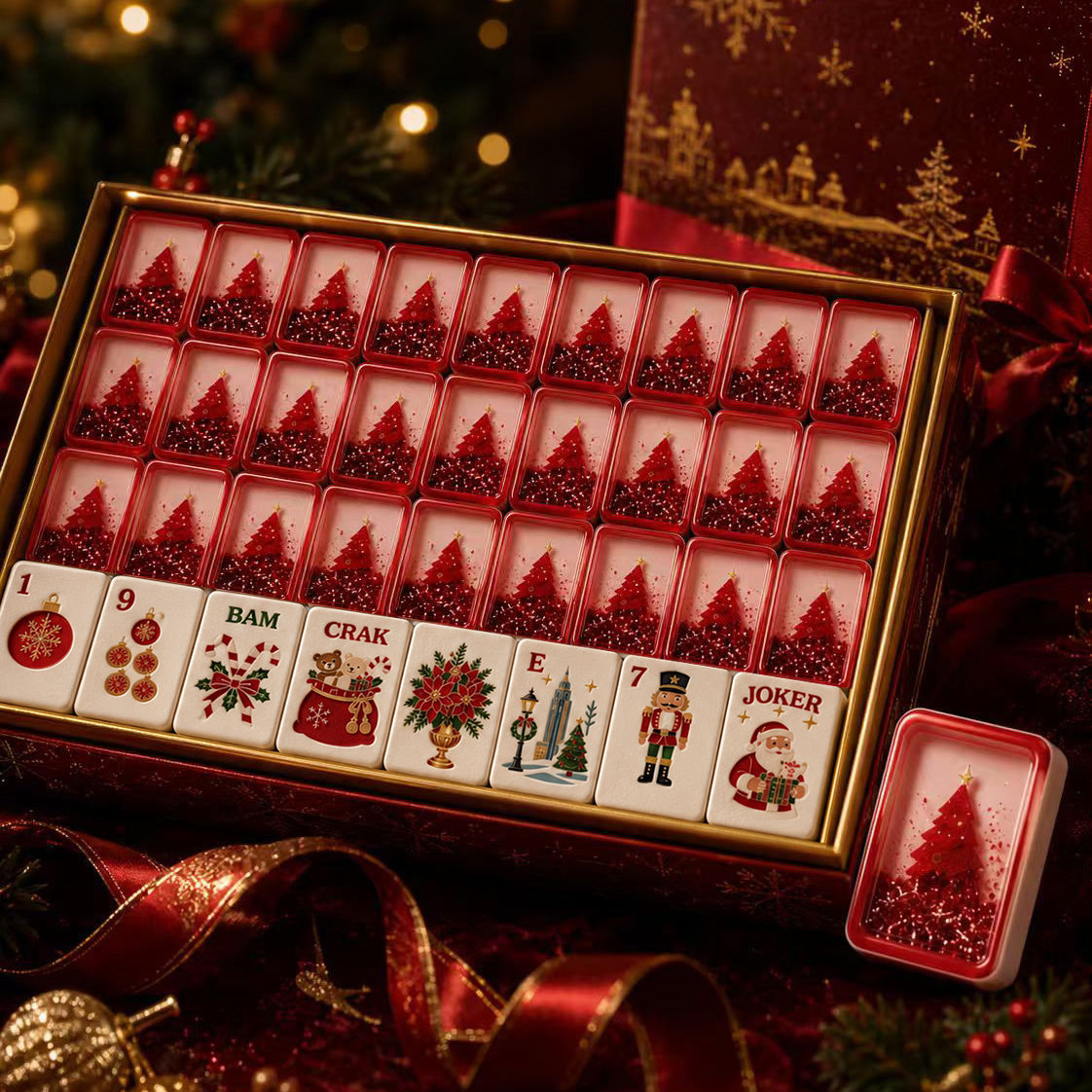
Taiwanese mahjong requires a 144-tile set (not 152-tile American), featuring three suits (Bams, Craks, Dots) numbered 1–9 in fours each, plus winds, dragons, and flowers—but no jokers. The game uses sequences (chows: three consecutive numbers in one suit), pungs (three identical), and kongs (four identical), and play is fundamentally different: hands are drawn from tiles in play rather than from a fixed annual card. You'll also need to learn about the "wall," Kong replacement tiles, and bonus tiles (flowers/seasons). Because Taiwanese rules permit chows and joker-free play, an American 152-tile set with jokers won't work correctly. Mahstead sells 160-tile American sets designed for American rules; for authentic Taiwanese play, you'll need to source a 144-tile Taiwanese-specific set from a specialist supplier, then add a mat and racks that fit your table and hand size.
Taiwanese mahjong and American mahjong look similar—same tile suits, winds, and dragons—but the rule sets are so different that using the wrong equipment creates confusion and ruins the game. We've hosted players switching between variants, and the first mistake is always grabbing whatever set they own. This guide walks you through what actually works for Taiwanese play, how it differs from American, and what to check before you order.
Why is Taiwanese mahjong different from American?
American mahjong is card-based: hands come from the current year's National Mah Jongg League card, and you work toward patterns printed on it. Taiwanese mahjong is hand-building: you draw and discard to form your own melds—sequences (chows), sets of three or four identical tiles—without needing a card. American tiles include 8 jokers; Taiwanese tiles do not. American hands use pungs and kongs only (no sequences you can call); Taiwanese hands require sequences as core patterns. The games also differ in scoring, wall construction, and how flowers count. Both use 1–9 in three suits plus winds, dragons, and flowers, but the gameplay is closer to Riichi (Japanese) than to American style.

What tile count and composition does Taiwanese mahjong need?
Taiwanese mahjong is played with exactly 144 tiles: three suits (Bams, Craks, Dots) numbered 1–9, four copies of each = 108 tiles; 16 winds (4 each: North, East, South, West); 12 dragons (4 each: Red, Green, White); and 8 flowers/seasons (4 flowers + 4 seasons, one of each). There are no jokers in Taiwanese play. The 144-tile set is compact and essential—removing jokers that American sets include is critical because Taiwanese rules never allow them. A 160-tile set designed for American mahjong will have 8 jokers and spare blanks; those extra tiles are dead weight for Taiwanese play and will confuse beginners about what counts as "in play." If you already own an American set, do not attempt Taiwanese mahjong with it; the jokers will violate hand-building rules and scoring.
How do you choose between Taiwanese and other regional variants?
Taiwanese is one of several non-American variants played worldwide, each with distinct tile counts and rules. Riichi (Japanese mahjong) also uses 136 tiles with no jokers and emphasizes hand-building like Taiwanese, but has different scoring and hand rankings. Hong Kong mahjong uses 144 tiles, allows sequences, but plays with sparser flowers and different bonus rules. Chinese Classical uses 152 tiles and sequences. The key decision: What community are you joining? If your local group plays Taiwanese, you need the 144-tile Taiwanese set. If you're learning online or from a book, confirm which variant the resource teaches—mixing rules across sets causes collisions. American mahjong is by far the most common in the US; if you're starting out and unsure, American is easier to find locally and learn through the National Mah Jongg League card. But if your group explicitly plays Taiwanese, commit to the 144-tile setup from day one.

What equipment do Taiwanese players need beyond tiles?
Once you have the correct 144-tile Taiwanese set, you'll want a few supporting pieces:
Mat: A mahjong mat provides grip, visibility, and a defined wall boundary. Most mats fit any tile size; look for one labeled for Asian variants or universal fit. Browse mahjong mats for home play to see how they're sized and finished.
Racks with pushers: Taiwanese players often use racks to hold and organize their hand, especially when learning. Racks elevate tiles for easier reading and prevent accidental discard mistakes. A set of racks with pushers designed for standard tile heights will work fine; confirm the mat and racks fit together at your table.
Bag or case: A 144-tile set is smaller and lighter than a 160-tile American set. A compact travel bag or case designed for mahjong tiles will protect your set, though you may find a smaller pouch sufficient.
Dice: Taiwanese play uses two or three dice to determine wall position and starting hand; any standard mahjong dice work.
You do not need the National Mah Jongg League card for Taiwanese mahjong—that card is American-only. Instead, you'll need a Taiwanese hand-ranking reference (book, chart, or app) to learn which melds and patterns score.
🀄 Shop best-selling mahjong sets →
How do you source a Taiwanese mahjong set if most US stores sell American?
This is the honest part: most mahjong retailers in the US focus on American sets because that's the largest domestic market. Mahstead, for example, specializes in American 160-tile sets with jokers and does not stock 144-tile Taiwanese sets. To find a Taiwanese set, you'll need to:
Search online for "144-tile Taiwanese mahjong set" or "麻將" (mahjong in Chinese). Retailers who focus on Asian games, Chinese cultural centers, or international online vendors often carry Taiwanese sets.
Check local Asian cultural organizations: Community centers, libraries, or cultural societies in larger US cities sometimes sell or can recommend Taiwanese sets. Search meetup boards and community calendars for "mahjong" in your area.
Join Taiwanese mahjong forums or groups: Players often share sourcing advice, and you may find group buys or trusted imports.
Verify the set includes 144 tiles, not 160 or 152, and confirm no jokers are included. Ask the seller directly: "Does this set include jokers?" If yes, it's an American set mislabeled.
Quality matters: a 144-tile Taiwanese set should have readable tile faces, secure bamboo-and-bone or acrylic construction, and quiet play. Avoid sets with chipped tiles or faded engravings, which cause misreads during fast play.
🎁 See our most-loved mahjong sets & accessories →
What's a quick checklist before you buy a Taiwanese set?
Before you commit to a Taiwanese set, run through this:
Item | Check | Why It Matters |
Tile count | Must be exactly 144 | Taiwanese games require no jokers; 160+ = American set |
Jokers included | Must be zero | Jokers break Taiwanese hand-building rules |
Tile size | Standard (typically 1–1.5 inches) | Fits racks, mats, and hands from most suppliers |
Engravings | Clear, no chips | Fast play requires instant tile recognition |
Flower/Season tiles | Must include all 8 | Many Chinese sets skip these; confirm before order |
Seller location & returns | Clear shipping, return window | International shipments can take weeks; verify policy |
Language/rules included | Optional but helpful | English reference cards or QR codes to hand-ranking sites reduce setup friction |
What to check before you buy: If you're new to Taiwanese mahjong, confirm your group plays authentic Taiwanese rules (not a house variant), then ask them to recommend a set they use—word-of-mouth is the fastest way to avoid a mismatch. Verify the set ships within your budget and timeline; international sources often take 2–4 weeks. Finally, budget for a mat and racks only after you confirm the tile size, so everything scales together.
✨ Find your Mahstead set — free US shipping →

FAQ
Can I use an American 160-tile mahjong set to play Taiwanese mahjong?
No. American sets include 8 jokers; Taiwanese rules forbid jokers entirely and will mark your hand as invalid. You must use a 144-tile Taiwanese set to play correctly. Mixing sets creates confusion and breaks scoring logic.
What's the main rule difference that makes tile count different?
Taiwanese mahjong is hand-building—you draw and discard tiles to form melds (sequences and sets), with no external card. American mahjong is card-based; you use the current year's National Mah Jongg League card and never form sequences you can call. This structural difference means Taiwanese needs no jokers (jokers violate hand-building logic), while American sets include jokers as wildcards for card patterns.
Do Taiwanese mahjong racks and mats differ from American ones?
Not substantially. Standard racks and mats fit both, as long as tile sizes match. A 144-tile Taiwanese set uses the same tile height as a 160-tile American set, so any universal-fit mat and rack set works for either. The key is confirming your mat and racks fit your table height and the tile size of your specific set.
Where do most US players find Taiwanese mahjong sets?
Asian cultural retailers, online international vendors, and specialist mahjong shops in larger US cities carry 144-tile Taiwanese sets. Mahstead focuses on American sets; for Taiwanese play, search online for "144-tile Taiwanese mahjong" or ask local cultural organizations for sourcing advice.
How long does it take to learn Taiwanese mahjong rules compared to American?
Taiwanese typically takes longer to master—hand-building and sequence logic are more complex than card-pattern matching. Most players spend 4–6 weeks learning hand rankings and 2–3 months playing comfortably. Riichi (Japanese) and Taiwanese are considered more difficult than American, which can be learned in 1–2 weeks.
What's the cost difference between a Taiwanese and American mahjong set?
A 144-tile Taiwanese set is generally comparable to or slightly cheaper than a 160-tile American set, since it includes fewer tiles and no jokers. Exact prices vary by supplier and material. For durable acrylic or bone-and-bamboo Taiwanese sets, expect pricing similar to quality American sets from various retailers.


View More
View More
View More
