
What Is Seven Pairs in Mahjong? Hand Rules & Examples
Last updated: Nov 23, 2026
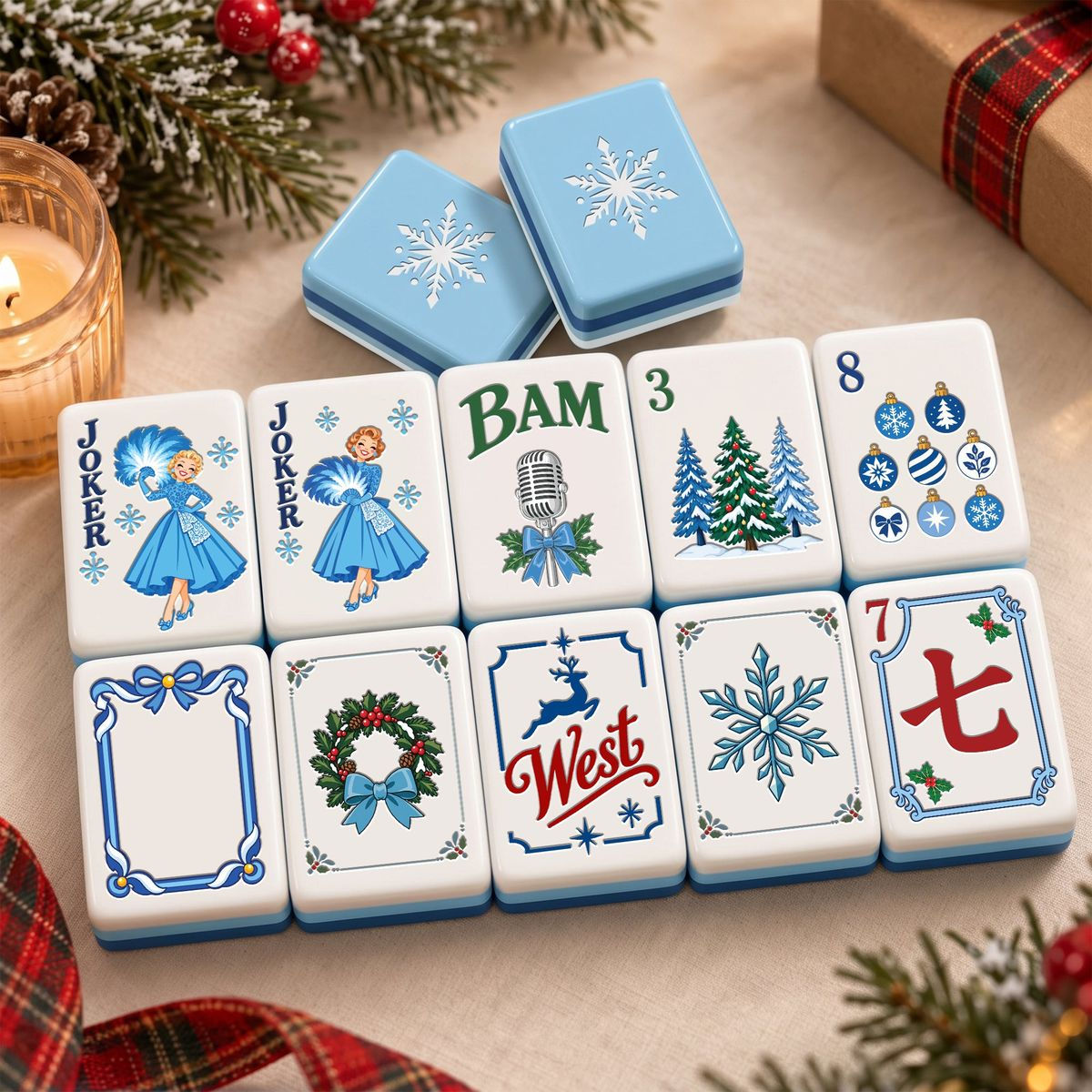
Seven pairs in American mahjong means your winning hand contains exactly seven identical pairs—fourteen tiles total, no sequences or melds exposed. Examples: three 5 Dots + three 5 Dots + three 1 Bam + three 1 Bam + one Red Dragon + one Red Dragon + one Green Dragon + one Green Dragon. The hand appears on the current National Mah Jongg League card (issued each spring) in a dedicated section. You cannot use jokers as a single tile or inside a pair—a pair must be two actual identical tiles. Seven pairs hands pay a fixed point value listed on the card for that year. When shopping for a best-selling American mahjong set, ensure it contains a full 152-tile deck (eight jokers, no blanks) so you can build and practice every hand type accurately.
Seven pairs is one of the most recognizable hands in American mahjong—all identical pairs, no sequences, and a fast way to win. We'll show you exactly how it works and what tiles you need.
How does a seven pairs hand actually work?
Seven pairs consists of fourteen tiles arranged as seven identical pairs. Each pair must be two of the exact same tile—for example, two 3 Craks, two West winds, or two White Dragons. You do not create a pair by mixing numbers or suits: 1 Dot + 2 Dot is not a valid pair in this hand. All fourteen tiles must be in your hand (or in your final drawn/discarded tile when you win); nothing is exposed on the table as a pung, kong, or sextet. Seven pairs hands usually go down quickly because you're hunting for duplicates rather than building sequences, which makes them tactically different from other hand types.

Where do you find seven pairs on the card?
The National Mah Jongg League card, updated every spring, groups hands into sections by pattern and point value. Seven pairs appears in a dedicated section (often marked by a pair icon or label). The card shows multiple valid combinations—some use only number tiles, others mix winds, dragons, and flowers. Each valid seven pairs pattern is listed with its point value; hands not listed on that year's card cannot be played. Check your current card carefully: a hand that was valid in 2025 may have been replaced in 2026. If you're new to reading the card, familiarize yourself with how to read a mahjong card so you can spot seven pairs combos fast during play.
🀄 Shop best-selling mahjong sets →
Can you use jokers in a seven pairs hand?
No—jokers are not allowed in seven pairs, and in fact, jokers cannot be used as a single tile or inside a pair in any American mahjong hand. This is one of the strictest rules. Jokers can substitute for missing tiles only in exposed melds (pungs, kongs, quints, sextets). Since seven pairs has no exposed melds, you have zero use for jokers. If you're close to a seven pairs hand but missing one tile and holding a joker, the joker does not help you win—you must find the actual matching tile. This rule trip up newer players who assume jokers are wild cards everywhere. Understanding how jokers work prevents costly mistakes during play.
What mistakes do players make with seven pairs?
Mistake 1: Forgetting the pair rule. A pair must be two identical tiles, not two tiles of similar rank. 7 Bam + 7 Crak is not a pair; only 7 Bam + 7 Bam qualifies.
Mistake 2: Trying to use a joker as part of a pair. Jokers cannot substitute inside a pair, ever. Your fourteen tiles must all be real, matched tiles.
Mistake 3: Holding unrelated tiles and hoping. Seven pairs is a target hand—if you have no duplicate tiles in your first draw, discard early toward hands that do use your tiles. Don't cling to orphaned tiles waiting for a miracle pair.
Mistake 4: Confusing it with "knitted" pairs in other variants. Chinese and Hong Kong mahjong have "seven pairs" hands that allow pairs of different ranks (1-2-3, 5-5, 8-8, etc.). American mahjong seven pairs is strict: all pairs must be identical. Don't mix rule systems.
Mistake 5: Playing a seven pairs hand that's not on the card. If a combination doesn't appear in that year's card section, it's not a legal winning hand, no matter how logical it seems. The card is law.
Mistake 6: Neglecting to announce your hand. Once you draw or take the tile that completes your seven pairs, you must call "Mah Jongg" immediately. If you delay, another player may discard and reset the game.

How do seven pairs strategy differ from other hands?
Seven pairs is often called a "gathering" hand because you're collecting duplicates across all tile types (numbers, winds, dragons, flowers) rather than building numeric sequences. This means you're flexible: many different combinations of tiles can work for you, which makes seven pairs hands tend to develop faster than sequence-heavy hands. However, this flexibility cuts both ways—other players can often see what you're hunting (they notice you're holding many different numbers and suits) and will discard cautiously. Seven pairs hands also have a lower discard rate early: if you draw a hand with no duplicates in your first fourteen tiles, seven pairs may not be your target. Switch gears mentally and look for hands that use your orphaned tiles in sequences instead. Strategic seven pairs players learn to pivoting mid-game: hold seven pairs as a secondary target, not your only goal.
Hand Type | Tile Pairs | Sequences | Exposed Melds | Speed | Table Read |
Seven Pairs | 7 (identical) | 0 | 0 | Fast | Visible duplicates |
Consecutive Sequences | 1 | 6 | 0 | Slow | Linear tile flow |
Mixed | 1 | 3–4 | 2–4 | Medium | Balanced |
🎁 See our most-loved mahjong sets & accessories →
What equipment helps you track seven pairs hands?
When you're hunting pairs, clear organization matters. A sturdy mahjong rack with pushers lets you group tiles by type (all Bams together, all winds grouped, all dragons stacked) so duplicates jump out visually. Many players find pushers especially useful because they let you shuffle tiles side to side without dropping them. If you play with a mahjong mat, you get a clear tile-discard zone, which reduces confusion when calling tiles and prevents accidents. A good mat also protects your tiles from table wear over years of weekly games. For traveling to tournaments or a friend's house, a sturdy mahjong bag or case keeps your tiles organized and prevents loss mid-game—nothing derails a seven pairs strategy like a missing tile.
What to check before you buy a mahjong set for seven pairs practice
Full 152-tile count: Confirm the set includes exactly 152 playing tiles plus eight jokers. No blanks should enter play. Check the tile list on the product page.
Legible suit markings: Pairs are easier to spot if Bams, Craks, and Dots are visually distinct. High-contrast designs help you group duplicates faster.
Engraved over printed: Engraved tiles resist wear and tile-rubbing faster than printed ones—important if you play weekly and seven pairs often.
Current year's card: Ensure you have the latest National Mah Jongg League card (issued spring 2026) so you know which seven pairs hands are legal this season.
✨ Find your Mahstead set — free US shipping →

FAQ
Can you win with seven pairs if only one pair is in your hand and the rest are exposed on the table?
No. Seven pairs is a closed hand—all fourteen tiles must be in your hand at win. You cannot expose any pungs, kongs, or other melds. If you expose tiles, you're no longer eligible for a seven pairs win on that round.
Do winds and dragons count the same way as number tiles in a seven pairs hand?
Yes. Two East winds, two Red Dragons, or two 4 Dots all count as valid pairs. The National Mah Jongg League card lists the exact combinations allowed each year, mixing number suits, winds, and dragons in various combinations.
If I'm one tile short of a seven pairs hand and I draw a joker, can I use it to complete the hand?
No. Jokers cannot substitute inside a pair, and seven pairs has no exposed melds where jokers are allowed. You must find the actual matching tile to win.
How many points is a seven pairs hand worth?
Point values are listed on that year's National Mah Jongg League card for each valid seven pairs pattern. Points vary by combination and point multiplier. Consult your current card for the exact value.
Is seven pairs the fastest hand to win in American mahjong?
Not necessarily. Speed depends on luck and tile flow. Some hands with sequences can develop just as fast. Seven pairs feels fast because you're hunting many different tile types, but if duplicates don't appear in early draws, other hands may close first.
Can you discard a tile that could complete a seven pairs hand to block another player?
Yes. If you see another player is collecting pairs, you can hold back or avoid discarding tiles that match their hand. However, you must still discard one tile each turn—you cannot stall indefinitely. Play defensively by reading the discard pile and other players' racks.


View More
View More
View More
