
What Is Seat Wind in Mahjong? A Beginner's Guide
Last updated: Nov 23, 2026
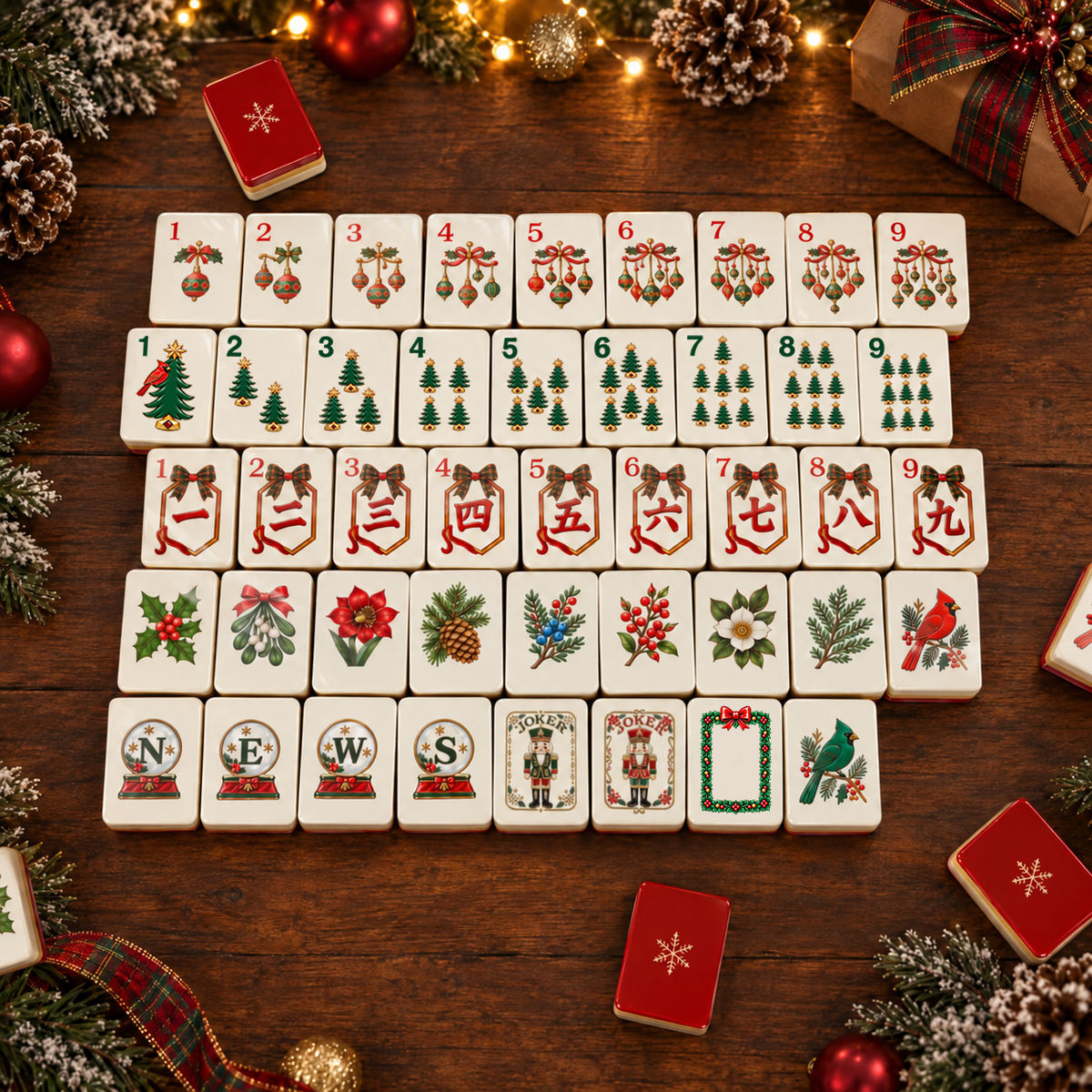
Seat wind is your position at the mahjong table—East, South, West, or North—and it determines the order in which you draw tiles during play. East always deals first; South, West, and North follow in clockwise order. Your seat wind changes after each hand (usually East moves to South, South to West, West to North, North to East), so all four players eventually hold each position during a game. The seat wind affects which tiles enter your hand first and, alongside the current discard, which hands from that year's National Mah Jongg League card are available to you. Understanding seat wind is essential to reading the card and planning your strategy, and it's the same across all best-selling American mahjong sets.
Seat wind is your assigned position at the mahjong table—East, South, West, or North—and it determines the order in which you draw tiles during play. East always deals first; South, West, and North follow in clockwise order. Your seat wind changes after each hand (usually East moves to South, South to West, West to North, North to East), so all four players eventually hold each position during a game. The seat wind affects which tiles enter your hand first and, alongside the current discard, which hands from that year's National Mah Jongg League card are available to you. Understanding seat wind is essential to reading the card and planning your strategy, and it's the same across all American mahjong sets.
Why does seat wind matter during the first draw?
East draws from the wall first, then South, West, and North in order. East picks two tiles, then each player draws two, and the cycle continues until each player has 13 tiles. East therefore controls which tiles are available on the wall and discard pile first, giving a subtle advantage in hand selection. This is why the player who holds East wind for a round is often called "the dealer." The rotation ensures fairness: nobody sits in the same wind all night.

How do you track seat wind rotation?
After each hand concludes and tiles are scored, seat winds rotate: East becomes South, South becomes West, West becomes North, and North becomes East. Some groups rotate only if East wins; others rotate regardless. Write down the current winds on paper or keep them on a rack card to avoid confusion. In a typical game session, each player holds East exactly once every four hands.
🀄 Shop best-selling mahjong sets →
What's the relationship between seat wind and the discard?
The discard tile—the first tile discarded after the Charleston is complete—tells you which winds are "in play" for hand-matching. When you look at the card, you cross-reference the discard and seat wind to find which hands are legal to play. For example, if South wind is discarded and you are West, your available hands are narrower than if you were East. This is why experienced players memorize the card layout and react instantly to discards.
How do seat winds appear on the mahjong card?
The National Mah Jongg League card organizes hands by suit, dragon, wind, and flower categories. Hands marked with specific winds (e.g., "E W") are only playable by players in East or West wind during that round. Hands marked "2024" or the current year are only legal in the year printed; the card changes annually every spring. Learning to read the card is your first step toward strategy and speed at the table.
Does seat wind work the same in other mahjong variants?
In Chinese mahjong, Hong Kong mahjong, and Riichi mahjong, seat wind (called "wind" or "prevalent wind") operates similarly: a player's position determines draw order and scoring multipliers, and wind rotates after each hand. However, American mahjong is unique because seat wind also gates which hands you may claim from the card—no other variant restricts hands by position. Understanding this rule prevents illegal calls and keeps the game fair.
🎁 See our most-loved mahjong sets & accessories →
Seat Wind Decision Framework: When Does Position Change Your Strategy?
Scenario | Your Seat Wind | What Changes | Strategic Move |
Discard is East wind | East | You may play East-marked hands | Check card for E-only patterns |
Discard is East wind | West | You cannot play East-marked hands | Pivot to hands playable in West |
You have 1 Bam (bird) and South is discarded | South | South + bird hands unlock | Look for bird + South combinations |
No wind marked on card | Any | All wind hands available | Wind no longer gates your options |
East winds rotation approaching | North | You'll become East next | Plan to take East advantage when it arrives |

What common mistakes do new players make with seat wind?
Forgetting the rotation. Players often don't update winds after each hand, leading to illegal calls. Write it down or ask before every hand begins.
Confusing wind with suit. Wind (N, E, W, S) is a separate tile type from Bams, Craks, and Dots. You cannot form a chow with wind tiles; they are only used in pungs, kongs, quints, or sextets.
Claiming a hand restricted by wind. If you are North wind and the discard is South, but the hand you want to play is marked "E/W only," you cannot claim it. Pause, read the card, and confirm your seat wind matches.
Not asking for clarification. If you're unsure whether a hand is legal in your current position, ask before committing tiles. One misread call can restart the hand or cost your group the game.
How does seat wind affect which tiles you see first?
East's turn comes first in each draw cycle, so East sees the wall before others and can begin planning immediately. By the time tiles reach North (the last draw position), certain tiles may already be in players' hands or discarded, limiting North's options. This is why East has the first-mover advantage, though it's small—by the end of the first cycle, all players have 13 tiles and the gap narrows. Strategic discarding (offering tiles your opponents need) matters far more than draw order.
✨ Find your Mahstead set — free US shipping →
What to Check Before You Buy a Set
Does the set include a card? Some sets sold separately do not. Confirm the current year's card is included or buy it separately.
Are wind tiles clearly marked? Look for a set with large, engraved characters so you can read N, E, W, S quickly during play. Engraved American mahjong sets from Mahstead feature deep etching that outlasts paint and stays readable after years of use.
Do you have a rack or mat to organize tiles? A rack with pushers helps you separate winds from suits and keeps your hand organized during rotation.
Is the set shipped with protective packaging? Acrylic sets are durable, but poor packing can crack tiles. Mahstead ships all sets with cushioning, and free US shipping is included.
Why rotate seat wind if not everyone plays every position?
Fairness and learning. Over many games, each player experiences East, South, West, and North. This teaches you how the card changes per position and prevents one player from always holding the best position. In formal tournaments, seat wind rotations follow strict rules to ensure balanced play over multiple rounds.
How does seat wind relate to the Charleston?
The Charleston is the tile-passing ritual before play begins and happens the same way regardless of seat wind. East begins the Charleston (passing left), and it cycles through all players until tiles are drawn. Seat wind becomes relevant only after the Charleston ends and tiles are in hand. The Charleston itself does not change based on wind; it is a fixed ritual that precedes every hand.

FAQ
Can I change my seat wind if I don't like it?
No. Seat wind rotates on a fixed schedule after each hand. Fairness demands that all players hold all positions during a game session. If you have a strong hand in North wind but the discard favors South, pivot to a playable hand instead of rotating out of turn.
What happens if someone forgets to rotate seat wind?
Illegal hands may be claimed. Stop immediately, verify where you are on the rotation (usually written down), and restart the hand if a wind-dependent hand was claimed incorrectly. Always confirm seat winds aloud before the first discard.
Do I need to wear the wind tile around my neck or hold it as a marker?
No. Seat wind is your position, not a physical tile you hold. Some groups place a marker (a spare flower or a paper slip) in front of the dealer's spot for clarity, but it is not required. Your seat at the table is your wind.
Is seat wind the same in 2-player or 3-player mahjong?
No. In 2- or 3-player games, some winds are skipped or shared. 2- and 3-player mahjong rules differ significantly from the standard 4-player variant. Consult those rules before playing with fewer players.
How do I remember which wind I am during a game?
Write winds down on paper before the first hand. Update after each hand. If your group uses a marker or token at the dealer's spot, note your position relative to it. Mahstead mahjong mats include corner squares you can use to track winds and current discard during play.
Does seat wind affect scoring in American mahjong?
In American mahjong, wind does not multiply your score (unlike Chinese variants). It gates which hands you may play, but scoring points is the same regardless of position. American mahjong scoring depends on hand pattern and the discard, not seat wind.


View More
View More
View More
