
Hong Kong Mahjong vs Riichi Mahjong: Rules, Tiles & Play
Last updated: Nov 23, 2026
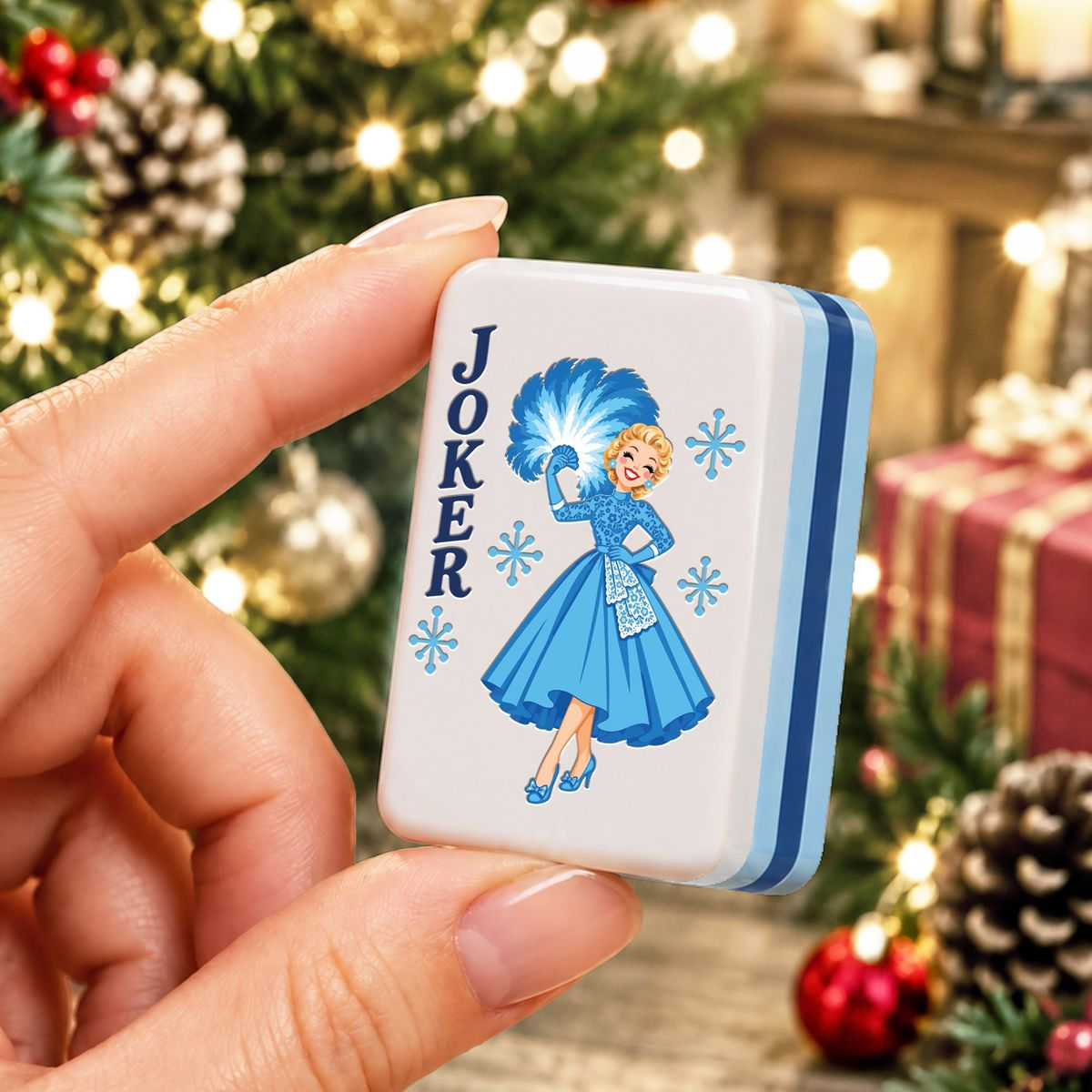
Hong Kong mahjong uses 136 tiles (suits 1–9 in three types, winds, dragons, flowers—no jokers) and scores based on speed and luck; Riichi uses the same 136-tile set but adds a formal declaration system and strict hand patterns that require all melds to be revealed. American mahjong, by contrast, uses 152 tiles (with 8 jokers), requires hands from the current year's National Mah Jongg League card, and allows hidden melds until you win. Hong Kong favors fast, social play; Riichi emphasizes strategy and betting. Both are played in clubs worldwide and can be learned in a few hours, but they demand different tile sets and skill priorities than what American players know.
Hong Kong and Riichi mahjong are often mentioned together because both are non-American variants popular in Asia and among expat communities across North America. But they are distinct games with separate tile inventories, hand requirements, and pace. We've seen players assume they can swap between them with one set of tiles—they can't. Understanding the core differences helps you decide which variant suits your group, whether you're hosting weekly games or learning for the first time.
What tile set does each variant use?
Hong Kong and Riichi both play with 136 tiles: three numbered suits (Bamboo/Bam, Circle/Dot, Character/Crak), ranks 1–9 with four copies each; four winds; three dragons; and eight flowers. Neither variant uses jokers or blanks. American mahjong uses 152 tiles plus 8 jokers, so a best-selling American mahjong set won't work for Hong Kong or Riichi play—you need a dedicated 136-tile set.
The physical appearance differs too: Hong Kong and Riichi tiles often show simplified artwork compared to American versions, and flowers are always called and exposed early. Because both variants rely on identical tile counts and no wild cards, the game depends purely on tile luck and strategic discarding. This makes them faster and more luck-driven than American play, where joker placement and hidden melds add complexity.
🀄 Shop best-selling mahjong sets →

How do hand patterns differ between them?
Hong Kong mahjong hands are simple: you need four melds (three-tile units: a pung of three identical tiles, a chow of three consecutive tiles like 1–2–3, or a kong of four) plus a pair. Any hand that meets that structure wins. There is no reference card; players memorize common patterns or learn by play.
Riichi mahjong is stricter: all melds must follow a specific pattern called a "yaku." Common yakus include all pungs, all one suit, or tile value pairs in sequence. You cannot win with just any four melds and a pair—your hand must match an approved yaku pattern. This rule adds chess-like depth; bad hands can be unwinnable even if you have four melds and a pair. American mahjong sits between them: hands come only from the current year's National Mah Jongg League card, which lists hundreds of legal hand patterns (many of which allow chows, flowers, and jokers in precise positions).
What is the Riichi declaration, and how does it change play?
In Riichi mahjong, once your hand is one tile away from winning, you can declare "Riichi," place a stake on the table, and freeze your hand—you cannot change it anymore. This signals to other players that you are close to winning, adding tension and strategy: do you declare early (risking someone else wins first) or wait (and risk drawing an unwinnable tile)?
Hong Kong mahjong has no Riichi system; play flows continuously without formal declarations. American mahjong also has no Riichi mechanic—players simply announce "Mahjong!" when they draw or are handed the winning tile.
The Riichi rule transforms the endgame from pure luck into a psychological game where timing and risk management matter as much as tile draw. Experienced Riichi players debate constantly whether declaring early is bold or reckless; newer players often declare too late and miss the bonus points.
How does scoring work in each variant?
Variant | Base Win | Bonuses | Speed | Total Skill:Luck Ratio |
Hong Kong | 1 point or payment set | Speed, special hands, player position | Fast (one round ~10 min) | ~40:60 luck-favored |
Riichi | Base points × multiplier | Yaku type, Riichi bonus, position | Moderate (~20 min per round) | ~55:45 balanced |
American | Points from card per hand played | Bonus if quint/sextet; joker use | Slow (one game ~90 min) | ~25:75 skill-favored |
Hong Kong scoring is informal: winners collect a fixed payment from each loser, with bonuses for special hands like "all pungs" or winning on the first draw. Payments are often 1–5 points per hand, making it social and gambling-adjacent.
Riichi scoring uses a point multiplier system: base points depend on the yaku type and how many melds you exposed; bonuses apply if you declared Riichi or won off someone else's discard. Points accumulate across four rounds, and final scores can vary wildly.
American scoring uses the National Mah Jongg League card reference: each hand has a fixed point value printed on it, sometimes doubled if you use a quint or sextet instead of a pung. Scoring is rigid and precise—no interpretation needed.

Which variant is easiest to learn if you play American mahjong?
If you know American mahjong, Riichi is the easier transition: both emphasize strategic hand-reading and require learning specific hand patterns (yakus in Riichi, the annual card in American). You already understand pung, kong, and pair logic.
Hong Kong mahjong is actually simpler to learn but feels foreign to American players because it has no reference card and relies more on intuition and speed. The "any four melds plus a pair" rule is easier to grasp, but gameplay is faster and less forgiving—new players often discard winning tiles because they don't recognize the pattern.
Starting fresh? Hong Kong is quicker to your first win (~30 minutes); Riichi takes longer (~2 hours) because you must memorize at least five yakus before you can play competitively. American mahjong is slowest to onboard (~4–6 hours) due to the Charleston, the annual card, and the complexity of joker placement rules.
🎁 See our most-loved mahjong sets & accessories →
What do you actually need to play each variant?
For Hong Kong or Riichi mahjong, you need a 136-tile set (one set per four players), a flat surface, and—optionally—a mat with a wind indicator and walls (bamboo pushers help speed up tile handling). Scoring is tracked by pen and paper or memory, so no rack or special equipment is mandatory.
For American mahjong, you need 152 playing tiles plus 8 jokers (never mixed into a single game), a current-year National Mah Jongg League card, a mat, and ideally mahjong racks with pushers so all players can organize their hands and see tiles clearly during the Charleston and play. A travel bag or case protects acrylic tiles during transport between homes.
Hong Kong and Riichi sets are more compact and durable for frequent play because they lack jokers and blanks—fewer moving parts means less to replace. American sets, especially engraved or themed designs, require more careful storage; acrylic tiles scratch if jostled in a basic bag without padding.
✨ Find your Mahstead set — free US shipping →
What to check before you buy
Tile count: Confirm the set is 136 (Hong Kong or Riichi) or 152 (American) before ordering; mixing formats ruins a game.
Joker inclusion: American sets include jokers; Hong Kong and Riichi sets do not.
Hand reference: If playing Riichi, buy or print a yaku chart; American play requires the current-year National Mah Jongg League card.
Racks and mats: Optional for Hong Kong, helpful for Riichi (to organize melds), essential for American (to manage tiles during Charleston and play).
Storage: Acrylic mahjong sets benefit from a padded bag if you move them weekly between players' homes.

FAQ
Can I use one American mahjong set to play Hong Kong or Riichi?
No. American sets have 152 tiles plus 8 jokers and no flowers in the same quantity as Asian variants. Hong Kong and Riichi need exactly 136 tiles with no jokers. Mixing sets breaks both games.
How long does a full game of each variant take?
Hong Kong, one complete round (all four winds): 30–50 minutes. Riichi, four rounds: 60–90 minutes. American, one complete game (one hand per player per wind): 90–120 minutes.
Which variant is fastest to learn?
Hong Kong mahjong. The "any four melds plus pair" rule takes 15 minutes to explain; your first hand may win within 30 minutes of starting. Riichi requires memorizing at least five yakus (1–2 hours). American mahjong takes 4–6 hours to learn the Charleston, card reading, and scoring.
Do Hong Kong and Riichi use the same rules for chows and pungs?
Yes. Both use identical pung (three of the same tile) and chow (three in sequence like 1–2–3 Bams) logic. American mahjong forbids chows entirely—you can only expose pungs, kongs, quints, and sextets.
What is the most common mistake when switching between variants?
Assuming you can play them with the same tile set. Players often buy a "mahjong set" without checking tile count, then discover 15 minutes into a game that they have the wrong number of tiles. Confirm the set matches your variant before game day.
Is there a chance jokers are used in Hong Kong or Riichi mahjong?
No. Neither variant uses jokers or wild tiles. All wins depend on actual tile draws and discards, which is why these games feel faster and more luck-driven than American play.


View More
View More
View More
