
What Is Hot Wall in American Mahjong
Last updated: Nov 23, 2026
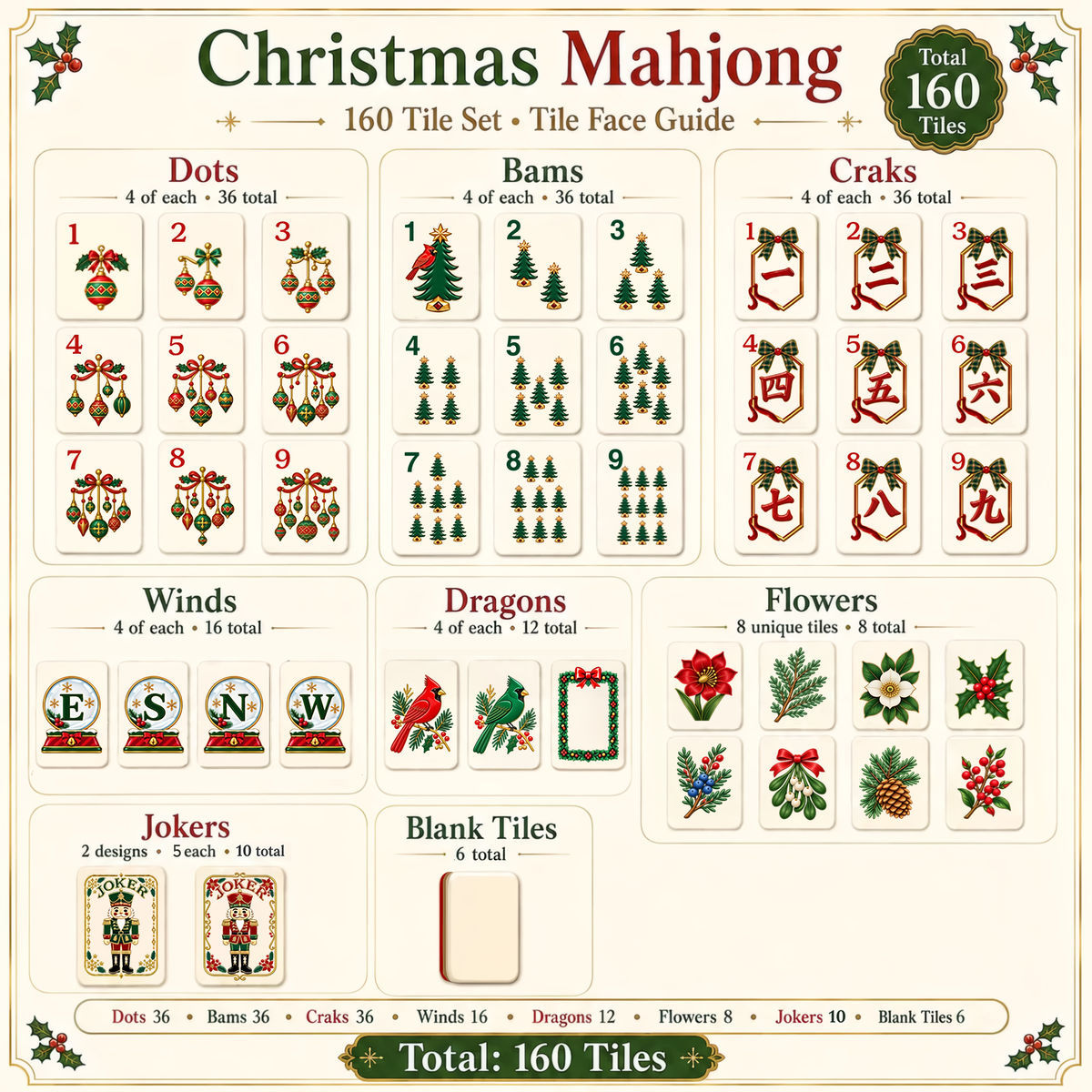
Hot wall in American mahjong is the discard pile of the player sitting directly across from you (your opposite hand). When that player discards a tile, any hand on the current year's National Mah Jongg League card that requires that exact tile becomes "dead"—you can no longer win with it, even if you later draw it yourself. Hot wall resets when a new hand is dealt. The rule encourages table pressure and strategic discarding, because one player's discard doesn't just help the table; it also eliminates specific winning paths for their opposite. Understanding hot wall is essential for reading which hands remain viable as the game progresses and for knowing when to pivot your strategy mid-hand. Many players new to American mahjong overlook this rule, leading to frustration when they think they've won but discover their hand required the opposition's discard. Our best-selling mahjong sets come with reference cards to help you track the rules during play. 🀄 Shop best-selling mahjong sets →
Who is your opposite hand?
Your opposite hand is the player sitting across the table from you—at a four-player game, the player directly to your left's left (or right's right). In seat rotation (East, South, West, North), if you're East, your opposite is West. Your opposite's discard pile is the hot wall. If you're sitting casually and haven't assigned seats yet, agree on who sits across before the Charleston begins. This matters because understanding American mahjong setup means knowing exactly which discard pile controls your hand's fate.

How do you track which hands are dead?
As your opposite discards tiles, you cross off or mark any hand on your card that requires that tile. Most players use a physical pen or pencil on their card; others use a small notepad or mental notes if they play regularly. The key is consistency: mark immediately after the discard is placed, not later. If a hand requires a tile in a specific pung (like three 5 Dots) and the 5 Dot appears in hot wall, the entire hand dies—even if you have the other two 5 Dots. Write lightly or use a dry-erase overlay so you can reuse your card across multiple hands during a sitting. This habit prevents costly errors: we've all seen someone claim "mahjong" only to discover mid-verification that a required tile was in the opposite's discard pile an hour ago.
What makes hot wall different from other discards?
Hot wall alone kills hands. Discards from the other two players (your right and left neighbors) do not affect hand validity—you can still win with a hand that requires their tiles. Only the opposite's pile is active. This asymmetry is what separates American mahjong from some variants; it adds drama because one seat's game becomes intertwined with one other seat's fortune. When your opposite discards a 1 Crak (the bird tile), they instantly remove dozens of potential hands for you but leave hundreds untouched. This rule forces you to read the current card carefully and adapt as the opposite's discards narrow your options.
How do hot wall rules interact with jokers?
Jokers can never replace a tile in hot wall because jokers are never part of any hand on the card itself—they're wildcards you use to fill incomplete melds or pairs. If your opposite discards a 3 Bam and you have a joker in a pung where the 3 Bam was supposed to go, the hand is still dead. The joker cannot resurrect it. Conversely, if you hold a joker and your opposite's discard would have killed your hand, the joker doesn't help you claim that hand anyway, since the card required the actual tile. This distinction confuses new players; the rule is simple: dead is dead, regardless of jokers in your hand. Learning how jokers work clarifies this and many other common mistakes.

What happens when you aren't sure if a hand is dead?
Stop. Call it out to the table before you claim mahjong. Verify together on the card: does the hand require the tile that's in hot wall? If yes, the hand is dead and you cannot claim. If no (or the tile is not in hot wall), the hand is alive and valid. Never assume. We've stopped mid-game to look up ambiguous hands dozens of times, and it's always worth the 30 seconds. If the card is unclear or worn, consult a printed copy from the National Mah Jongg League website. Disputes are rare when everyone agrees to check before claiming. This is why owning a durable set with clear tile markings and a readable card matters—small print or faded tiles lead to arguments.
Scenario | Hot Wall Effect | Your Hand | Outcome |
Opposite discards 7 Dot; you have a hand requiring 7 Dot pung | Tile is in hot wall | 7 Dot, 7 Dot, joker + rest | Hand is dead; cannot claim |
Opposite discards 2 Crak; you have a hand requiring 2 Crak in a different suit section | Tile is in hot wall, but wrong suit on card | Does not apply (different hand) | Check each hand individually—some may be dead, others alive |
Opposite discards Red Dragon; you have two hands on card requiring Red Dragon | Both hands die | Both require Red Dragon | Both hands are now invalid |
Opposite discards 5 Dot; you have a hand requiring 5 Dot; you also hold a joker | Joker does not override hot wall rule | 5 Dot hand + joker available | Hand is dead; joker cannot save it |
🎁 See our most-loved mahjong sets & accessories →
How does hot wall affect strategy mid-hand?
Pay attention to what your opposite discards in the first few turns. If they throw tiles that would kill your strongest hands, you adapt: shift focus to other hands, draw from the wall differently, or even decide to fold if too many options vanish. Experienced players read hot wall like weather—it's a signal. If the opposite is discarding low Bams and you were counting on a low Bam pung, pivot. Conversely, if they're discarding tiles you don't need, you maintain your original course. The pressure is mutual: your discards are hot wall for your opposite too. This creates a subtle mind game—do you throw tiles to help yourself or to block them? Both strategies matter. Understanding the full rules of American mahjong includes this psychology.
What happens if someone wins with a dead hand?
It's an invalid mahjong claim. You must reveal your hand and the card; if the verification shows the hand required a tile in hot wall, the claim is disallowed. No points are scored. The hand ends, tiles are reshuffled, and play continues. Penalties vary by house rules (some groups rotate the dealer; others simply replay the hand). Prevention is simpler than correction: verify before claiming, every time. Mark your card as hot wall grows. Ask the table "Is this hand still good?" if you're unsure. New players often skip this step; regular groups build it into habit. When you're hosting a weekly game, setting up with a mat that has a clear discard area and racks with pushers helps everyone track discards visually and reduces confusion.
What to check before you buy into a new game
Before sitting down with an unfamiliar group, ask: "Do you play with hot wall?" (Most American mahjong groups do, but some house rules vary.) Confirm which player is your opposite and which discard pile is hot wall. Check that everyone marks hands as they discard. If you're learning, bring a pencil and your card—don't rely on memory. If the group uses an older card (from a prior year), confirm the hands on it, since card changes annually. Watch one hand before you play for real to see how the table marks and verifies. This five-minute setup prevents a frustrating first game.
✨ Find your Mahstead set — free US shipping →

FAQ
Can my opposite player deliberately discard tiles to kill my hands?
Yes. It's legal strategy. If they see your discard pattern and guess your hand, they can throw tiles to invalidate it. This is part of the game's social and tactical depth. The counter: vary your discards, don't telegraph your hand too early, and watch the opposite's strategy too.
If I draw a tile from the wall after the opposite discarded it, can I use it?
Only if you draw it fresh from the wall. Once it's been in the opposite's discard pile (hot wall), it killed relevant hands at that moment. If a new tile (identical) appears later in the wall, that's a different tile and doesn't count against hot wall. Hot wall is tied to the moment of discard, not the tile rank itself.
What if two people are sitting opposite each other but the table isn't a perfect square?
Define opposite before the game starts. Usually it's the player farthest away, roughly 180 degrees. If the table is oval or irregular, point and agree. Confusion here ruins the game, so say it out loud and confirm everyone understands which discard pile is hot wall.
Does hot wall change if someone goes out and a new hand begins?
Yes. Hot wall resets completely when the hand ends and new tiles are dealt. The previous opposite's discard pile no longer matters. Your new opposite (after seat rotation) begins a fresh hot wall pile.
Can I ask someone else which tiles are in hot wall, or must I track it myself?
You can ask, but it's your responsibility to know. If you claim mahjong and haven't verified against hot wall, you own the error. Track it as you play. Asking a neighbor to double-check before you claim is fair; relying on them to remember for you is risky.


View More
View More
View More
