
What Is Flower Hand in American Mahjong?
Last updated: Nov 23, 2026
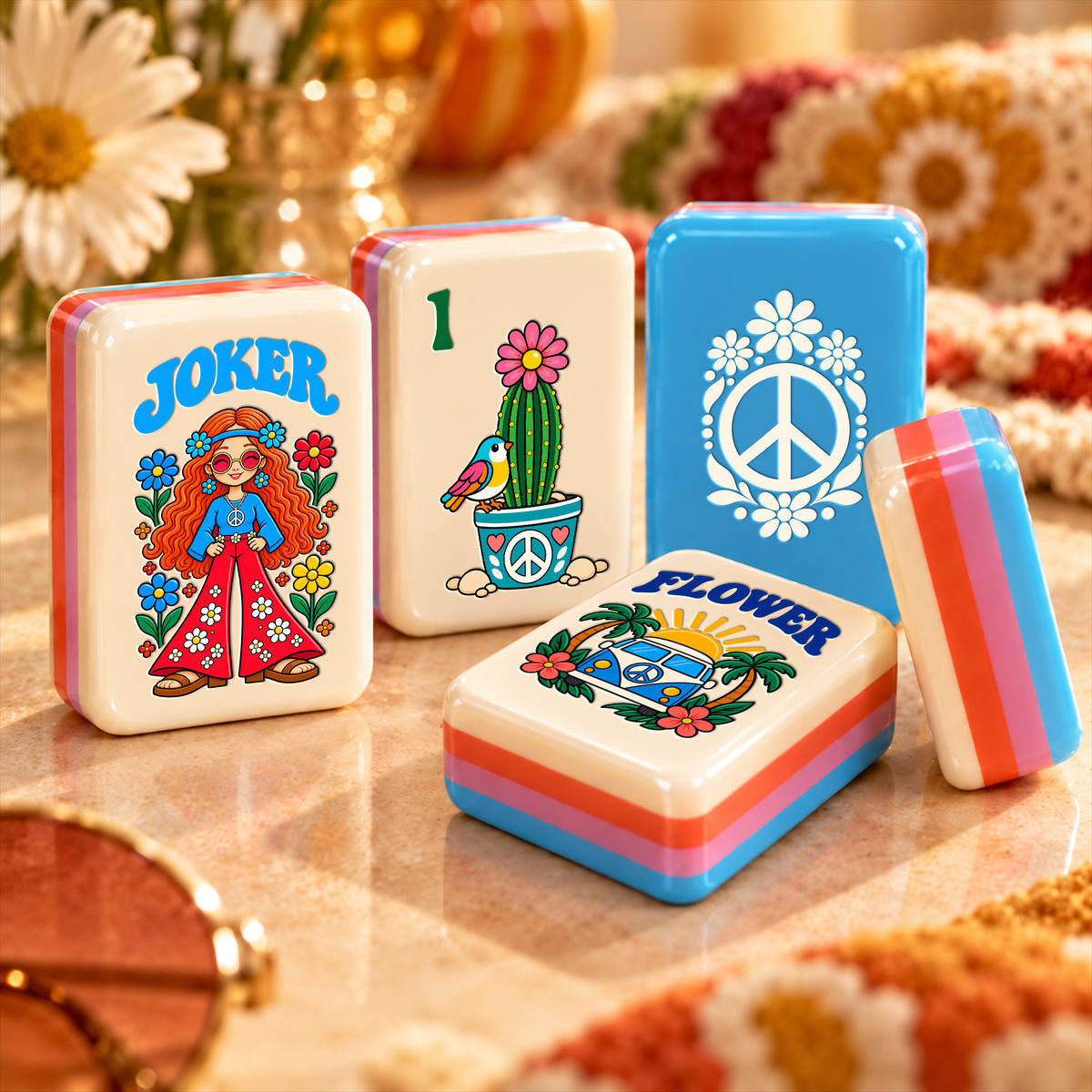
A flower hand in American mahjong is a completed hand that includes flower tiles—eight special honor tiles (four Plum, four Orchid, four Bamboo, four Chrysanthemum in traditional Chinese sets) or jokers standing in as flowers. Flowers cannot be used to build pairs or exposed melds in standard American play; instead, they're drawn and immediately replaced by pulling from the loose tile pile. Flower hands must be listed on the current year's National Mah Jongg League card to score. They typically appear as single tile additions to pairs-and-melds patterns, worth the points shown on the card. A flower hand is typically completed during play when a player picks a flower tile from the wall or dead wall, replaces it, and the resulting hand matches a card pattern.
How do flowers work in the hand and wall?
When you draw a flower tile during active play, you immediately set it aside face-up and draw a replacement tile from the loose tile pile (not the wall). The flower counts toward your hand without taking a regular tile slot—you still hold thirteen tiles after the replacement. If you draw a flower from the dead wall (the last fourteen tiles), replace it the same way. Flowers never sit in your hand; they're always displayed openly. This means your opponents always know when you've drawn a flower and which flower it was. The replacement tile becomes part of your hand and can be used in melds, pairs, or future draws. Understanding this mechanic is critical because it speeds up play and prevents confusion about hand completion.

What patterns use flowers on the card?
Flowers appear on the current year's National Mah Jongg League card in specific patterns, listed alongside pairs and melds just like any other hand combination. A flower pattern typically shows a pair plus three or four melds, with the flower acting as a modifier—for instance, "Pair of 1 Craks + Pung 5 Bams + Quint 7 Dots + Kong White Dragons + Flower." The card organizes hands by number (often shown as "1F," "2F," etc., where F denotes flower), making it simple to scan for flower-inclusive options when you're one or two tiles away. Flowers almost never replace pairs; they complement completed melds. The specific flower tile (Plum, Orchid, Bamboo, or Chrysanthemum) listed on the card must match exactly—you cannot substitute one flower for another. This precision is why every player needs a complete set with all eight flowers distinct and easy to identify.
🀄 Shop best-selling mahjong sets →
Why do flower hands matter strategically?
Flower hands matter strategically because they're often high-scoring bonus plays that give you a competitive edge when other options are blocked. Drawing a flower early in your hand signals flexibility: you now have an extra path to completion that other players may not anticipate. Experienced players track which flowers have been drawn and which remain in the wall, adjusting their discard strategy accordingly. If you're holding a hand that could become a flower hand with one more tile, you're effectively playing two hands at once—the primary hand plus the flower variant—which increases your odds of winning. This dual-track mentality is why flower hands reward attention and planning. Players who ignore flower patterns on the card often miss quick wins or fail to recognize dead draws early enough. Knowing how to read the mahjong card helps you spot these opportunities instantly.
Common mistakes when playing flower hands
The most common mistake is forgetting to replace a flower immediately. If you draw a flower and set it aside without pulling a replacement, you've created a dead hand—you'll have fourteen tiles instead of thirteen, and the hand is invalid. Always pull the replacement tile from the loose pile the instant you set down the flower; make it automatic. A second mistake is confusing a flower with a blank tile or joker in sets where flowers aren't clearly marked or distinguished by shape or color. Before each game, inspect your tiles and make sure flowers are instantly recognizable. A third error is assuming a flower can replace any tile in a meld—it cannot. Flowers are only valid in patterns explicitly listed on the card; attempting to use a flower as a wild tile for a non-flower hand is a misplay and voids the hand. Finally, players sometimes discard flowers carelessly, not realizing a flower draw might have been their winning path. Pay attention to which flowers remain in play and which have been discarded; this information shapes your late-game decisions. What's in an American mahjong set covers how to identify flowers correctly in your set.
Flower hands vs. other bonus hands: a comparison
Not all bonus hands in American mahjong involve flowers, and understanding the difference helps you prioritize which patterns to pursue:
Hand Type | Composition | Scoring | Strategy |
Flower Hand | Pair + melds + 1 flower tile (drawn & replaced) | Card-listed points (usually 30–50) | Draw-dependent; plan for flower early |
Pung/Kong Hand | Pair + three or four exposed identical-tile melds | Card-listed points (varies) | Visible & controllable; easier to execute |
Joker Hand | Pair + melds using jokers as wildcards | Card-listed points (typically 40–60) | High-value but limited jokers per set |
Straight/Sequence | Cannot be used in American mahjong | N/A | Not applicable; American mahjong has no sequences |
Flower hands occupy a middle ground: more flexible than strict pung hands because a flower can arrive at any moment, but less controllable than joker hands where you manage the jokers yourself. The strategic value lies in their unpredictability and the mental agility required to track them.
🎁 See our most-loved mahjong sets & accessories →
How to spot flower hands quickly on the card
Scanning the card for flower patterns takes practice but becomes reflexive. First, look for the letter "F" or the word "Flower" printed in the row or pattern description. Most cards group flower hands into dedicated sections or mark them with a distinct symbol. Second, read the exact flower tile name—Plum, Orchid, Bamboo, or Chrysanthemum—and memorize which one you drew. If your cards are dog-eared or faded, invest in a new set printed on quality cardstock; a worn card slows down your lookup and invites errors. Third, check the pair and melds listed alongside the flower. If you're short one tile to a non-flower hand but have a pair and the right melds, and you've just drawn a flower that matches a card pattern, call Mahjong immediately. Practice this drill in casual games: whenever a flower is drawn, pause and count how many players can find that flower pattern on the card within five seconds. The fastest player at your table usually wins more flower hands because they can seize opportunities others overlook.
What you'll need: choosing a set with clear, usable flowers
A clear set of eight distinct flowers is essential for smooth flower hand play. Acrylic tiles with engraved flowers photograph well and resist fading or cracking. Sets with hand-carved or colored flowers are more durable than printed tiles, which can chip. Before buying, check that flowers are easy to distinguish at arm's length—sitting three feet across a table, you should instantly recognize Plum from Chrysanthemum without squinting. If your set uses bamboo or other natural materials, verify that moisture or humidity won't degrade the flower markings. When hosting weekly games, invest in a quality mat and rack with pushers to protect tiles and keep flowers visible. Our best-selling acrylic sets include eight flowers with crisp, durable engravings. Pair your set with a dedicated mahjong mat to prevent flower tiles from sliding or flipping face-down during heated play.
✨ Find your Mahstead set — free US shipping →
What to check before you buy
Flower clarity: Can you identify each of the four flowers by shape, color, or engraving at a distance?
Durability: Are the flower markings engraved or printed? Engraved flowers last far longer in weekly games.
Completeness: Does the set include all eight flowers (two of each type)?
Replacement tile accessibility: Is the loose tile pile easy to reach and draw from without disturbing your hand?
Card accuracy: Do you have the current year's National Mah Jongg League card, which lists all valid flower hands?

FAQ
Can a flower tile count as a joker or wild tile?
No. Flowers are strictly honor tiles that can only appear in hands explicitly listed on the card as flower hands. In any other context, they must be replaced immediately when drawn and cannot substitute for missing tiles in a meld.
What happens if I pick a flower and forget to replace it before the next player's turn?
Your hand is invalid. You cannot proceed with fourteen tiles. Immediately draw a replacement from the loose pile. If the turn has already passed, alert the table and restart the draw sequence with the replacement tile; most house rules permit a do-over to avoid stalling play.
Do I have to declare a flower hand immediately when I complete it?
Yes. In American mahjong, you must call Mahjong immediately when you draw the final tile that completes your hand, whether or not it's a flower. If you delay calling, other players may draw and alter the hand, or they may challenge the validity of the pattern.
How many flowers are in a standard American mahjong set?
Eight flowers total: traditionally four types (Plum, Orchid, Bamboo, Chrysanthemum) with two copies of each. All eight are always included; they're not considered spare tiles.
Can flower hands be worth more points than other bonus hands?
It depends on the card. Flower hands vary in point value, typically ranging from 30 to 60 points based on the specific pattern. Check the current year's National Mah Jongg League card to see exact point values; they're listed with every hand pattern.
If no one draws a flower all game, can I still win without a flower hand?
Absolutely. Flower hands are optional strategic paths. Most games are won with pung, kong, or joker hands. Flowers add variety and excitement but are never mandatory for play.


View More
View More
View More
