
What Is First Left in American Mahjong? Rules & Strategy
Last updated: Nov 23, 2026
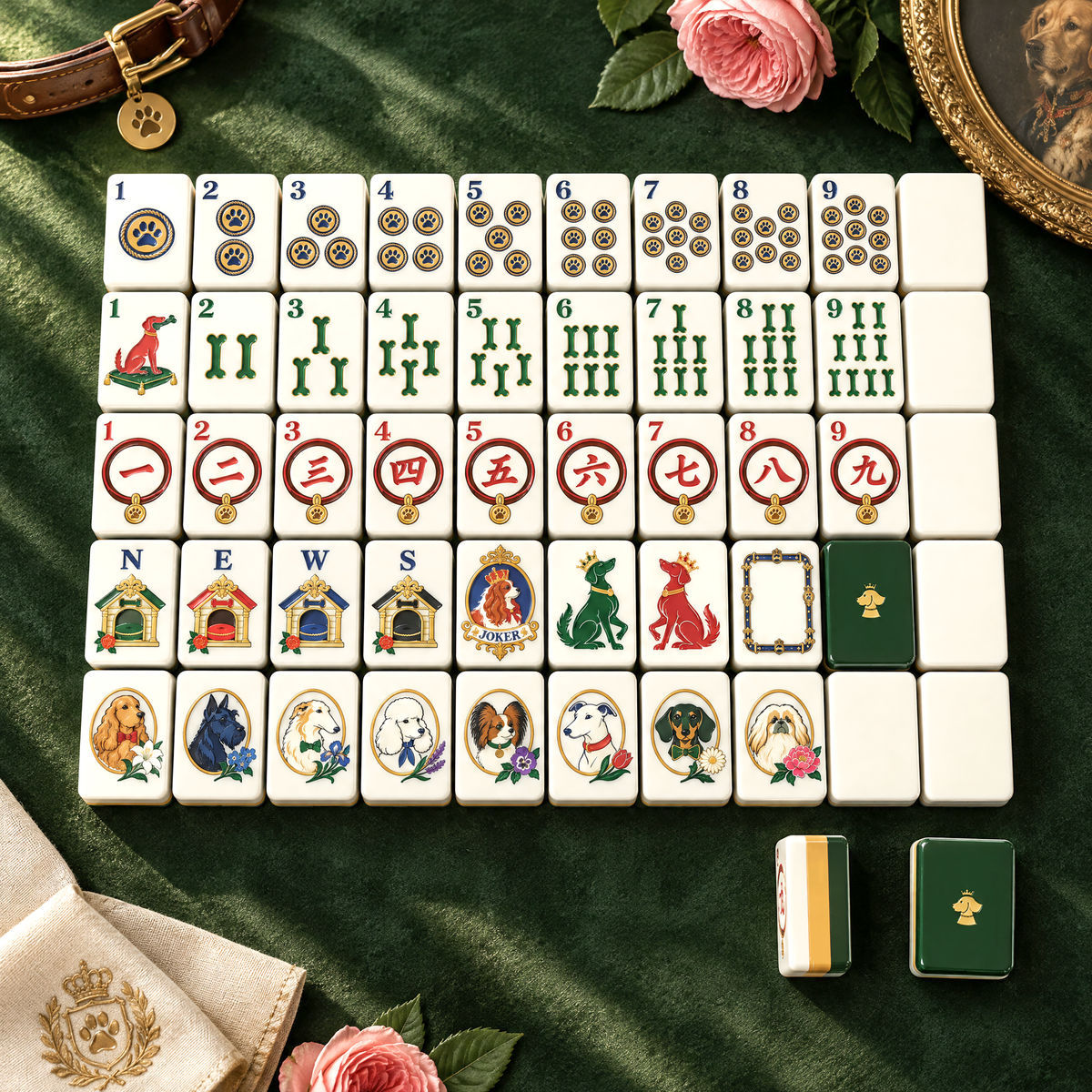
In American mahjong, "first left" is the tile discarded by the player seated to the dealer's left—always the first discard of the round. Unlike subsequent discards, first left cannot be claimed for a pung, kong, or any exposure; it may only be used to build a hand in hand or claimed as a joker replacement much later. This rule exists because the four initial hands are built in a specific rotation: dealer draws and discards first, then the player to their right, then across, then left. The player to the dealer's left completes the four opening draws, then discards. That discard is protected as a neutral starting point. American mahjong, played with the National Mah Jongg League card and 152 tiles plus jokers, uses this rule to ensure fairness and keep the opening tempo balanced.
🀄 Shop best-selling mahjong sets →
Why Can't You Claim First Left as an Exposure?
The first left rule prevents the player to the dealer's left from giving away a free exposure on their opening turn. After the dealer draws and discards, the right-hand player draws and discards, then the player across does the same. By the time first left is played, three hands have already drawn and discarded—three chances to claim or build. Protecting first left keeps all four players on equal footing during the vulnerable opening moves. Once first left is on the discard rack, it becomes fair game: a later player can claim it as a joker substitute if needed, and any player can build from it in hand. This asymmetry only applies to the first discard of the round; every tile discarded thereafter follows normal American mahjong calling rules.

How Does First Left Fit Into the Opening Draw Sequence?
The opening draw happens in a fixed order: dealer, right, across, left. The dealer draws one tile from the back wall, then discards. The right-hand player draws next, then discards. The across player draws and discards. Finally, the left player draws—completing the four-tile draw. That left player then discards, and that discard is first left. Once first left lands on the rack, the wall is fully "cracked" (opened) and the dealer begins normal play by drawing from the wall. The left player's discard is frozen for one turn: the dealer cannot claim it, only the right and across players may claim it as an exposure after the dealer has had a chance to draw and play. This lag—the rule that first left sits unclaimed for at least one full turn—is what separates it from every other discard.
What Happens If a Player Misses Claiming First Left?
If a player chooses not to claim first left when they could (as an exposure or joker substitute), that tile remains in the discard rack and play moves forward normally. There is no penalty for passing; players must actively announce a claim ("I claim") when they want to use a discard. If the dealer draws and plays without claiming first left, or if the next player to act (the right player) does not claim it as an exposure, it simply stays on the rack as a cold tile. Later in the round, any player can use it as a joker substitute if their hand calls for it—for example, if they are waiting for a specific tile and first left matches the joker value they need. Once the hand ends, first left loses any special status and becomes part of the discard history.
🎁 See our most-loved mahjong sets & accessories →
How Should You Play First Left as a Strategic Choice?
As the left player (the one who discards first left), your opening discard is one of your first hand-reading moments. Discard a tile that is unlikely to be called: a tile you have duplicates of, or one that doesn't match any obvious suit pattern in the current hand. Many left players discard a "safe" tile—one that matches the hand already being built, or a tile from a suit that the hand does not appear to need based on the pattern of earlier draws. Avoid discarding a tile that looks isolated or extreme in value (like a 1 or a 9) unless you are confident it is not part of a common pattern on the card. Some left players also track the dealer's discard and the right player's discard to gauge what suits or numbers are being drawn; this helps you avoid throwing a tile that might be claimed as a joker substitute later. The left player has no exposure risk with first left—that is the entire point—so use that freedom to set a calm, defensive tone for your hand.

When Should You Claim First Left as an Exposure or Joker?
Claim first left as an exposure only if it completes or advances a strong exposable pung, kong, or quint already in your hand. In American mahjong, you cannot expose a pair or a single tile; you expose only groups of three, four, five, or six identical tiles. If you have two 3 Craks in hand and first left is a 3 Crak, claiming it as a pung gives you a discard, speeds your hand, and commits you publicly to a tile pattern. However, if you have only one 3 Crak in hand and first left is another 3 Crak, do not claim it just because it matches—wait until you have three or more in hand, or save first left as a potential joker substitute later. Claim first left as a joker substitute only when your hand is nearly ready and you need that exact tile value to complete your winning combination. This late-game claim is rare but powerful: it means you have been building quietly and first left is the missing piece.
Comparison: First Left Decision Tree
Situation | Action | Reason |
I have 2 of the 3 Craks, first left is a 3 Crak | Do not claim | You need three for a pung. Claim when you have three or four. |
I have 4 of the 5 Bams, first left is a 5 Bam | Claim as pung/kong | Four identical tiles exposed is a strong, flexible move. |
I have four 7 Dots and one joker; first left is a 7 Dot | Do not claim | You already have a joker substitute. Save first left for a different tile later. |
Hand is nearly ready; I need a 2 Bam to win; first left is a 2 Bam | Claim as joker substitute | Final move. No exposures needed; joker substitution is your path to mah jongg. |
I am unsure what I need; first left is a middle value | Wait and pass | If you cannot confidently use it now, pass. Risk of blocking your own hand is high. |
The power of this table is that it shifts first left from a single rule into a series of hand-state questions. Ask yourself: Do I have three or more already?Is this tile more valuable now as a safe reserve?Am I close enough to winning that this tile ends my hand? Answer any yes, and you have your move.
Common Mistakes When Playing or Understanding First Left
Thinking first left is always safe to discard. Many left players mistakenly believe their first left discard cannot hurt them. Not true. While it cannot be claimed as an exposure, a later player can use it as a joker substitute if it matches their winning hand. Discard thoughtfully, not randomly.
Claiming first left too eagerly to build an exposure. New players sometimes claim first left to start an exposure that they later regret. Remember: in American mahjong, every exposure consumes a meld slot and commits you to that tile suit. If you claim a 3 Crak pung early, you are announcing that Craks are central to your hand—your opponents will play defensively around Craks afterward. Claim only if the pung is already solid (three or four identical in hand).
Forgetting first left can be claimed as a joker substitute. Some players think first left disappears after the first turn or that it is "dead." Not so. First left can be claimed as a joker anytime during the hand if your winning combination calls for it.
Confusing first left with other opening rules. In some variants (Hong Kong, Chinese standard mahjong), the opening sequence differs drastically. Make sure you are playing American mahjong rules with the National Mah Jongg League card—that is when first left applies in the exact way described here.
What to check before you buy a set to practice first left rules:
Does the set include two color-coded jokers or marker tiles? In American mahjong, having visually distinct jokers and a clear discard rack helps you track first left and the opening sequence without confusion. Engraved American mahjong sets often use sharp tile design and custom markers to make these opening moves easier to follow.
Is the discard rack or mat large enough to show the order of tiles clearly? A good mahjong mat or set with a dedicated rack area makes first left visible and prevents arguments about which tile was discarded first.
Are the tiles large and readable? Engraved, high-contrast tiles let you see first left from across the table and reduce mistakes in identifying its value or suit.
Learning first left is best done by playing live rounds with a reliable set and a mat that keeps the discard order transparent.
How Does First Left Differ in 2- or 3-Player American Mahjong?
In 2- or 3-player variants of American mahjong, the opening draw sequence is compressed. With only two players, the dealer draws and discards, then the other player draws and discards—that second discard is first left. With three players, the sequence is dealer, then right, then left; the left player's discard is first left. The same rule applies: first left cannot be claimed as an exposure. However, the faster, tighter table means first left happens sooner, and the tile often carries less strategic weight because there are fewer hands drawing simultaneously. If you play 2 and 3 player mahjong rules, first left still exists and is still protected—but the smaller player count shifts the overall game balance significantly.
✨ Find your Mahstead set — free US shipping →

FAQ
Can the dealer claim first left?
No. The dealer cannot claim first left as an exposure or direct use. However, if the dealer is waiting for a specific tile and first left matches the joker value they need, they can claim it as a joker substitute late in the hand.
Is first left always the same tile value across rounds?
No. First left is determined by which player is seated to the left of the dealer. Since the dealer position rotates after each hand (usually clockwise), a different player becomes "left" each round, and each new first left is a different tile based on that player's hand.
What if the left player accidentally discards before drawing in the opening sequence?
This is a misdeal. The hand should be stopped and reset. The left player must draw before discarding to complete the opening four-draw sequence correctly.
Can you claim first left if you go mah jongg on the same turn?
Yes, but only as a joker substitute or if it completes a pung you are exposing as part of your winning hand. If you need first left to finish, you may use it and declare mah jongg immediately.
Does first left have a different name in other mahjong variants?
In Hong Kong, Chinese, and Riichi mahjong, the opening discard rules are entirely different and the concept of "first left" does not exist in the same form. First left is specific to American mahjong and the National Mah Jongg League rules.
If someone misses claiming first left, can they claim it on a later turn?
Only as a joker substitute. If a player passed on claiming first left as an exposure, they cannot go back and claim it as an exposure later. But any player can use it as a joker substitute anytime during the hand if their winning hand calls for that tile value.


View More
View More
View More
