
What Is an Atomic Hand in American Mahjong?
Last updated: Nov 23, 2026
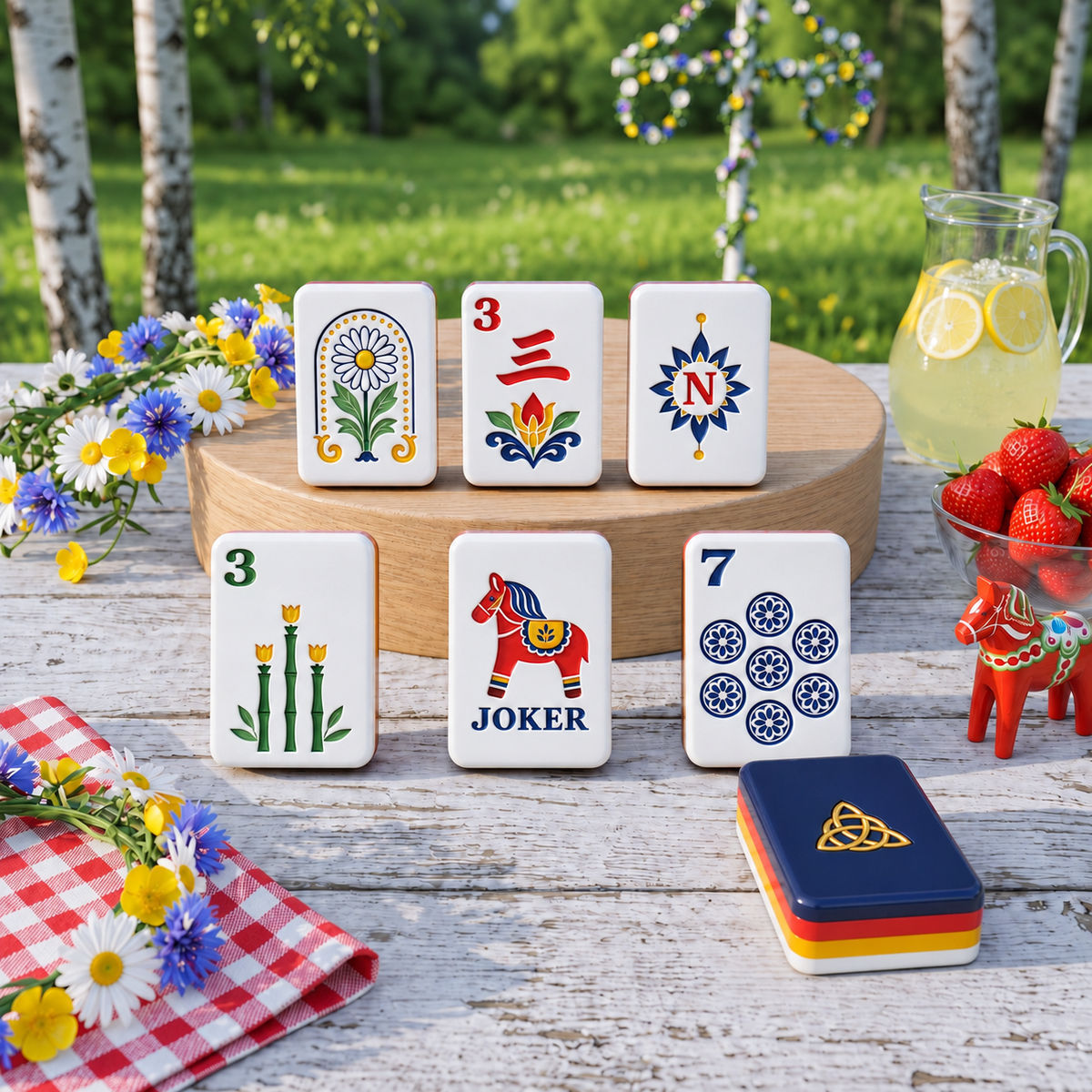
An atomic hand in American mahjong is a special hand pattern that uses low-value tiles (1, 2, or 3 of any suit) with few or no jokers to fill it. On the current year's National Mah Jongg League card, atomic hands are listed in dedicated sections and score between 30 and 40 points depending on the exact configuration and year. You spot them by matching three to four groups of identical low tiles—usually pungs, kongs, or quints—with a pair, all drawn purely or with minimal joker substitution. The appeal: atomic hands require discipline (you must turn down many tempting draws) and patience, but the payout feels earned because you've avoided the safety net of jokers. At Mahstead, players often use dedicated scoring sheets and reference mats to track atomic and other patterns during play, making the hand-tracking cleaner and faster across the table.
What makes atomic hands different from regular hands?
Most American mahjong hands lean heavily on jokers—they're wildcards that fill gaps and speed up your win. Atomic hands flip that logic: they restrict joker use, forcing you to build pure (or nearly pure) combinations of the lowest tiles. A regular hand might have four or five jokers scattered across three groups; an atomic hand has one, two, or zero. This constraint is why atomic hands feel prestigious: you've navigated the table without relying on luck, and the rule book rewards that discipline with solid points. The trade-off is time—atomic hands take longer to assemble because you can't simply replace missing tiles with a joker.

Where do you find atomic hands on the card?
The current year's National Mah Jongg League card organizes hands into themed sections. Atomic hands appear in a dedicated low-tile section (or sections) that groups patterns by suit and number combination. Look for rows that feature "1–2–3" or "all 1s" or "all 2s" as the core structure, then scan rightward to see which groupings (pung, kong, quint, sextet) and joker counts are legal. For example, a row might read: "Three 1 Bams, one 2 Bams pung, one pair of Craks"—no jokers allowed. Another might allow one or two. Learning to read the card accurately is the first skill you need; without it, you'll misidentify atomic hands or miss them entirely during play. The sections are color-coded or marked by number range on most cards, making them easier to locate once you know what to look for.
How do you score an atomic hand?
Atomic hands on the current year card typically score 30 to 40 points, depending on the exact pattern and complexity. A simple atomic hand (three or four groups of identical low tiles plus a pair, zero jokers) sits at the lower end; more intricate patterns or those with one joker substitution yield higher payouts. Unlike some advanced games, American mahjong scoring is fixed—the card dictates the point value, not the tiles themselves—so once you verify your hand matches a legal pattern, you know instantly what you've won. American mahjong scoring works on a flat point scale, not multipliers, which makes it simpler to track and settle bets. Keep a tally sheet nearby; even small errors in recorded scores cascade over a season of weekly games.
Why do experienced players pursue atomic hands?
Seasoned players hunt atomic hands because they represent a rare strategic sweet spot: high reward with moderate effort. Unlike hands requiring specific winds or dragons (which depend on the wall draw), atomic hands rely on tiles that appear in abundance on the wall—low Bams, Craks, and Dots are drawn frequently, giving you genuine chances to build them. Moreover, once you've picked two or three matching low tiles early in the game, you're visibly committed to the atomic path, which subtly discourages opponents from discarding the tiles you need (they assume you're chasing something rare). The hand also teaches discipline: learning to pass on quick, easier hands in favor of a slower atomic build sharpens your long-term strategy and win rate. Over a season, players who can consistently recognize and pursue atomic hands when the wall permits them outpace purely reactive players.
Hand Type | Typical Joker Use | Score Range | Time to Build | Difficulty |
Atomic (low tiles) | 0–2 | 30–40 | Moderate–slow | High |
Mixed with jokers | 3–5 | 25–35 | Fast | Low–moderate |
Dragon/wind heavy | 2–4 | 35–45 | Moderate | Moderate–high |
Quint/sextet focus | 1–3 | 35–50 | Slow | High |

What mistakes do players make when chasing atomics?
The biggest error is holding too long. Many new players fall in love with an atomic hand early (after drawing two matching low tiles) and refuse to pivot, then discard carelessly and never complete it. Commit to an atomic hand only if you've drawn at least three or four tiles that support it by mid-game; before that, stay flexible. A second trap is ignoring the joker allowance. Some atomic patterns permit one or two jokers; if you fail to read the card correctly, you might discard a tile thinking you can't use it, then discover too late that you could have. Third, newer players often overestimate rarity: atomic hands are less common than regular hands, but they're not unicorns. If no one else at the table is pursuing low tiles, the wall is fresher and your odds improve. Conversely, if two opponents are already building low-tile hands, abandon ship and pivot to a different pattern. Finally, don't assume atomic hands are always the best choice just because they score well—context matters. If you're trailing late in the game, chasing a 30-point atomic might be slower than grabbing a 25-point hand that's halfway built. Play the situation, not the pattern.
🀄 Shop best-selling mahjong sets →
How do you stay organized while building an atomic hand?
Clear table layout is essential. Mahjong racks with pushers help you sort your tiles by suit and number, making it instantly obvious how many low tiles you've collected and which groups are complete. Without a rack, tiles slide around, you lose track, and opponents gain intel (they'll see you rearranging repeatedly and know you're stuck). A dedicated mahjong mat with clear suit zones also reduces confusion—place your Bams on the left zone, Craks in the middle, Dots on the right—so discards don't collide with your hand. Keep your hand face-down until you're ready to expose, but sort it privately. Use a pen and small notepad to jot which atomic patterns you're eyeing; when you pick a tile, mark whether it helps or hurts each option. This external memory frees your brain to track opponent discards and avoid telegraphing your strategy.
✨ Find your Mahstead set — free US shipping →
What to check before you buy a set to practice atomic hands
Set completeness: Verify the set includes all 152 playing tiles plus 8 jokers. Atomic hands depend on access to multiple copies of low-numbered tiles; a short or damaged set skews your practice and gives you false confidence. Tile clarity: Choose tiles with large, easy-to-read numerals and suit symbols. When you're learning atomic patterns, misreading a 1 as a 2 derails your entire build. Acrylic tiles with crisp numbering (no faded or raised engravings that wear down) stay readable through hundreds of games. Card access: Confirm you have the current year's National Mah Jongg League card—atomic hand sections change yearly, and old cards have outdated patterns. Many players keep a laminated card at the table and a backup in their mahjong bag or case for travel. Rack fit: If you buy a set with racks, test that tiles sit upright without jamming. A rack that's too narrow or too deep makes sorting low tiles tedious, defeating the purpose of staying organized.
🎁 See our most-loved mahjong sets & accessories →
How do atomic hands fit into your long-term game plan?
Think of atomic hands as a skill milestone. In your first season, focus on recognizing them and understanding the card. In your second, try to spot when the wall conditions favor an atomic build and commit to one or two per game. By your third season, you'll instinctively know whether an atomic hand is worth chasing based on opponent behavior, remaining tiles in the wall, and score pressure. Learning to read the mahjong card with confidence is foundational; once you're fluent there, atomic hands become another arrow in your quiver. Many players find that chasing atomics sharpens their overall tile-reading and patience, which helps them win more hands across all patterns. Atomic hands also create memorable table moments—when someone goes atomic after a slow, visible build, the table feels the satisfaction together, which is part of why we play every week.

FAQ
Can I use jokers in an atomic hand?
It depends on the specific atomic pattern on the card. Some atomic hands allow zero jokers; others permit one or two. Always verify the hand entry on the current year's National Mah Jongg League card before committing. Misreading the joker allowance is a common disqualification.
How often should I see an atomic hand come up in a game?
Most casual weekly games see one or two atomic hands per session, depending on player experience and wall conditions. Newer players chase them less often; seasoned groups may see three or four across a full afternoon.
What's the difference between an atomic hand and a hand with mostly low tiles?
An atomic hand is a specific legal pattern from the current year's card, not just any hand with low tiles. A hand with three 1s and three 2s might match an atomic pattern, but a random assortment of low tiles won't qualify unless it matches an exact listed combination.
Should I always go for an atomic hand if I draw two matching low tiles early?
No. Draw at least three or four supporting tiles before committing. Early draws can shift as the game unfolds. If you're holding two 1 Bams and no other low tiles by mid-game, abandon the atomic plan and chase something else.
Do atomic hands score better than dragon or wind hands?
Not necessarily. Atomic hands typically score 30–40 points; dragon or wind hands can score 35–50. Choose based on what tiles you're drawing and what the wall offers, not just point value.
Can I play atomic hands if I'm new to American mahjong?
Yes, but focus first on understanding the basics of how to play. Once you're comfortable reading the card and building simple hands, atomic hands become an accessible intermediate skill.


View More
View More
View More
