
What Is a Sextet in American Mahjong
Last updated: Nov 23, 2026
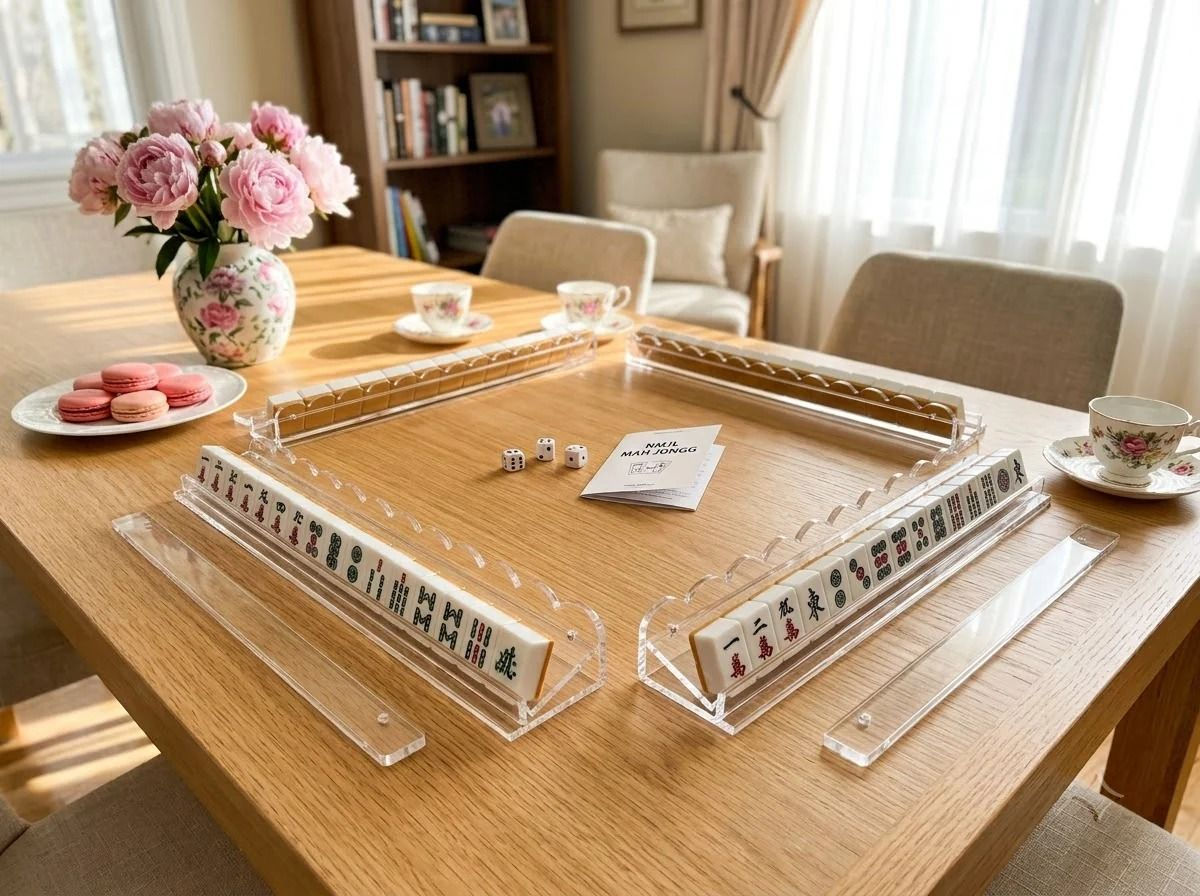
In American mahjong, a sextet is a meld of exactly six identical tiles—same number, same suit—that you expose face-up on your rack after calling them from the wall or another player's discard. Unlike a pung (three identical) or kong (four identical), a sextet is rarer and more powerful because it covers more of your hand in one meld. You can only form a sextet from tiles listed on the current year's National Mah Jongg League card; not every hand pattern allows sextets, and they often appear in hands marked with the "sextet" notation on the card. When you complete a sextet, you expose all six tiles immediately, just as you would a pung or kong. Sextets give you more tile coverage per meld, making them valuable for filling out long, complex hands. Because American mahjong uses exactly 152 playing tiles with four copies of each number-suit combination (four 1 Bams, four 2 Craks, etc.), a sextet uses six of those four-copy pools, leaving only two tiles of that kind unused in the entire deck—a scarcity that adds strategic weight to hands that require them.
What exactly is a sextet, and how does it differ from a pung or kong?
A sextet is six identical tiles—same number, same suit—all exposed on your rack at once. A pung is three identical; a kong is four. Since American mahjong limits you to four copies of each tile per suit, a sextet means you're using six tiles from two different copies of the same number-suit combination across the game. For example, three 5 Dots from one pool of four and three 5 Dots from another pool make a sextet. This is rare because it requires coordination across the entire deck and careful design on the mahjong card. Sextets also score higher than pungs and kongs in most hands, making them a desirable but challenging meld to complete.
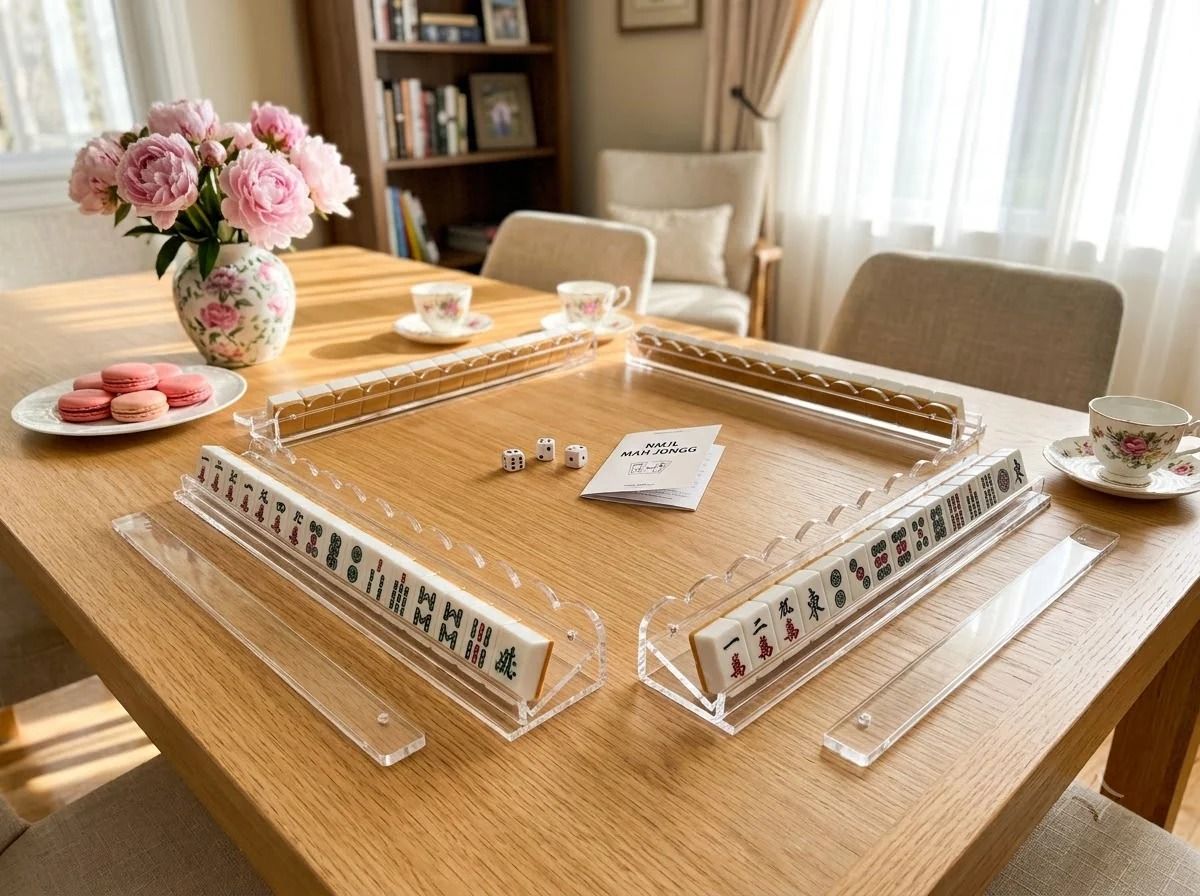
How do you call or form a sextet during a game?
To form a sextet, you start like any other meld: you call a tile from the wall (your next turn) or from another player's discard (a interrupt call). Once you have the first tile, you draw and build the meld in your hand and on your rack. You expose the sextet as soon as you've collected all six tiles; you don't wait for a later turn. The call works the same way as for a pung or kong—you stop the game, announce your meld, and place all six tiles face-up on your rack in front of you. Your next turn continues normally. If you're working with jokers, remember that jokers can never be used in a sextet on their own and can only substitute for individual tiles within the sextet, not stand in for pairs or entire sequences. Consult the National Mah Jongg League card for that year's specific sextet hand patterns.
🀄 Shop best-selling mahjong sets →
Where do sextets appear on the mahjong card?
The current year's National Mah Jongg League card organizes hands by hand type, section, and pattern. Sextet hands are marked explicitly in the card layout—usually in dedicated rows or sections labeled "Sextet" or within specific hand patterns like "Sextet Like Numbers" or "Sextet Consecutive." Not every hand uses a sextet; many hands use only pungs, kongs, or quints (five identical tiles). When you're learning to read the mahjong card, scan the legend or table of contents to find the sextet rows. Memorizing where they sit on the card speeds up gameplay; experienced players can spot a sextet pattern in seconds. Because the card changes every spring, always use the current year's card—old hands may include sextets in different places or patterns, leading to confusion and disqualified wins.
What's the strategy behind playing hands with sextets?
Sextets lock in a large portion of your hand early, which can be liberating or risky. Once you expose six tiles as a sextet, you've committed that suit and number to the pattern; you can't repurpose those tiles. The advantage: fewer tiles left to hunt down, less distraction during the end game. The risk: if your hand requires flexibility or a backup hand, a premature sextet meld can trap you. Strong players weigh the probability of completing the sextet against the risk of an opponent getting closer to a win. If you're running late in hand completion, a sextet is worth the call; if you're ahead, you may hold back until the last safe moment. Watch the discards to gauge whether your sextet suit is flowing toward you or drying up; if others are throwing your number away, grab it immediately. If opponents are hoarding that suit, slow down and reassess whether a sextet is realistic for this hand.
What's the difference between American sextets and other mahjong variants?
American mahjong has unique rules: four copies of each tile per suit, no chows (sequences like 1-2-3), exposure of pungs, kongs, quints, and sextets, and jokers that substitute for single missing tiles. Chinese mahjong, by contrast, uses sequences heavily, has eight copies of each tile in a Cantonese game or different tile distributions in Mandarin, and rarely uses the term "sextet" in the same formal way. Hong Kong mahjong also relies on sequences and has different scoring. Riichi mahjong (Japanese) is a completely different game with melds called "sets" and "runs" and hand patterns tied to yakus (winning combinations). Taiwanese mahjong blends elements of Chinese and Hong Kong rules. American mahjong's sextet is specific to the four-tile-per-suit system and the formalized National Mah Jongg League card, making sextets a distinctly American innovation. If you play multiple variants, don't assume sextet rules transfer; each has its own meld logic.

Common mistakes players make with sextets—and how to avoid them.
Mistake 1: Calling a sextet too early. You expose four tiles and believe a sextet is guaranteed, so you call the fifth. Then a player wins before you draw the sixth, and you're caught with exposed tiles counting against you. Fix: Only call a sextet meld when you are confident the sixth tile is near (on the board, in a player's discard pattern, or with just a few draws left).
Mistake 2: Confusing sextets with quints. A quint is five identical tiles; a sextet is six. They're different hands on the card and score differently. Fix: Keep a current year card in front of you and match your tiles to the printed pattern before you call.
Mistake 3: Using jokers incorrectly in a sextet. Jokers cannot replace an entire tile slot in a sextet meld; they can only substitute for a missing individual tile within the meld. Some players try to use one joker to "complete" a sextet of five plus one joker—invalid. Fix:Learn how jokers work in detail before assuming jokers salvage every meld.
Mistake 4: Misreading the card. The current year's sextet patterns change every spring. Using last year's card is a loss. Fix: Buy or print the current year's League card, and if playing a borrowed set, confirm the card date before starting.
Mistake 5: Exposing the sextet in the wrong order. While you can arrange six tiles on your rack however you like visually, misplacing them in front of others can confuse the table and slow verification. Fix: Arrange sextets in a clear row or group so the player across and beside you can count and verify instantly.
When should you build a sextet hand versus a pung or kong hand?
The choice depends on hand speed, tile availability, and your game position. If you're behind in hand completion, a sextet hand requires more tile hunts and is slower—usually a bad choice. If you're ahead or in a race, a sextet that locks in six tiles early can be faster because you reduce the remaining unknowns. Sextet hands also appeal when the tiles for that sextet are flowing heavily from discards; if three players keep throwing 2 Craks, a 2 Crak sextet becomes realistic. Conversely, if 2 Craks are rare in the discard pile, a pung or kong hand is more practical. Scan the card before the game and note which hands include sextets; pre-plan a sextet hand as a backup if your primary hand stalls. Some players reserve sextets for endgame scenarios, when one sextet completes the hand and wins immediately.
Hand Type | Tile Count | Speed | Rarity | Best When |
Pung | 3 identical | Fastest | Common | Early meld, high volume |
Kong | 4 identical | Fast | Moderate | Mid-hand lock-in |
Quint | 5 identical | Moderate | Less common | Special patterns on card |
Sextet | 6 identical | Slowest | Rare | End-game or tile flow heavy |
🎁 See our most-loved mahjong sets & accessories →
What you'll need to play sextets confidently
A reliable American mahjong set is essential because you need four identical tiles per number-suit combo to even attempt sextets. Low-quality sets with chipped or mismatched tiles make it hard to spot the sixth identical tile. Our best-selling mahjong sets include durable acrylic tiles with sharp, consistent engraving, so every 2 Crak looks identical to every other 2 Crak—critical for spotting sextets fast. Keep your current year's League card in plain view, along with a laminated copy or notebook of sextet hand patterns. Use mahjong racks with pushers to organize and separate your tiles cleanly; a sloppy rack makes sextet verification slow and error-prone. A dedicated mahjong mat with clear hand zones helps everyone at the table visualize exposed melds instantly.
Before you call a sextet, check this list
[ ] Is the sextet pattern on the current year's League card? (Old cards may have different patterns.)
[ ] Do I have all six identical tiles in my hand or accessible on my rack?
[ ] Am I confident the win pattern matches this sextet hand exactly?
[ ] Have I counted the exposed tiles to confirm no duplicates are already exposed by other players?
[ ] Is this the right moment in the game—not too early, not too late—to commit six tiles?
[ ] Are jokers substituting correctly (only for missing singles, not entire tiles)?
[ ] Have I announced the call and shown the tiles to at least one other player for verification?
✨ Find your Mahstead set — free US shipping →

FAQ
Can I use a joker to complete a sextet?
A joker can substitute for one missing tile within a sextet, but it cannot replace the entire sixth tile. For example, if you have five 3 Bams and need the sixth, a joker can stand in for that missing tile. However, you cannot use one joker as "the sextet"—you must have at least five of the actual identical tiles.
Is a sextet the same in Chinese, Hong Kong, and American mahjong?
No. Chinese and Hong Kong mahjong emphasize sequences and have different tile distributions; the term "sextet" is not standard. Sextets are specific to American mahjong's four-tile-per-suit system and the National Mah Jongg League card. Other variants use entirely different meld logic.
How often do sextet hands appear on the mahjong card?
The frequency varies year to year, but sextets typically appear in 5–15% of hands on the current year's card. Not every player completes a sextet in every game; many hands never use them. Always check the card legend for the specific year you're playing.
What happens if I call a sextet and then realize I miscounted?
You must correct the meld immediately. If you expose fewer than six identical tiles, the meld is invalid and you lose the call. You cannot reclaim the tiles or replay. This is why counting twice before calling is essential, especially under table pressure.
Can other players prevent me from calling a sextet?
No. Once you call a meld (pung, kong, sextet, etc.), the table stops and verifies. Other players cannot block or interrupt a meld call. However, if another player wins before you complete your sextet call, they win and the hand ends; your uncompleted sextet becomes a loss for you.
Do sextets score higher than kongs?
Yes, typically. Sextet hands are usually worth more points than kong hands on the scoring summary because they require more coordination and rarer tile draws. However, scoring depends on the exact hand pattern on the card, not the meld type alone. Always check the specific hand's listed score.


View More
View More
View More
