
What Is a Pusher in American Mahjong?
Last updated: Nov 23, 2026
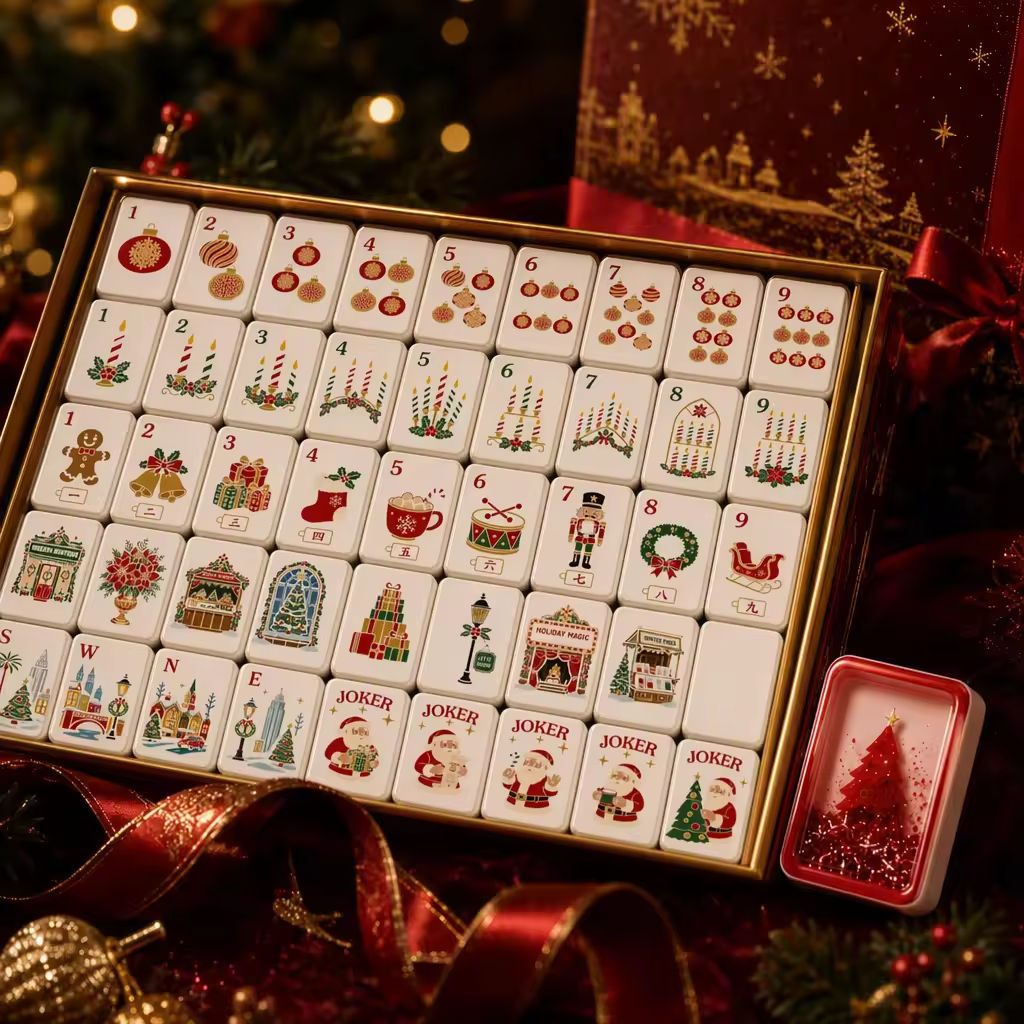
A pusher is a flat or slightly curved stick, typically 4–6 inches long, used to organize and advance tiles on your personal rack during American mahjong play. Held in your dominant hand, it slides tiles forward from the back of the rack toward the wall edge, keeping your hand concealed from other players until you're ready to claim or discard. Every serious player carries one because it prevents accidental tile exposure, maintains rack discipline, and keeps the game moving smoothly. Pushers come alone or paired with a full rack set. We recommend looking for one that matches your set's design—wooden, acrylic, or metal—so it feels balanced in your hand and complements your table setup.
Why do I need a pusher instead of just using my fingers?
Your fingers are unpredictable. When you reach into a crowded rack to shift tiles, you risk bumping neighbors' hands, exposing tiles you're still considering, or accidentally triggering a claim. A pusher creates distance and deliberation: you advance tiles from back to front in one smooth motion, no fumbling. It's also faster. Once you're ready to commit—to keep a tile or form a pung—you're already organized. Without one, you'll watch experienced players outpace you because they're not rearranging constantly. On a 160-tile set and a full four-player table, that efficiency compounds over dozens of hands.

How does a pusher fit into the standard rack?
Most American mahjong racks sit at a 45-degree angle, creating a slanted wall toward you. Tiles stand upright along that wall, and the pusher rests horizontally beneath or alongside them. You grip it in your right hand (or left, if you're left-handed) and use a gentle sliding motion—never poking or jabbing—to push tiles forward. The pusher itself never stacks tiles; it just nudges. Your rack holds all 14 of your tiles in a single row. When the pusher is not in use, it usually lies flat on the table edge or on your lap, within arm's reach.
What materials work best for pushers?
Pushers are made from wood, acrylic, bamboo, or metal, each with trade-offs:
Material | Feel | Durability | Noise | Best For |
Wood | Warm, traditional | High if sealed | Quiet | Players who want classic aesthetics |
Acrylic | Smooth, modern | Very high | Minimal | Fast games; easy to clean |
Bamboo | Light, eco-conscious | Medium-high | Low | Casual players; sustainable choice |
Metal | Sleek, weighted | Highest | Moderate clinking | Serious tournament players |
Acrylic pushers glide smoothly and don't wear down tile faces. Wooden ones offer grip and warmth but need occasional care. Metal pushers are heavier—some players love that control; others find them too harsh against tiles. We've seen players switch materials after a single season based on how their hand tires. The best choice matches your rack material and personal preference, not budget alone.
Can I use one pusher for all my sets, or should each set have its own?
One quality pusher works across all your sets. A pusher is a tool, not a consumable. However, if you own multiple mahjong sets—one for serious games, one for travel, one engraved for gifts—having a dedicated pusher in each set's bag saves you from scrambling at game time. Some players keep two: one precise for tournament play and one casual for friends. We've found that beginners benefit from a matched set (rack + pusher together) because you're learning muscle memory on coordinated equipment. Experienced players often mix and match.

What's the difference between a pusher and a rack?
A pusher is the tool; a rack is the structure. The rack is the angled holder—plastic, wood, or bamboo—that sits in front of you, holding your 14 tiles upright at a readable angle. The pusher is what you hold to move tiles within that rack. Think of it as the difference between a bookshelf and a bookmark. You cannot play without a rack, but you can play without a pusher (though it's messy and slow). Most serious players own both, usually as a matched pair. When you're shopping for racks with pushers, you're buying an integrated system designed so the pusher and rack feel like one gesture.
🀄 Shop best-selling mahjong sets →
Where does etiquette come in with pushers?
Speed matters, but so does respect. Pushing tiles too fast or aggressively signals you're flustered or rushing others. Smooth, deliberate movements tell the table you're confident and in control. Never use your pusher to point at tiles or to mock other players' hands—it's a tool, not a commentary device. If your pusher breaks during a game, ask politely to borrow another player's momentarily, or play with your fingers (quietly and carefully) until you replace it. Some players use pushers as a social signal: a player who pulls it out slowly says, "I'm going to be thoughtful here." That same player switching to quick pushes signals, "I'm locked in; deal the next hand." It's subtle, but the table notices.
What common mistakes should I avoid with pushers?
Pushing too hard. Tiles scatter across the table, or you crack a tile face. Use gentle, steady pressure.
Losing your pusher mid-game. Keep it on the table edge, not in your bag or lap. We've had players pause games searching for a lost pusher. That's a break in rhythm.
Choosing one that's too short. If it's under 3 inches, you'll find yourself reaching awkwardly into the rack every turn. 4–6 inches is the sweet spot.
Mixing incompatible racks and pushers. An acrylic pusher designed for wooden racks can feel clunky with acrylic racks. Check that handle diameter and surface texture align.
Using it as a personal worry toy. Tapping your pusher on the table, flipping it, or spinning it distracts other players. Keep it still until you need it.
What to check before you buy
Length: Measure your current rack or test at a store. 4–5 inches is standard.
Material alignment: Does your pusher match your rack's finish (wood, acrylic, bamboo)?
Handle comfort: Can you hold it for two hours without fatigue? Grip width matters.
Tile compatibility: Will the pusher slide smoothly against your tiles without scratching acrylic or wood faces?
Noise tolerance: Do you prefer silent play (acrylic/bamboo) or can you accept quiet metal taps?
🎁 See our most-loved mahjong sets & accessories →
We play weekly, and we've noticed that new players underestimate the pusher. They think it's decorative or optional. It's neither. A good pusher reduces hand mistakes, speeds up tile management, and keeps the game flowing. When you're learning how to play American mahjong, a quality pusher paired with a solid rack becomes invisible—you don't think about it, you just use it. That's when you know you've got the right one.
✨ Find your Mahstead set — free US shipping →

FAQ
Is a pusher required by official American mahjong rules?
Not formally. The National Mah Jongg League rulebook doesn't mandate pushers. However, every sanctioned tournament and serious game expects players to use one, as it prevents disputes over tile exposure and keeps play orderly.
Can I use a chopstick or pen as a pusher?
Technically, yes, but no. Chopsticks slip, pens scratch tiles, and neither was designed for tile surfaces. A real pusher has a slight curve and appropriate materials to protect expensive tiles. Play once with a makeshift tool, and you'll buy a proper one.
Do I need a pusher for 2 or 3-player mahjong?
The same principle applies: fewer players, smaller tables, but the same need for hand privacy and organization. If you play 2 and 3-player mahjong, a pusher is equally important.
How do I maintain a pusher so it lasts?
Wipe it monthly with a soft cloth. Acrylic is nearly indestructible. Wood benefits from occasional light oil or wax. Avoid harsh chemicals, hot water, or direct sunlight, which can fade or warp it. A quality pusher lasts decades.
Can beginners play without a pusher while they learn?
Yes, but you'll develop bad habits. Playing without one trains your fingers to reach into the rack, which is slower and risks exposure. Start with a pusher and build good form from day one.


View More
View More
View More
