
What Is a Jokerless Hand in American Mahjong?
Last updated: Nov 23, 2026
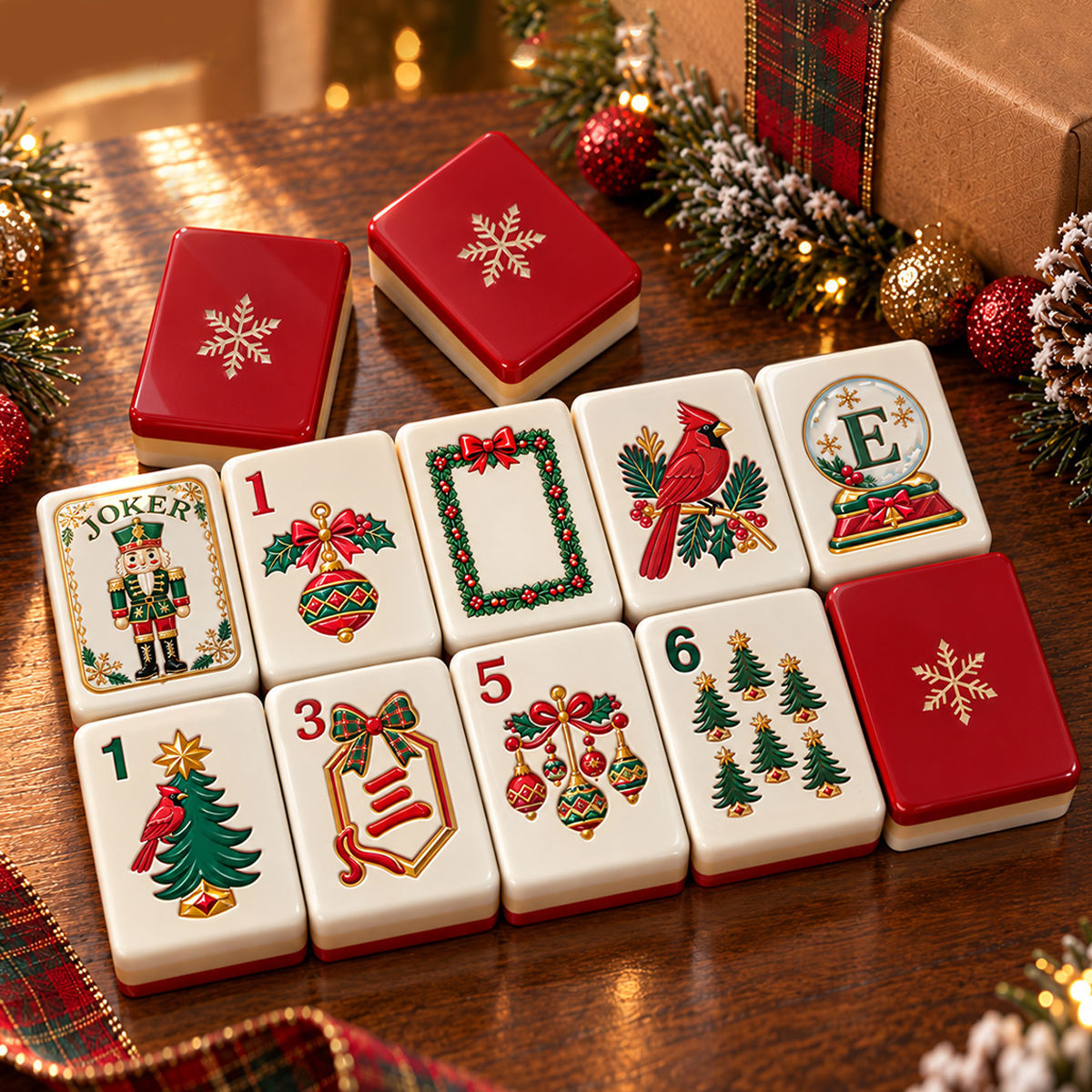
A jokerless hand is a completed American mahjong hand that contains zero jokers as substitutes. Every tile in your winning combination—your melds (exposed pungs, kongs, quints, or sextets) and your pair—must be an actual, matching natural tile from the deck. Jokerless hands appear on the current year's National Mah Jongg League card alongside joker-heavy alternatives; the card lists both versions of most patterns. When you declare a jokerless hand, you win the round and earn a bonus multiplier—typically double or triple the base points—because building without jokers demands tighter strategy and luck. You'll encounter jokerless hands at nearly every American mahjong game; they reward disciplined tile management and make the round more challenging for all players at the table.
Why does a jokerless hand score more than a regular hand?
Jokerless hands multiply your score because they're harder to achieve and require genuine tile collection skill. The National Mah Jongg League card assigns higher point values to patterns marked "no jokers." A regular hand using jokers as wildcards typically multiplies by 1× or 1.5×; a jokerless version of the same pattern multiplies by 2× or 3×. Since you cannot substitute a joker for missing tiles, you must draw or pick the exact natural tiles you need—dramatically reducing your odds. This constraint tests your reading of the card, your discard strategy, and your luck over twelve rounds. Players who chase jokerless hands build stronger pattern recognition and learn to pivot when tiles dry up.

How do you identify jokerless hands on the card?
The National Mah Jongg League card marks jokerless patterns with a special symbol or notation in each hand listing. Most commonly, you'll see a "*" or a note indicating "no jokers allowed" next to certain hand variations. When you read the mahjong card, scan the row containing your potential hand: if the version you're building shows no joker symbols in the meld or pair section, it qualifies as jokerless. Some hands appear in only one jokerless version; others list both a "with jokers" and "no jokers" option side by side. Learning the card's format takes two or three games; veterans scan and sort hands in seconds. Keep a current-year card at the table and ask the dealer to confirm before you declare—no one minds the question.
What tiles can and cannot be used in a jokerless hand?
In a jokerless hand, every visible tile must be a natural—the exact suit and number you need. You cannot use any of the eight jokers included in every American set as wild substitutes. Your hand may include Winds, Dragons (Red, Green, White), Bams, Craks, Dots, and Flowers—all natural tiles. The White Dragon (often called "Soap") may appear in a jokerless hand as a regular Dragon tile; it does not act as a joker replacement. You may expose pungs (three identical tiles), kongs (four identical tiles), quints (five identical tiles), or sextets (six identical tiles). Your pair must also be two identical natural tiles. If your hand calls for a pung of 5 Dots and you lack one tile, you cannot fill it with a joker in a jokerless pattern—you must wait for the actual 5 Dot to be drawn or picked.
What's the real difference between jokerless and joker-heavy hands?
Pattern type | Joker use | Difficulty | Points multiplier | Strategy shift |
Jokerless | Zero jokers allowed | High (exact tiles only) | 2×–3× | Discard carefully; pivot early if tiles dry |
Standard with jokers | 1–4 jokers as wildcards | Medium (some flexibility) | 1×–1.5× | Build aggressively; use jokers to fill gaps |
Joker-heavy | 4+ jokers substituting | Low (many paths to win) | 1× | Quick wins; higher chaos at table |
Jokerless hands teach the fundamentals: you must read the card accurately, remember which tiles have been discarded, and adapt if natural tiles aren't flowing your way. Joker-heavy hands reward speed and aggression but offer lower payouts. Most tables mix both; a player might call a jokerless hand in round 3 if the tiles cooperate, then switch to a joker-friendly pattern in round 8 when luck shifts. Experienced players keep both options in their toolkit.
🀄 Shop best-selling mahjong sets →
Common mistakes new players make with jokerless hands
Beginners often confuse jokerless hands with hands that simply use fewer jokers—these are not the same. A hand marked "no jokers" on the card is absolute: zero jokers. Mixing up card notation leads to false declarations and penalties. Another frequent error: holding onto tiles hoping for a natural when the joker version of the same hand is already within reach. This delays your win unnecessarily. New players also forget that jokers cannot fill a pair—if your winning pair needs two 1 Bams and you hold only one 1 Bam and one joker, you cannot declare a jokerless hand with a joker-substituted pair. Always cross-check the card and ask the dealer or scorekeeper for confirmation before declaring. At Mahstead, we recommend keeping a printed, current-year card at every seat so all players can verify jokerless requirements instantly and avoid disputes.

How does pursuing a jokerless hand affect table strategy?
Chasing jokerless hands changes your entire discard and picking rhythm. When you commit to a jokerless pattern, you become more conservative: you'll hold onto specific natural tiles longer and discard jokers early since they can't help you. Other players notice this and may discard tiles you need, forcing you to pivot or wait longer. Veterans use jokerless pursuits strategically—sometimes announcing the pattern aloud (the "calling" strategy) to signal confidence and discourage others from blocking you. Mathematically, your odds of completing a jokerless hand are lower than a joker-inclusive version, so patience and reading opponent discards matter more. If you see three 3 Dots already played and your jokerless hand needs a 3 Dot for a pung, switch strategy immediately; don't waste draws chasing a ghost tile. The best players maintain two or three viable hands—jokerless and joker-flexible—and pivot based on what the tile wall reveals.
🎁 See our most-loved mahjong sets & accessories →
What to check before you buy your first set to practice jokerless hands
Confirm your set includes the full 152 playing tiles plus eight jokers and spares, so you have every tile type needed to simulate real hands. Acrylic tiles with clear engraving let you spot natural tiles instantly, reducing errors during card-checking. A soft mat protects tiles during long study sessions and helps organize your jokerless practice hands by suit and rank. Racks with pushers let you sort and display tiles neatly, making it easier to verify patterns against the card. If you're hosting a regular game, ensure your set is durable—our best-selling acrylic mahjong sets are designed for weekly play and come with a protective case for storage. Jokerless practice is most effective with a high-quality, easy-to-read set and a comfortable mat where you can lay out tiles clearly.
How to score and win with a jokerless hand
When you declare a jokerless hand, the scorekeeper or dealer multiplies your base points by the card's listed multiplier for that pattern—typically 2× or 3×. You win the round immediately; other players settle their payments to you based on the settlement rule (usually the player who discarded the winning tile pays double). Keep a printed card at the scoring station to verify the multiplier instantly. Some groups use a jokerless bonus on top of the multiplier—check your house rules. Once you win, your score is marked and the next round begins. Playing jokerless doesn't require a separate deck or tools—you use the same 152-tile set as any other hand, just with stricter rules.
Why learning jokerless hands improves your overall game
Building jokerless hands trains your memory and pattern recognition faster than joker-heavy play. You learn which tiles have been discarded, predict what's in the wall, and adjust your strategy mid-game. This skill transfers directly to joker-inclusive hands—you become sharper at reading board state and opponent tendencies. Many serious players use jokerless goals as warm-up challenges before higher-stakes rounds. Understanding when to abandon a jokerless pursuit and pivot to a joker-flexible pattern is the mark of a mature player. Our guide to how to play American mahjong covers foundational strategy; jokerless practice deepens that foundation.
✨ Find your Mahstead set — free US shipping →
What to check before you buy
Tile clarity: Ensure engraved numbers and suits are deep and visible under table lighting; acrylic tiles resist wear better than bamboo for frequent jokerless practice.
Complete set: Verify 152 playing tiles plus eight jokers are included; jokerless study requires all four copies of each number-suit combination.
Current-year card: Always purchase or download the latest National Mah Jongg League card; jokerless patterns change annually and older cards will confuse your practice.
Durable case: Protect your set during storage and transport so tiles stay perfectly flat and readable.
Comfortable mat: A soft mat reduces hand fatigue during long jokerless study sessions and organizes tiles by pattern.

FAQ
Can I use a joker if my hand is listed as "no jokers" on the card?
No. A jokerless hand forbids all joker substitutes. Every tile must be natural. If you declare with a joker in a jokerless hand, you lose the round and pay penalties.
What happens if I run out of natural tiles and need one more to complete a jokerless hand?
You cannot substitute a joker. You must either wait for the natural tile to be drawn or picked, or pivot to a different hand pattern. Jokerless means genuinely zero jokers.
Do jokerless hands exist in Chinese or Hong Kong mahjong, or only American?
Jokerless patterns are unique to American mahjong and the National Mah Jongg League card system. Chinese and Hong Kong variants play with natural melds only—jokers are not part of those games.
How do I know which hands on the card are jokerless if I'm new?
Check the card's legend (usually on the back or cover). Jokerless hands are typically marked with a symbol like an asterisk or labeled "no jokers." Ask your dealer to show you the key before your first game.
Does declaring a jokerless hand give me a guaranteed win over the other players?
No. A jokerless hand is a completed, legal winning hand—it wins the round just like any other. The bonus points reward you for the difficulty, but the win is not automatic; you must still declare before someone else does.
If I have two jokerless patterns to choose from, which one should I declare?
Check the card's multiplier for each pattern. Declare the one with the higher multiplier, as long as both are accurately completed on your wall. If multipliers are equal, either is fine.


View More
View More
View More
