
What Is 369 Hands in American Mahjong
Last updated: Nov 23, 2026
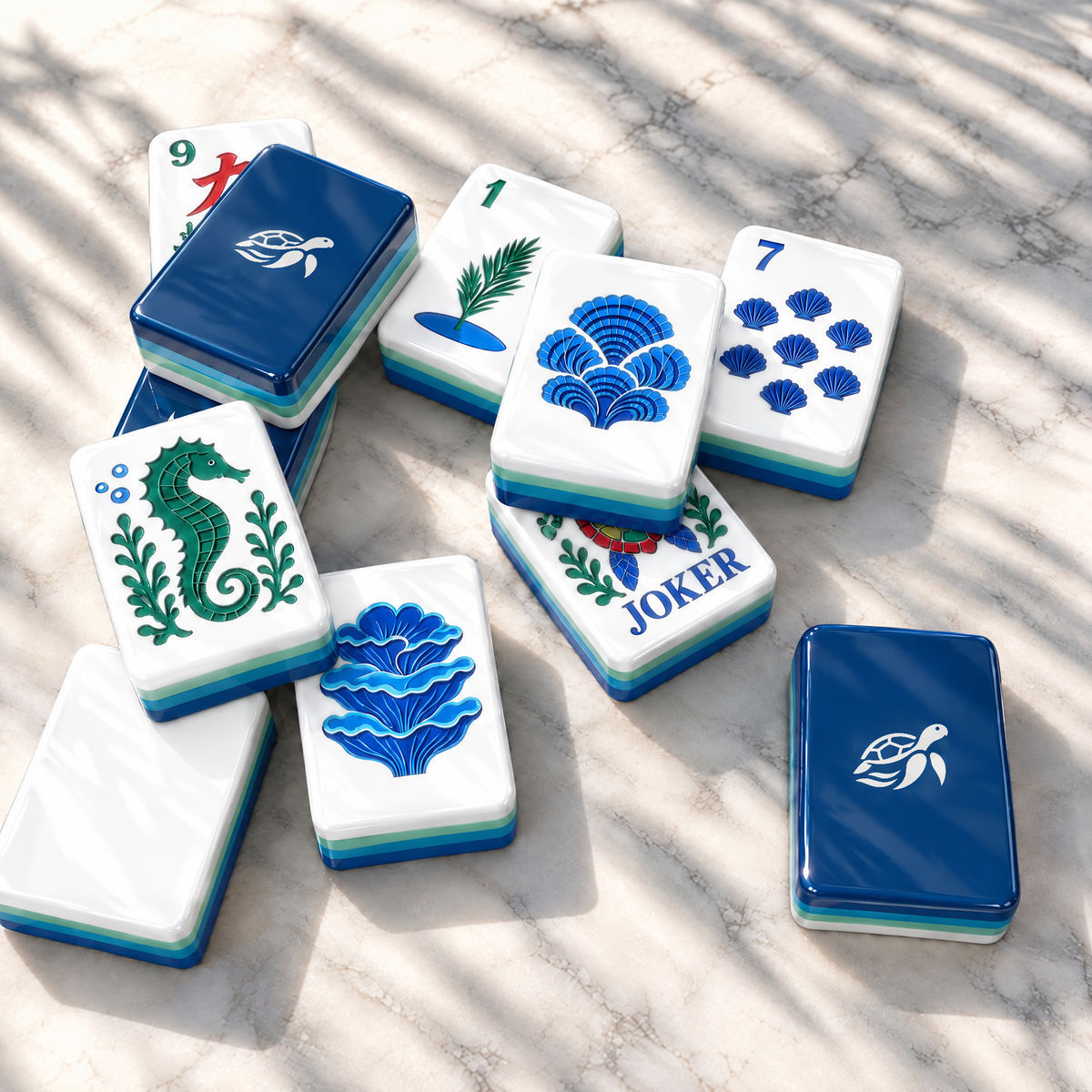
A 369 hand in American mahjong is a pattern—named for its three consecutive numbers (3-6-9)—built entirely from one suit (Bams, Craks, or Dots) and appears on the current-year National Mah Jongg League card. You complete it by collecting the exact tiles listed in that pattern, exposing pungs, kongs, quints or sextets as required by the card, and holding the remaining tiles in your hand until you draw your final tile and declare mahjong. These hands typically score higher than mixed-suit patterns because they demand focus and don't allow you to pivot to backup hands as easily. A 369 hand plays the same way as any winning hand—you pay attention to the discard pile, use jokers strategically to fill gaps, and track what's been drawn. Learn more in our guide to how to play American mahjong.
What does "369" mean on the card?
The name comes from the hand's tile progression: it contains tiles numbered 3, 6, and 9 in sequence within that single suit. You'll find these patterns listed in different sections of the National Mah Jongg League card, usually grouped by the suit and the specific combination of pungs, kongs, or other melds. Each 369 pattern is unique—for example, one might call for two pungs and a quint, while another might require different configurations. The "3-6-9" label helps players remember and spot them quickly during play and card study.

Why do players chase 369 hands?
Single-suit hands score higher points than mixed hands because they're harder to complete and require you to commit fully to one direction. Once you decide to pursue a 369 pattern, you can't easily switch to a backup hand if your tile draw goes badly—your survival depends on drawing the exact tiles you need or getting helpful jokers. This risk-reward structure makes 369 hands rewarding when they work and educational when they fail. Players who build the best-selling mahjong sets and practice tracking single-suit patterns become faster readers of the card and sharper at probability.
How do you identify a 369 hand on the card?
The current NMJL card organizes hands by suit and by structure type. Look for sections marked for your chosen suit and scan for patterns labeled with numbers like 3-6-9, 2-5-8, or 1-4-7—these are the single-digit progressions. Each entry shows you the exact combination of melds (exposed pungs, kongs, quints, etc.) and tiles you must hold. Start by identifying the suit first, then check the melds column to confirm the pattern matches your tiles. Many players keep the card at the table and use a rack to prop it up for quick reference during play. A good rack with pushers helps you organize your hand so you can spot matching patterns without fumbling.
🀄 Shop best-selling mahjong sets →
What's the difference between a 369 and other single-suit hands?
Single-suit hands on the card include many patterns beyond 369—labeled by their number sequences (1-4-7, 2-5-8, 1-5-9, etc.) or by their meld structure. A 369 hand is one specific type: it uses the numbers 3, 6, and 9 in one suit. Each pattern has its own point value and tile requirements. The key is that all of them lock you into one suit, which makes your hand easy to read and track but hard to salvage if your draw distribution changes. Beginners sometimes confuse these patterns and miss winning opportunities; keeping a current year's card at the table prevents costly mistakes.

How should you build and defend a 369 hand?
Start by deciding early in the game (after the Charleston) whether your tiles favor a single-suit direction. If you hold two or three tiles from the 3-6-9 pattern you're targeting, build toward it immediately by collecting more tiles from that suit and discarding from other suits. Hold onto jokers for gaps that will be hard to draw naturally. When you expose a meld, make sure it matches your card exactly—miscalling a pung costs the hand. As other players discard from your suit, adjust your strategy: if they're feeding your suit, keep building; if they're starving it, start thinking about a backup hand in a different suit. Use your rack with pushers to organize tiles by suit and number so you can spot gaps and matching patterns instantly. Many mistakes happen when players misread their own hand because tiles are jumbled—the pushers solve that.
🎁 See our most-loved mahjong sets & accessories →
Comparison: Single-Suit Hands and Their Payoff
Hand Type | Number Pattern | Suit Count | Difficulty | Best For |
369 (example) | 3, 6, 9 | One | High | Experienced players, committed betting |
1-4-7 (example) | 1, 4, 7 | One | High | Same skill level, different tile distribution |
Mixed suit hand (example) | Varies | Two or three | Medium | Flexible players, adaptive strategy |
All Honors | Winds & Dragons | N/A | Very high | Expert players, rare conditions |
Single-suit hands reward patience and commitment. If you're learning to read the card faster, our guide to how to read the mahjong card breaks down the layout and shortcuts.
What to check before you commit to a 369 hand
Your tile count in that suit after the Charleston: Do you hold at least 4–5 tiles from the pattern? If fewer, you're betting on very specific draws.
Joker availability: Count how many jokers remain in the wall. If you've already drawn two jokers and discarded one, only five are left—plan accordingly.
Your position at the table: East plays first and sees more discards; West plays last and has less information. Timing matters.
Backup patterns: Before committing fully, scan for a second hand in a different suit in case your 369 draw stalls.
Discard pile activity: If other players are throwing many tiles from your suit early, your 369 might never complete. Pivot if necessary.
Card section clarity: Make sure the 369 pattern you've identified is actually on the current year's card—many players misremember or confuse similar numbers.
Common mistakes that cost 369 hands
Holding too long. Players fixate on a 369 and refuse to pivot when the wall starts showing unfavorable draws. By turn 12, if you haven't assembled two-thirds of your melds, switch strategy—don't sit and hope.
Misreading the card. A 3-6-9 pattern might require a specific meld arrangement (e.g., pung-quint-kong) that looks different from the mental image you formed during study. Double-check every tile before calling mahjong.
Wasting jokers early. New players use a joker to fill a minor gap, then wish they'd saved it for a harder spot later. Jokers are most valuable for the third or fourth meld when your draw options narrow.
Exposing melds too early. In American mahjong, you must expose (place face-up on the table) any pung, kong, quint, or sextet when you first complete it. Some players wait, hoping to misdirect opponents, but this is against the rules. Know when your hand becomes locked-in and unavoidable.
Ignoring the discards. If three tiles from your target pattern have been discarded by other players, those four copies are gone—only one remains in the wall. Adjust immediately.
✨ Find your Mahstead set — free US shipping →
Our pick: What you'll need to master 369 hands
A full 160-tile American mahjong set with clear suit and number markings. Worn or unclear tiles slow down card reading and cost you winning hands. Browse our best-selling sets for designs with large, readable engravings.
A rack with pushers. Single-suit hands demand perfect tile organization so you can spot the 3-6-9 pattern and any gaps instantly. A solid rack with pushers keeps your hand sorted by suit and number, cutting your decision time in half.
A current-year NMJL card at the table, preferably in a card holder so it doesn't get lost or damaged. You'll reference it dozens of times per game.
A mat for tracking discards and melds cleanly.A good mahjong mat gives you enough space to expose your melds without mixing them with the discard pile.
Dice and a pen to track points if you're scoring formally, though casual games often keep running tallies by memory.

FAQ
Can you play a 369 hand in Hong Kong or Riichi mahjong?
No. The 369 pattern exists only in American mahjong because American mahjong uses the National Mah Jongg League card, which is unique to that variant. Hong Kong and Riichi mahjong use completely different hand structures and scoring systems.
What happens if you draw all the tiles you need for a 369 hand very early?
You're locked in—you must expose your melds as you complete them (per American mahjong rules). You cannot hide them or wait. This is why 369 hands are high-risk: you lose flexibility and other players know exactly what you're doing.
Is a 369 hand worth more points than a mixed-suit hand?
Yes, according to the scoring column on the current NMJL card. Single-suit hands pay higher points because they're harder to complete and more predictable to defend against. The exact point difference varies by pattern and year.
How many 369-type patterns are on the mahjong card each year?
The card includes multiple single-suit patterns with different number sequences (1-4-7, 2-5-8, 1-5-9, 3-6-9, etc.). The exact count changes each year when the NMJL issues a new card every spring. You'll encounter several options in each suit.
If I have four 3 Bams, can I use all four in one meld?
Yes—that's a kong (four identical tiles). In American mahjong, a kong can be exposed or held in your hand. If you're building a 369 hand that calls for a pung (three 3 Bams) and a quint (five of a different tile), you could expose the kong, then use one of the extra 3 Bams elsewhere—but only if the card pattern allows it. Always check the card first.
What's the best strategy if two other players are also building single-suit hands?
You're competing for limited tiles in that suit. Watch their discards carefully—if they're throwing Craks, they're probably not building a Crak 369. Pivot to a suit or pattern they seem to avoid. The first player to complete usually wins; hesitation costs the hand.


View More
View More
View More
