
Singapore Mahjong Scoring Chart Explained
Last updated: Nov 23, 2026
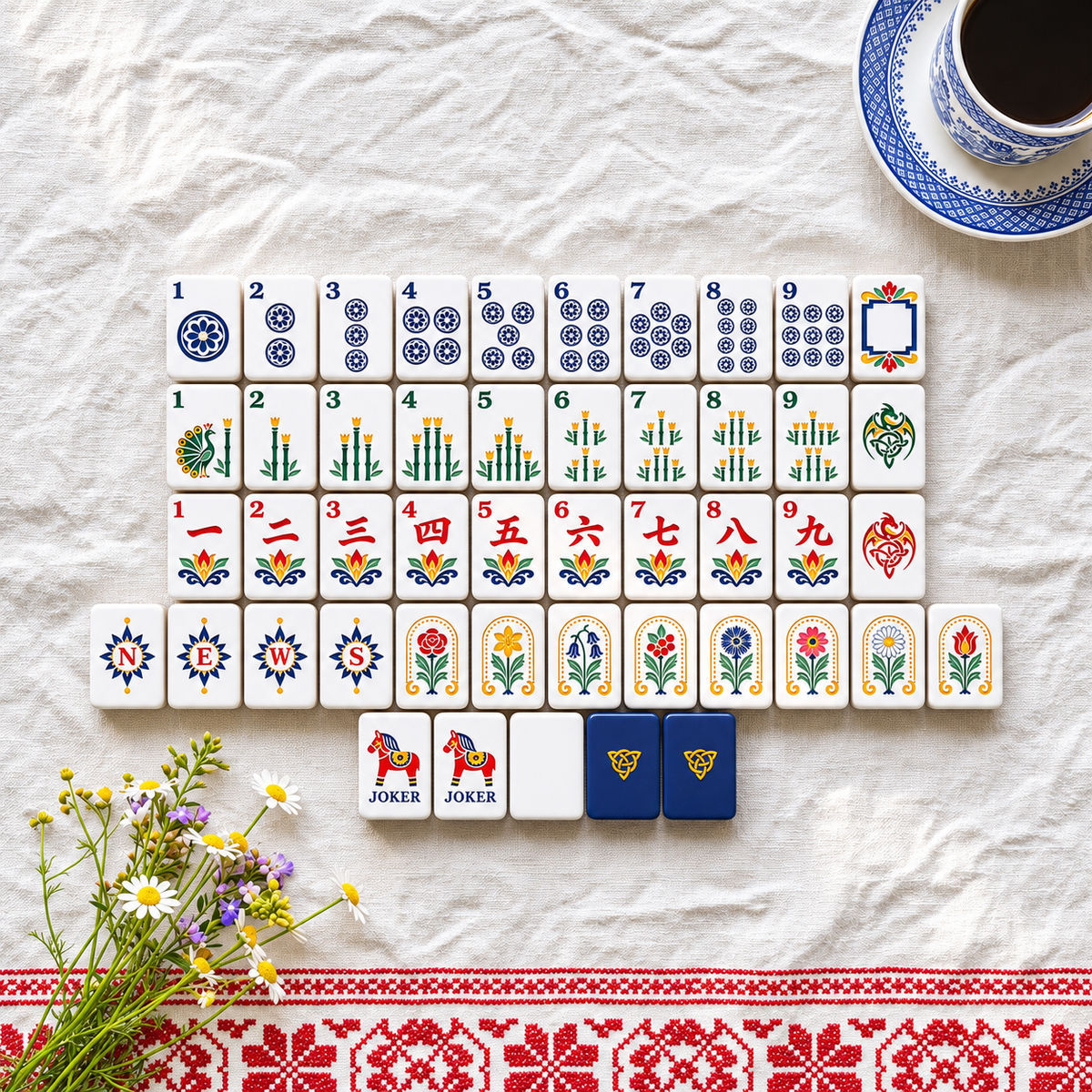
Singapore mahjong scoring differs sharply from American play: it uses a points table where each hand has a base value multiplied by a "fan" (complexity multiplier, typically 1–8). Points depend on whether you win from the wall ("self-drawn") or from a discard, what tiles you melded, your wait type (single, pair, or edge), and whether doubles apply (honor tiles, terminal combinations, all-pair hands). A winning hand's score is calculated as: base points × fan × 2 for self-drawn wins, or base points × fan for discard wins, then doubled again if you were the dealer. Scoreboards in Singapore clubs show a fixed chart; players memorize common hands. Unlike American mahjong (which requires that year's card), Singapore scoring is standardized across regions, making travel play predictable. The system rewards harder hands with exponentially higher payouts, so building complexity early shapes strategy.
What is a "fan" and how does it affect the score?
A fan is a multiplier that reflects hand complexity. A one-fan hand (basic winning combination) scores the lowest; a seven or eight-fan hand scores exponentially higher. Each doubling element—all honors, all terminals, two dragons, self-drawn win—adds one fan or applies a modifier. For example, a "two-fan hand" scores double a "one-fan hand" at the same base points. Singapore players prioritize building fans early, so you understand scoring during play, not after the win is declared.

How do self-drawn and discard wins change the payout?
Self-drawn wins (winning from the wall) automatically double the base payout, because you required no luck from an opponent's discard. A discard win pays the base rate. If you were the dealer when you self-drew, the payout doubles again—meaning a dealer self-drawn win is worth four times a non-dealer discard win at identical fan levels. This is why dealer position carries such weight in Singapore play; the incentive to hold winning tiles and draw aggressively is steep.
What tiles or combinations count as doubles?
Common doubles in Singapore mahjong include: any pung of honor tiles (winds, dragons), any pung of terminal tiles (1s and 9s), self-drawn wins, dealer wins, and all-pair hands. If your hand contains multiple doubles (e.g., two dragon pungs and self-drawn), each one stacks, multiplying the fan count. Beginners miss this layering; studying the chart before a game reveals which tile combinations are most valuable and why experienced players hold 1s, 9s, and honors.
Where do you find and read a Singapore scoring chart?
Singapore mahjong charts are published in rule books, club scorecards, and online resources like the Singapore Mahjong Association guidelines. The chart is a table with hand patterns in one column (e.g., "all-pair hand," "dragon pung + honor pung") and corresponding fan values in rows. Charts often show both self-drawn and discard rates side-by-side. Many online tutorials include downloadable PDFs. The chart does not change yearly like American mahjong; standardization means you learn one chart and use it for years.
What are common scoring mistakes and how do you avoid them?
Frequent errors include: forgetting to double for dealer or self-drawn wins, miscounting fans (applying an extra double twice), confusing terminal pungs with non-terminal ones, and not checking whether your wait type qualifies for a bonus. To avoid these, calculate the score aloud before accepting payment, verify your fan count against the chart, and if a dispute arises, consult the chart again. Many Singapore clubs require silent confirmation from non-winners before a score is locked.
Scenario | Base Points | Fan | Self-Drawn? | Dealer? | Total Multiplier | Why This Matters |
Basic discard win | 20 | 1 | No | No | ×1 | Minimum payout—most common. |
Basic self-drawn | 20 | 1 | Yes | No | ×2 | Doubles payout for wall win. |
Two-fan discard | 20 | 2 | No | No | ×2 | Doubles for complexity, not position. |
Dealer self-drawn, two-fan | 20 | 2 | Yes | Yes | ×8 | Position + draw + fan stack. |
All-pair hand, dealer discard | 20 | 2–3 | No | Yes | ×4 | Rarer hand, dealer bonus applies. |
🀄 Shop best-selling mahjong sets →

Understanding the wait types and their impact on scoring
In Singapore mahjong, your "wait type" (how many tiles can complete your hand) affects whether you earn bonuses. A "single wait" (only one specific tile finishes your hand) is riskier and scores higher if you win; a "pair wait" or "open wait" (multiple tiles complete you) is less risky and may score less. Some charts assign bonus fans for difficult waits. This rule sharpens tactical depth: holding a single-wait hand is tempting because the payout is bigger, but you're more likely to fail. Understanding wait types helps you decide whether to push for a high-scoring hand or settle for a safer, lower one.
How does the dealer rotation affect cumulative scores?
In Singapore mahjong, the dealer rotates after each round unless the dealer wins, in which case the dealer remains. Dealer wins trigger higher payouts, incentivizing players to stay dealer and push aggressive play. Over a full session, dealer rotations distribute the advantage, but a player who wins multiple dealer rounds in a row can accumulate substantial points fast. Tracking dealer position throughout the game is as important as calculating individual hand scores; many close matches are decided by who held dealer longest or won as dealer most often.
🎁 See our most-loved mahjong sets & accessories →
What is the scoring difference between Singapore and other Asian variants?
Singapore mahjong uses a fixed, standardized fan-based chart; Chinese mahjong often uses region-specific scoring systems or plays without a chart (calculating on the fly). Hong Kong mahjong employs a "limit" system (capping maximum payouts) and different hand categories. Taiwanese mahjong blends elements of both. American mahjong (using 152 tiles, four-tile exposures, and no chows) does not use a fan system at all—hands come from a yearly card, and scoring is fixed per hand type. If you play Singapore, traveling to another region requires learning an entirely new scoring system. Many international players practice Singapore rules because the fan system is portable: once you know the multipliers, you can adapt to regional hand variations faster.
What to check before you buy a scoring reference
If you're building a regular Singapore mahjong group, consider:
Tile quality: Do your tiles feel durable enough for weekly play? Acrylic or bone-and-bamboo sets hold up best over years.
Chart legibility: Print or laminate a Singapore scoring chart in a large font and leave it centerpiece on the table so disputes settle fast.
Mat and rack space: Singapore play often involves keeping multiple melds visible; a wide mahjong mat and sturdy racks with pushers reduce errors and speed play.
Dice and markers: Singapore games require standard six-sided dice (two or more) and a scoring marker or app. Confirm your set includes functioning dice.
Travel gear: If you join a club or travel for tournaments, a well-padded mahjong bag or case protects tiles and keeps the chart organized.
✨ Find your Mahstead set — free US shipping →
Many players in Singapore clubs use consistent best-selling mahjong sets because the tiles are uniform and fast to handle, and the scoring stays sharp. Setting up with reliable gear means you focus on strategy, not logistics.

FAQ
Can I use an American mahjong card to play Singapore mahjong?
No. American mahjong hands come from a yearly card and are unique sets; Singapore mahjong uses a fan-based points table applied to any winning combination. The tile sets differ in number and function too. You need separate rules and a scoring chart for Singapore play.
Do all Singapore clubs use the same scoring chart?
Yes. The Singapore Mahjong Association publishes a standardized chart used across clubs, tournaments, and casual play in the region. Minor house rules may apply (e.g., bonus fans for specific hands), but the core chart is consistent, unlike regional American mahjong variants.
What happens if I win on my first draw (the opening hand)?
In Singapore mahjong, winning on the opening draw is extremely rare and typically scores high because it's self-drawn from the wall. The exact payout depends on your fan count and whether you held dealer position, but the payout is at least doubled for the self-drawn win.
Is the dealer always the player sitting east?
No. The dealer begins at a designated position (often East) but rotates after each hand unless the dealer wins, in which case the dealer stays. The next player clockwise becomes dealer after a non-dealer win. Dealer position changes throughout the session.
How do I calculate points quickly during play?
Memorize the top 10–15 common hand patterns on your chart (e.g., "two-pung hand," "all honors," "self-drawn dealer"). When you win, look up your hand pattern, find its fan value, then apply the multipliers (×2 for self-drawn, ×2 for dealer). Write it down immediately so no one disputes the calculation later.
What's the maximum score I can earn in a single hand?
The highest fan count on most Singapore charts is 8 (or sometimes 7), which represents hands of extreme rarity or perfect construction (e.g., all-honor all-pair self-drawn wins). The multiplier stacks (self-drawn ×2, dealer ×2), so a maximum-fan dealer self-drawn win is worth ×8 the base points. Exact maximums depend on your chart and house rules.


View More
View More
View More
