
What Happens If You Have Too Many Tiles in Mahjong
Last updated: Nov 23, 2026
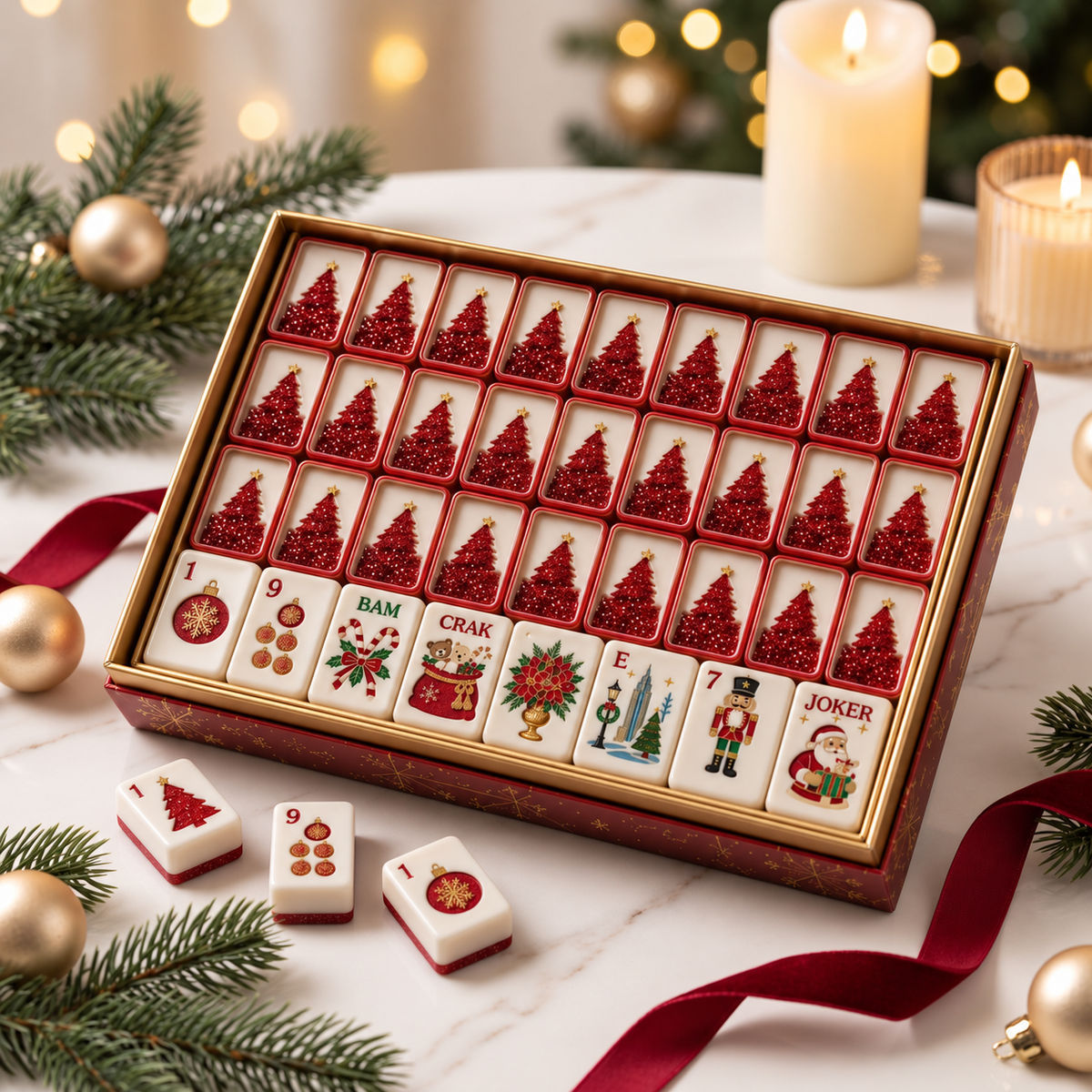
American mahjong requires exactly 152 playing tiles and 8 jokers—never more. If you add extra tiles to the wall or your hand, you violate the game rules: hands become invalid, draws are impossible to verify, and scoring collapses. The 152 tiles comprise three suits (108 Bams, Craks, Dots—one through nine, four of each), 16 winds (four of each direction), 12 dragons, and 8 flowers. Modern sets sold as "160-tile" or larger include spare jokers and blank tiles for replacement—these spares never enter play. The National Mah Jongg League standard locks the game at exactly 152 tiles. If your set is incomplete or you've added tiles by mistake, count the wall before dealing; if you find excess, remove them and reshuffle. Mahstead acrylic sets come pre-counted so you can verify your count against a fresh set if yours goes missing or gets damaged.
In American mahjong, the legal game uses exactly 152 playing tiles and 8 jokers—never more. If you add extra tiles to the wall or your hand, you violate the game rules: hands become invalid, draws are impossible to verify, and scoring collapses. The 152 tiles comprise three suits (108 Bams, Craks, Dots—one through nine, four of each), 16 winds (four of each direction), 12 dragons, and 8 flowers. Modern sets sold as "160-tile" or larger include spare jokers and blank tiles for replacement—these spares never enter play. The National Mah Jongg League standard locks the game at exactly 152 tiles. If your set is incomplete or you've added tiles by mistake, count the wall before dealing; if you find excess, remove them and reshuffle. Mahstead acrylic sets come pre-counted so you can verify your count against a fresh set if yours goes missing or gets damaged.
Why tile count is non-negotiable in American mahjong
American mahjong is the only variant that enforces an exact tile count via league rules. The 152-tile rule ensures every player draws 13 tiles, the dealer draws 14, and exactly 108 tiles remain in the wall for the draw pile—no ambiguity. If you add even one tile, the math breaks: someone will have 14 tiles when they should have 13, or 13 when they should have 14. This cascades into hand mis-declares, where a player thinks they've won but the tile count proves they haven't. The National Mah Jongg League card (reissued each spring) is written for a 152-tile game; hands printed on it assume that exact count. Adding tiles is like changing the deck mid-poker: the game becomes unplayable. We always count our wall before the first hand and recount after any pause of more than a few minutes. Over 20+ games a week, miscounts happen—usually a forgotten tile under someone's rack or a joker that rolled under the table.

How surplus tiles end up in your game (and how to spot them)
The most common culprit is confusion between "spare" tiles and "playing" tiles. When you buy a 160-tile set, you receive 152 tiles for play plus extra jokers and blanks for replacements if a tile cracks or goes missing. Many new players assume all tiles go into the wall; instead, you set the spares aside in a small pile or bag before you shuffle. The second mistake is mixing two sets: you grab one set for the wall and accidentally add a tile from a second set (maybe a joker that looks similar). The third is a tile that was removed for repair or cleaning—you replace it and forget to remove the original when it comes back. We've had players add tiles because they misread the setup instructions or saw an old 144-tile set rule online and thought 152 was "plus all extras." The fix: before every game, lay out 16 winds, 12 dragons, and 8 flowers on the table and count by suit in groups of four. If you spot more than four of any tile, you have a duplicate. Pull it and set it aside as a spare.
Scenario | What's Wrong | How to Fix | Time Cost |
Set from a competitor brand, unmarked spares | Don't know which tiles are extra | Count all tiles, separate into four stacks per number, remove the fifth | 5–10 min |
Mixed two sets without labeling | Can't tell which set is which | Mark one set with a permanent marker on the back, recount both | 10–15 min |
Tile cracked, you bought a replacement | Original + new both in play | Remove the new tile, inspect the old, and retire the damaged one | 2–3 min |
New player added all jokers they found | 8 jokers turned into 10+ | Count jokers separately, set extras aside before the wall is built | 3–5 min |
Tile rolled under furniture | Wall is short one tile, no one notices until hand fails | Always count the wall after setup; if short, search before dealing | 2–3 min |
🀄 Shop best-selling mahjong sets →
Why the Charleston and hand validation depend on exact tile count
The Charleston—the three-phase tile-passing ritual before play begins—only works if you have exactly 152 tiles. Each player passes 14 tiles to the right, then 12 to the left, then 6 across. The math is precise: if you have 153 tiles, one player will end up with 15 after the Charleston, and no one will catch it until hands are declared. When that happens, the entire hand is invalid, and you have to replay. We've seen this once in a casual game where a player had grabbed a spare joker thinking it was part of the set; it wasn't caught until someone went out and the scorekeeper did a count. The lesson: always count before the Charleston starts. If a tile is missing (cracked, lost, or at the cleaners), note it in writing before you begin, and do not start until the set is whole. The National Mah Jongg League card assumes 152 tiles; hands on the card are only valid in a 152-tile game. Adding tiles invalidates every hand written on the card for that game.

The spare-tile trap: when "extra" means "off the table"
Here's where many players trip up: a 160-tile set is called "160" because it contains 160 tiles total, but only 152 are for play. The extra 8 tiles (typically extra jokers and blanks) are spares—insurance against loss or damage. They must be removed before you build the wall. We keep our spares in a small cloth pouch labeled "SPARES" so no one mistakes them for the playing set. If you open a new Mahstead 160-tile set, verify the inventory: you should find 152 identical tiles in four bags (one per suit/honors) and a separate small bag of spare jokers and blanks. Never dump all tiles into one pile and assume you'll sort them out mid-game. Count them first. A common error happens when someone loses a tile weeks or months into using a set, buys a replacement from a competitor, and adds it without removing one of the original four—now you have five of that tile in circulation. The fix is a pre-game ritual: before every session, separate tiles by type (Bams, Craks, Dots, winds, dragons, flowers, jokers) and count each group. If you see a fifth of any tile, remove it immediately.
How to set up a 152-tile game from scratch (step-by-step)
Step 1: Empty the set onto a clean, flat surface. Separate tiles into seven groups: Bams, Craks, Dots, winds, dragons, flowers, and jokers. Keep spares in their separate bag or aside in a labeled area.
Step 2: Count each group. Bams, Craks, and Dots should each have 36 tiles (four of each number one through nine). Winds should have 16 (four of each: North, East, West, South). Dragons should have 12 (four Red, four Green, four White). Flowers should have 8 (four of each: 1 and 2, or all one design—varies by set). Jokers should have 8.
Step 3: Verify the total. 36 + 36 + 36 + 16 + 12 + 8 + 8 = 152. If your count is off, compare with a reference set or blog post on what's in an American mahjong set.
Step 4: Build the wall. Shuffle all 152 tiles face-down. Each player draws seven stacks of two tiles (14 tiles per side of the wall). The wall should be 28 tiles deep per side. If you're short, a tile is missing. If you have extras, remove them and recount.
Step 5: Verify before the Charleston. Before passing begins, spot-check the wall: pick a random section and count 10 tiles. If they add up correctly, you're good.
Step 6: Place 8 jokers in the center discard area or rack area. These are used during play as wild tiles and replacements, but they're not part of the wall.
If any step fails, stop and recount. A 30-second verification now prevents a 10-minute argument later.
🎁 See our most-loved mahjong sets & accessories →
What to check before you buy a new set
When shopping for a mahjong set, always confirm it's marked as a 152-tile playing set (or "160-tile" with clear labeling of the 8 spares). We sell best-selling acrylic American mahjong sets that come pre-counted: you can verify your count against the documentation if needed. Look for sets that come in separate compartments by tile type or tile suit, which makes pre-game counting faster and easier. Avoid loose-bulk sets with no packaging; they're prone to loss and mixing. If you inherit or buy a used set, assume nothing about the count—verify it against the league standard before you play. For travel or storage, check whether the set comes with a protective bag or case; a set in a durable bag is less likely to lose tiles to cracks or spills. If a tile cracks, buy a replacement tile from the same manufacturer if possible; mixing brands means colors and textures may not match, and you risk adding a tile that's slightly different in size. We've seen tiles from different sets not stack cleanly, which can lead to tiles tipping during play.
✨ Find your Mahstead set — free US shipping →

FAQ
Can I play with 144 tiles instead of 152?
No. American mahjong requires exactly 152 tiles per the National Mah Jongg League standard. 144-tile sets are used in Chinese and other variants, not American. If you're learning American rules, use a 152-tile set only.
What if I'm one tile short—can I add a blank?
No. A blank tile is not a legal playing tile in American mahjong. If your set is short, repair or replace the missing tile with an identical tile from the same manufacturer, or buy a new set.
My set came with 160 tiles. Do I use all 160 or just 152?
Use exactly 152. The extra 8 (jokers and/or blanks) are spares for replacement only. Set them aside before building the wall; never add them to play.
How do I know which tiles are spares?
Check the packaging and documentation. Mahstead sets clearly separate spare tiles. If your set doesn't label them, count by suit: any tile that appears as a fifth (beyond four of each number) is a spare and goes aside.
If I lose a tile, can I play with 151 tiles?
No. Stop play and either repair the tile, buy a replacement from the original manufacturer, or retire the set. Playing with fewer than 152 tiles invalidates all hands per league rules.
Do I count the 8 jokers as part of the 152?
Yes. The 152 includes 8 jokers. They sit in the center during play and are used as wild tiles; they're not removed from the count.


View More
View More
View More
