
The 1 Bam Tile in Chinese Mahjong: What It Means
Last updated: Nov 23, 2026
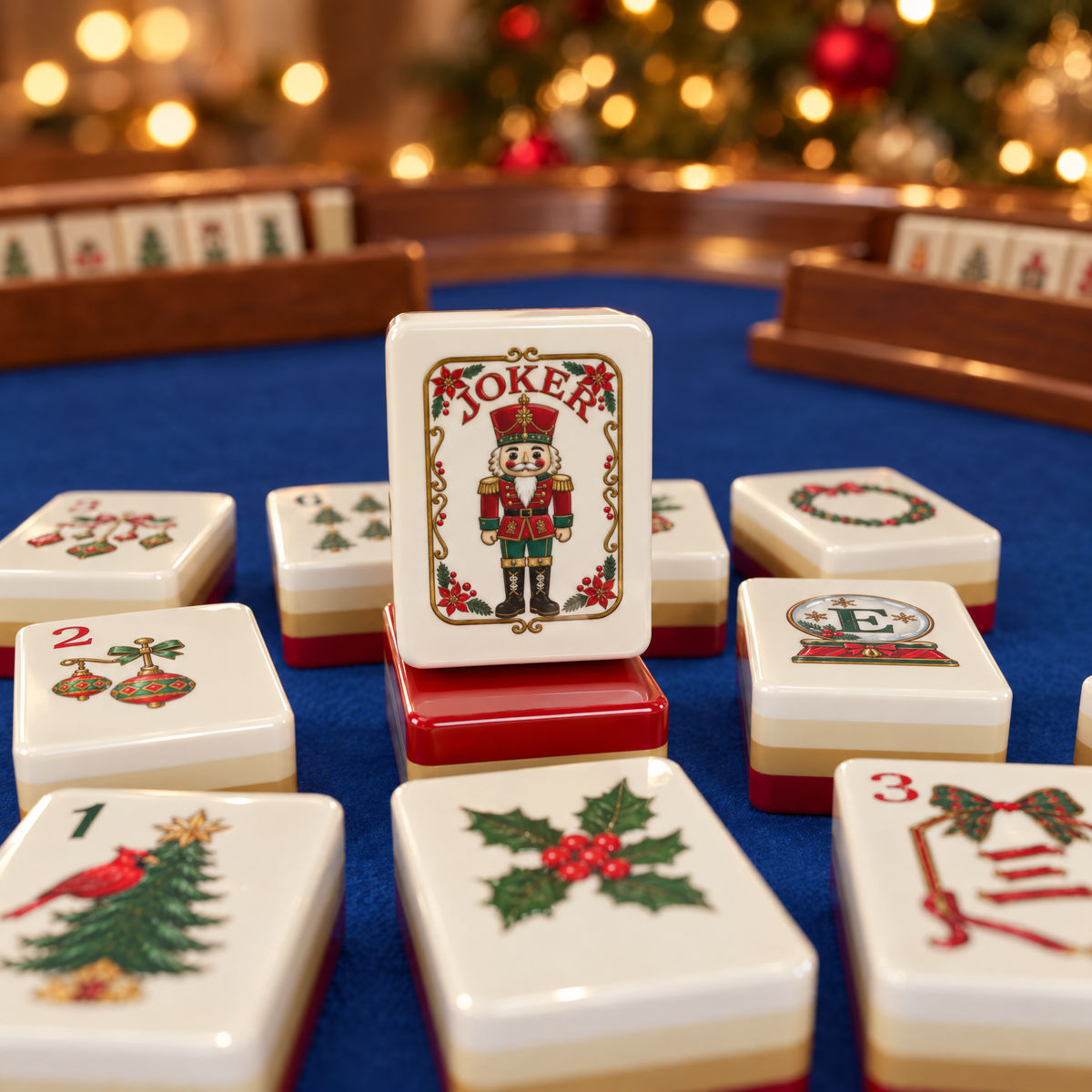
The 1 Bam is the lowest-ranked tile in the Bamboo suit (called "Bam"), numbered 1–9 across all mahjong variants. It appears in every standard set four times—once per player. American mahjong players recognize it immediately by the bird (often a sparrow or plover) drawn on the face instead of a simple dot or bamboo stalk; Chinese and Hong Kong mahjong show one bamboo stalk. In American play, 1 Bams are part of the 152 tiles required per game and are used to complete hand patterns from the year's National Mah Jongg League card—never in sequences, only in pairs or matching groups of three or four. In Chinese and Riichi mahjong, 1 Bams function in chows (sequences like 1–2–3 Bam) and are worth standard points. The bird illustration makes the 1 Bam a visual anchor for new players learning to sort and distinguish suit types.
The 1 Bam is one of the most visually distinctive tiles in mahjong, but its role and value differ depending which variant you're playing. Whether you're learning American mahjong for the first time or comparing styles, understanding this single tile—and what that bird means—opens up a clearer picture of how hand patterns form and why tile recognition matters.
What does the bird on the 1 Bam represent?
The bird engraved or printed on the 1 Bam isn't decorative—it serves a critical function for gameplay. In Chinese mahjong tradition, the bird symbolizes the lowest bamboo value; in American mahjong, it's a universal visual marker that lets players instantly identify the suit without reading a number. Most modern tiles show a simple bird silhouette (sparrow, crane, or plover). This design originated in 19th-century Chinese tile sets and persisted because it works: a player sorting their rack at speed can spot "bird = Bam suit" without squinting at numerals. The bird is also what makes the 1 Bam instantly memorable to beginners, turning an abstract concept into a concrete image they can picture between games.

How is the 1 Bam used in American mahjong?
In American mahjong, the 1 Bam plays the same functional role as every other number tile: it's a building block for patterns listed on the current year's National Mah Jongg League card. You cannot form a sequence or "chow" (1–2–3) in American play—that's a core rule difference from Chinese variants. Instead, the 1 Bam is used to complete pungs (three identical 1 Bams), kongs (four 1 Bams), pairs, or the longer groups (quints and sextets) shown on the hand sheet. A typical pattern might require a pung of 1 Bams plus a kong of another tile, or a pair of 1 Bams as your final match-winning combination. Since every standard American set contains exactly 152 tiles plus 8 jokers, four 1 Bams are always present. When you're building a hand, the 1 Bam is statistically no rarer than a 5 Dot or 7 Crak; its visibility on the tile face is its only distinction.
How does the 1 Bam differ across Chinese, Hong Kong, and Riichi variants?
Each mahjong variant treats the 1 Bam differently, which matters if you play multiple styles or travel to a region with a different table culture.
Variant | 1 Bam appearance | Role in play | Point value |
American | Bird illustration | Pung/kong/pair only; no sequences | Part of hand pattern; varies by combo |
Chinese (Simplified) | One bamboo stalk | Forms chows (1–2–3 Bam); key terminal tile | 1–4 points per meld, higher in winning hand |
Hong Kong | One bamboo stalk | Forms chows; terminal with 9 Bam in melds | 2 points per pung; scoring varies by bonus |
Riichi (Japanese) | One bamboo stalk | Forms chows; common in standard hands | 1,000–3,000 points depending on hand type |
In Chinese and Hong Kong play, 1 Bams are terminal tiles—meaning they sit at the lowest end of the numerical range and play a strategic role in "waiting for terminals" or limiting hand types. In Riichi mahjong, the 1 Bam is equally common but carries no special status; its value depends on the overall hand composition and bonus tiles drawn. American mahjong sidesteps this entirely: the 1 Bam is just another tile on the card, no more or less strategic than any other number. This is why new players switching from American to Chinese mahjong are often surprised that sequences exist and that terminals matter—the 1 Bam suddenly becomes a tactical consideration rather than just a building block.
Why does the 1 Bam matter for choosing your first mahjong set?
When you're shopping for a mahjong set, the 1 Bam is your first litmus test for tile clarity and design quality. If the bird is poorly engraved, smudged, or indistinct, you'll strain your eyes every time you sort a hand. A well-made tile shows the bird crisply, with clear suit differentiation—something a premium acrylic set delivers better than cheaper resin alternatives. Players hosting weekly games know that tile legibility directly affects game pace: unclear tiles slow down the Charleston (the pre-game tile pass), force players to ask "which suit is that?" and drain the table's energy. The 1 Bam's high visual distinctiveness makes it the perfect indicator of overall set quality. If the bird looks fuzzy, the entire set likely suffers from soft engraving or printing. If it's sharp and bold, the rest of the tiles will follow suit—literally.

What should you check before you buy: a practical buyer's checklist
Before adding a mahjong set to your collection, run through this quick inventory focused on the 1 Bam and its companions:
Bird clarity: Hold the 1 Bam at arm's length under normal room light. Can you see the bird outline without squinting? ✓ Pass. Blurry or faint? ✗ Skip.
Suit differentiation: Place a 1 Bam next to a 1 Crak and 1 Dot. Each should look visually distinct—not just numerically, but by color and pattern. If they blur together, the set will exhaust you.
Tile thickness and weight: A substantial tile (acrylic or quality resin, not paper-thin plastic) won't warp or discolor after years of shuffles. Flex the 1 Bam slightly; it should resist bending.
Joker count and clarity: An American set needs exactly 8 jokers for 152 tiles. Count them and ensure they're clearly marked—jokers are often the first tiles to wear out visually.
Set completeness: Verify you have four of each tile (1–9 in all three suits, four winds, dragons, flowers). A fast audit: grab all four 1 Bams and lay them side by side. Identical appearance? ✓ You're good.
Storage and mat compatibility: If you're hosting weekly games, check your mat size before committing to a set. A premium set deserves a mat that showcases it.
🀄 Shop best-selling mahjong sets →
The 1 Bam in teaching and learning: Why beginners remember it first
Any player who's taught someone new knows the 1 Bam is the student's anchor. New players learn suit names in this order: "Bam [points at bird], Crak [points at flower], Dot [points to circles]." The bird is memorable, pronounceable, and instantly differentiates the Bamboo suit from the others. Once a new player locks in the 1 Bam's appearance, sorting a mixed rack becomes automatic—they can group suits rapidly without overthinking. This is why beginner-friendly set designs often emphasize clarity on the low-numbered tiles: clarity on the 1s cascades into clarity on the 2s, 3s, and beyond. Seasoned players also use the 1 Bam as a teaching diagnostic. If a new player reaches for a 1 Crak when you call "1 Bam," you know they haven't yet internalized suit patterns—so you focus your next explanation on colors and shapes rather than numbers alone. The 1 Bam, in short, is your first window into a player's comfort level.
🎁 See our most-loved mahjong sets & accessories →
Common mistakes: misidentifying the 1 Bam at the table
Even intermediate players sometimes misread a 1 Bam under poor lighting or when hands are crowded. Here's what goes wrong and how to avoid it:
Confusing the 1 Bam with a joker: A joker typically shows a star, smiley face, or blank (depending on the set design). The bird on a 1 Bam is always organic and centered. Keep jokers and number tiles in separate zones during play.
Mixing 1 Bam and 1 Crak: Both have distinctive imagery, but the Crak suit usually features a flower or plum blossom, while the Bam is always a bird. If you're unsure mid-game, ask for a visual check rather than guess.
Playing with low-contrast sets in dim light: This is where a poor set shows its weakness. Invest in a set with bold, high-contrast engraving on the 1 Bam—it's an investment in every game you'll play. Acrylic sets with deep engraving handle low light far better than resin.
Forgetting the 1 Bam is exactly 1/36th of the Bam suit: In American mahjong, knowing this ratio helps you mentally track tiles as they're drawn. If you've seen two 1 Bams and none have been used yet, you know two are still waiting.
What to check before you buy
If you're selecting a new set for weekly games or gifting a player who's just starting out, prioritize these specifics:
Is the bird on the 1 Bam clear and crisp, or faded and soft?
Can you easily distinguish the 1 Bam from the 1 Crak and 1 Dot at a glance?
Does the set come with a travel bag if you're transporting it between homes?
Are all four 1 Bams identical in color, shading, and engraving depth?
Is the tile sturdy enough to shuffle hundreds of times without warping?
Our mahjong racks with pushers are designed to display tiles at an angle that highlights the faces, including the 1 Bam's bird—so legibility is built into the playing experience.
✨ Find your Mahstead set — free US shipping →

FAQ
Why do some 1 Bams show a bird and others show a single bamboo stalk?
American mahjong sets use a bird to make the 1 Bam instantly recognizable at speed. Chinese and Hong Kong sets use one bamboo stalk to match traditional design. Both represent "1" in the Bamboo suit; the imagery is cultural preference and historical convention, not a rule difference.
Can I use a 1 Bam in a sequence like 1–2–3 in American mahjong?
No. American mahjong has no sequences (chows). The 1 Bam is only used in identical groups: a pung (three 1 Bams), a kong (four 1 Bams), a pair, or longer composite melds shown on the National Mah Jongg League card. Chinese, Hong Kong, and Riichi variants allow 1–2–3 sequences.
Is the 1 Bam worth more points than other low-numbered tiles in American play?
No. In American mahjong, point value comes entirely from the hand pattern you're completing, listed on the current year's card. The 1 Bam has no intrinsic point value—it's a tile like any other. In Chinese and Hong Kong variants, terminals (like the 1 Bam) can earn bonus points, but that's a variant rule, not universal.
How do I know if a mahjong set's 1 Bam is high quality?
Hold it at arm's length under room light. The bird should be sharp, centered, and easy to see. If it's blurry, faded, or requires close inspection, the set was likely carved or printed with shallow dies. Quality sets show crisp birds that last through years of play.
What if my 1 Bams don't all look identical?
This is a red flag. All four 1 Bams in a 152-tile set must be identical in color, shading, and engraving depth. If they vary, the set may have been assembled from multiple batches or repaired improperly. Request a replacement or full refund; inconsistent tiles will derail your game.
Can I use a 1 Bam as a joker if I'm missing a joker during play?
No. In American mahjong, jokers are distinct tiles that serve a mechanical function (wildcards in certain positions). A 1 Bam is always a 1 Bam and can never substitute. If you're missing a joker, pause play and locate it or use a spare blank tile (if your set includes spares).
Does the 1 Bam change meaning between American and Chinese mahjong?
Its identity doesn't change—it's always the "1" of the Bamboo suit. But its usage does: American play forbids sequences, so the 1 Bam is only grouped identically. Chinese play allows the 1 Bam in sequences with 2 and 3 Bams, making it strategically distinct. Learn your variant's rules, and the 1 Bam's role clarifies immediately.


View More
View More
View More
