
Is an Expensive Large Print Mahjong Set Worth It?
Last updated: Nov 23, 2026
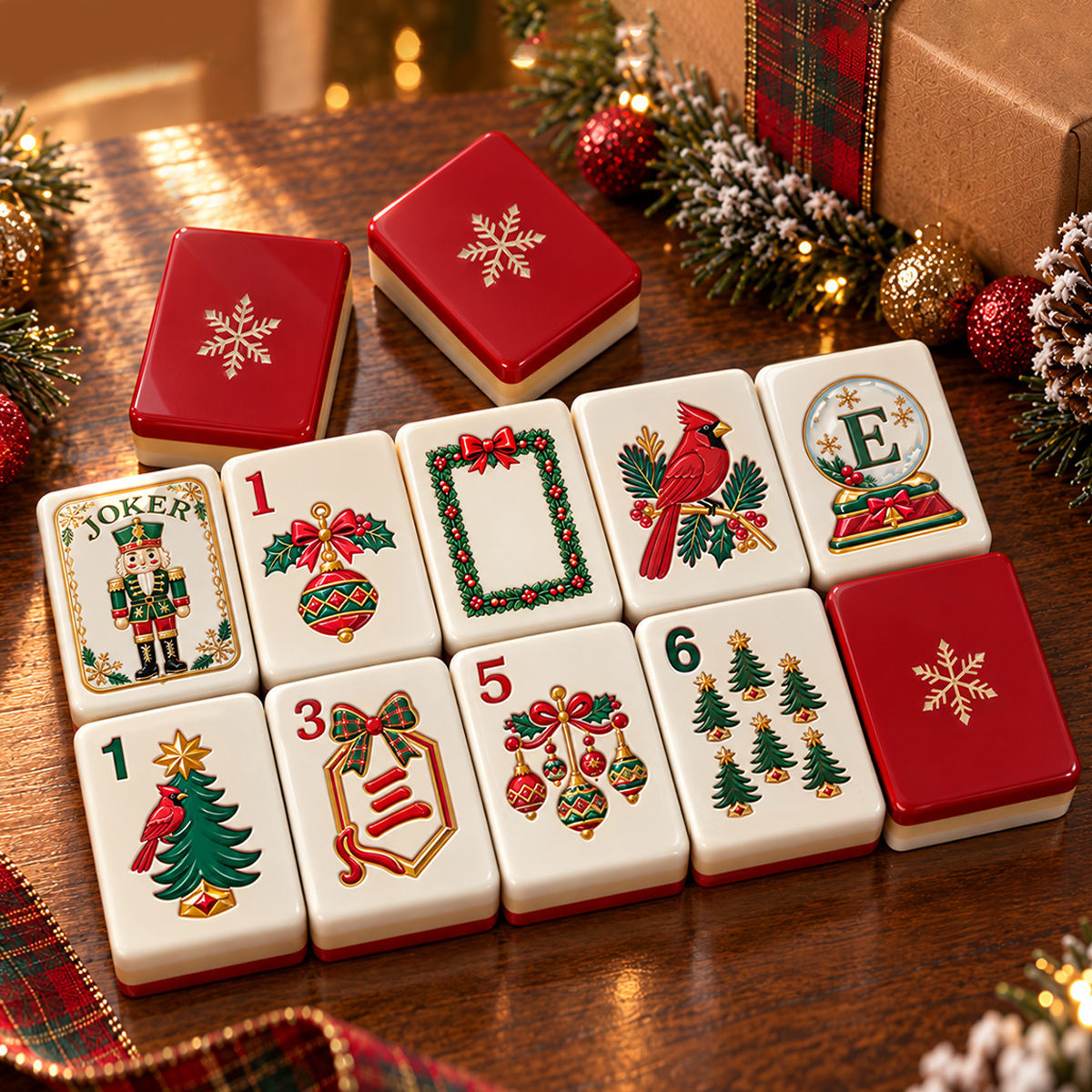
Large-print American mahjong sets cost more than standard sets, but the decision isn't only about money—it's about who sits at your table and why they play. We've hosted games weekly for years, and we've watched players squint, miss calls, and shuffle slowly because they couldn't read quickly. That's the gap large-print closes. Here's how to know if it's right for you.
What makes a large-print set expensive?
Large-print tiles require hand-engraving or precision printing on oversized acrylic, thicker materials to hold detail, and often custom batch production. A standard tile measures roughly 1¼ inches; large-print tiles expand the face area significantly, adding material cost and labor time per set. Engraved American mahjong sets with large print also require sharper molds, longer curing, and quality control to ensure contrast stays legible under lamplight. The tile count remains 160 (152 playing tiles plus spares), but each tile demands more precision because symbol clarity can't be sacrificed to speed.
🀄 Shop best-selling mahjong sets →

Who actually benefits from large-print tiles?
Players over 65, anyone with low vision or astigmatism, and people with tremoring hands all benefit immediately. Large print also helps players who wear bifocals—they can keep their head still and read tiles in their focal zone without tilting down. If your group includes anyone squinting, leaning close, or asking "what's that tile?" during the Charleston, large-print will speed up play and reduce frustration. Casual players or younger groups who play once or twice yearly will likely never notice the difference; weekly players with mixed ages or vision challenges see the payoff within the first two games.
Does a large-print set last longer than standard?
Not necessarily longer, but it can hold legibility longer. Large-print tiles start with bolder contrast, so even after years of shuffling, the symbols remain readable. A standard engraved set will also outlast most acrylic by decades if stored dry and handled gently, but the smaller print fades slightly with table wear and lamplight exposure. If you play 50+ times per year, large-print tiles hold their sharpness more visibly in year three or four. For storage and transport, both types need a padded mahjong bag or case; damage happens in the bag, not at the table.
🎁 See our most-loved mahjong sets & accessories →
Large-print vs. standard: a side-by-side comparison
Feature | Standard Set | Large-Print Set | Winner for... |
Tile size | ~1¼″ face | Visibly larger | Players with presbyopia |
Symbol contrast | Clear but fine detail | Bold, high contrast | Low-light tables |
Cost | Baseline | 40–60% higher | Budget-conscious groups |
Setup speed | 10–15 minutes | Same or slightly slower (larger hands needed) | Speed-focused play |
Durability | 5–10 years heavy use | 6–12 years (starts clearer) | Weekly players |
Beginner-friendly | Requires focus | Easier to learn on | New players |
Storage footprint | Standard | Marginally larger | Small bags or shelves |
Large-print sets justify their cost if your table has two or more players who hesitate reading tiles or who play multiple games weekly. A single occasional player doesn't need it; a table of five players over 70 is exactly where it shines.

What to check before you buy a large-print set
Read the product details carefully. Confirm the print method—hand-engraved acrylic holds detail better than stamped or decal tiles, which wear away faster. Check the tile thickness; heavier acrylic (≥¼ inch) resists chipping if dropped. Verify that the suit symbols (Bams, Craks, Dots) are color-coded and large enough that you can distinguish them at your table's typical distance and lighting. Look for a product image or description that shows how the wind tiles and dragon tiles appear; they should be equally bold. Ask whether the set includes racks with pushers—large-print tiles often need roomier racks because players prefer more hand space.
Test contrast at your table. If possible, borrow a large-print set for one game before committing. Play under your actual lamplight and seating distance. Sit in every seat position, because glare and shadow vary. If you still struggle to read quickly, a larger set may not solve it alone; you might also need better lighting or a larger, cushioned mahjong mat with higher sides to reduce reflection.
Consider who plays with you long-term. If your group is stable (same four or five players), investing in large-print makes sense for everyone's comfort. If players rotate frequently or you host occasional visitors, a large-print set is less cost-effective because the benefit is narrower. Standard sets remain the practical choice for open or mixed groups.
✨ Find your Mahstead set — free US shipping →
When a standard set is the smarter choice
If your group averages under age 60, plays fewer than 20 times per year, or all players read standard print comfortably, a standard engraved set is the better buy. You'll save money and still own a set that lasts decades. If space or portability matters—you're a traveling player or store your set in a small apartment—standard tiles take up less room in a travel case. If you're a beginner still learning hand patterns and the National Mah Jongg League card, a standard set is fine; once you're fluent, you can upgrade if your eyes demand it. Finally, if you're buying a second set for a different group or location, keep the standard set there and reserve large-print for your primary weekly game.
The real bottom line
Large-print mahjong sets are worth it if they let your table play faster, more accurately, and more pleasantly. They cost more because materials and labor are genuinely higher, not because of marketing. The payoff isn't speed alone—it's confidence. Players who can read tiles quickly stop second-guessing themselves, call hands sooner, and report enjoying games more. A table that plays weekly with aging or low-vision players sees the benefit from the first game. Casual players or younger groups will likely find the extra cost unnecessary. Measure your table's actual needs before ordering: if three players squint every game, large-print earns its price in the first season.

FAQ
Are large-print tiles thicker or just bigger?
Both. Large-print tiles use thicker acrylic (often ¼ inch or more) so the hand-engraved symbols won't wear flat with age. Standard tiles are thinner and lighter, so they don't need as much material. The extra thickness also makes large-print tiles stack and shuffle differently—many players need slightly roomier racks.
Can I mix large-print and standard tiles in the same set?
No. American mahjong requires exactly 152 identical tiles plus 8 jokers. Mixing tile sizes creates imbalance during shuffling, uneven wear, and visibility chaos at the table. Always buy one set size and stick with it.
Do large-print sets qualify for free US shipping?
Yes. Mahstead ships all 160-tile sets free across the US, regardless of whether you choose standard or large-print. See the current price on the product page for any engraved set.
Will large-print help if I have colorblindness?
Partially. Large-print makes the numerals and count marks easier to read, but it won't change color contrast. If you have red-green colorblindness, the Dragon and Crak suits may still be hard to tell apart. Larger symbols help a little; better lighting and seating directly across from the discard wall help more. Discuss with your group whether they're willing to call suit aloud during your turn.
How do I store large-print tiles so the print doesn't fade?
Keep them dry, out of direct sunlight, and in a padded bag or case (not loose in a drawer). UV light fades engraved contrast over time. Store in a cool closet or shelf, never in a hot car or windowsill. A solid travel case protects the print from dust and humidity better than a soft bag alone.
Can beginners learn on a large-print set, or is it cheating?
Beginners learn faster on large-print. Reading tiles is already hard when you're memorizing hand patterns and the National Mah Jongg League card. Removing eyestrain lets them focus on strategy. Once skilled, they can play with any set. It's not cheating—it's accessibility.


View More
View More
View More
