
How to Use the East Wind Tile in American Mahjong
Last updated: Nov 23, 2026
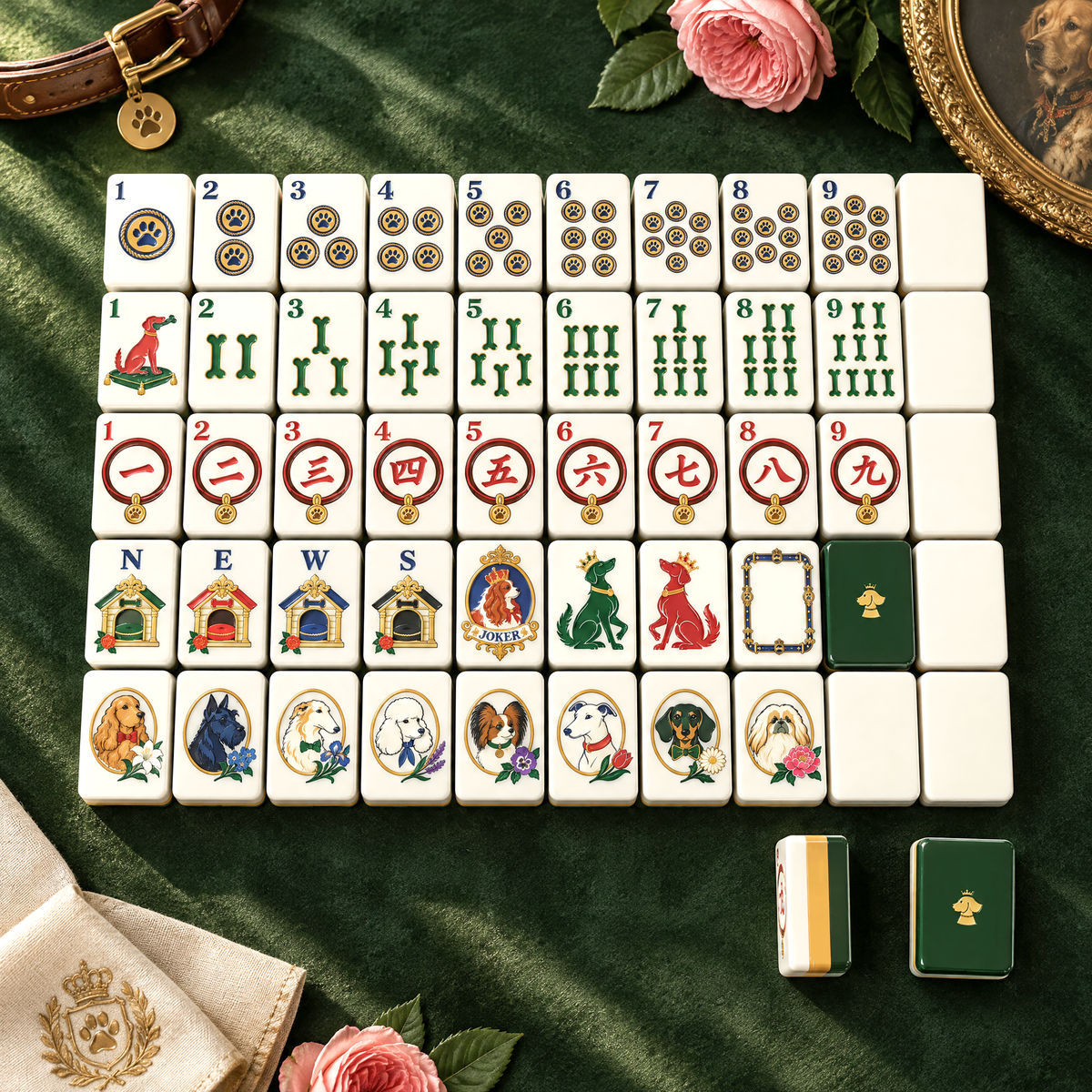
The East Wind (represented by an "E" on tiles) is one of four wind honors in American mahjong, always appearing in sets with North, South, and West. On the National Mah Jongg League card, East Wind tiles appear in specific hand patterns—you'll use them as exposable pungs (three identical), kongs (four), or higher combinations. Before play begins, East Wind also determines who sits in the "East" seat (the position that breaks ties and leads the first hand), rotating around the table after each game. Every American mahjong set contains exactly four East Wind tiles; our best-selling sets include all four winds with clear markings so seating and hand-building happen without confusion. Never swap or discard an East Wind during play—it's a full tile, not a joker placeholder.
The East Wind tile is one of four wind honors in American mahjong, always appearing in sets with North, South, and West. On the National Mah Jongg League card, East Wind tiles appear in specific hand patterns—you'll use them as exposable pungs (three identical), kongs (four), or higher combinations. Before play begins, East Wind also determines who sits in the "East" seat (the position that breaks ties and leads the first hand), rotating around the table after each game. Every American mahjong set contains exactly four East Wind tiles; our best-selling sets include all four winds with clear markings so seating and hand-building happen without confusion. Never swap or discard an East Wind during play—it's a full tile, not a joker placeholder.
How does East Wind work during the Charleston?
The Charleston is the tile-passing ritual before each hand begins, not a means to assign seats—that's done separately. However, East Wind's role emerges during seating: before the Charleston starts, one player is designated "East" and leads. This player draws first during the opening draw, giving East a tiny positional advantage. East's role cycles clockwise around the table each hand (East → South → West → North → East). If you're new to hosting, this simple rotation prevents one player from always leading and keeps the game fair.

What hands on the card use East Wind tiles?
East Wind appears in dozens of hand patterns on the current National Mah Jongg League card—typically as part of honor pairs, pungs, kongs, or mixed combinations with numbered suits. For example, a pung of East Wind tiles (three identical East tiles) might form the core of an all-honor hand or a mixed pung-based pattern. The card changes every spring, so the specific positions vary yearly; your job is to check the card before you pick up tiles and identify which hands you can build. If you spot three or four East Wind tiles in your hand during play, cross-reference the card to see if a valid hand contains that combination.
When can you expose or declare East Wind?
In American mahjong, you can only expose (lay down for all to see) identical tile combinations: pungs (three matching), kongs (four matching), quints (five), or sextets (six). East Wind follows this rule strictly—three East tiles exposed is a valid pung; two East tiles are never exposable and cannot form a pair unless the complete hand on the card calls for exactly one pair plus other combinations. Jokers cannot replace East Wind in a single tile or pair, so if the card shows an East Wind pair, you must hold two actual East Wind tiles. When you're ready to declare a hand, say "Mahjong!" and lay down all your tiles so the group can verify them against the card.
What's the difference between East seat and East Wind tile?
These are two separate concepts. The East seat is a table position—the player sitting there plays first in each hand and is responsible for leading the game. The East Wind tile is a physical mahjong tile with an "E" marking. You'll use East tiles to build hands, expose combinations, and score; you'll use the East seat only for turn order and dealer authority. Confusion arises because players sometimes say "I'm East" (meaning seat) or "I have an East" (meaning the tile). The seat rotates every hand; the tiles stay in play unless your hand is complete.
How do you assign the initial East player in a game?
Before any hand begins, players roll dice or draw tiles from the wall to determine who sits East for the first hand. Some groups draw: shuffle all tiles face-down, each player draws one, and the highest-ranking tile (often ranked as 1 Dot, 9 Dot, 1 Bam, 9 Bam, etc., depending on house rules) wins East. Other groups roll two dice and apply house rules to break ties. The player who draws or rolls highest sits in the "East" position, draws first when the hand begins, and is responsible for enforcing rules during play. After that hand concludes, East moves clockwise to the next player. This ensures everyone takes turns leading and prevents a single player from holding an advantage all game.
🀄 Shop best-selling mahjong sets →

Quick reference: East Wind roles and responsibilities
Role | When it happens | Your action | Why it matters |
Seating | Before hand 1 | Dice draw to pick East player | Determines turn order and first draw |
Playing | During hand | Check card for East patterns; expose if valid | Builds scoring hands |
Rotation | After hand ends | East seat moves clockwise | Keeps turns fair across 4 players |
Tie-breaker | Mid-hand dispute | East player or East seat rules final | Prevents stalling |
What mistakes do players make with East Wind?
Mistake 1: Forgetting East rotates each hand. New players sometimes assume one player stays East the entire game. After each hand ends (whether you won or lost), East moves to the next player clockwise. Set a timer or use a small marker to remind everyone who's East for the next hand.
Mistake 2: Trying to expose two East Wind tiles as a pair. A pair cannot be exposed in American mahjong. If your hand requires an East Wind pair, you keep both tiles hidden until you can declare Mahjong! (all tiles laid). Many beginners accidentally expose a pair, which breaks the hand.
Mistake 3: Using a joker to "complete" an East pung. American mahjong rules forbid jokers in pungs, kongs, or quints of wind tiles. If you have two East Wind tiles and a joker, that joker cannot substitute for the third East to make a pung. You must hold three actual East tiles or abandon the combination.
Mistake 4: Confusing East seat authority with East tile value. The East player does not score higher simply for holding East tiles; East seat breaks ties and leads. A hand with three East tiles scores the same whether you're sitting East or North—the card alone determines points.
What to check before you buy
Clear tile markings: Look for sets where wind tiles (East, South, West, North) are printed or engraved clearly so you can read them from across the table without squinting. Acrylic sets with bold typography work best for long games.
Four complete winds: Count the winds in your set. American mahjong requires exactly four North, four East, four South, and four West tiles. Our engraved collections guarantee full tile counts and readable markings so seating and hand-building flow smoothly.
Hand-size tiles: If you play with hands held (not on racks), make sure tiles are sized comfortably for your grip. Smaller tiles suit tight racks; larger tiles work better in-hand for players with vision or dexterity needs.
A current card: Your set is only useful with this year's National Mah Jongg League card. Order or print a 2026 card before your first game—hands change every spring, so an old card will cost you points.
🎁 See our most-loved mahjong sets & accessories →
Hosting tip: Make East roles visible
During games, players sometimes forget who sits East after two or three hands. Use a physical marker—a small card, coin, or engraved pushers placed at the East position—to remind everyone of the current seating. This cuts confusion and speeds play.
The bigger picture: learn what else is in a set
East Wind is one piece of American mahjong's 152-tile ecosystem. Understanding how all tiles work together—dragons, suits, jokers, flowers—makes hand-reading and strategy sharper. Every tile has a role; East Wind's dual function (seat-setting and hand-building) shows why even honors demand attention.
✨ Find your Mahstead set — free US shipping →

FAQ
Can I use a joker to represent an East Wind tile in a pung?
No. In American mahjong, jokers cannot substitute for tiles in pungs, kongs, quints, or sextets of any suit or honor. You must hold four actual East tiles to form a pung—jokers are illegal here.
Does sitting in the East seat give me a scoring bonus?
No bonus points. East seat determines turn order and tie-breaking authority. Scoring depends only on which hand from the current card you declare, regardless of your position.
What happens if I expose East Wind tiles but the card doesn't match my hand?
You cannot declare Mahjong. You must retract the exposed tiles, and your turn ends. This is a "false hand" and some groups penalize it; check your house rules before play.
How many East Wind tiles should be in my set?
Exactly four, matching the other three winds (four North, four South, four West). Sets with incomplete winds cannot play American mahjong fairly.
If East rotates, does my hand or score reset?
Your score carries forward every hand. Only the seating changes—who draws first, who leads. All previous scores stay on the pad.


View More
View More
View More
