
What Does the 4 Dot Tile Look Like in American Mahjong?
Last updated: Nov 23, 2026
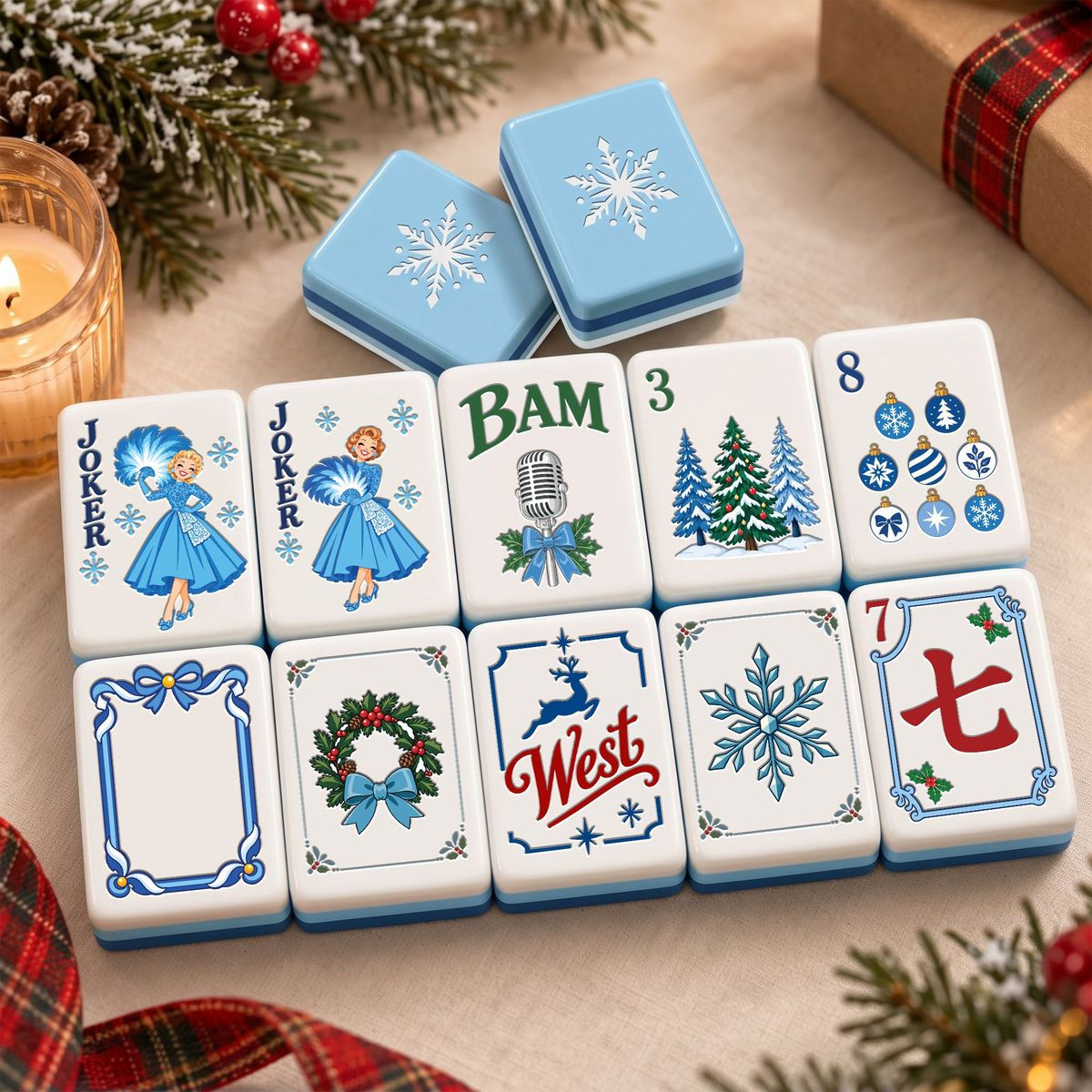
The 4 Dot tile shows four small circles or dots arranged in a square formation—typically two dots in the upper left and lower right corners, two in the upper right and lower left—on a rectangular tile face. The Dot suit uses round pips (unlike Bams, which show bamboo stalks, or Craks, which show ideographs). In American mahjong's 152-tile deck, you'll find four identical 4 Dot tiles; they're neutral in color and number value, making them straightforward to spot even under table lighting. The tile's clarity matters because speed matters: when you're scanning a rack of 13 tiles or checking exposed melds, a sharp pip pattern prevents misreads. Our acrylic sets use deep laser engraving to ensure every dot is crisp and permanent, so the 4 Dot stays legible for years of weekly games.
The 4 Dot tile shows four circular pips arranged in a square formation—typically two dots in the upper left and lower right corners, two in the upper right and lower left—on a rectangular tile face. The Dot suit uses round pips (unlike Bams, which show bamboo stalks, or Craks, which show ideographs). In American mahjong's 152-tile deck, you'll find four identical 4 Dot tiles; they're neutral in color and number value, making them straightforward to spot even under table lighting. The tile's clarity matters because speed matters: when you're scanning a rack of 13 tiles or checking exposed melds, a misread costs time and trust. Our acrylic sets use deep laser engraving to ensure every dot is crisp and permanent, so the 4 Dot stays legible for years of weekly games.
Why Does Dot Tile Design Matter for Play?
Speed and accuracy separate casual games from confident ones. When you're building your hand or reading the table, you need to identify tiles in a glance—not squint at worn or faint markings. A well-engraved 4 Dot tile has uniform, evenly-spaced pips that your brain registers instantly, even in side-view across a crowded rack. Poor printing or shallow engraving causes "ghost" pips: dots so faint you second-guess what you're looking at, slowing your decision-making and undermining the flow of the game. American mahjong tile design follows a standard layout—the 4 Dot always appears the same way—so consistency across all your tiles lets muscle memory take over. Professional players often replace sets after 10+ years not because tiles break, but because surface wear dulls the pips and creates friction at the edges. Depth matters: laser-engraved pips outlast printed ones because the mark lives in the material, not on top of it.

How Does the 4 Dot Compare to Other Numbered Dots?
Each numbered Dot tile has a distinct pip count that becomes automatic recognition over time. The 1 Dot shows a single centered circle. The 2 Dot displays two pips in diagonal opposition (upper left, lower right). The 3 Dot places three pips in a diagonal line. The 4 Dot—our focus—arranges four pips in a square. The 5 Dot (often called the "quint" in exposed play) shows five pips in an X-plus pattern: four corners and one center. The 6 Dot uses two vertical columns of three. The 7 Dot adds a center pip to the 6-Dot layout. The 8 Dot fills nearly the entire tile with pips in a dense grid. The 9 Dot is the heaviest: nine pips in a three-by-three square. Beginners often confuse 4 and 5 Dots at a glance, so practice reading during the Charleston shuffle. The 5 Dot's extra center pip is the giveaway once you spot it once. This visual progression—sparse to dense—makes the Dot suit intuitive: higher numbers = more pips = fuller tiles.
🀄 Shop best-selling mahjong sets →
What Tile Defects Make the 4 Dot Hard to Read?
Common printing flaws and manufacturing shortcuts can blur or hide pips. Shallow engraving means the dots barely indent the tile surface; under fluorescent or dim table lighting, they vanish into shadow. Uneven ink coverage on printed tiles leaves some pips lighter than others, forcing your eye to work harder. Chipped or worn edges around pips catch light and create visual noise, making it harder to count quickly. Tiles that aren't cut square sit unevenly in your rack and tilt, throwing the pips into glare or shade. Incorrect pip spacing—dots placed too close or too far apart—breaks your pattern-recognition rhythm. Since American mahjong sets are meant to last, we use precision laser engraving that cuts the same depth and width every time, so the 4 Dot tile you draw on turn 1 looks identical to the 4 Dot you draw on turn 100. When comparing sets, ask about engraving depth and hold a sample under the light you'll play under. If you can run your fingernail along the pips and feel a difference, that's quality.

Which Mahjong Variants Show the 4 Dot Differently?
American mahjong is strict about tile design: the 4 Dot always shows four pips in a square. But other variants use different systems. Chinese mahjong (the ancestor of American rules) uses nearly identical tile faces, though some regional sets emphasize pips differently or add color coding. Hong Kong mahjong keeps the square-pips layout but tiles are smaller and often carved from bamboo and bone, so pips are more angular and take practice to read. Riichi mahjong (Japanese) uses the same pip count and layout as Chinese, so the 4 Dot looks the same, but the entire deck is smaller and narrower. Taiwanese mahjong also mirrors the Chinese 4-Dot design. If you play multiple variants, American-specific sets (like ours, with acrylic construction and color-coded honor tiles) keep your rhythm in American games, while traveling to Hong Kong or trying Riichi requires a separate set. The 4 Dot itself doesn't change, but the tile's surrounding size, weight, and handling do—which affects speed and comfort over a long session.
How Can You Practice Identifying the 4 Dot Quickly?
Speed comes from repetition under realistic conditions. Start by shuffling a full American set and calling out tiles as you draw them—work through Dots 1–9 five times in a row. Time yourself: you should recognize each tile in under one second by touch and sight combined. Next, play a round of American mahjong for beginners focusing only on reading your hand, not on strategy. When you're building your first exposure, grab the 4 Dot tiles deliberately and verify them before placing them on the table. During the Charleston passing phase, call out the suit and number of each tile you pass—this forces verbal confirmation and builds auditory memory too. Finally, play with the lights set to the same level as your usual game venue; if your weekly group meets under overhead fluorescents, practice at home with similar lighting. Muscle memory works best when all conditions match. After 10–15 hours of play with a good-quality set, the 4 Dot will feel as obvious as reading a printed number on paper.
Variant | 4 Dot Appearance | Tile Material | Typical Size | Recognition Speed |
American | Four square pips | Acrylic | Standard (1.0″) | Fast (uniform) |
Chinese | Four square pips | Bamboo/bone | Standard (0.9″) | Moderate (variable) |
Hong Kong | Four angular pips | Bamboo/bone | Small (0.8″) | Slow (fine detail) |
Riichi | Four square pips | Plastic | Narrow (0.7″) | Moderate (compact) |
Taiwanese | Four square pips | Bamboo/bone | Small (0.85″) | Moderate (variable) |
🎁 See our most-loved mahjong sets & accessories →
What Should You Check Before Buying a Mahjong Set?
Before committing to a set, verify these specifics so you get tiles that stay readable for years. Engraving depth: Hold a sample under table light and look for shadows in each pip—deep engravings cast clear shadows; shallow ones disappear. Pip uniformity: Count the pips on a 4 Dot three times in a row; if you get different answers, the spacing or alignment is off. Tile flatness: Place a 4 Dot on a flat surface and check for wobbling or tilting; warped tiles won't sit right in your rack and cause misreads. Color consistency: All four 4 Dot tiles should match exactly—no variation in background shade or pip shade. Edge quality: Run your fingertip along the edges; rough or splintered edges catch light and distract from the pips. Weight and feel: Acrylic tiles should feel substantial but not heavy; hollow or lightweight tiles suggest cheaper construction that won't age well. Joker clarity: Check that any jokers in the set are marked clearly (American mahjong uses 8 jokers); if they're ambiguous, the whole set is suspect. Most online shops provide sample photos under good lighting; ask for close-ups of a 4 Dot and 5 Dot side-by-side before ordering. Mahstead includes detailed product photography and ships free across the US, so you can compare our sets' pips against any other brand.
✨ Find your Mahstead set — free US shipping →

FAQ
Is the 4 Dot tile the same in every American mahjong set?
Yes—the 4 Dot always shows four pips in a square formation per National Mah Jongg League standards. Clarity and engraving depth vary by manufacturer, but the layout and count never change. This standardization lets you play with any NMJL-compliant set.
Why do some 4 Dots look more spaced out than others?
Tile size and pip scale vary slightly across manufacturers. Larger tiles space the pips farther apart for clarity; compact tiles compress them. Both are correct, but spacing affects visual recognition speed—a matter of personal preference and table lighting conditions.
Can you tell a 4 Dot from a 5 Dot by touch alone?
Experienced players can feel the difference because the 5 Dot has a center pip that breaks the symmetry; your fingertip detects the extra bump. Beginners should rely on sight until touch becomes automatic over 50+ hours of play.
Do acrylic 4 Dot tiles last longer than bone or bamboo ones?
Acrylic resists wear and fading better than printed bone or bamboo, especially under constant shuffling. Laser-engraved acrylic tiles remain sharp for 10+ years; bone and bamboo often dull after 5–8 years of weekly play.
What happens if a 4 Dot tile gets chipped or scratched?
Minor scratches don't affect gameplay, but chips that alter the pip count create confusion. If a 4 Dot looks like a 3 Dot or 5 Dot due to damage, that tile should be replaced. Mahstead sets come with spare tiles to cover this scenario.
Are there color-coded versions of the 4 Dot tile?
No—the 4 Dot (part of the Dot suit) is always neutral in color per NMJL rules. Color coding appears only on honor tiles (winds and dragons). Monochrome 4 Dots help newer players focus on pip counting without distraction.


View More
View More
View More
