
What Is Pure One Suit in Mahjong? Rules & Hand Strategy
Last updated: Nov 23, 2026
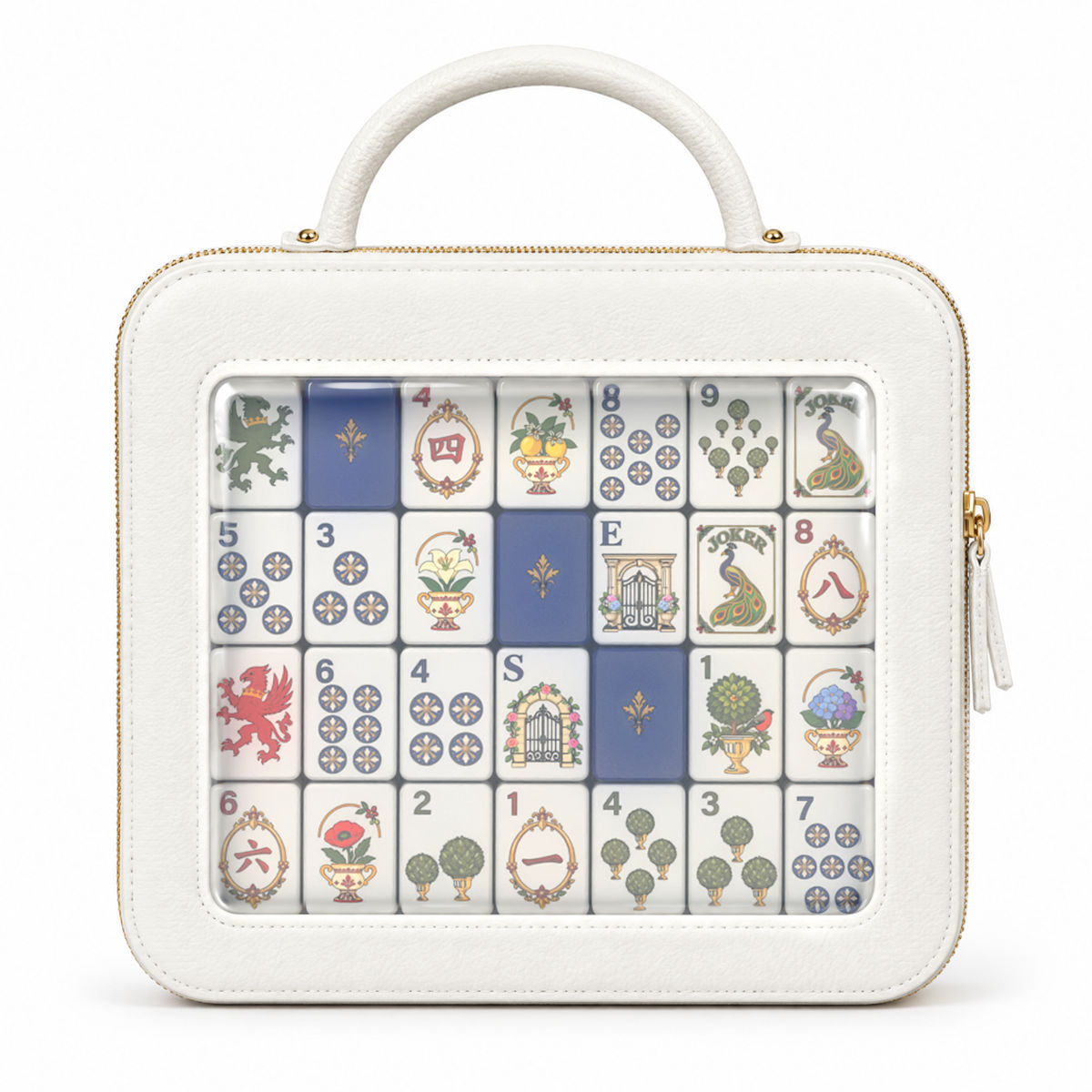
In American mahjong, a "pure one suit" (or "all one suit") hand contains tiles exclusively from one of the three number suits—Bams, Craks, or Dots—plus any winds, dragons, flowers, or jokers. You cannot mix number suits; for example, playing 3 Bams with 5 Craks breaks the pattern immediately. These hands appear on the annual National Mah Jongg League card in designated sections and typically score 30, 40, or 50 points depending on the pattern structure. The advantage: fewer tiles block your draw, so you have more room to maneuver. The cost: you must discard every tile from the two excluded suits early, signaling your intent to the table and giving opponents time to block. Most players encounter pure one-suit hands in their first week of play, and our best-selling acrylic sets come with a current-year card so you can locate these patterns instantly. 🀄 Shop best-selling mahjong sets →
Why does pure one suit score higher than mixed-suit hands?
Pure one-suit hands are worth more because they require stricter tile discipline: you sacrifice eight to nine tiles (the entire excluded suits) before the game even starts. That constraint is mathematically harder to navigate than a mixed hand where you can pivot between suits. On the National Mah Jongg League card, one-suit patterns reward this sacrifice with 40- or 50-point payouts versus the 20- or 30-point mixed hands, making the risk worthwhile when the table texture supports it. By discarding cleanly and early, you also signal confidence—some opponents will push back, others will respect your line and clear their own suit.

How do you spot a pure one-suit hand on the card?
The annual card groups one-suit hands into dedicated sections, usually labeled by suit (Bam, Crak, Dot) and then broken into sub-patterns: pairs, pungs, kongs, quints, sextets, and mixed specials like "1 pair + all quints." To find a hand quickly: (1) identify your pair or primary tile, (2) match it to the card's index, (3) scan that section's suit rows, (4) read left to right to find your exact combination. The card uses consistent notation—numerals, brackets for runs or multiples, symbols for winds/dragons/flowers—so a 2 Bam pair with four Bam pungs looks the same every time you reference it. Spending five minutes learning the card's layout on your first night saves fifteen minutes of fumbling per game.
What's the biggest mistake players make with one-suit hands?
Holding tiles from excluded suits too long hoping for a mixed hand. If you commit to pure Bams, dump every Crak and Dot by turn three or you've wasted your first draw cycle. A second error: telegraphing your suit too early when the table is still fluid—if you're not ahead by pick six, consider abandoning the hand rather than staying locked into a dead suit while your opponents pivot. A third trap is falling in love with a high-score one-suit pattern and chasing it past the point of probability; if you haven't drawn two matching tiles by turn four, the statistical window is closing. The remedy: track what you've discarded, listen to what others have thrown away, and update your win probability every draw.
Which one-suit hands are safest for newer players to attempt?
Hands with simple repeating pungs (3-tile groups of identical numbers) are forgiving: for example, three Bam pungs plus one pair, or four Bam pungs with flowers and winds. These patterns are low-variance because you're matching the same number in the same suit four times, not hunting for a precise sequence. Quint-heavy hands (five identical tiles) are harder because quints are rarer; sextets (six identical) are rarer still. Pair-based one-suit hands (where the pair is Bams and everything else is also Bams) are straightforward if the pair is a mid-range number like 5 or 6 Bam, since those numbers appear more frequently in hands and discards. Beginners should avoid one-suit hands anchored on 1 or 9 of any suit early in their learning curve—those boundary numbers come up less often and the hand plays defensively.
How does pure one suit differ across other mahjong variants?
Chinese mahjong (also called Cantonese or Hong Kong) also uses one-suit hands but they score differently and jokers work entirely differently—Chinese tiles include no jokers, and sequences (chows) are allowed and required in many hands, changing the tile economy. Riichi mahjong (Japanese) has completely different tile sets and melds; one-suit concepts don't map cleanly. Taiwanese mahjong mixes tiles and rules so differently that "pure one suit" barely applies. American mahjong is unique because jokers are wildly available (eight in a 152-tile deck), so a pure one-suit hand can borrow jokers without breaking the pattern—a huge tactical difference from Chinese variants where you must use only the numbers you draw. If you're comparing rule sets, stick to American; the National Mah Jongg League card is American-only and one-suit patterns are designed around our joker abundance.

What to check before you commit to a pure one-suit hand
Decision Point | What to Ask | Action |
Suit choice | Do I have ≥2 matching tiles? | Pair or pung visible by pick 3? Go. Otherwise fold. |
Table discards | How many from my suit are already gone? | If >6 of my suit is dead, switch hands now. |
Opponent pressure | Has someone dumped heavily from this suit? | They're likely pursuing it. Compete only if ahead. |
Turn count | Am I on track by turn 6? | No confirmed second group? Abandon and play mixed. |
Joker spend | How many jokers do I need? | >3 jokers for one pung? Hand is fragile. |
🎁 See our most-loved mahjong sets & accessories →
Example: building a pure Bam hand step-by-step
Turn 1: You draw 5 Bam, 5 Bam, 7 Bam. You have a pair. You immediately discard your Craks and Dots (all of them). Your signal: I'm playing Bams.
Turn 2–3: You pick 4 Bam, 4 Bam, 4 Bam. You now have a pair and a pung—two-thirds of a simple hand. You discard any remaining non-Bams.
Turn 4: You draw 2 Bam, 2 Bam, one joker. You use the joker as a third Bam in a new group. You're close.
Turn 5: Your tile comes: 3 Bam. You now have a pair (5-5), two pungs (4-4-4, 2-2-Joker), and one more tile to find. You've signaled so loudly that the table knows your hand; they start avoiding discarding Bams near your pair rank.
Turn 6: You draw 6 Bam but need 5 Bam, 6 Bam, or 7 Bam for your final group. You discard a wind you picked as throw-away. You're not on pace.
Lesson: Pure one-suit hands win fast (turn 8–10) or not at all. If you're not visibly close by turn 6, switch mental gears and play defensively until someone else commits.
Ready to practice one-suit hands at your table?
One-suit hands reward discipline and punish hesitation. The fastest way to learn is to play them live with engraved sets that let you read the card easily—quality acrylic tiles and a bright, laminated card prevent squinting and speed up hand lookups. Pair your set with a mat designed for clear tile spacing so you and your opponents can see which tiles are leaving the table and which suit is running dry. When you host weekly games, your table's speed and confidence around suit-based strategy improves within three weeks.
✨ Find your Mahstead set — free US shipping →
Why reading the card matters more than memorizing hands
You don't memorize every one-suit pattern—you learn the card's structure. Spend your first two games indexing: where do Bam hands live? Which section has the most 40-point scores? Within one season, card navigation becomes muscle memory. This beats memorization because card patterns change yearly; rules stay the same. A high-quality laminated card from the League or bundled with top-selling sets is worth every cent because you reference it hundreds of times per year and wear on cheaper cards happens fast. Bring a card protector or sleeve to every game.

FAQ
Can a pure one-suit hand include wind and dragon tiles?
Yes. Winds, dragons, flowers, and jokers are not part of any number suit, so they don't break a pure one-suit hand. A hand of all Bams plus two winds and a joker is still "pure Bam."
If I discard all my Craks and Dots, do opponents know I'm playing one suit?
Absolutely. By turn two or three, good players will notice. Some will block you; others will push their own suit. Play confidently and fast—the table's acknowledgment is just feedback, not a reason to panic.
What's the lowest-scoring pure one-suit hand?
On the current card, one-suit hands typically start at 30 points (depending on the pattern: pairs, simple pungs, mixed specials with flowers). Exact scores are listed on the card itself.
Is pure one suit harder than mixed-suit hands?
It depends. A simple one-suit hand (three Bam pungs, one pair) is easier to assemble than a complex mixed hand with specific sequences and honor tile requirements. But one-suit hands demand faster decision-making and harder discard discipline.
How many tiles from one suit are in a full deck?
Each suit (Bam, Crak, Dot) has 36 tiles in a standard 152-tile deck: four copies each of 1–9. One-suit hands use 9–13 of those 36 tiles, leaving plenty in the deck for the table to draw from or for you to hunt.
Can I switch from a one-suit to a mixed hand mid-game?
Yes, but the later you switch, the more committed your discards look and the fewer useful mixed tiles remain undiscarded. Turn 1–3 pivots are clean; turn 6+ switches are risky because you've already signaled.


View More
View More
View More
