
Vietnamese Mahjong Cheat Sheet: Rules, Tiles & How It Differs
Last updated: Nov 23, 2026
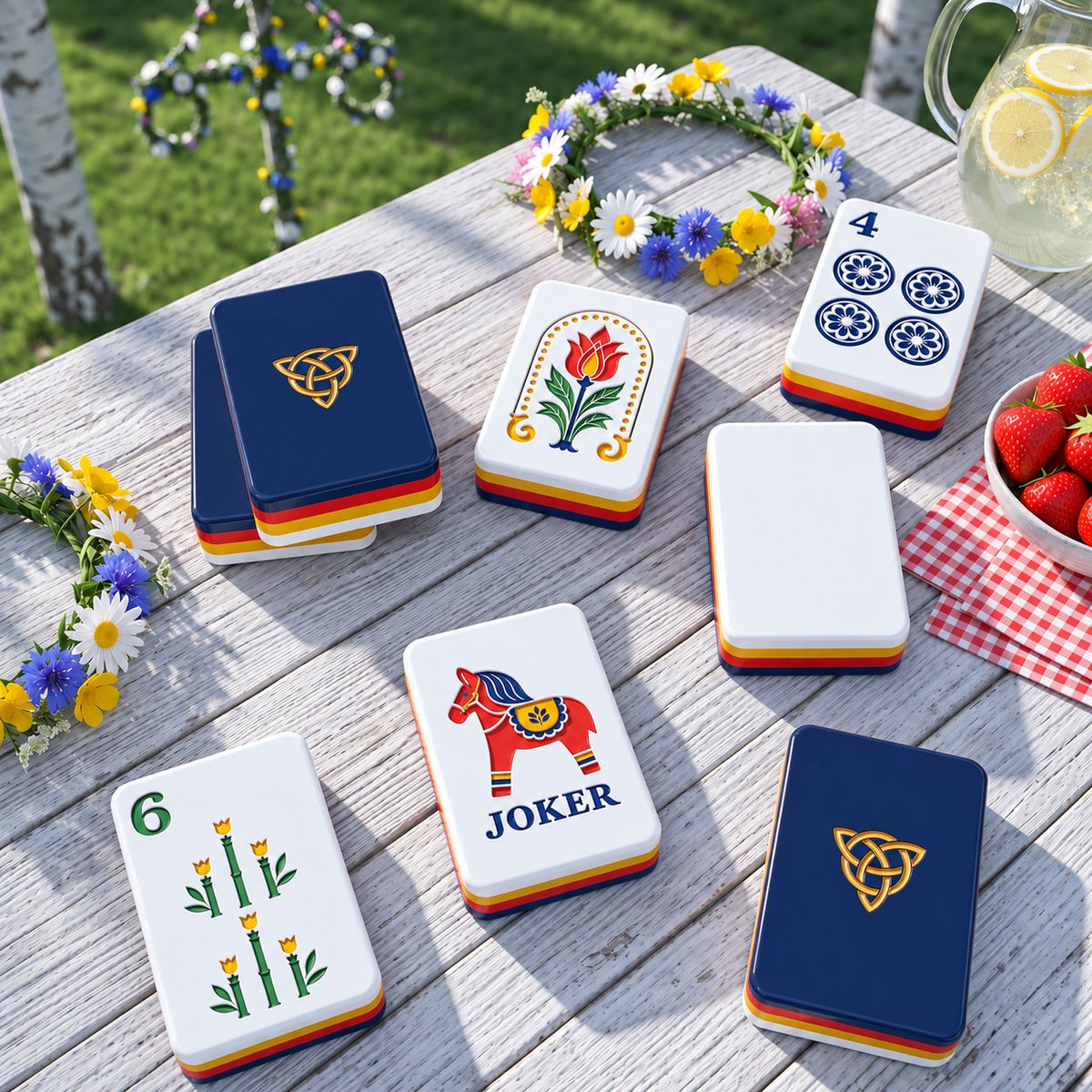
Vietnamese mahjong uses the same 152-tile core as American mahjong (three suits: Bam, Crak, Dot; winds; dragons; flowers; jokers) but plays by entirely different rules. The game draws 16 tiles per player at the start, players draw one and discard one per turn, and winning hands are built from melds (pungs, kongs, pairs) without relying on a printed card. Winning typically happens within 15–20 minutes per round. Scoring varies by region but often awards points for sets, dragons, and pung completions. Vietnamese players often emphasize speed and memory over the rigid hand-patterns of American play. The key difference: no Charleston, no annual league card, and melds show face-up as you build them. If you know American mahjong, you already own the right tiles—just learn a new rule set.
How is Vietnamese mahjong different from American?
American mahjong locks you to hands printed on the year's league card and uses eight jokers and a complicated pass ritual called the Charleston. Vietnamese mahjong throws out the card entirely. You build your own winning hand from memory using five types of melds: pung (three identical), kong (four identical), chow (three consecutive numbers in one suit), pair, and eye (the winning pair). You need a complete hand of 14 tiles: four melds plus a pair. Games move fast—ten to twenty minutes—because there's no card-flipping or complex scoring tables. American players find Vietnamese mahjong feels like improvisation; Vietnamese players find American mahjong feels like homework. Both use the same physical tiles; the game inside your head is what changes.

What tiles do you need to play Vietnamese mahjong?
You need one standard 152-tile set: 108 suited tiles (Bam, Crak, Dot numbered 1–9, four of each), 16 winds (four each: North, East, West, South), 12 dragons (four Red, four Green, four White), eight flowers, and eight jokers. Vietnamese rules treat jokers as wild tiles that can substitute for any suit tile in a pung or kong—so you can use them strategically to complete melds mid-game. Beginners sometimes buy 160-tile sets (which include spare tiles) to replace worn or lost tiles during long sessions; a best-selling acrylic set gives you that buffer at no extra shipping cost. You do not need a printed card, a special cloth, or a Charleston ritual. The tiles themselves are all you need.
How do you set up and start a Vietnamese mahjong game?
Shuffle all 152 tiles face-down on the table. Each of the four players draws 16 tiles and arranges them into a wall in front of them (eight on top, eight on bottom, stacked). The remaining 8 tiles stay in the center as the draw pile. The player sitting East draws first from the live draw pile, then discards one tile face-up into the center. Play passes counterclockwise (or clockwise, depending on your house rules). Any player may claim a discarded tile if it completes a pung, kong, or winning hand—this is called "stealing." When you claim a tile, you expose your meld and take your turn. If no one claims the discard, play continues to the next player. Unlike American mahjong, there's no hidden hand—melds live on the table so opponents can see what you're building.
Setup Step | American Mahjong | Vietnamese Mahjong |
Tiles per player (start) | 13 | 16 |
Pass ritual | Charleston (complex) | None |
Printed card | Required (yearly) | None |
Melds exposed | Yes, but limited to pung/kong/quint | Yes, all types (pung/kong/chow) |
Winning time | 30–60 min | 10–20 min |
Joker rules | Substitute in groups only; never alone | Substitute freely in pung/kong |
What are Vietnamese mahjong melds and how do you score them?
A meld is a set of tiles that count toward a winning hand. Vietnamese mahjong has five meld types:
Pung: three identical tiles (e.g., 5 Bam, 5 Bam, 5 Bam). Often worth 2–4 points.
Kong: four identical tiles. Worth 4–8 points, depending on whether it's opened (claimed) or closed (drawn privately).
Chow: three consecutive numbered tiles in one suit (e.g., 4 Crak, 5 Crak, 6 Crak). Worth 1–2 points.
Pair: two identical tiles. Required as the "eye" in a winning hand; does not score extra points on its own.
Eye: the pair that completes your winning hand.
Scoring varies widely by region and table. Some tables award extra points for all-honor melds (winds and dragons only), dragon pungs, or "all pung" hands (no chows). A typical winning hand has one to three chows and one to three pungs plus a pair. The critical difference from American mahjong: you build any winning shape from memory, not from a card. This makes speed and tile memory much more valuable than pattern recognition.
🀄 Shop best-selling mahjong sets →

How do you call a win and what happens next?
When you have 14 tiles forming four melds plus a pair, you call "win" (or "mahjong") immediately. A winning tile can come from two places: the live draw pile (if you draw it yourself) or a discard (if another player throws it). If you win from a live draw, you score full points and win the hand. If you win from a discard (called a "rob" or "steal"), the player who discarded loses the points to all three opponents. Some tables rule that you can only win from specific discard types; others allow any winning tile. After a win, shuffle all tiles, rotate positions (usually East moves to South, South to West, etc.), and play again. A typical game runs four rounds (one per wind position) or eight rounds if you want a longer session. Vietnamese mahjong players often play ten to fifteen hands in one evening; American mahjong players often play three to five.
What common mistakes do Vietnamese mahjong beginners make?
Forgetting chows count as melds. New players sometimes think only pungs and kongs matter. Chows are just as valid—and often easier to build because they use consecutive numbers instead of exact matches.
Holding the wrong pair. Your pair (eye) must be identical. You cannot use a 5 Bam and a 5 Crak as a pair, even though they're both "fives"—the suit matters.
Ignoring dragons and honors. A pung of Red Dragons scores just as well as a pung of 5 Dots. Beginners often discard dragons early, then watch opponents claim them.
Not watching the discard pile. Vietnamese mahjong is fast. If you're not paying attention to what each player threw, you'll miss opportunities to claim tiles.
Exposing your hand too early. Some players open melds as soon as they form them. Smart players wait to expose melds until the last moment so opponents can't prepare against you.
Confusing joker rules. In Vietnamese mahjong, a joker substitutes for any tile inside a pung or kong—but you cannot make a pair entirely of jokers. Use jokers strategically, not reflexively.
The fastest way to learn: watch two hands, then play one yourself. You'll see the rhythm within minutes.
🎁 See our most-loved mahjong sets & accessories →
What to check before you buy a set for Vietnamese mahjong
Tile clarity. Make sure suits (Bam, Crak, Dot), winds (N/E/W/S), and dragons (Red/Green/White) are printed or engraved clearly. Fast play demands instant recognition.
Joker count. Vietnamese mahjong uses all eight jokers frequently. Confirm your set includes eight jokers, not fewer.
Tile feel. For fast games, slightly heavier acrylic or resin tiles reduce accidental slides. If tiles slip during rapid sorting, gameplay breaks down.
Storage. Vietnamese sessions often run 10–15 hands in one night. A travel bag or case keeps tiles organized and protected between rounds.
Racks optional. American mahjong relies on racks with pushers because players hide their hand. Vietnamese players often build melds on the table, so racks are less critical—but a mat still protects your playing surface.

FAQ
Can I use an American mahjong set to play Vietnamese mahjong?
Yes. Both use the same 152 tiles. You'll ignore the American league card and play by Vietnamese rules instead. The physical tiles are identical.
Is Vietnamese mahjong harder than American mahjong?
It's different, not harder. American mahjong requires card memorization and pattern matching; Vietnamese mahjong emphasizes speed and tile memory. Beginners pick up Vietnamese rules in one evening.
How long does a Vietnamese mahjong game take?
A single hand takes 10–20 minutes. A session of eight to ten hands runs 2–3 hours. American mahjong typically takes 30–60 minutes per hand.
Do I need a special table or mat for Vietnamese mahjong?
No. A mat protects your surface and speeds tile movement, but any smooth table works. Vietnamese players often play on bare wood or cloth without dedicated mahjong furniture.
Can jokers be used in a pair in Vietnamese mahjong?
No. A pair must be two identical real tiles. A joker can substitute inside a pung or kong, but your winning hand must close with an actual tile pair.
What if two players win on the same discard?
The player closest to the discard (usually the one sitting immediately counterclockwise) claims it. If both sit equally far, house rules decide—some tables award the hand to the player with the fewest tiles already exposed.
Does Vietnamese mahjong have a minimum hand value to win?
No fixed minimum like American mahjong. Any four melds plus a pair wins. Some high-stakes tables reward bigger hands with bonus points, but a basic win is always valid.
Can I play Vietnamese mahjong with three players?
Yes, though it's less common. Each player draws 17 tiles instead of 16, and the game adjusts for three instead of four wall sections. House rules vary, so agree before you start. ✨ Find your Mahstead set — free US shipping →


View More
View More
View More
