
Custom Mahjong Travel Bag: Choose the Right Case for Your Set
Last updated: Nov 23, 2026
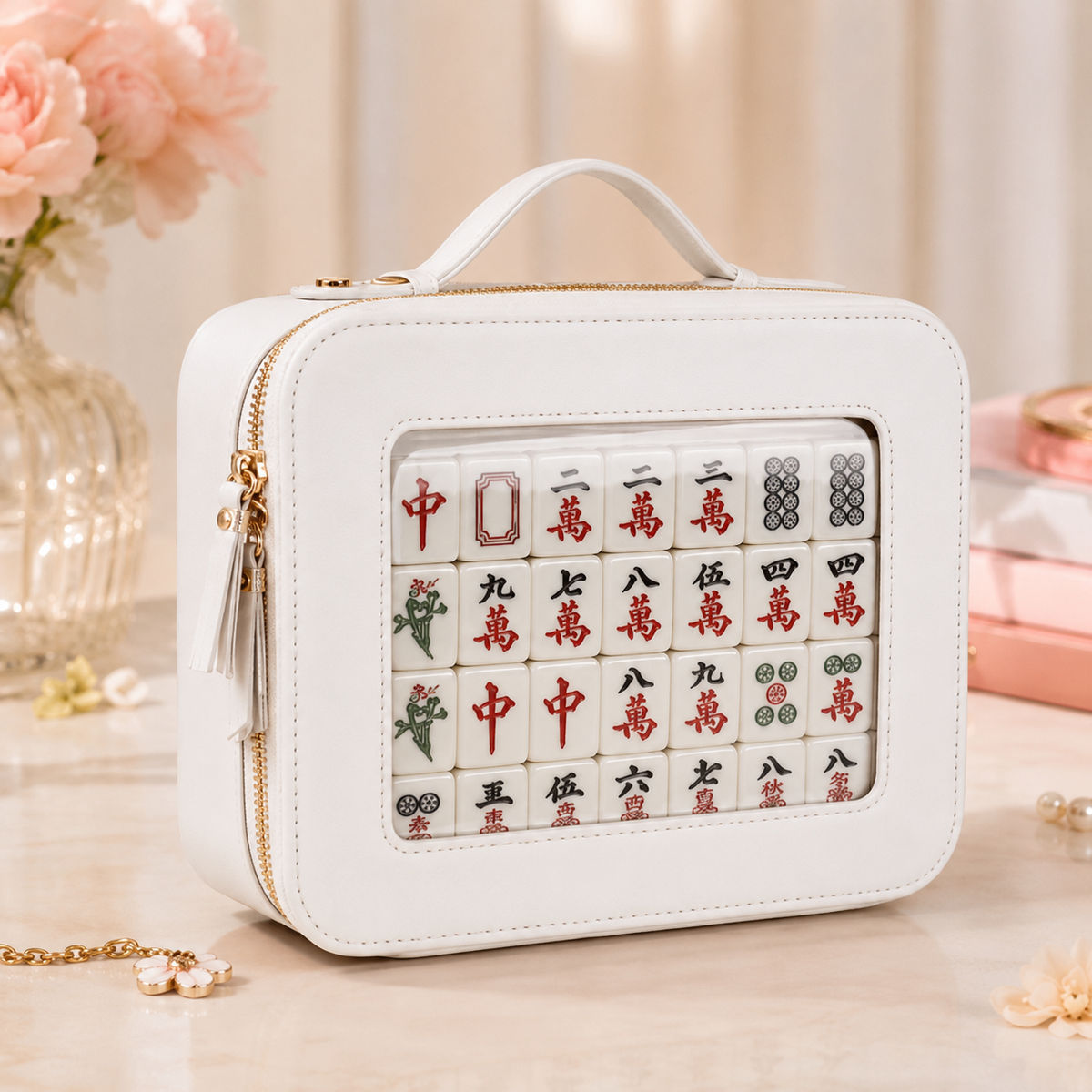
A mahjong travel bag is a protective case designed to hold a full 152-tile American mahjong set, racks, mat, and dice in one portable package. We use reinforced nylon or canvas exteriors, padded interiors, and organized compartments to keep tiles from shifting or spilling. Most bags measure 12–16 inches wide and weigh 3–5 pounds when packed. Capacity ranges from single-set cases to multi-set organizers; pricing varies by material and customization options. The right bag depends on how often you travel, whether you need engraved personalization, and whether you want room for a full mat or just tiles and racks. Common mistakes: underestimating how much space a full set plus accessories actually needs, or choosing soft-sided bags without sufficient padding for frequent transport.
A mahjong travel bag seems simple—just a container, right? Wrong. We've learned that the difference between a bag that protects your tiles for years and one that falls apart after a season comes down to four things: material durability, internal organization, padding thickness, and honest sizing. When you're carrying our best-selling mahjong sets to a friend's house or a weekend tournament, your bag is the only thing standing between a beautiful set and spilled tiles on a car seat.
What size bag do you actually need?
Most players underestimate how much space 152 tiles, eight jokers, four racks with pushers, a mat, and dice actually occupy. A full set with racks takes up roughly 10 × 8 × 4 inches when neatly packed—but only if everything has a designated slot. If you're tossing tiles loose into a soft bag, you'll need at least 50% more volume to avoid crushing corner racks or cracking tile edges. Hard-shell cases with molded compartments use space efficiently and protect against pressure from books or suitcases stacked on top. Soft bags with padded dividers are lighter and fold flat when empty, but demand careful packing and aren't ideal if your car trunk gets jostled during every errands run. Measure your set's footprint (most are 9 × 7 inches flat) and add 2 inches on all sides for padding, then choose a bag that offers that internal clearance without excessive room that lets tiles shift.

Hard shell vs. soft padded: which protects better?
Hard-shell bags (rigid plastic or reinforced polymer exterior) guard against crushing, puncture, and weather. They're heavier and don't compress, so they take up consistent trunk space whether full or empty. Soft-padded bags (nylon or canvas with 1–2 inch foam) weigh less, pack into tight spaces, and feel more like everyday luggage—but rely entirely on padding thickness to absorb impact. A 1-inch foam soft bag won't protect tiles if you sit on it; a 2-inch foam bag will, though it becomes bulky. Our travel bag collection includes both types. Hard shells win if you travel by air, share a car trunk with heavy items, or play rough-and-tumble tournament schedules. Soft bags suit weekly home games where the bag lives in a closet between sessions and rarely faces extreme pressure.
Bag Type | Best For | Weight | Durability | Setup Time | Honest Trade-off |
Hard shell (rigid case) | Air travel, tournaments, shared trunks | 4–6 lbs | Lasts 8+ years | Organized internally | Bulky when empty |
Soft padded (nylon + foam) | Weekly home games, apartment storage | 2–3 lbs | Lasts 4–6 years if padded ≥1.5" | Packing matters | Padding degrades with pressure |
Soft unpadded (basic canvas) | Very casual, occasional games | 1 lb | 2–4 years | Quick | Minimal tile protection |
🀄 Shop best-selling mahjong sets →
Does personalization add value, or is it just vanity?
An engraved travel bag with your name, initials, or a mahjong title (player name, year, group name) serves two practical purposes: it prevents mix-ups at group games and it signals that this set is yours—which matters when multiple players bring bags to a table. We see engraved American mahjong sets become real conversation starters; the same goes for matching bags. Personalization does add cost (typically a small upcharge per character), but if you're playing in rotating groups, it eliminates the "whose bag is this?" moment. However, if you play solo or always host at home, plain bags work just fine and cost less. Personalization also increases resale difficulty if you ever upgrade to a new set—whereas a plain bag can move to anyone.

What internal organization features actually matter?
Compartments and dividers reduce setup time and prevent mix-ups. A well-designed bag has: one dedicated slot per rack (so racks don't crush each other), a sealed tile container or pouch (keeps tiles from scattering if the bag tips), a flat pocket for the mat (rolled mats can crease or crack if crammed into general space), a small zippered pouch for dice and scorecards, and breathable lining (reduces moisture if stored in humid basements or garages). Bags without dividers force you to search for racks every time you unpack, and they invite tile spillage. Overly complicated organization—ten tiny pockets with unclear purpose—creates friction too. The best bags strike a balance: thoughtful compartments that take 30 seconds to understand, not a puzzle. Mahstead designs bags assuming you've got four racks plus pushers, a full set of tiles, and a standard mat.
What should you check before ordering?
Here's a practical checklist to avoid buyer's remorse:
Measure your mat rolled or folded. If your bag claims "mat pocket," verify the pocket actually fits your mat's packed dimensions. A 24 × 24 inch mat rolls to roughly 24 × 3 inches; some bags' "pockets" are too narrow.
Confirm padding thickness in the product description (aim for 1.5+ inches for soft bags). If no thickness is listed, ask before buying.
Check weight capacity. A 4-pound set plus racks plus mat approaches 5–6 pounds; if a soft bag is rated for "10 pounds," that's functional but not protective during rough handling.
Verify internal dimensions against your set's footprint. If the listing says "9 × 7 × 4 inches internal," your set should fit with a quarter-inch clearance on all sides—not snugly.
Look for water resistance, not waterproofing. Full waterproofing traps moisture inside; water-resistant exteriors shed rain without sealing dampness in.
Ask about strap options. Is it a single shoulder strap (tiring on long walks), a backpack harness (balanced), or handles only (good for car rides)? Your preference matters.
🎁 See our most-loved mahjong sets & accessories →
Engraving: does it affect durability or shipping?
Personalization is etched or embossed into the bag's exterior material—usually nylon, canvas, or the hard-shell polymer. It doesn't weaken the structure; engraving creates grooves that actually help you grip handles. However, engraving does add lead time (typically 1–2 weeks) because it's done after the bag is assembled, so plan ahead if you need a specific set by a game date. Custom bags also aren't returnable if you change your mind about the design, so confirm spelling and layout before checkout. Shipping to the US is always free, but production and personalization are two separate timelines—standard bags ship faster. If you're ordering as a gift and need it quickly, a plain bag arrives sooner.
✨ Find your Mahstead set — free US shipping →
The real test of a travel bag isn't the first trip—it's the twentieth. By then, you've learned whether the zippers hold, the padding stays intact, and the compartments actually prevent disasters. We design our bags for that reality, not marketing promises. A set you play with weekly deserves a bag that won't let you down.

FAQ
Can I fit a mahjong mat inside a standard travel bag?
Most bags have a flat back pocket designed for a rolled or folded standard mat (24 × 24 inches). Verify the pocket depth matches your mat's packed thickness—typically 2–3 inches rolled. Large tournament mats may require a separate storage solution or a larger bag.
Do soft padded bags protect tiles as well as hard cases?
If padded 1.5+ inches and properly packed, soft bags protect tiles well for weekly home games. Hard cases offer superior protection for air travel or rough tournament conditions. Your usage pattern determines which is worth the extra weight and bulk.
How long does personalization add to my order?
Engraved bags typically add 1–2 weeks to production time because customization happens after assembly. Plain bags ship sooner. Plan ahead if you're ordering for a specific game or gift deadline.
What's the difference between a travel bag and a table cover?
A travel bag is rigid, organized, and designed for portability between locations. A mat or table cover stays on the table during play. Many players use both: a bag to transport the set, and a mat to protect the playing surface and improve tile handling during the game.
Can I return a custom-engraved bag if I change my mind?
Personalized items typically aren't returnable once ordered because they're made specifically for you. Confirm spelling, initials, and layout before checkout to avoid regret. Plain bags usually have standard return policies—check the product page.
Do I need a travel bag if I always play at home?
If your set lives in a closet between sessions, a lightweight soft bag or basic canvas case protects it from dust and accidental crushing. You won't need the durability of a hard case, but some storage container is still worthwhile to keep tiles, racks, and mat together and organized.


View More
View More
View More
