
What Does the 3 Bam Tile Look Like in Mahjong?
Last updated: Nov 23, 2026
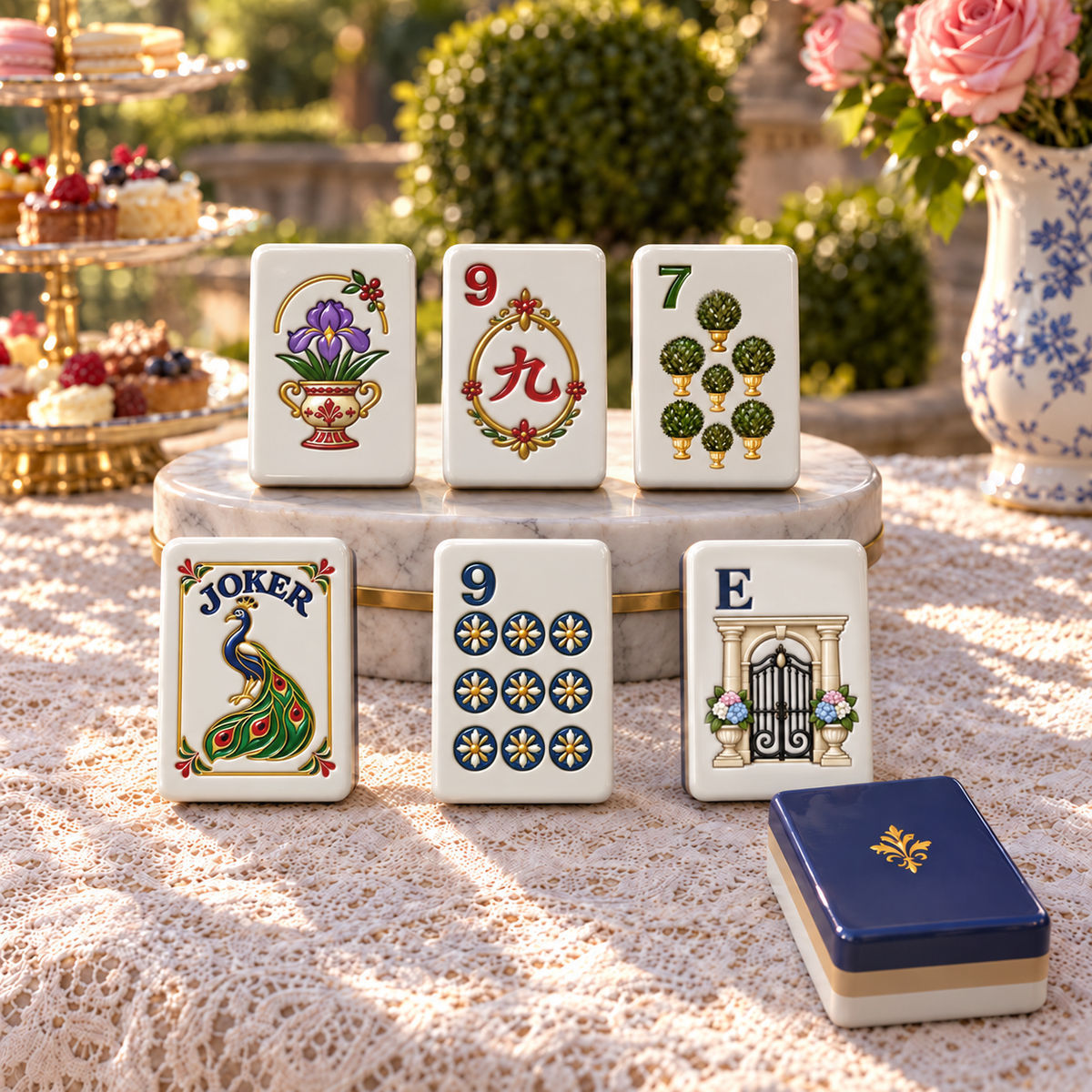
The 3 Bam tile displays three vertical bamboo stalks, typically rendered as simple parallel lines or stylized stalk imagery depending on the tile design. In American mahjong, you'll find four copies of the 3 Bam in every standard 152-tile set—one for each player's hand or the wall. The Bam suit represents bamboo and runs from 1 to 9; the 3 Bam occupies the middle-low range. On an acrylic tile, the bamboo symbol is usually engraved, painted, or embossed on the tile face, making it instantly recognizable next to other Bams. The tile measures roughly ¾ inch square on most sets. When you're learning, spotting the 3 Bam quickly speeds up hand-building and discarding. Mahstead's engraved acrylic sets render the Bam suit with clean, legible bamboo imagery so players can identify every Bam number at a glance, even from across the table.
The 3 Bam tile is one of 36 Bam suit tiles in an American mahjong set, featuring three upright bamboo stalks as its primary design element. It's a fundamental tile you'll draw and discard hundreds of times in a game. In our weekly games, spotting the 3 Bam quickly becomes second nature, but new players often ask what exactly they're looking at—and that question matters, because if you can't identify your tiles instantly, the game slows to a crawl.
How is the 3 Bam different from other Bam tiles?
Each Bam tile from 1 to 9 shows a different number of stalks. The 1 Bam displays a single stalk and a bird (the "sparrow" or "bird tile"). The 2 Bam shows two stalks. The 3 Bam displays three stalks, arranged vertically or fanned slightly. The 4 Bam has four stalks, and so on through 9 Bam. This straightforward numeric progression makes the Bam suit easy to learn: count the stalks and you know the number. Unlike the Crak or Dot suits, which use symbolic shapes (coins or dots), the Bam suit's visual logic is direct. The 3 Bam sits right in the middle-lower range of the Bam numbers, so it appears often in hand-building patterns—many players hoard Bams in the 2–5 range during the Charleston exchange.
🀄 Shop best-selling mahjong sets →

What materials affect how the 3 Bam looks?
Acrylic tiles, which Mahstead manufactures, offer crisp, durable imagery. The Bam stalks are engraved into or printed onto the acrylic face, creating a surface that feels smooth and is easy to read under typical table lighting. Bamboo or bone tiles, used in traditional and vintage sets, develop a warmer patina over time and may show the stalks in relief. Plastic tiles vary widely: cheaper sets sometimes render the Bam stalks so faintly or in such small print that distinguishing a 3 from a 4 across the table becomes a strain. Tile weight and thickness also matter. A heavier tile (acrylic sets typically range from medium to substantial) resists sliding around the mat, so your 3 Bam stays put when you lay it down. Our players prefer acrylic because the engraved design survives thousands of plays without fading, and the heft means your discards don't scatter. When you're comparing sets, hold a tile in hand: the 3 Bam should be instantly legible without squinting.
Where does the 3 Bam appear on the mahjong card?
The National Mah Jongg League card (the official hand list for American mahjong) includes hundreds of winning patterns, many of which call for Bam tiles. Some patterns require three consecutive Bams (called "sequences" in other mahjong variants, but American mahjong treats these differently—you cannot expose or call sequences in American mahjong). Instead, American winning hands typically call for exposed groups like pungs and kongs, or combinations with Winds and Dragons. The 3 Bam may appear in a pung (three identical 3 Bams), a kong (four 3 Bams), or a pair. Because American mahjong hands come only from the current year's card, the 3 Bam's frequency and role shift annually. Learning to read the card and spot which hands use which Bams takes practice—our guide to reading the mahjong card walks you through finding patterns. The card is not a reference you memorize; you keep it at the table throughout the game.
🎁 See our most-loved mahjong sets & accessories →
Why does the 3 Bam matter when you're choosing a set?
When you're evaluating a new set, pick up a few tiles and study the 3 Bam. Can you read it clearly? Does the engraved bamboo stalk imagery pop, or does it blend into the tile? A poor 3 Bam design is often a sign the entire set skimps on legibility. We've seen acrylic sets where the Bams are barely distinguishable from Craks (the coin suit) from even a short distance. Mahstead's engraved American mahjong sets prioritize clarity: the Bam stalks are boldly engraved so every number stands out. This is especially important if you're hosting a game with newer players or anyone with vision challenges. A clear 3 Bam makes the learning curve gentler and keeps the pace steady. Our best-selling mahjong sets are engineered for table readability—the 3 Bam is legible from across a dining table without leaning in.
Factor | Why It Matters | How to Check |
Engraving clarity | Faded tiles slow play and frustrate players | Hold a tile at arm's length; can you count the stalks? |
Tile weight | Heavy tiles resist sliding and feel premium | Pick up a 3 Bam; does it have substance? |
Suit contrast | Easy to separate Bams from Craks and Dots | Lay three different suits side-by-side; are they distinct? |
Set durability | Tiles survive years of weekly games | Ask how many plays before engraving fades |

How do beginners often confuse the 3 Bam?
New players sometimes mistake Bams for other suits because they don't know what "bamboo" symbolism looks like on a tile. The 3 Bam's three stalks can resemble the three "dots" on a 3 Dot if the Dot suit uses circular symbols—but Dots are round, while Bams are linear stalks. Craks (the coin suit) show a square with a hole in the middle, which looks nothing like bamboo, but in poor-quality sets the distinctions blur. Another common mistake: confusing the 1 Bam with the 1 Crak or 1 Dot. The 1 Bam is unique because it includes a bird, making it unmistakable once you know to look for it. New players should start with mahjong for beginners guides that use high-contrast tile imagery—this builds visual recognition fast. When you sit down to your first game, ask your host to let you handle a few tiles of each suit before play starts. Spend two minutes sorting a 3 Bam, 3 Crak, and 3 Dot into three piles. Once you've done that drill, your brain locks in the differences.
What to check before you buy
When ordering a mahjong set online, you cannot hold a 3 Bam in hand first. Ask the seller for clear, close-up photos of the Bam tiles—specifically a 1 Bam (to see the bird), a 3 Bam, and a 9 Bam. Compare those photos side-by-side with a competitor's images. Request details on engraving depth and whether the design is painted, engraved, or embossed. Read reviews from players with older eyes who mention readability. Mahstead provides high-resolution imagery of every set design and includes a mahjong mats option that complements your tile choice—a good mat with contrast lighting makes the 3 Bam (and every tile) easier to read. Ensure the set you're buying is a full 152-tile American mahjong set with eight jokers; the 3 Bam alone is not enough to identify a true set.
✨ Find your Mahstead set — free US shipping →
Quick visual reference: Bam suit at a glance
Tile | Visual | Purpose in play |
1 Bam | One stalk + bird | Unique; called "the bird tile" |
3 Bam | Three stalks | Common in mid-range patterns |
5 Bam | Five stalks | Appears in many hands; middle value |
9 Bam | Nine stalks | Terminal tile; high value |
The 3 Bam is neither rare nor common—it's an everyday tile. Mastering its appearance takes five minutes of focused study, and that investment pays off in every game you play. See our complete guide to what's in an American mahjong set to understand how the 3 Bam fits into the full 152-tile structure and why set design matters across all suits.

FAQ
Can the 3 Bam be used in a winning hand?
Yes. The 3 Bam can appear in any hand pattern that calls for Bams—usually as part of a pung (three identical 3 Bams), a kong (four 3 Bams), or paired with other Bams or special tiles, depending on the year's National Mah Jongg League card.
How many 3 Bams are in a mahjong set?
Four. Every tile number in the Bam suit (1–9) appears four times in a standard 152-tile American mahjong set, so there are exactly four 3 Bams per set.
Is the 3 Bam different in Chinese or Hong Kong mahjong?
Yes. Chinese and Hong Kong mahjong allow sequences (1-2-3 runs) and use different hand patterns, so the 3 Bam appears in sequential melds. American mahjong has no sequences and uses only the current year's card, so the 3 Bam's role differs each spring when a new card is issued.
What happens if a 3 Bam tile is damaged or lost?
American mahjong sets include spare tiles (extra jokers and blanks); if a tile is damaged, most players stop using that set or source a replacement from another set. Always buy a complete 152-tile set with spares to have backups on hand.
Why does the 3 Bam look faded on some sets?
Poor engraving depth, cheap acrylic, or use of thin paint causes fading over time. Mahstead's engraved tiles retain their legibility through thousands of plays because the design is cut into the acrylic surface, not painted on top.
Can I play mahjong with just knowing what the 3 Bam looks like?
You'll need to recognize all 152 tiles and understand how to play American mahjong rules, the Charleston exchange, and how to read the card, but yes, tile recognition (starting with the 3 Bam) is the foundation of the game.


View More
View More
View More
