
Filipino Mahjong Rules: How It Differs from American Play
Last updated: Nov 23, 2026
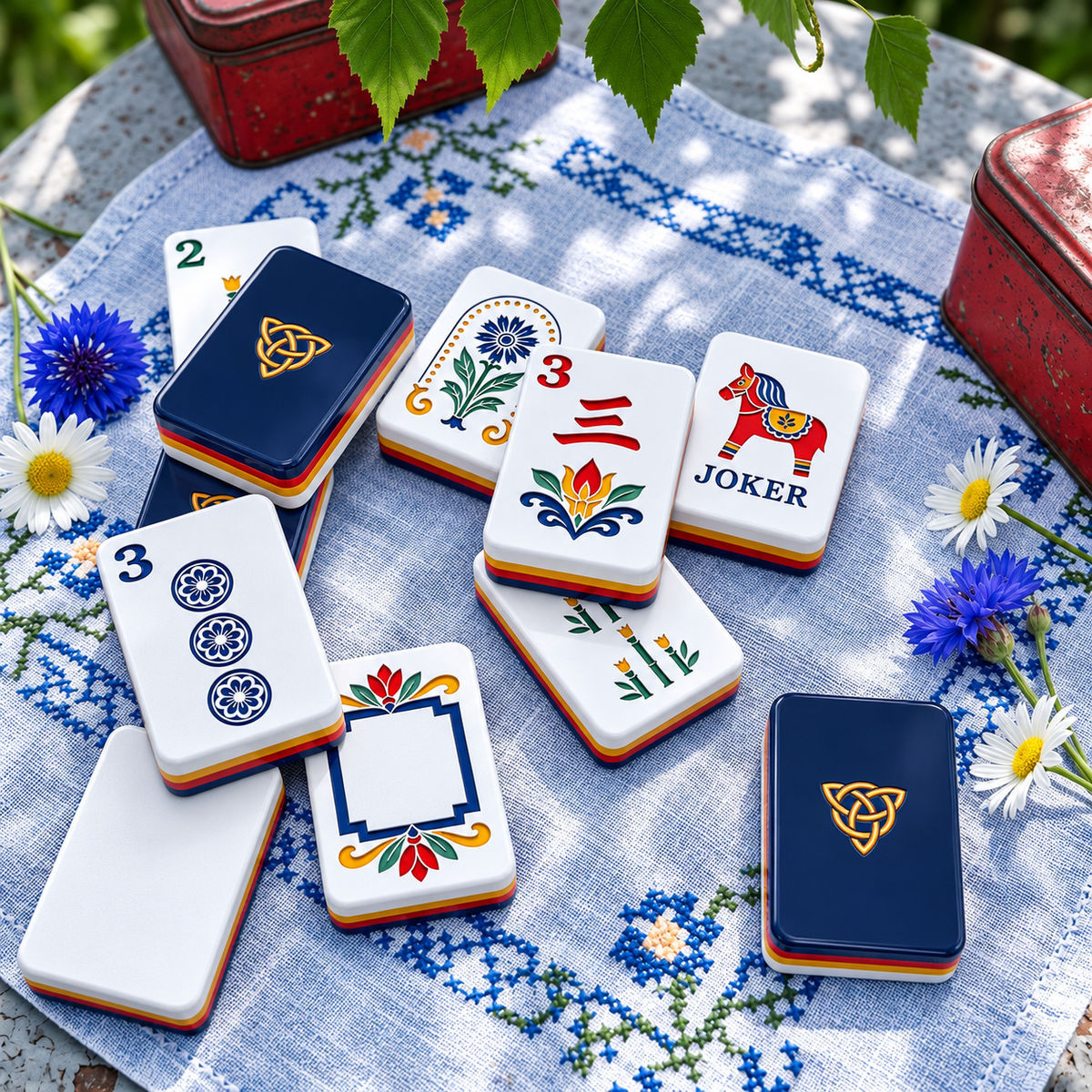
Filipino mahjong uses 144 tiles (Bams, Craks, Dots 1–9 in four copies, plus Winds, Dragons, and Flowers), dealt 16 tiles per player in a four-player game. Players draw and discard in turn, forming melds (Pungs of three identical tiles, Kongs of four, Chows of three consecutive numbers in one suit) and announcing which are exposed or concealed; jokers can substitute within exposed melds only. A hand wins when all tiles form valid melds plus one pair, with no fixed hand list—any combination counts if it follows the meld rules. Play moves much faster than American mahjong because the card constraint is absent, making it ideal for casual weekly games.
What tiles are in a Filipino mahjong set?
A standard Filipino mahjong set contains 144 tiles: 108 suited tiles (Bams, Craks, Dots numbered 1–9, four copies of each), 16 Winds (four each of North, East, South, West), 12 Dragons (four each of Red, Green, White), and 8 Flowers (typically four each of two flower tiles). There are no jokers in the base set; some regional rules add one or more jokers as wild cards, but this varies by group. The setup is simpler than American mahjong—no extra jokers to manage, no decision about which tiles are spares, just the core 144 ready to play.

How do you deal and start a Filipino mahjong hand?
In a four-player Filipino game, the dealer (often determined by rolling dice) sits East. Going clockwise (South, West, North), each player draws tiles in turn until everyone has 16 tiles; the dealer then picks one more tile to begin with 17. The dealer's first discard starts the play sequence. Before the hand begins, some groups perform a three-pass Charleston (similar to American mahjong) to exchange tiles, though many casual games skip this step entirely and go straight to drawing and discarding. The player sitting opposite the dealer typically keeps score.
What are valid melds in Filipino mahjong?
Valid melds are Pungs (three identical tiles, e.g., three 5 Bams), Kongs (four identical tiles), and Chows (three consecutive numbers in one suit, e.g., 3–4–5 Craks). Unlike American mahjong—which forbids sequences and uses only pungs, kongs, quints, and sextets—Filipino mahjong embraces chows as a core meld type, making hand construction feel closer to rummy. Melds can be exposed (laid on the table and subject to joker rules) or concealed (held in hand until you win). A winning hand must contain all melds plus one pair, and any legal combination of melds and a pair wins—there is no fixed hand card to consult, freeing players from a rigid list.
How do jokers and wildcards work?
Most Filipino mahjong groups allow one or more jokers (or designate a tile, like the White Dragon, as wild). Jokers can substitute for any tile within an exposed meld only—never in a concealed meld and never to form a pair on their own. If you lay down a Pung of 3 Dots but lack one tile, you can use a joker in its place as long as the meld is exposed on the table. This rule keeps the game flowing but prevents abuse of wildcards in hidden melds, maintaining strategic tension. When a joker is used, players note it to track which meld it's part of; some groups even replace a joker mid-game with the real tile if it's discarded later.
What wins a hand and how is it scored?
A winning hand (called "mahjong") consists of four melds plus one pair. For example: three 2 Bams (Pung), 4–5–6 Dots (Chow), three Red Dragons (Pung), four North Winds (Kong), and two White Dragons (pair). Play ends immediately when a player completes this structure, either by drawing a tile on their turn or by claiming the discard of another player. Scoring varies widely by region and group; common systems award points based on whether melds are concealed or exposed, whether the winning tile was drawn or claimed, and whether any "bonus" patterns appeared. Unlike American mahjong's detailed scoring table, Filipino rules are typically informal and agreed upon before play starts—a house rule system agreed amongst the four players.
Aspect | Filipino Mahjong | American Mahjong | Why It Matters |
Tile count | 144 tiles | 152 tiles (+ 8 jokers) | Set compatibility; can't mix variants |
Melds allowed | Pungs, Kongs, Chows | Pungs, Kongs, Quints, Sextets | Filipino allows rummy-like sequences |
Hand list | None; any legal combo wins | Fixed yearly card required | Filipino = faster, American = structured |
Joker use | Wildcard in exposed melds | No role in actual play | American jokers are draw replacements |
Winning condition | 4 melds + 1 pair | Must match current year's card | Filipino = flexible, American = rigid |
Play speed | Fast (20–30 min per hand) | Moderate (30–45 min per hand) | Filipino suits casual social games |
🀄 Shop best-selling mahjong sets →

How does Filipino mahjong flow differ from American play?
In Filipino mahjong, the discard pile is often kept in a neat spiral or line so all tiles are visible; players rapidly call claims ("Pung!", "Chow!", "Kong!") as tiles are thrown, and the game momentum is brisk. American mahjong requires the annual National Mah Jongg League card to be consulted for every hand, slowing verification but ensuring consistency. Filipino play rewards table memory and speed; players learn to read opponents' discards, spot live melds, and block risky tiles quickly. American mahjong is more cerebral—you're matching precise patterns from the card, so play involves more pausing and confirming. Both styles work beautifully for weekly games; Filipino suits groups that want fast rounds and loose rules, while American suits players who prize structure and hand variety. If you're switching between variants, the shift in pace and decision-making is the biggest adjustment.
What's the best setup for hosting Filipino mahjong at home?
You need a mahjong mat or smooth playing surface, clear discard area, good lighting, and racks with pushers to organize your 16 tiles per player (racks help prevent accidental reveals and speed tile management). A quiet, comfortable seating arrangement (ideally a four-person square table or dedicated space) reduces distractions and keeps play flowing. Some groups use a score pad or app to track rounds; others keep informal tally. If you're traveling with a Filipino set, a padded mahjong bag or case protects the 144 tiles and keeps everything organized for transport to friends' homes or regular game nights.
✨ Find your Mahstead set — free US shipping →
Common mistakes Filipino mahjong players make
Miscounting melds: Calling a win before you actually have four melds plus a pair is embarrassing and forfeits your turn; count aloud before declaring. Joker chaos: If jokers are in play, clarify at the start whether they can be used in concealed melds (most groups say no). Unclear discards: Throw tiles firmly and call suit/number so there's no dispute about what you meant to play. Pair confusion: The pair must be two identical tiles; some new players accidentally use a single tile as a "pair" and trigger a game halt. Ignoring table reads: If three players have discarded 7 Craks, don't hold your 7 Crak hoping someone needs it—assume the fourth player either has it or won't use it.
What to check before you buy a Filipino mahjong set
Tile count: Confirm the set is 144 tiles, not 152 or 166 (American-style sets won't work for Filipino play).
Material: Acrylic and resin sets are durable and easy to clean; bamboo sets are beautiful but heavier for travel.
Markings clarity: Ensure the Bam, Crak, Dot suits and Wind/Dragon symbols are clearly printed or carved so you can read tiles across the table.
Joker presence: Decide if you want jokers included (some groups don't use them; check your group's house rules first).
Bag or case: If you play at different locations, a protective bag saves wear and keeps tiles organized between sessions.
🎁 See our most-loved mahjong sets & accessories →

FAQ
Can I use an American mahjong set to play Filipino mahjong?
No. American sets have 152 tiles and include extra jokers; Filipino sets use 144 tiles. The tile count and joker handling are incompatible, so you'd either have leftover tiles or shortage of certain numbers. Always match the set to the variant you're playing.
Do I need the National Mah Jongg League card to play Filipino mahjong?
No. Filipino mahjong has no fixed hand list—any legal combination of four melds plus one pair wins. This freedom is one reason it plays faster than American mahjong and appeals to casual groups.
What happens if two players claim the same discard?
Priority typically goes to the player claiming a Kong or Pung over a Chow, or the player closest to winning. If tied, house rules decide (often the player closest to the dealer in clockwise order gets it). Settle this before the first hand.
How many rounds do you usually play in a session?
A typical casual session runs 4–8 hands per player, depending on group size and available time. Each hand takes 20–30 minutes on average, so a two-hour session yields about 4–6 hands total.
Can jokers be used to form the winning pair?
No. The pair must be two identical real tiles. Jokers are wildcards for melds only (and only in exposed melds in most groups). Using a joker as a pair is an automatic loss or forfeiture of the hand.
Is Filipino mahjong played the same way in every region?
Rules vary by family, city, and group—there's no single official standard like the American variant has with the League card. Before you start, clarify joker rules, Charleston practice, scoring method, and whether concealed melds can hold jokers with your group.


View More
View More
View More
